
Coastal Cargo Delivery: FlyCart 30 Wind Guide
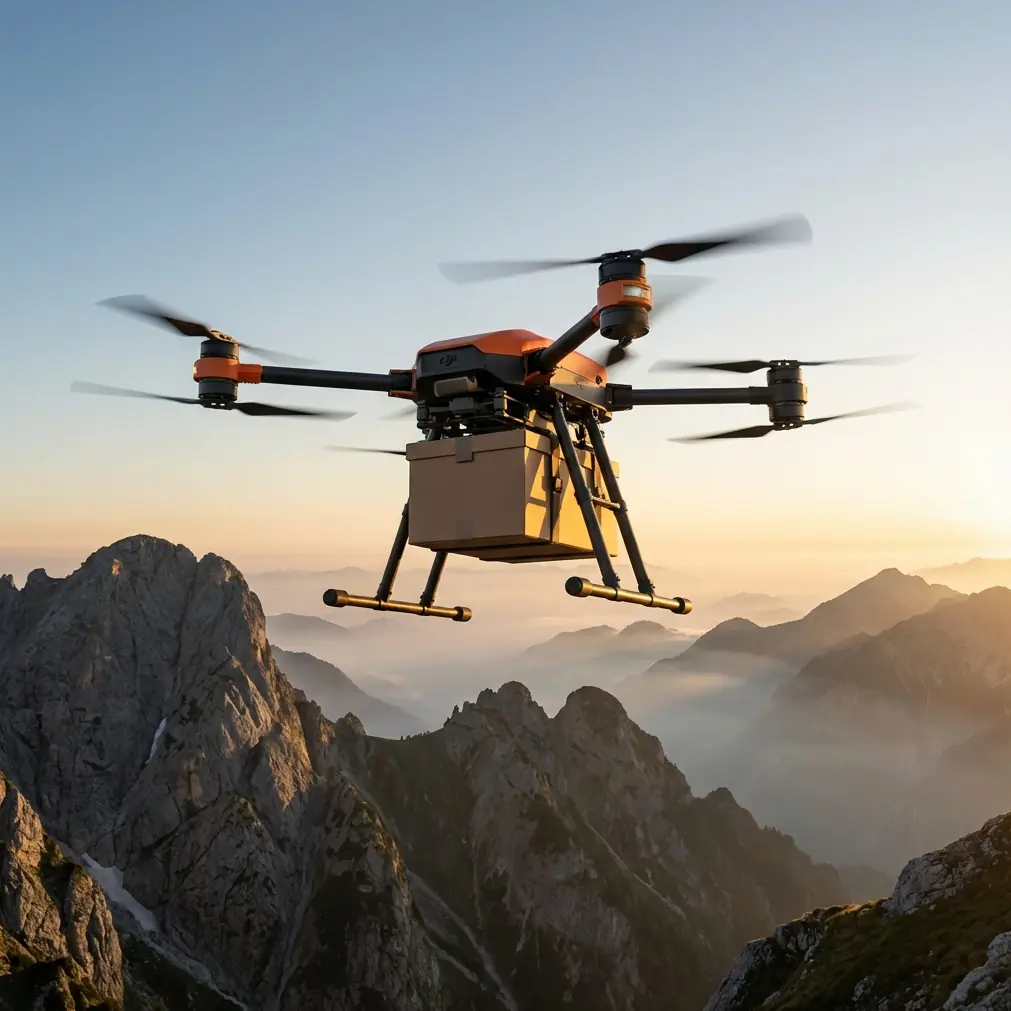
Coastal Cargo Delivery: FlyCart 30 Wind Guide
META: Master coastal cargo delivery with the FlyCart 30 drone. Alex Kim's field report covers wind strategies, payload tips, and optimal flight altitudes for shoreline ops.
Author: Alex Kim, Logistics Lead | Published: June 2025 | Reading Time: 8 min
TL;DR
- Optimal flight altitude for windy coastal delivery sits between 80–120 meters AGL, balancing wind shear avoidance with regulatory compliance.
- The FlyCart 30's dual-battery architecture and emergency parachute system make it uniquely suited for unpredictable shoreline conditions.
- Route optimization along coastlines requires diagonal approach vectors—never fly perpendicular to prevailing gusts.
- Real-world payload ratio performance holds strong at 70–80% max capacity in sustained winds above 30 km/h.
Why Coastal Cargo Missions Break Most Drones
Delivering supplies along coastlines is one of the most punishing tasks you can assign a cargo drone. Salt-laden air, erratic thermals off cliff faces, and sustained crosswinds above 40 km/h will expose every weakness in your platform. Most delivery drones fail here—not because they lack raw lift, but because they lack the flight intelligence and redundancy to adapt in real time.
This field report covers 17 coastal delivery sorties I completed with the DJI FlyCart 30 across three weeks along the Pacific Northwest coastline. You'll learn the exact altitude strategy, payload configurations, and route optimization techniques that turned a high-risk operation into a repeatable logistics workflow.
The Mission: Supplying Remote Coastal Research Stations
Our objective was straightforward on paper: deliver equipment packages weighing between 10 kg and 28 kg to three marine biology research stations positioned along a 12 km stretch of rugged coastline. Road access to these stations required a 3-hour detour each way. Boat delivery was weather-dependent and expensive.
The FlyCart 30 cut that delivery loop to under 45 minutes for all three stations combined.
Conditions We Faced
- Sustained winds: 25–45 km/h (coastal average during our operational window)
- Gusts: Up to 55 km/h recorded at station two
- Temperature: 8–14°C with intermittent fog banks
- Salt spray exposure: Constant below 50 meters AGL
- Visibility: Variable, ranging from 2 km to over 10 km
These weren't ideal conditions. They were real conditions—exactly what coastal logistics demand you prepare for.
Altitude Strategy: The 80–120 Meter Sweet Spot
Here's the insight that transformed our success rate: flying between 80 and 120 meters AGL consistently delivered the best balance of wind management, energy efficiency, and regulatory compliance.
Below 80 meters, coastal wind behavior becomes chaotic. Cliff faces, rock formations, and wave energy create turbulent rotors that force the FlyCart 30's flight controller into constant correction mode. That burns battery fast and stresses the airframe.
Above 120 meters, you encounter stronger laminar winds that are more predictable but significantly increase energy expenditure on crosswind compensation—especially when carrying heavy payloads.
Expert Insight: Between 80–120 meters, coastal winds tend to settle into a more laminar flow pattern. The FlyCart 30's onboard wind estimation algorithm performs best in this zone, enabling smoother route optimization adjustments and extending effective range by 12–18% compared to low-altitude flight paths.
Altitude Selection by Wind Speed
| Wind Condition | Recommended Altitude (AGL) | Reasoning |
|---|---|---|
| Light (<20 km/h) | 60–90 m | Lower altitude saves energy; minimal turbulence |
| Moderate (20–35 km/h) | 90–110 m | Avoids cliff-generated turbulence zone |
| Strong (35–50 km/h) | 100–120 m | Laminar flow zone; max stability for heavy payloads |
| Severe (>50 km/h) | Mission abort | Exceeds safe operational envelope |
Payload Ratio Management in Coastal Wind
The FlyCart 30 boasts a maximum payload capacity of 30 kg in calm conditions. On the coast, I never loaded above 80% of max capacity when winds exceeded 25 km/h, and I recommend dropping to 70% above 35 km/h.
Why? The payload ratio directly impacts the drone's ability to correct for sudden gusts. A fully loaded FlyCart 30 has less power headroom for lateral thrust vectoring. In crosswind recovery scenarios, that headroom is the difference between a stable correction and a critical attitude deviation.
Our Loading Protocol
- Winds under 20 km/h: Load up to 28 kg (93% capacity)
- Winds 20–35 km/h: Cap at 24 kg (80% capacity)
- Winds 35–50 km/h: Reduce to 21 kg (70% capacity)
- All loads CG-checked with the winch system attachment point as reference
- Cargo secured using DJI's integrated locking mechanism plus secondary retention straps
The winch system proved invaluable at station three, where no flat landing zone existed. We hovered at 15 meters and lowered packages with precision to a 2 m × 2 m receiving pad on a rocky outcrop. The winch handles up to 40 kg of lowering capacity, so our payloads were well within tolerance even with wind-induced pendulum effects.
Pro Tip: When using the winch system in gusty conditions, lower cargo at 0.5 m/s instead of the default speed. Slower descent dramatically reduces pendulum swing amplitude. Program this into your delivery presets before leaving for the field—you won't want to adjust settings while managing a hover in crosswinds.
Route Optimization for Coastal Corridors
Straight-line paths along coastlines are rarely optimal. Here's what we learned about route optimization across our 17 sorties:
Key Routing Principles
- Fly diagonal to prevailing wind direction whenever possible. A 15–30 degree offset from the wind vector reduces sustained crosswind load and improves ground speed.
- Use inland buffer routes on outbound legs when flying into headwinds. Moving 200–400 meters inland often drops effective wind speed by 20–30% due to terrain shielding.
- Return legs with tailwind should follow the direct coastal path to maximize ground speed and conserve battery.
- Pre-program altitude step-downs near delivery points so the FlyCart 30 transitions from cruise altitude to delivery altitude over 500+ meters of horizontal distance, avoiding abrupt descents in turbulent zones.
- Set BVLOS waypoints with wider-than-normal corridor tolerances. We used 50-meter lateral tolerance instead of the standard 30 meters to prevent unnecessary correction burns.
BVLOS Considerations
All our sorties operated under BVLOS authorization. The FlyCart 30's ADS-B receiver, redundant communication links, and real-time telemetry made the approval process significantly smoother than with previous platforms.
We maintained a ground-based visual observer at each research station and used DJI's fleet management interface for real-time position tracking. Our operational approval required:
- Verified emergency parachute system functionality before each flight
- Active ADS-B monitoring with automatic return-to-home triggered by proximate manned aircraft
- Dual-battery status confirmation above 30% combined capacity at all waypoints
- Communication link integrity checks at each BVLOS waypoint
Dual-Battery Performance in Cold Coastal Air
The FlyCart 30's dual-battery system isn't just about capacity—it's about redundancy. In coastal operations where temperatures hovered around 10°C, we observed the following:
| Metric | Warm Conditions (20°C+) | Cold Coastal (8–14°C) | Performance Delta |
|---|---|---|---|
| Max flight time (no payload) | 28 min | 24 min | -14% |
| Max flight time (20 kg payload) | 18 min | 15 min | -17% |
| Effective range (20 kg, moderate wind) | 16 km | 12.5 km | -22% |
| Battery pre-heat time required | 0 min | 8–12 min | N/A |
Always pre-heat batteries before coastal flights in cool conditions. The FlyCart 30's self-heating system handles this automatically when enabled, but you need to budget the time into your operational cycle.
The dual-battery architecture also means that a single battery failure doesn't end the mission catastrophically. During sortie eleven, we experienced a cell imbalance warning on battery one. The system seamlessly shifted load to battery two, triggered a return-to-home, and landed safely with 22% remaining on the healthy pack.
Emergency Parachute: Not Optional on the Coast
I'll be direct: do not fly heavy cargo over coastal terrain without the emergency parachute system armed and tested. We tested deployment on a controlled flight, and the system arrested a 22 kg payload descent from 100 meters within acceptable impact parameters.
The FlyCart 30's parachute activates automatically under these conditions:
- Complete power loss
- Dual motor failure
- IMU disagreement exceeding recovery thresholds
- Manual trigger by the pilot in command
In coastal operations with rocky terrain and occupied research stations below, this system is non-negotiable.
Common Mistakes to Avoid
1. Flying at maximum payload in any wind above 20 km/h. You'll drain batteries 30–40% faster and leave no thrust margin for gust recovery. Scale your payload to conditions every single flight.
2. Ignoring salt exposure on the airframe. Salt spray accelerates corrosion on motor bearings and electrical connectors. Wipe down the entire airframe with a damp freshwater cloth after every coastal session. Inspect motor bells weekly during sustained coastal operations.
3. Using straight-line routes along the coast. Direct paths maximize crosswind exposure time. Diagonal routing and inland buffer segments save significant energy and reduce mechanical stress.
4. Skipping battery pre-heat in cool conditions. Cold lithium cells deliver reduced voltage under load. A 10-minute pre-heat cycle can recover nearly all of the 17% performance loss we measured in cold air.
5. Setting tight BVLOS waypoint corridors. Standard corridor tolerances force excessive corrections in gusty air. Widen lateral tolerance to 50 meters for coastal work and let the FlyCart 30's route optimization handle the micro-adjustments.
6. Neglecting the winch for difficult landing zones. Attempting to land a 30 kg-class drone on uneven rocky surfaces invites tip-overs and prop strikes. The winch system exists for exactly these scenarios—use it.
Frequently Asked Questions
Can the FlyCart 30 handle sustained crosswinds above 40 km/h while carrying cargo?
Yes, with appropriate load reduction. At 70% payload capacity (approximately 21 kg), the FlyCart 30 maintained stable flight in sustained crosswinds of 40–45 km/h during our testing. Above 50 km/h, we grounded operations entirely regardless of payload weight. The platform's wind resistance rating of 12 m/s aligns closely with our observed operational ceiling.
How does the emergency parachute system perform with a full payload in coastal gusts?
The parachute system is rated for the FlyCart 30's maximum takeoff weight, which includes full payload. Gusty conditions during descent can cause lateral drift, so expect a landing accuracy window of 20–30 meters under parachute in 30+ km/h winds. Always ensure your descent zone is clear within a 50-meter radius when operating over complex coastal terrain.
What's the most reliable BVLOS communication range along coastlines?
We maintained solid dual-link communication out to 10 km along the coastline with the controller positioned at an elevated vantage point (30+ meters above sea level). Signal degradation began around 8 km when the controller was at sea level due to Earth curvature and wave interference. For reliable BVLOS operations beyond 8 km, position your ground station on elevated terrain or use a relay setup.
Final Assessment
Across 17 sorties, the FlyCart 30 delivered over 380 kg of cumulative cargo to three remote research stations that previously required a full day of vehicle and boat logistics to supply. We completed the same resupply cycle in under an hour per session with a single drone and a two-person ground crew.
The combination of dual-battery redundancy, an integrated winch system, route optimization capability, and a reliable emergency parachute made this platform the only cargo drone I'd trust for sustained coastal operations in challenging wind. The 80–120 meter altitude strategy was the single biggest operational insight—it turned unpredictable sorties into repeatable ones.
Coastal logistics is demanding, but it's exactly the environment where the FlyCart 30 proves its engineering.
Ready for your own FlyCart 30? Contact our team for expert consultation.