
FlyCart 30 for Remote Coastline Operations
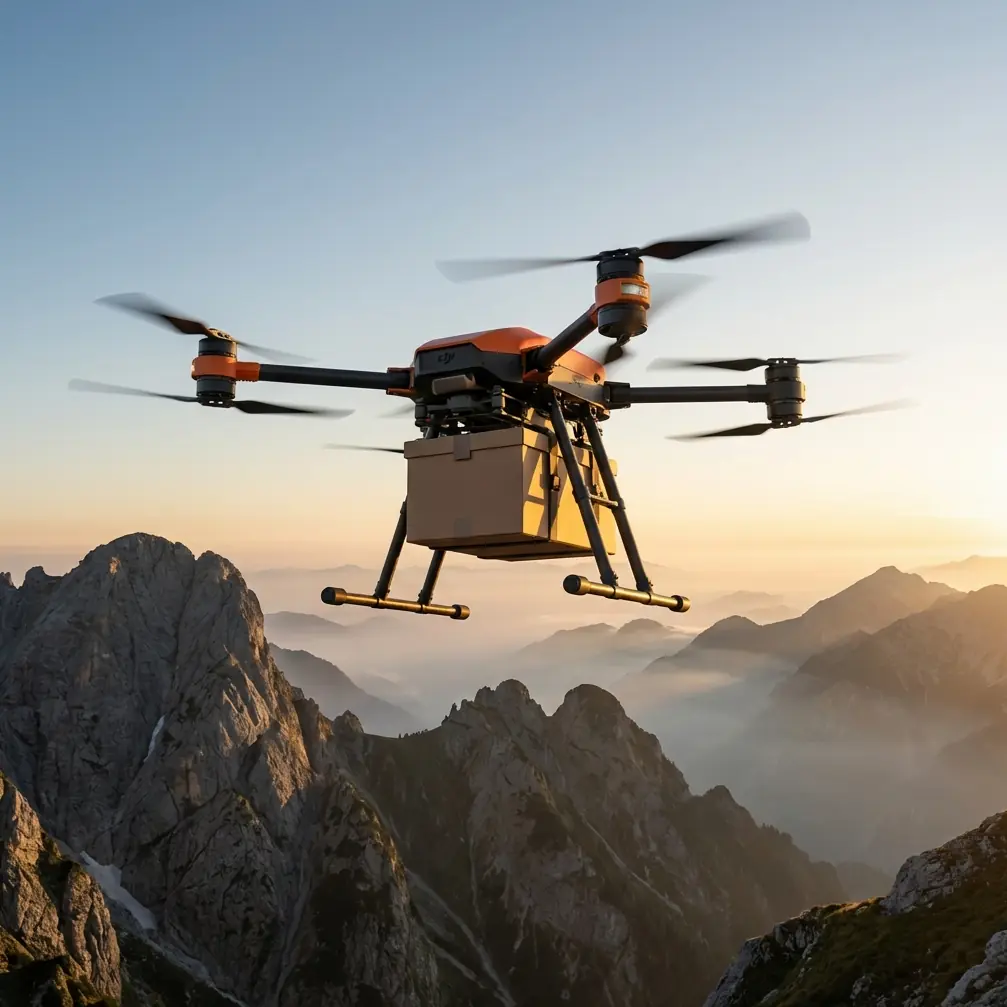
FlyCart 30 for Remote Coastline Operations: What Actually Matters in the Field
META: Practical FlyCart 30 guidance for remote coastline missions, covering payload ratio, winch use, BVLOS planning, EMI antenna adjustment, dual-battery strategy, and parachute risk control.
When people talk about the FlyCart 30, they often focus on headline specs. Out on a remote coastline, that is rarely the real story.
What matters is whether the aircraft keeps working when salt air starts building on connectors, wind curls around cliffs, GNSS quality shifts near rock faces, and electromagnetic interference shows up where you did not expect it. That is the environment where the FlyCart 30 earns its place. Not as a showroom platform, but as a working logistics tool for missions that are awkward, repetitive, and expensive to do any other way.
I have approached these operations as a logistics lead first and a drone operator second. That mindset changes the question. Instead of asking, “What can the FC30 carry?” the better question is, “What mission bottleneck does it remove on a coastline where ground access is poor and every turnaround eats daylight?”
For remote shoreline work, the answer is usually a mix of delivery consistency, safer stand-off positioning, and time recovered from difficult handoffs. The FlyCart 30 becomes especially useful when the cargo destination is reachable by air but inconvenient or risky by vehicle or foot: survey markers, inspection tools, emergency spares, rope kits, radios, medical packs, sensor payloads, or camera support gear for crews operating along bluffs, jetties, islands, or narrow access roads.
The Real Problem on the Coast
Coastal missions combine several small operational penalties into one big one.
The launch area may be decent, but the drop area is often not. Wind direction can shift between the takeoff point and the delivery point. Line-of-sight can disappear behind terrain. Landing near people or uneven ground may be a bad idea. Radio behavior can also become less predictable than many teams expect, especially around coastal infrastructure, communication towers, power equipment, reinforced concrete, steel railings, and marine installations.
This is where operators get into trouble by planning a clean inland-style flight for a messy shoreline environment.
The FlyCart 30’s value in this setting comes from system design choices that directly address those constraints. Two stand out operationally.
First, the winch system changes how you think about access. If the receiving point is a narrow platform, a boat deck with motion, a rocky ledge, or a place where rotor wash would be disruptive, lowering the load instead of forcing a landing can be the difference between a practical mission and an unsafe one. The point is not convenience. The point is reducing contact risk at the endpoint while preserving aircraft control margin.
Second, the dual-battery architecture matters beyond simple endurance. On coastal jobs, reserve planning is not optional. You may need extra margin for a reroute around birds, a delayed drop because the pickup team is not in position, or a climb profile that is more aggressive than expected because of terrain and wind shear. Dual-battery operation supports that planning discipline by giving crews a more robust basis for sortie management than a platform built around tighter energy constraints.
Those are not abstract advantages. They alter how missions are designed.
Why Payload Ratio Changes the Economics
Payload ratio is one of the most overlooked ways to judge whether a logistics drone makes sense for remote coastline work.
If too much of your flight resource is consumed just by the aircraft supporting itself, you end up with a narrow mission envelope and a lot of operational compromise. A stronger payload ratio means more of the aircraft’s effort goes toward moving useful material, which is exactly what matters when you are ferrying gear to places with poor access.
For coastline teams, that can reshape the daily workflow. Instead of sending personnel down and back across rough terrain for one forgotten tool, one battery module, one replacement sensor, or one spool of line, the FC30 can absorb that errand into the air tasking plan. That is not just about speed. It reduces fatigue, vehicle movement, and time spent exposing people to unstable footing or surf-adjacent terrain.
In practice, payload ratio also affects route optimization. A route that looks acceptable for a light package may become inefficient if the aircraft is frequently underutilized or if the sortie count is too high. The smarter approach is to group loads around operational windows, weather behavior, and receiving-site readiness. On a remote coast, route optimization is not merely finding the shortest line on a map. It is sequencing tasks to avoid wasted cycles, unnecessary climbs, and idle hover time while preserving battery reserves for contingencies.
That matters even more under BVLOS concepts of operation, where route discipline becomes part of risk management rather than just an efficiency exercise.
BVLOS on the Coast Is a Planning Problem Before It Is a Regulatory One
A lot of people reduce BVLOS to permissions. That is only part of the picture.
Operationally, coastal BVLOS planning is about terrain masking, comms behavior, emergency diversion points, and deciding in advance what the aircraft should do when the environment becomes less cooperative. The FlyCart 30 is well suited to these conversations because it is not a novelty platform. It is a work aircraft that forces teams to think in terms of repeatable corridors and controlled handoff procedures.
Along shorelines, BVLOS route design should account for more than a clean path from origin to destination. You need to think about where the aircraft will be relative to cliffs, metallic structures, marine radios, temporary site equipment, and reflective surfaces that can complicate signal integrity. You also need to preserve options. A route with one theoretical path and no graceful fallback is a weak route, even if it looks efficient on paper.
This is where I push teams to separate “fast” from “resilient.” The best route is usually the one that can tolerate a small surprise without forcing a bad decision.
Handling Electromagnetic Interference: What Worked for Us
One field issue that does not get enough attention in coastline drone operations is electromagnetic interference. It can show up near repeater sites, harbors, radar-adjacent areas, utility equipment, security systems, and even improvised site power setups.
On one shoreline support mission, we saw intermittent signal instability that did not line up with weather or battery behavior. The aircraft was flyable, but the link quality trend was wrong for that segment of the route. The problem turned out to be less about raw distance and more about the antenna relationship to the aircraft’s working corridor and nearby infrastructure.
The fix was not dramatic. We adjusted antenna orientation and repositioned the ground setup to improve the geometry of the link relative to the route segment. That sounds simple because it is. But it only works if the crew is disciplined enough to treat EMI as an operational variable instead of assuming every signal issue is a range issue.
For FlyCart 30 operators capturing or supporting remote coastline missions, that lesson matters. If you are seeing inconsistent link quality, do not jump straight to broad assumptions. Review the route segment, identify nearby interference sources, and check whether the antenna alignment is actually optimized for the aircraft’s path and altitude profile. A small adjustment at the ground station can restore a surprising amount of confidence, especially when the route passes near metal-heavy or high-emission infrastructure.
If your team is building procedures for this kind of work, it helps to compare setup notes after each mission and keep a simple field log of where antenna adjustments improved performance. That habit saves time later. If you want to swap practical setup notes with crews doing similar work, this operator chat link is a reasonable place to start.
Why the Winch System Is More Than a Convenience Feature
On paper, a winch system sounds like a nice add-on. On a coastline, it can be central to mission design.
Landing zones near coastal work sites are often compromised by loose debris, uneven rock, narrow clearances, moving vessels, or personnel concentration. In those cases, forcing a touchdown because the aircraft technically can land misses the point. The safer method may be to keep the FC30 in a controlled hover and lower the payload to a prepared receiving point.
That has several operational benefits.
It reduces the need to expose the aircraft to unstable surface conditions. It limits rotor wash interaction with loose sand, salt spray, or lightweight equipment. It also allows the receiving team to work from a more deliberate pickup position rather than improvising around the aircraft itself.
For teams capturing coastlines in remote environments, this is especially valuable when delivering support gear to camera crews, survey teams, or inspection personnel positioned on irregular terrain. The winch system lets the aircraft serve the mission without demanding a proper landing area at every endpoint. That is a major distinction. It expands the number of places that are functionally serviceable.
Emergency Parachute Changes the Risk Conversation
When people mention an emergency parachute, the discussion sometimes drifts into marketing language. The practical perspective is simpler.
In remote coastline operations, there are scenarios where a degraded aircraft state leaves few good options. Water, rock, elevation change, and sparse recovery access can make emergency outcomes harsher than they would be over a flat inland site. An emergency parachute does not erase risk, but it changes the risk profile. It gives operators and planners another layer to consider when evaluating routes over difficult ground or near areas where controlled descent behavior matters.
This becomes operationally significant in mission approvals and stakeholder confidence. Site managers, safety leads, and clients often respond better when risk controls are explained as layered systems rather than a single promise of reliability. On the FC30, the emergency parachute belongs in that layered discussion along with route design, battery reserve policy, endpoint procedures, and comms discipline.
Dual-Battery Strategy on Coastal Sorties
A dual-battery setup is only as useful as the crew’s decision-making. The mistake is to treat extra energy as permission to be casual.
On remote coastline runs, the right way to use the added margin is to protect options. Build battery planning around the ugliest reasonable version of the return leg, not the nicest one. Assume the drop may take longer. Assume the wind may swing. Assume you may need to hold briefly, climb differently, or abort and reposition.
That mindset turns the dual-battery configuration into a strategic advantage rather than a comfort blanket. The FC30 supports that discipline well because it is built for transport work, where consistency matters more than showing off the edge of the envelope.
What This Means for Teams Using the FlyCart 30 Near Remote Coasts
If your mission involves moving equipment, emergency supplies, or field support items along a coastline with poor access, the FlyCart 30 makes the most sense when you treat it as part of a logistics system, not a stand-alone aircraft.
That means:
- Design routes for resilience, not just directness.
- Use the winch system to avoid forcing landings into bad endpoints.
- Plan BVLOS corridors around terrain, infrastructure, and fallback options.
- Treat electromagnetic interference as a solvable field condition, including antenna adjustment and ground station placement.
- Use the dual-battery setup to preserve decision space.
- Frame the emergency parachute as one layer in a broader operational risk model.
The FC30 is not interesting because it can carry things. Plenty of aircraft can carry things. It is interesting because, in the right environment, it removes friction from missions that normally stall on the last few hundred meters. Remote coastlines are full of those last few hundred meters. Narrow tracks, unstable surfaces, blocked roads, awkward handoffs, and delayed support requests all pile up there.
That is why the FlyCart 30 deserves serious attention in this niche. Not because it promises a perfect mission every time, but because its payload-focused design, winch-enabled delivery method, BVLOS suitability, emergency parachute layer, and dual-battery resilience line up with the real-world problems coastline teams actually face.
If I were setting up a FlyCart 30 program for remote shoreline work today, I would spend less time admiring the platform and more time tuning the operating method: battery reserves, route libraries, drop-site discipline, interference checks, and crew communication. The aircraft matters. The procedure matters more.
Ready for your own FlyCart 30? Contact our team for expert consultation.