
FlyCart 30 for Low-Light Coastline Work: What Actually
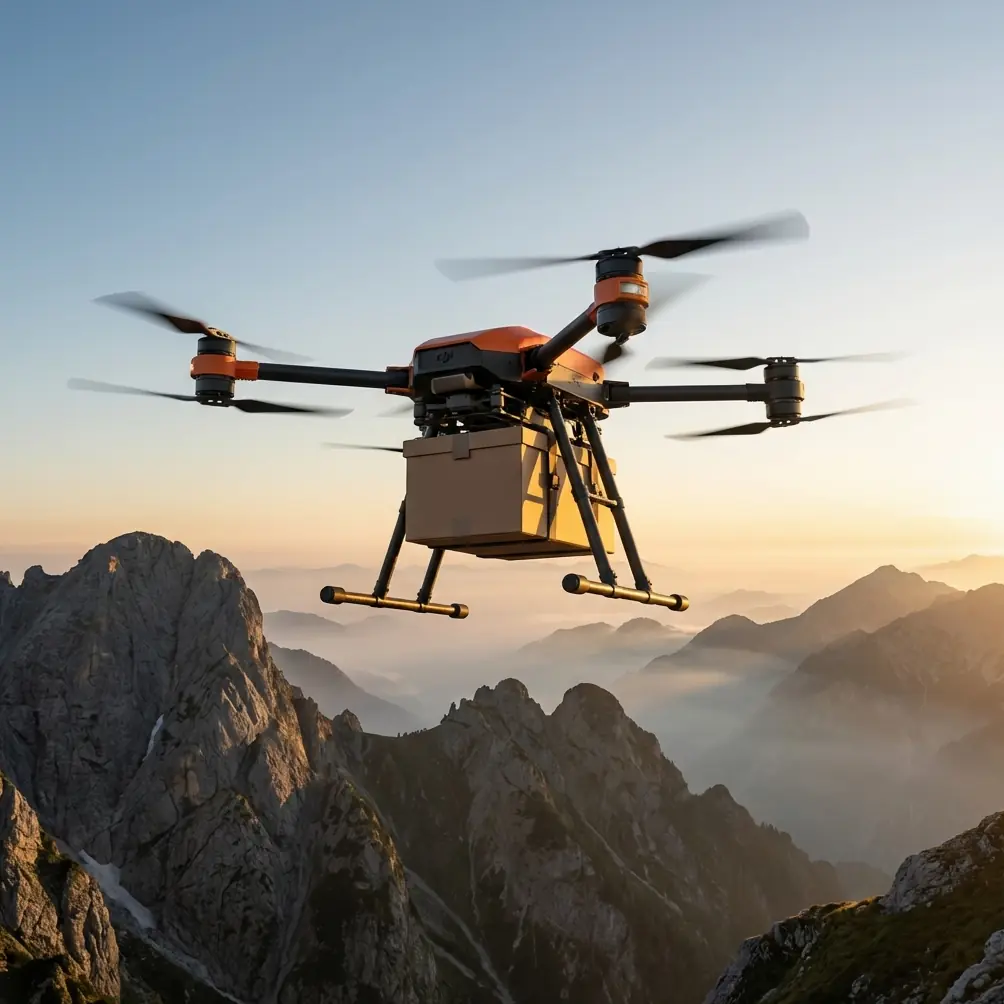
FlyCart 30 for Low-Light Coastline Work: What Actually Matters in the Field
META: A practical expert guide to using the DJI FlyCart 30 for coastline operations in low light, with insights on payload ratio, winch use, BVLOS planning, route optimization, emergency systems, and mission-ready accessories.
Coastlines punish sloppy planning. Light fades faster than crews expect, wind shifts with almost no warning, salt hangs in the air, and access routes that look simple on a map turn into dead ground once the tide changes. If you are evaluating the FlyCart 30 for this kind of work, the real question is not whether it can lift a payload. The real question is whether it can keep a coastal mission predictable when visibility, terrain, and recovery options all get worse at the same time.
That is where the FlyCart 30 becomes interesting.
I’m writing this from the perspective of a logistics lead, because that is how these flights should be judged. Not by brochure claims. By task completion, safety margins, turnaround time, and what happens when conditions degrade halfway through a run. For low-light coastline operations, the FlyCart 30 sits in a useful niche: it is one of the few cargo-oriented UAV platforms that can do serious transport work while still giving operators options when the landing zone is uneven, obstructed, or simply too risky to touch down on.
The coastline problem usually starts with access. Teams are trying to move batteries, radios, medical kits, lines, sensors, sampling gear, or emergency spares to a point that is technically close but operationally awkward. A cliff edge, a narrow beach at dusk, a rocky outcrop, a vessel with unstable deck conditions, or a work crew positioned beyond a washed-out track can turn a short delivery into a slow ground detour. When daylight is already thinning, the cost of that delay compounds. The delivery itself matters, but the timing matters more.
The FlyCart 30 addresses that problem with a combination that is unusually relevant to shoreline work: cargo capacity, winch-based placement, and operational redundancy. Those are not abstract features. They solve three separate coastal failure points.
First, payload ratio determines whether the flight is worth launching in the first place. A cargo aircraft that spends most of its lift capacity just carrying its own limitations is not very useful in the field. The FlyCart 30 is designed for meaningful load carriage, which changes planning at the mission level. Instead of sending multiple small sorties for a chain of lightweight items, teams can consolidate equipment into fewer trips. That matters near the coast because every extra launch is another exposure to changing wind, another battery cycle, and another decision point in failing light.
Second, the winch system changes where and how deliveries can be completed. This is one of the strongest operational advantages for coastline use. In low light, finding a safe touchdown area is often harder than reaching the target zone. Wet sand can be deceptive. Driftwood, wires, antennas, loose netting, or uneven rock shelves are easy to miss from a distance. A winch lets the aircraft hold a safer hover position while lowering the payload into a controlled spot. That is not just convenient. It reduces rotor wash disturbance, avoids unstable landings, and gives the receiving crew more flexibility. If the ground team can clear a small drop zone rather than prepare a full landing area, deployment gets faster and safer.
The third factor is redundancy, and this is where the FlyCart 30’s dual-battery architecture deserves attention. Coastal work at dusk is not forgiving. Return decisions become tighter because visual reference degrades and weather fronts can move in behind the aircraft. A dual-battery setup gives operators a more resilient energy framework, especially when missions involve hovering for a winch descent or route deviations around terrain or protected zones. It does not remove risk. Nothing does. But it gives the mission planner more breathing room when low-light operations start consuming reserves faster than expected.
A lot of people talk about BVLOS as if it is mainly a regulatory checkbox. In coastline work, BVLOS is a planning discipline before it is anything else. The FlyCart 30 becomes significantly more valuable when operators design routes around signal stability, terrain masking, emergency diversion points, and retrieval logic. Long, curved shorelines create odd communication behavior. Headlands can break line-of-sight even when the map says the path is open. Reflections off water can complicate situational awareness. In other words, route optimization is not software theater here. It is the backbone of mission consistency.
For example, a straight line over open water may look efficient, but it may not be the best low-light route if your recovery options vanish after a systems alert. A coastal route that parallels service tracks, lifeguard stations, or known clear zones can be the better choice even if it adds distance. This is where experienced FC30 operators separate themselves from first-time adopters. They do not ask only, “Can the aircraft get there?” They ask, “Where does this mission go when one variable goes wrong?”
That brings me to the emergency parachute. On paper, it reads like a fallback feature. Near the coast, it is part of the wider risk model. The value is not just in having a last-resort descent method. The value is in how that feature changes acceptable mission design. When crews operate near populated beach zones, parked vehicles, utility lines, or workboats, the existence of an emergency parachute can influence corridor selection, buffer design, and go/no-go thresholds. It is not permission to be reckless. It is part of a layered safety stack that makes certain mission profiles more manageable than they would otherwise be.
Low-light coastline work also exposes a less discussed issue: delivery precision is often more important than raw endurance. If a team is waiting near surf or on a narrow access shelf, you do not want a broad, sloppy drop area. You want predictable placement, minimal confusion, and quick handoff. The FlyCart 30’s cargo workflow becomes strongest when operators treat it like a logistics tool rather than a general drone with a hook attached. Packaging, rigging, descent speed, and receiver coordination all matter. The best coastal operators standardize load geometry so the winch drop behaves the same way every time, even when wind direction shifts.
One accessory can improve this dramatically. I have seen third-party strobe beacons make a genuine difference for low-light shoreline operations. Not because they make the aircraft flashy, but because they help ground teams maintain orientation during final approach and winch descent. On a dim coast, especially with surf noise and poor visual contrast, it is surprisingly easy for a receiving crew to lose track of aircraft position against the horizon. A compact aftermarket strobe mounted with proper balance considerations can improve visual acquisition and handoff timing without changing the core mission profile. That is the kind of accessory worth mentioning because it enhances coordination, not because it adds novelty.
There is also a practical human factor here. Low-light coastal missions compress communication. Everyone talks less because there is less time and less certainty. The platform you choose has to support that reality. The FlyCart 30 works best when procedures are simple enough to repeat under pressure: launch with a standardized rig, follow a pre-briefed route, confirm the target zone, hover clear of obstructions, lower by winch, verify load release, and exit on a rehearsed path. That sequence sounds basic, but it is exactly what keeps evening operations from becoming improvised.
The aircraft’s usefulness grows when teams match payload planning to coastal realities. Payload ratio is not just about how much weight the FC30 can carry. It is about how much mission value each sortie delivers. A medical pouch, replacement radio battery, thermal blanket pack, tow line, or corrosion-sensitive electronics case all impose different rigging and weather protection demands. Near saltwater, packaging discipline matters as much as aircraft capability. If a payload arrives wet, unstable, or tangled, the sortie technically succeeded and operationally failed. Good FC30 teams account for moisture barriers, anti-swing rigging, and quick-release handling before they ever arm the aircraft.
This is also why route optimization should include timing windows, not only geography. The best launch time for a coastline run may be 20 minutes earlier than the client or field team initially requests. That extra margin can preserve enough ambient light for visual confirmation at the drop site while still completing the return leg before conditions worsen. On paper, that looks like a scheduling tweak. In practice, it can be the difference between a controlled operation and a rushed final approach over dark water.
If you are building a use case around the FlyCart 30 for coastal capture or support missions in low light, my advice is simple: think like a logistics operator, not a hobby pilot and not a spec-sheet collector. The platform’s value comes from how its systems interact. The winch system expands delivery options where landing is unsafe. The dual-battery setup helps protect mission continuity during longer or more complex legs. The emergency parachute strengthens the broader safety envelope. BVLOS planning and route optimization turn a capable aircraft into a dependable workflow.
And yes, there is a conversion point here for teams still on the fence. Not a marketing one. A planning one.
If your coastline missions already involve delayed access, awkward delivery zones, or repeated twilight deployments, then every small inefficiency compounds into risk. The FlyCart 30 is not the answer to everything. It will not fix weak SOPs, poor weather judgment, or untrained crews. But it can remove several chronic bottlenecks at once when used properly. That is rare. Most platforms give you one standout capability and a list of compromises. The FC30 is more useful because its practical strengths stack together in a way that fits real coastal operations.
For teams trying to sort out whether their current workflow is leaving too much to chance, it helps to compare mission design assumptions with someone who has had to deliver under awkward conditions. If that sounds familiar, you can message a flight planning specialist here and pressure-test your route logic, payload setup, and low-light procedures.
The bottom line is not that the FlyCart 30 looks impressive near the water. The bottom line is that it solves the right problems. It reduces dependence on perfect landing zones. It supports higher-value sortie planning through better payload use. It gives operators meaningful safety layers for difficult terrain and fading light. Those are the qualities that matter when the coastline stops being scenic and starts becoming operational.
Ready for your own FlyCart 30? Contact our team for expert consultation.