
FlyCart 30 in a Dusty Coastal Corridor: What a Huzhou
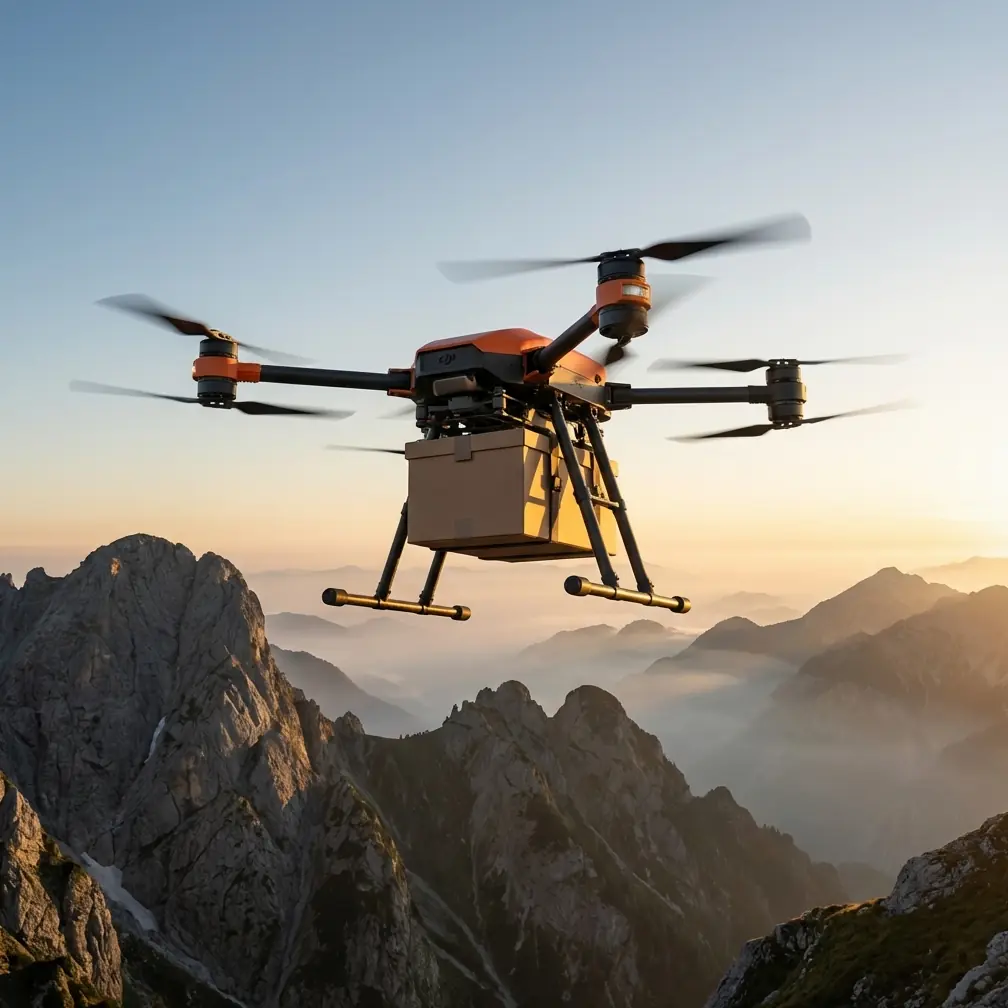
FlyCart 30 in a Dusty Coastal Corridor: What a Huzhou-Scale Low-Altitude Push Means for Real Cargo Operations
META: A practical FlyCart 30 case study on dusty coastal logistics, route planning, weather shifts, payload efficiency, and why Huzhou’s 2027 low-altitude economy plan matters for commercial UAV deployment.
When policy gets specific, operators should pay attention.
Huzhou’s newly released three-year low-altitude economy action plan is one of those signals that matters beyond local headlines. The city is not talking in vague terms. It wants to build “four high grounds” for development, bring in or cultivate more than 10 leading or key enterprises by 2027, launch more than 100 projects above the 100-million-yuan mark, and push the sector past 30 billion yuan in industrial scale.
For anyone evaluating the DJI FlyCart 30, those numbers are not abstract. They point to the kind of ecosystem heavy-lift drone logistics actually needs: airspace coordination, infrastructure, maintenance capacity, trained crews, route planning tools, and customers with repeatable transport demand. A cargo drone is only as useful as the operating environment around it. Huzhou’s plan suggests an environment being built on purpose.
I’ve been looking at this through the lens of a logistics lead, not a policy commentator. And the most useful way to interpret a regional plan like this is to ask a simple question: what does it change for a FlyCart 30 mission on the ground?
Or, more accurately, over the ground.
A coastal cargo scenario, not a brochure fantasy
Let’s take a real-world style operating profile: a dusty coastal corridor where crews need to move tools, sensors, replacement components, and small urgent loads between shoreline work points and inland staging areas. These are the kinds of routes that look simple on a map but become messy fast in practice.
Salt in the air. Fine dust kicked up from exposed surfaces. Wind shifts rolling in off the water. Landing zones that are usable, but not ideal. Ground transport that can be delayed by poor access roads, site congestion, or simple distance inefficiency.
That is the sort of mission set where the FlyCart 30 starts to become interesting.
Not because “drones are the future.” That phrase tells you nothing. The real appeal is operational: payload ratio, access flexibility, reduced dependency on rough ground transit, and the ability to keep material flowing when the site geometry works against trucks or utility vehicles.
In coastal work, especially where dust and changing wind are both factors, aircraft design choices become more than spec-sheet decoration. You begin to care about dual-battery redundancy, route stability under shifting conditions, a dependable winch workflow when landing is inconvenient, and safety systems that add margin rather than just marketing.
Why Huzhou’s targets matter to FlyCart 30 operators
The strongest detail in the Huzhou action plan is not the 30 billion yuan ambition by itself. Big numbers attract headlines, but operators need to look at the supporting structure. Two details stand out.
First, the city aims to introduce and cultivate more than 10 chain-leading or key enterprises by 2027. That matters because commercial cargo drones do not thrive in isolation. A serious operating market needs manufacturers, software providers, maintenance teams, battery support, training schools, airspace service partners, and enterprise users who can generate recurring missions. Once key firms cluster, reliability improves. Procurement gets easier. Support response times shrink. The distance between “demo flight” and “working fleet” gets shorter.
Second, Huzhou wants more than 100 major projects above the 100-million-yuan level. That signals something else: density of use cases. Heavy-lift logistics becomes viable when there are enough industrial, infrastructure, agricultural, and service scenarios to justify route development and crew investment. Without project concentration, BVLOS ambitions and route optimization strategies remain theoretical. With project concentration, repeat corridors begin to form.
That’s the difference between owning a FlyCart 30 and operating one well.
The mission window: dusty shoreline, inland transfer, weather turning halfway through
On one representative coastal logistics run, the task was straightforward at first glance: move a time-sensitive load from an inland support point to a shoreline work zone where direct vehicle access was slowing the crew. The route crossed open ground with exposed dust pockets and a section where wind patterns tended to change as sea air pushed inland.
The aircraft setup favored stability and risk control over squeezing out every last minute of endurance. For this kind of route, payload ratio is not just a capacity calculation. It’s an operational discipline. Fly too close to the edge on weight, and your weather margin shrinks. Leave sensible headroom, and the aircraft has more authority when conditions stop cooperating.
That tradeoff became relevant sooner than expected.
Mid-flight, the weather shifted. Not dramatically enough to trigger panic, but enough to force immediate reassessment. The air became less predictable over the coastal segment, and surface-level dust activity increased around the destination zone. This is where lesser planning tends to show. If the mission concept depends on a perfect arrival and a pristine touchdown area, it was badly designed from the start.
The better answer was to lean on the mission architecture: maintain route discipline, avoid unnecessary descent into the worst dust until the approach was stabilized, and complete delivery using the winch system rather than forcing a compromised landing.
That detail matters. On a coastal industrial route, a winch is not just a convenience feature. It can be the difference between a controlled handoff and an avoidable exposure event at the landing zone. If the ground is dusty, uneven, cluttered, or simply not worth the rotor wash disturbance, suspended delivery gives the crew a cleaner option.
What the FlyCart 30 changes in this environment
The FlyCart 30’s appeal in scenarios like this is not one single feature. It is the interaction of several systems that make commercial logistics more practical in flawed environments.
1. Payload handling that supports real route decisions
Cargo operators tend to learn the same lesson repeatedly: available lift is only useful if it still leaves room for safe margins. In coastal work, the payload ratio conversation is tied directly to wind tolerance, route flexibility, and the ability to finish a mission without pushing battery planning into a corner.
The operational significance here is simple. A platform built for cargo lets teams move meaningful loads in fewer trips, but the best outcomes come when dispatch decisions account for environment rather than just theoretical capacity. Huzhou’s low-altitude buildout could accelerate exactly this kind of maturity, because a larger ecosystem usually means better mission planning standards, stronger dispatcher training, and more data-driven route optimization.
2. A winch system that turns bad landing zones into usable delivery points
Dusty coastal sites often punish rigid operating models. If a drone must land every time to complete the job, many otherwise valid routes become poor candidates.
A winch changes the geometry. It lets the aircraft remain in a more controlled hover position while the load is delivered to a safer or cleaner spot below. In practical terms, this reduces rotor wash effects on loose dust, limits contact risk with uneven ground, and helps crews work around temporary obstructions.
That makes the winch system especially relevant for shoreline maintenance teams, utility contractors, and site support crews moving gear to points that were never designed as aviation surfaces.
3. Dual-battery architecture adds operational margin when the weather moves
Weather changes are not always dramatic. Many are subtle enough to tempt crews into continuing as if nothing has changed. That is where disciplined operators value margin.
Dual-battery architecture matters because cargo missions are unforgiving of surprises. When air conditions worsen partway through a route, extra resilience in the power system supports safer decision-making. It does not eliminate risk, and it should never be treated as permission to plan aggressively. But in commercial work, redundancy is part of what separates a useful transport platform from an experimental toy.
For regions scaling low-altitude operations, like Huzhou intends to do, redundancy also matters from a regulatory and organizational confidence standpoint. Enterprises are much more likely to adopt cargo drones when the aircraft and operational framework both show layered safeguards.
4. Emergency parachute systems matter most when nobody wants to think about them
No operator wants a safety discussion to become the headline of the day. That is precisely why safety systems deserve attention before flights become routine.
In a growing low-altitude economy, especially one aiming for a cluster of key enterprises and more than 100 major projects, public and enterprise trust becomes infrastructure in its own right. Emergency parachute capability contributes to that trust. Not because it replaces proper planning, but because it acknowledges reality: logistics routes often cross imperfect terrain, active work areas, and environments where contingencies need to be managed, not wished away.
BVLOS and route optimization: where policy ambition meets field execution
The low-altitude economy is often discussed as if success depends only on aircraft capability. That misses the point. Cargo UAV adoption tends to bottleneck around operational scaling: flight approvals, route repeatability, mission management, and the economics of routine deployment.
That is why Huzhou’s development plan is so relevant for FlyCart 30 readers. If a city is intentionally building an industry around low-altitude growth, it creates better conditions for BVLOS progression, route standardization, and recurring enterprise logistics. Not automatically. But materially.
In dusty coastal operations, route optimization is not merely about shortest distance. It includes:
- choosing paths that reduce exposure to unstable wind zones,
- preserving alternatives if the destination becomes unsuitable,
- timing flights around changing environmental conditions,
- and matching payload decisions to battery reserve strategy.
As these systems mature across a regional ecosystem, the FlyCart 30 becomes more than a capable aircraft. It becomes part of a transport layer.
That’s what many headlines miss. Aircraft capability starts the conversation. Operating environment determines whether the conversation goes anywhere.
What commercial teams should take away now
If you are evaluating the FlyCart 30 for logistics near coastlines, industrial parks, utility corridors, or hard-to-access service zones, Huzhou’s announcement should be read as a market readiness signal.
A city targeting more than 10 key enterprises by 2027 is effectively saying it wants a functioning supply chain, not isolated experiments. A city pushing for more than 100 large projects is signaling demand density. And a city aiming for a 30 billion yuan low-altitude economy is telling operators that drones are being considered as economic infrastructure, not side-stage technology.
That changes procurement logic.
Instead of asking only, “Can this aircraft carry the load?” teams should be asking:
- Can we build repeatable routes around it?
- Can our crews adapt when weather changes mid-mission?
- Do our delivery methods fit dusty or constrained landing areas?
- Is our safety architecture credible enough for sustained enterprise use?
Those are better questions, and they lead to better deployments.
A final field note from the coastal corridor
The most revealing part of the coastal mission was not that the FlyCart 30 completed the delivery. It was how the mission adapted when conditions shifted.
The route held. The load stayed within a sensible operating envelope. The aircraft did not need a perfect landing zone because the winch system gave the crew another option. The dual-battery configuration preserved decision space when the weather became less cooperative. And the overall mission profile reflected something many new operators overlook: cargo drone success depends less on dramatic flying than on disciplined logistics thinking.
That is where regional low-altitude policy and aircraft capability finally connect. One creates the conditions. The other has to perform inside them.
If you’re assessing whether FlyCart 30 fits your own transport workflow, that conversation is best grounded in your route realities, payload patterns, and site constraints rather than generic hype. If useful, you can message our logistics team here to compare mission profiles against actual operating conditions.
Ready for your own FlyCart 30? Contact our team for expert consultation.