
FlyCart 30 on a Rugged Coastline: What Camera Discipline
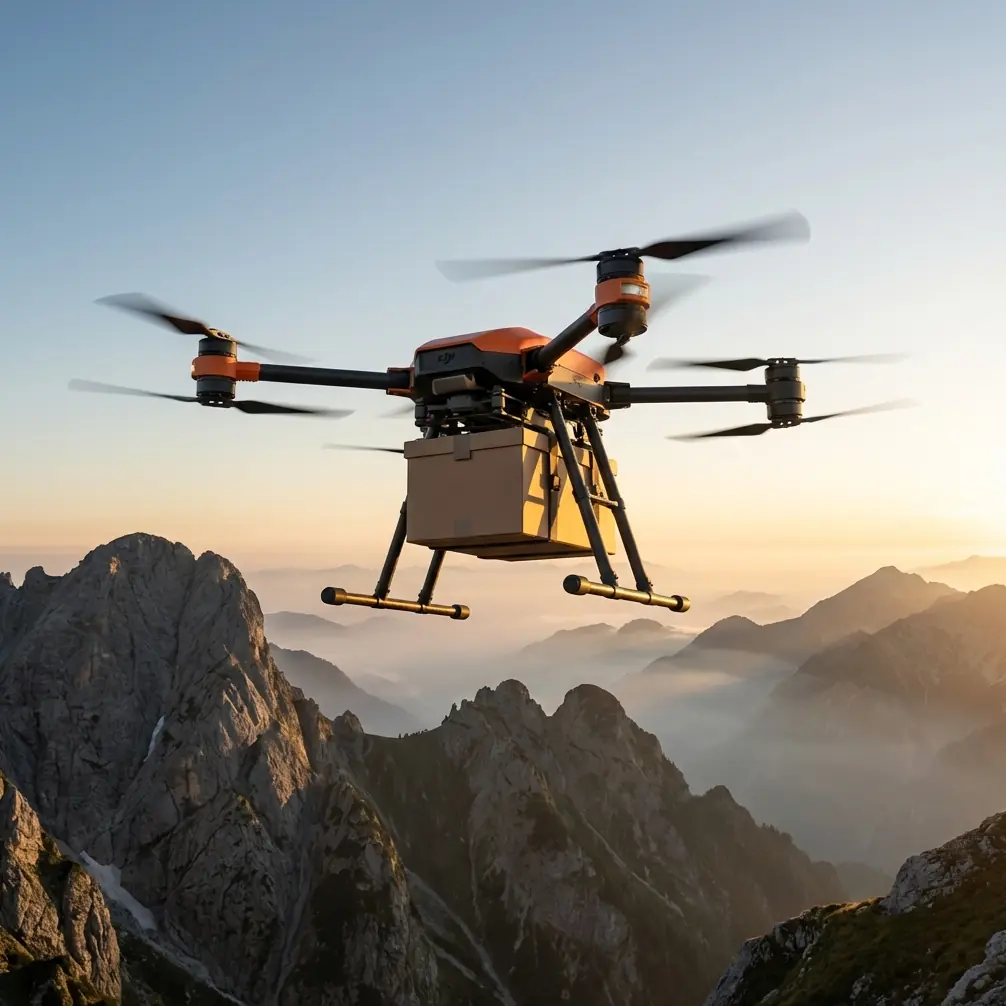
FlyCart 30 on a Rugged Coastline: What Camera Discipline Taught Our Logistics Team
META: A field-based FlyCart 30 case study on coastal operations, route planning, payload handling, winch use, and why basic aperture-priority camera habits improved mission results in complex terrain.
Coastal work has a way of exposing weak planning.
Cliffs create dead zones. Wind shifts without much warning. Salt haze lowers visibility just enough to make a routine flight feel less routine. And when your job is not just to move equipment with a FlyCart 30, but also to document landing areas, cable routes, and shoreline access points, the quality of the imagery starts to matter as much as the transport itself.
I learned that the hard way.
I’m Alex Kim, a logistics lead, and one of our recent FlyCart 30 assignments involved repeated runs along a broken stretch of coastline where the terrain kept forcing tradeoffs. Some drop points were accessible only from above. Others looked straightforward on a map but became awkward once we had to account for crosswinds, uneven rock shelves, and the simple fact that not every zone was safe or practical for a direct touchdown. The aircraft handled the transport side well, especially once we matched the route plan to terrain rather than forcing a straight-line mindset. But the surprise lesson from that project had nothing to do with propulsion or payload hooks.
It came from photography.
That may sound off-topic for an FC30 discussion, but it wasn’t. Good coastal logistics depends on good visual information. Before and after each sortie, our team needed clear imagery of approach paths, cliff edges, vegetation cover, and temporary staging spots. We also had to review line-of-sight constraints for sections that would later be folded into longer BVLOS-style planning under controlled procedures. Blurry reference photos created friction in almost every handoff between field crew and planning desk.
So we changed how we captured them.
Why a camera setting became an operations issue
One of our site staff brought an older DSLR during the project. At first, the camera was being used in a casual, automatic way, mainly to “grab a few records” of shoreline segments and unloading points. The results looked flat and inconsistent. Some frames failed to isolate critical foreground objects. Others lost too much detail in the wider landscape. In a coastal environment, that is not a cosmetic problem. It affects route interpretation, hazard review, and how quickly a remote team can understand what the field team is seeing.
What fixed it was a basic discipline shift: using Av mode correctly.
The source material behind this point is from a camera article, not a drone manual, but the operational takeaway is surprisingly relevant. In aperture-priority mode, the photographer selects the F value and the camera automatically matches shutter speed. That sounds simple. It is simple. Yet that one adjustment changed the quality of our visual records.
When we needed a landing marker, cable anchor, or shoreline obstacle to stand out against a messy background, a wider aperture such as F2.8 gave us separation. The subject became easier to read at a glance. When we needed the entire scene sharp — for example, a long section of coastal track, a rocky shelf, and the slope above it — we moved toward smaller apertures like F8 so the broader environment stayed clear.
That distinction mattered because not every image serves the same decision. A close-up logistics check and a route-context image are different tools. Using the same generic camera mode for both had been costing us clarity.
The hidden failure point: shutter speed in coastal light
The most useful fact from that camera reference was not really about aesthetics. It was about motion blur.
In low light, even with a wide aperture, shutter speed can fall to around 1/10 second. Handheld, that is often a recipe for soft images. The source also referenced a practical rule many photographers know well: handheld shutter speed should generally not drop below “1 over focal length.” With a 50 mm lens, that means roughly 1/50 second or faster.
On a coastline, this is not a niche concern. We often work early or late because tides, crew timing, and weather windows rarely align with perfect noon light. Add wind and unstable footing, and the chance of blur rises quickly. A field image of a ledge, service path, or obstacle that looks “mostly fine” on the camera screen can become nearly useless later when planners zoom in.
After one frustrating review session, we started making shutter speed part of the field checklist for image capture. If the number drifted below the safe handheld threshold for the lens in use, the operator stabilized against a wall, rock face, or vehicle, or changed the setup rather than trusting luck. That sounds like a small habit. It saved time across the project.
For FlyCart 30 teams working in complex coastal terrain, this kind of discipline can improve more than the photo archive. It supports route optimization. It reduces back-and-forth questions from engineers or coordinators who were not on site. It helps validate whether a certain drop point really has the approach geometry the field team claims it has.
In other words, sharper photos produced smoother drone operations.
How the FlyCart 30 fit the coastline task
The FC30 itself brought a different kind of structure to the job. Coastal terrain punishes inefficiency. If the aircraft has to hover longer than necessary while the crew debates positioning, or if a landing zone turns out to be less stable than expected, the mission starts consuming margin. That is where a platform built for external load work earns its keep.
Our team relied heavily on the aircraft’s ability to support flexible delivery profiles rather than forcing full touchdown at every point. In several cliff-adjacent zones, the winch system was more valuable than a direct set-down because it let us keep the aircraft clear of unstable surfaces and awkward rotor wash interactions near brush and loose debris. That one capability expanded the number of practical service points we could use.
It also changed our payload thinking. Instead of treating the mission as a simple carry-and-drop exercise, we evaluated payload ratio against terrain difficulty and unloading method. The same mass can feel very different operationally depending on whether you need a stable precision hover over a narrow shelf, a short descent from above, or a direct approach into a more open zone. Coastal work rewards teams that think in profiles, not just in payload totals.
That is why route optimization mattered so much. A straight route on software may cut across terrain in a way that looks efficient but creates poor approach angles or unreliable communications geometry. We found better results by designing segments around terrain behavior: entering from the cleaner side of a ridge, choosing hover points that gave the ground crew a better retrieval position, and preserving extra decision space when the wind shifted.
Those are not glamorous adjustments. They are the difference between a drone operation that merely flies and one that delivers consistently.
Safety systems aren’t side notes in this environment
On exposed coastlines, operational confidence depends on layered protection. The FlyCart 30’s emergency parachute and dual-battery architecture were not features we mentioned just for paperwork. They influenced our willingness to conduct repetitive runs in a place where terrain reduces your options quickly.
When a route passes over uneven cliff bands and broken access paths, you do not have many forgiving recovery areas. Redundancy matters. Contingency systems matter. And the crew behaves differently when they know the aircraft has been designed around a more resilient risk posture.
That does not remove the need for conservative planning. It sharpens it.
We still built missions with coastal wind, retrieval logistics, staging distances, and communication reliability in mind. We still rejected routes that looked technically possible but operationally brittle. But the combination of dual-battery resilience and an emergency parachute system gave the platform a level of appropriateness for this environment that lighter, more improvised setups often lack.
A third-party accessory that quietly improved the mission
The accessory that made the biggest difference was not exotic.
We added a weather-sealed hard case insert system from a third-party gear supplier for organizing camera equipment, markers, and shoreline documentation tools in the support vehicle. That sounds mundane compared with aircraft hardware, but it solved a recurring field problem: fragile, loosely packed documentation gear slowing down deployment.
Once the DSLR, spare lenses, lens cloths, landing markers, and note kits all had fixed positions, our team moved faster and made fewer mistakes. The camera was no longer buried under ropes and gloves. Lenses stayed cleaner in salt-heavy air. The field crew actually used the right setup at the right time, which meant the imagery quality stayed consistent.
This is one of those operational truths people skip over when they talk about high-performance UAV work. Capability is cumulative. The aircraft matters. The route plan matters. The safety architecture matters. But small support accessories can remove the friction that keeps teams from using the platform well.
What changed after we linked image quality to flight quality
By the second phase of the coastline project, our workflow looked different.
Before deployment, the mission lead reviewed the route with the FC30 crew and the documentation lead together, not separately. We identified where wide-scene F8-style images would be needed to show terrain continuity and where shallow-depth-of-field shots at settings like F2.8 would better isolate specific hazards or drop references. We also made the shutter speed threshold a conscious checkpoint, especially in lower light. If we were near the handheld risk zone — such as the equivalent of going below 1/50 second on a 50 mm lens — we stabilized or adjusted before shooting.
That may sound like a photography lesson stapled onto a drone mission. In practice, it became part of operations control.
The result was better field interpretation, cleaner planning revisions, and fewer mistaken assumptions about site access. Some “viable” landing spots were ruled out once properly documented. Other locations we initially considered poor turned out to be useful when photographed with enough depth and detail to show their real geometry. Better visual evidence led to better drone decisions.
If your FlyCart 30 work involves coastline capture, utility support near shore, island resupply, erosion monitoring support, or transport into fractured terrain, this is worth remembering: logistics missions are often won before takeoff, and the evidence you collect on the ground shapes everything that follows.
A practical framework for FlyCart 30 teams working near the sea
Here is the approach I would keep using.
First, define the job as both transport and visual intelligence collection. If the mission depends on choosing or validating coastal access points, imagery is not secondary.
Second, treat route optimization as terrain negotiation, not just distance reduction. Cliffs, wind channels, and retrieval space should drive the shape of the route.
Third, use the winch system whenever the ground surface creates unnecessary touchdown risk. On our project, that one decision improved flexibility more than trying to force perfect landing zones out of imperfect terrain.
Fourth, lean on the platform’s safety architecture appropriately. Dual-battery design and an emergency parachute do not make a mission safe by themselves, but in rugged coastal work they meaningfully strengthen your contingency picture.
Fifth, tighten your camera habits. Av mode is useful because it lets the field operator choose whether the mission needs separation or broad scene clarity. A setting like F2.8 can help isolate a marker or hazard. F8 is often more suitable when the entire coastal scene needs to remain readable. But never ignore shutter speed. If it drops too low — around 1/10 second is a common danger zone in dim conditions — handheld blur can wipe out the value of the image. The “1 over focal length” rule is not fancy, but it is practical. For 50 mm, stay at about 1/50 second or faster unless you are properly stabilized.
That single rule probably saved us from more bad field documentation than any software tweak.
The broader lesson from this FC30 case
People often separate flight operations from documentation, as if one is the real work and the other is just reporting.
On complex coastlines, that split does not hold.
The FlyCart 30 is at its best when the mission team understands that payload movement, route design, site validation, and image capture are all parts of one system. If the cargo arrives but the team cannot clearly assess the next route segment, the mission slows. If the aircraft is excellent but the field evidence is weak, planning degrades. If the route is sound but the touchdown assumption is wrong, the winch becomes the operational pivot. None of these pieces stands alone.
That was the real lesson from our coastal assignment. The FC30 handled the heavy lifting, literally. But the mission became repeatable only when we matched the aircraft’s capabilities with better observation habits on the ground.
If you are planning similar work and want to compare notes on coastline routing, payload handling, or documentation workflow, you can message our field team here.
Ready for your own FlyCart 30? Contact our team for expert consultation.