
How I’d Set Up the FlyCart 30 for Windy Coastal Capture Miss
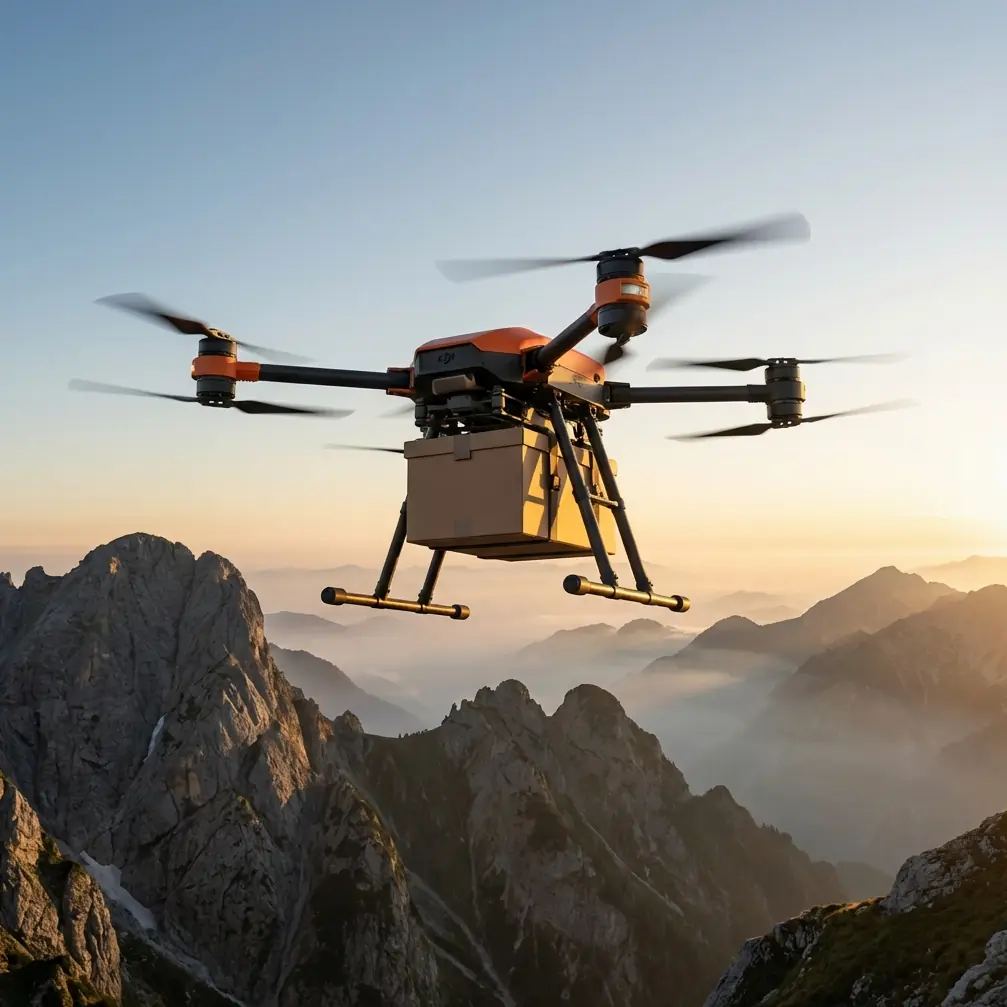
How I’d Set Up the FlyCart 30 for Windy Coastal Capture Missions
META: A practical FlyCart 30 field guide for windy coastline operations, covering payload ratio, winch use, dual-battery planning, route optimization, BVLOS considerations, and why battery durability news matters.
Windy coastlines expose every weak decision in a drone operation.
They punish poor route planning, exaggerate pendulum swing under suspended loads, and turn ordinary battery assumptions into mission risk. If you’re looking at the DJI FlyCart 30 from the perspective of a commercial operator tasked with capturing shoreline assets, transporting sensors, or supporting survey teams near cliffs, docks, or sea walls, the platform’s value is not just lift. It’s control under pressure.
I approach this as a logistics lead, not as someone dazzled by spec sheets. The real question is simple: how do you use the FlyCart 30 intelligently when the worksite is windy, the terrain is uneven, and landing options are limited?
That’s where the platform starts to separate itself.
Why the Coastline Changes the Entire Mission Plan
A coastline is not just “outdoors with wind.” It is a layered environment.
Wind hits differently over rock faces than over open water. Gusts rebound off buildings near harbors. Salt air affects equipment handling and turnaround discipline. And if your team is capturing data or moving light tools between inaccessible points, the aircraft may spend much of the mission flying parallel to drop-offs where recovery choices are thin.
In that setting, three FlyCart 30 themes matter more than headline payload figures:
- payload ratio under real wind load
- the winch system as a safer delivery tool than repeated landings
- dual-battery planning for reserve management, not just endurance claims
Those factors are operational, not cosmetic. They decide whether the aircraft becomes a reliable coastal workhorse or an expensive way to discover where your margins were too thin.
Start With Payload Ratio, Not Maximum Payload
People fixate on top payload numbers. That is usually the wrong starting point for a coastline mission.
For windy capture work, payload ratio matters more. In plain language: how much of the aircraft’s available lifting capability are you actually using once you account for the sensor package, any mounting hardware, and the aerodynamic penalty of what you’re carrying?
A lightweight payload with poor shape can be worse than a denser, better-secured one. Coastal wind exposes drag immediately. If you’re carrying a camera package, environmental sensor, marker kit, or line-deployed inspection tool, the problem is rarely just mass. It’s how that mass behaves in moving air.
With the FlyCart 30, I would build the mission around a conservative working load rather than trying to impress anyone with the top end. That gives you more authority in gusts, cleaner braking, and better battery reserve discipline. It also reduces stress on the suspended system if you’re using the winch instead of landing.
The mistake I see too often is this: teams choose a payload because the aircraft can technically lift it, then discover the route only works in calm weather. Along a coast, that is not a usable operating model.
The Winch System Is the Coastal Advantage Most Teams Underuse
The winch system changes how you should think about shoreline operations.
If your job involves delivering a compact sensor, lowering a capture tool to a ledge, or transferring equipment to a team standing on uneven terrain, the winch is not just convenient. It can remove the need to land in bad places. That is a major safety and efficiency advantage near surf zones, breakwaters, steep shoulders, and narrow service platforms.
Operationally, the winch does two things for you:
- It lets the aircraft stay in cleaner air above the turbulence zone close to the ground.
- It reduces exposure to unstable touch-down areas where sand, spray, loose gravel, or sloped surfaces complicate recovery.
That matters because many coastal missions fail at the last 10 meters, not the first kilometer. The air near cliffs and sea walls can be erratic. If the aircraft can hold position above and lower the payload instead of committing to a landing, your risk profile improves immediately.
I’d pair the FlyCart 30 winch with a third-party quick-release load stabilizer or anti-sway rig when running recurring coastal jobs. That kind of accessory can materially improve suspended-load behavior in crosswind segments. It’s not glamorous, but it can make line lowering more predictable and cut the oscillation that ruins precision placement.
For teams trying to refine those setups in the field, I’d point them to this FlyCart 30 operations contact as a practical support channel for mission-specific accessory fitment and workflow questions.
Route Optimization Matters More Than Raw Range
A windy coastline can make a short route feel long.
That’s why route optimization deserves more attention than generic endurance talk. The best route for a FlyCart 30 coastal mission is often not the most direct line on the map. It is the line that manages wind exposure, preserves battery reserve, and gives you cleaner decision points if conditions shift.
I’d structure route planning around these principles:
1. Avoid long crosswind legs with suspended loads
Crosswind is where line sway builds and where corrective input starts eating into efficiency. If possible, shape the route to reduce prolonged side exposure.
2. Use outbound legs that face the harder energy demand
If one segment is likely to encounter stronger headwind, I prefer facing that burden earlier in the mission while batteries are at a higher state of charge. It gives the crew more margin.
3. Create clear abort gates
On a coast, conditions can change fast. Build route checkpoints where the team can decide to proceed, shorten the mission, or recover.
4. Keep alternates realistic
An alternate landing or hold point is only useful if it is actually usable. Wet rocks, crowded promenades, and narrow maintenance strips may look acceptable on a screen and prove worthless on site.
5. Think in terms of task completion, not flight completion
If the actual objective is to capture a sensor reading, place a marker, or deliver a compact field item, the mission is complete when that task is done. Do not force a secondary objective if the wind trend has turned against you.
This is especially relevant in BVLOS-oriented planning. Beyond visual line of sight operations demand more disciplined route logic because you cannot rely on immediate visual intuition from the launch point. On coastal corridors, route optimization and contingency structure become inseparable.
Dual-Battery Thinking: Reserve Is the Product
The dual-battery architecture is easy to discuss in simplistic terms: redundancy, power, endurance.
That misses the point.
For windy coastal work, the real benefit of a dual-battery setup is reserve quality. You need enough power not just to fly the planned path, but to absorb a weather penalty, a hold event, a reposition, or a second attempt at a controlled winch drop. That reserve is what gives the aircraft commercial usefulness.
This is where a small but interesting piece of recent battery news belongs in the conversation. A recent report highlighted that there is now a new solution to the crack-resistance problem in solid-state lithium-metal batteries. The report was narrow; it did not explain the method, name the researchers, or provide test results. Still, the issue itself is highly relevant. Cracking in advanced battery architectures is not an academic footnote. It speaks to one of the hardest realities in aviation-grade power systems: durability under stress.
Why does that matter to a FlyCart 30 operator today, even though the aircraft is not being redefined by that headline overnight?
Because coastal logistics punishes battery weakness. Repeated load cycles, vibration, environmental stress, and high-demand wind corrections all make structural battery resilience a serious long-term concern. Any progress on crack resistance in next-generation solid-state lithium-metal battery design is worth watching because it points toward a future where high-performance drone batteries may offer better stability under mechanical and thermal strain.
For operators, the lesson is immediate even before any new chemistry reaches field deployment: treat power systems as structural assets, not consumable afterthoughts. Your dual-battery workflow should include rotation discipline, storage control, preflight health review, and conservative retirement thresholds. In coastal operations, battery management is not back-office maintenance. It is flight safety and schedule reliability.
Emergency Parachute Planning Is Not Optional Near the Shore
An emergency parachute is often discussed like a box-check feature. For coastal missions, that attitude is too casual.
If you are operating over access roads, near maintenance facilities, adjacent to marinas, or along public-facing shoreline infrastructure, the emergency parachute should be embedded into the risk model from the beginning. Not because you expect a failure, but because your recovery environment is unforgiving.
Cliff edges, shallow water, rocks, boats, railings, and pedestrian zones compress your options. A managed descent system can reduce the consequences of a critical event, especially in places where a normal forced landing path barely exists.
That does not mean the parachute solves everything. It means route design, altitude planning, and geofenced operating areas should account for where a parachute-assisted descent would create the least downstream hazard. In other words, don’t just ask whether the aircraft has the feature. Ask whether your mission architecture makes the feature useful.
A Practical Coastal Capture Workflow for the FlyCart 30
If I were deploying the FlyCart 30 for a windy shoreline assignment, my workflow would look like this.
Pre-mission
- Review forecasted wind direction, not just average speed.
- Map rotor-exposed segments near cliffs, seawalls, and structures.
- Define payload ratio conservatively with drag in mind.
- Inspect winch line condition and attachment hardware.
- Confirm dual-battery balance, health, and temperature readiness.
- Identify one primary and at least one realistic recovery area.
Payload setup
- Keep the package compact and shielded from side drag.
- Use a stabilizing accessory on suspended loads if repeatability matters.
- Secure all connectors and mounting points against vibration.
Flight planning
- Build the route around wind logic rather than shortest distance.
- Minimize long crosswind sections with a suspended load.
- Place go/no-go checkpoints before the highest-risk segment.
- For BVLOS-aligned workflows, verify communication continuity and contingency geometry.
On-site execution
- Launch only after observing real gust behavior, not just checking the app.
- Use the winch to avoid marginal landing zones whenever possible.
- Keep hover time short near terrain-induced turbulence.
- Treat battery reserve as protected margin, not spare capacity.
Post-flight review
- Inspect line wear, payload attachment stress, and battery thermal behavior.
- Record any route segment that produced sway, unexpected drain, or signal degradation.
- Adjust the next mission plan based on observed wind corridors, not assumptions.
That last point is where teams improve fastest. Coastal operations reward accumulated local knowledge. The FlyCart 30 gives you a capable platform, but the repeatable advantage comes from refining how the aircraft interacts with a specific stretch of shoreline.
What Actually Makes the FlyCart 30 Useful Here
Not hype. Not broad claims.
What makes the FlyCart 30 useful for windy coastal capture work is that its feature set aligns with the real constraints of the environment. The winch system reduces dependence on unsafe landing zones. Dual-battery architecture supports meaningful reserve management. Emergency parachute planning adds consequence control where the ground picture is messy. And with disciplined route optimization, BVLOS-capable workflows can become practical instead of theoretical.
The battery story in the background matters too. Even a sparse report about a new answer to crack resistance in solid-state lithium-metal batteries is a reminder that drone logistics is still heavily shaped by power-system durability. That kind of development is not just chemistry news. It points to where future operational confidence may come from, especially for high-stress commercial missions.
For now, the smart operator’s edge is not waiting for the next battery breakthrough. It is using today’s aircraft with enough discipline to handle a coastline that does not forgive shortcuts.
Ready for your own FlyCart 30? Contact our team for expert consultation.