
FlyCart 30 Field Report: Capturing Coastlines When
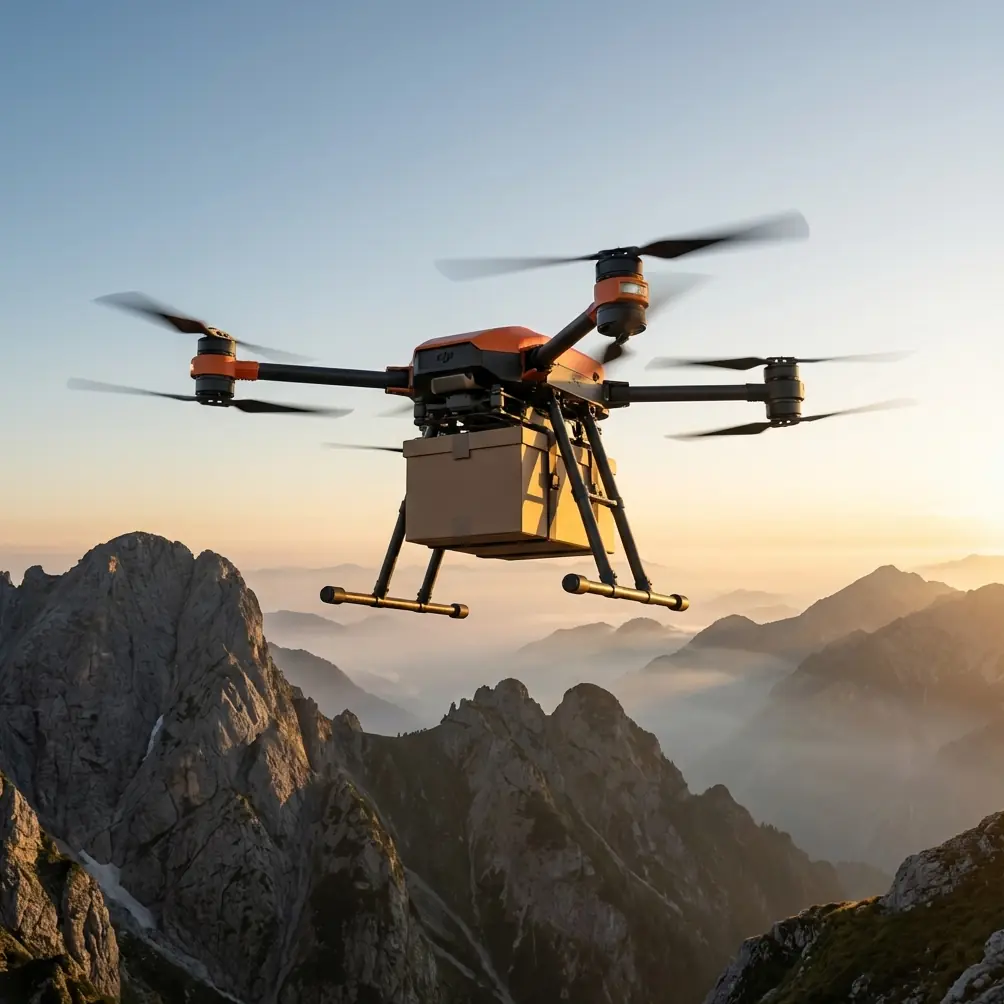
FlyCart 30 Field Report: Capturing Coastlines When the Weather Refuses to Cooperate
META: A field-tested look at FlyCart 30 for coastline operations in harsh temperatures, covering route planning, payload balance, winch control, dual-battery resilience, and why camera discipline matters when conditions shift mid-flight.
I spend a lot of time around operators who assume coastline work is mainly a flight challenge. It isn’t. It is a systems challenge.
With the FlyCart 30, the aircraft gets most of the attention: payload capability, delivery logic, route stability, safety architecture. All of that matters. But on a cold, windy shoreline, where temperature swings can flatten battery expectations and sea air can reduce visual clarity in minutes, the mission succeeds or fails on how well the entire operation is disciplined. Aircraft, payload, route, crew, camera settings, decision timing. Nothing lives in isolation.
That became obvious on a recent coastal documentation run built around the FC30. The assignment looked straightforward on paper: move a compact inspection payload along a broken stretch of shoreline, collect visual documentation at multiple points, and do it during a weather window that was “acceptable” but not exactly friendly. The goal was civilian and practical—supporting coastal asset review and site visibility, not spectacle. The problem was that coastal environments rarely stay inside the plan you wrote an hour earlier.
I approached it as a logistics lead would, not as someone chasing cinematic footage. The question was simple: how do you keep a FlyCart 30 productive when temperatures are extreme, wind shifts show up early, and image capture still needs to be usable once the drone is back on the ground?
Why the coastline changes the FC30 conversation
A lot of inland operations let you separate transport performance from imaging discipline. Coastlines do not.
The aircraft may be carrying tools, sensors, light support gear, or inspection material, while the crew is also expected to document site conditions. That puts pressure on payload ratio and route design right away. If you overload one side of the mission, the other side degrades. Push too hard on carrying capacity, and your margin in gusting conditions narrows. Prioritize only range, and you may arrive with images that are too inconsistent to support the reason you flew in the first place.
The FC30 is attractive in this kind of work because it is built for practical transport missions, not delicate lab conditions. That matters near water. You need a platform that can absorb operational reality: uneven launch conditions, changing temperature, intermittent wind shear, and point-to-point tasking that may need to be revised while airborne. Features such as a dual-battery design and an emergency parachute are not brochure decorations in that environment. They are part of how the crew buys time and preserves options when the weather shifts faster than forecast models suggested.
The day the forecast slipped
We launched in cold morning air with a route optimized for efficiency rather than distance alone. That distinction matters. Route optimization in a coastal setting is not simply the shortest line between two points. It is the lowest-risk sequence of transitions based on terrain exposure, expected wind direction, and where you still have clean recovery choices if the environment degrades.
The first leg was uneventful. Stable lift, acceptable visibility, manageable crosswind. Battery behavior was within expected limits. The payload ratio had been deliberately kept conservative because we knew temperature and wind together can quietly tax an airframe long before a dashboard makes it feel dramatic.
About halfway through the mission, the shoreline started doing what shorelines do. Air that had been merely cold became abrasive. Gusts began arriving from a slightly offset angle compared with the preflight trend. The sea surface changed texture first. Then the aircraft started seeing the kind of atmospheric inconsistency that never looks major on a chart but feels very different in the control loop.
This was where the FC30’s mission logic mattered more than raw performance. The aircraft did not need heroics. It needed predictability.
We shifted from the original exposure path to a revised route that reduced lateral exposure along the most open section of coast. That preserved energy, improved tracking consistency, and kept the payload motion cleaner. If you have ever reviewed visual material captured while a suspended load is fighting mixed wind, you know how quickly “usable” turns into “technically collected but operationally weak.”
The winch system changed the risk profile
This is where the winch system deserves more attention than it usually gets.
On coastal jobs, there are many moments when landing is the least elegant option. Surfaces can be unstable, narrow, wet, obstructed, or simply not worth the exposure. A controlled winch delivery or retrieval lets the FC30 maintain a safer operating position while the payload completes the practical part of the mission below.
That matters even more when weather changes mid-flight. Once the gust pattern became less cooperative, the value of the winch system increased immediately. Instead of committing the aircraft to tighter proximity work near a less forgiving shoreline edge, we kept the drone in a more stable position and handled the transfer through the winch. The operational significance is obvious: fewer close-in corrections, lower exposure to turbulent ground effect near irregular terrain, and less demand for risky repositioning in a weather window that was narrowing.
People often reduce delivery hardware to convenience. On the coast, it is a risk management tool.
Camera discipline was not optional
There is another layer to this mission that operators often underappreciate: image capture settings.
One of the provided reference materials had nothing to do with heavy-lift drones on its face. It was a 2026-05-05 technology post by 御空逐影 about using a phone’s professional camera mode. At first glance, that sounds unrelated to a FlyCart 30 field report. It isn’t. The article’s central point was that modern mobile imaging gets much better once the operator stops relying on automatic decisions and starts controlling core parameters manually. It specifically called out settings such as ISO sensitivity and shutter speed and framed them as part of a practical “6口诀” method for improving results.
That advice maps directly to coastline FC30 operations.
When the light over water changes by the minute, auto exposure often makes your documentation inconsistent from one pass to the next. Wind-driven clouds, reflected glare, dark rock, bright foam, and mist can all trick an automatic system. If your crew is capturing supporting visuals on a phone during launch, recovery, site coordination, or payload handoff, manual control of ISO and shutter speed is not a creative luxury. It is part of evidence quality.
Operationally, here is why that reference matters:
- ISO sensitivity affects how much noise enters the image as light drops or visibility gets dirty. On a cold, grey shoreline, bumping ISO too far may save brightness but can destroy detail in surface conditions, edge lines, markings, or infrastructure texture.
- Shutter speed determines whether moving spray, swinging loads, or crew actions are recorded clearly enough to review later. If the shutter is too slow, the very weather instability you need to document becomes a blur.
The source article also mentions several core camera parameters—describing them as “seven core parameters” in the original text—even though the summary highlights ISO and shutter speed. That idea is useful in FC30 field work because it encourages crews to think in systems, not shortcuts. A drone mission team that manages aircraft parameters carefully but leaves all ground imagery to default phone settings is only half professional.
The surprise is not that phone camera discipline helps. The surprise is how often it becomes the missing link in otherwise well-run UAV logistics operations.
Extreme temperatures expose weak planning fast
Cold-weather coastline work pressures batteries in a way office planning rarely captures. That is why the FC30’s dual-battery architecture matters operationally, not just technically.
With dual-battery support, you are not magically immune to temperature loss. What you gain is resilience and better mission continuity under stress. In our case, once the weather turned, reserve management became more meaningful than the nominal route estimate. We were able to reassess without immediately collapsing the mission into an urgent retreat. That time cushion matters because rushed decisions near water tend to create avoidable risk.
The same logic applies to BVLOS planning where permitted under local regulations and procedures. A coastline route can tempt operators into stretching the task simply because the line of travel looks visually simple. But visual simplicity is deceptive near water. You need route logic that respects changing wind channels, communications consistency, and recovery alternatives. BVLOS capability is not an excuse to chase distance. It is a framework that has to be paired with conservative environmental judgment.
That may sound obvious, but obvious things are often where costly mistakes happen.
Payload ratio decides whether the mission stays elegant
There is a tendency in cargo drone discussions to celebrate maximum lift as if every mission should press toward the ceiling. Coastline work argues for the opposite. What you want is not the largest possible payload. You want the best payload ratio for the day’s actual conditions.
That distinction shaped our setup from the start. We left margin on purpose. Once weather changed, that margin paid us back through cleaner stability, more comfortable route revision, and better control of the suspended load during the handoff sequence.
A drone that can carry more does not always need to carry more. The operators who understand this usually have shorter post-mission debriefs because fewer surprises get invited into the plan.
Safety architecture earns its place when things stay mostly normal
Emergency systems are often discussed as if they only matter during catastrophic failures. I think that misses the point.
An emergency parachute, for example, changes crew psychology before anything goes wrong. It supports more disciplined go/no-go thinking because there is a backstop in the safety stack. It does not justify pushing weather. It reduces the consequences if multiple variables stack against you despite good planning. On a cold shoreline, where recovery zones can be unforgiving, that matters.
The best safety features often do their job quietly. You hope never to use them. But they still shape the quality of the mission because they influence how confidently and conservatively the crew can operate.
What I would tell any team preparing for an FC30 coastal job
Treat the mission as a linked chain, not a flying task.
Use the FC30’s strengths where they are strongest: practical transport, stable mission logic, remote handoff via winch, route flexibility, and battery resilience. Then support those strengths with operational habits that seem small but are not small at all.
If the weather may shift, optimize the route for exposure control rather than geometry alone. If the payload can be lightened, take the margin. If visual documentation matters, assign someone who understands manual camera control. The 2026 article from 御空逐影 was talking about phone photography, but its core lesson belongs in drone field operations too: once you understand settings like ISO and shutter speed, ordinary equipment becomes much more useful.
That may be the most practical takeaway from this job. Not every performance gain comes from the aircraft itself.
The FC30 handled the mid-flight weather change the way a commercial platform should: not with drama, but with enough stability and system depth to let the crew make good decisions. Dual-battery confidence helped preserve options. The winch system reduced exposure during the transfer. Conservative payload ratio protected control quality. Safety architecture supported the mission envelope without tempting us to abuse it.
And the images? Better than they would have been if we had trusted auto settings and hoped for the best.
If your team is planning similar coastal work and wants to compare routing or payload setup notes, you can message our flight operations desk here.
That is what field maturity looks like with a FlyCart 30. Not just lifting cargo. Managing the entire mission when the coastline decides to rewrite your assumptions.
Ready for your own FlyCart 30? Contact our team for expert consultation.