
Capturing Forests with FlyCart 30 | Low Light Tips
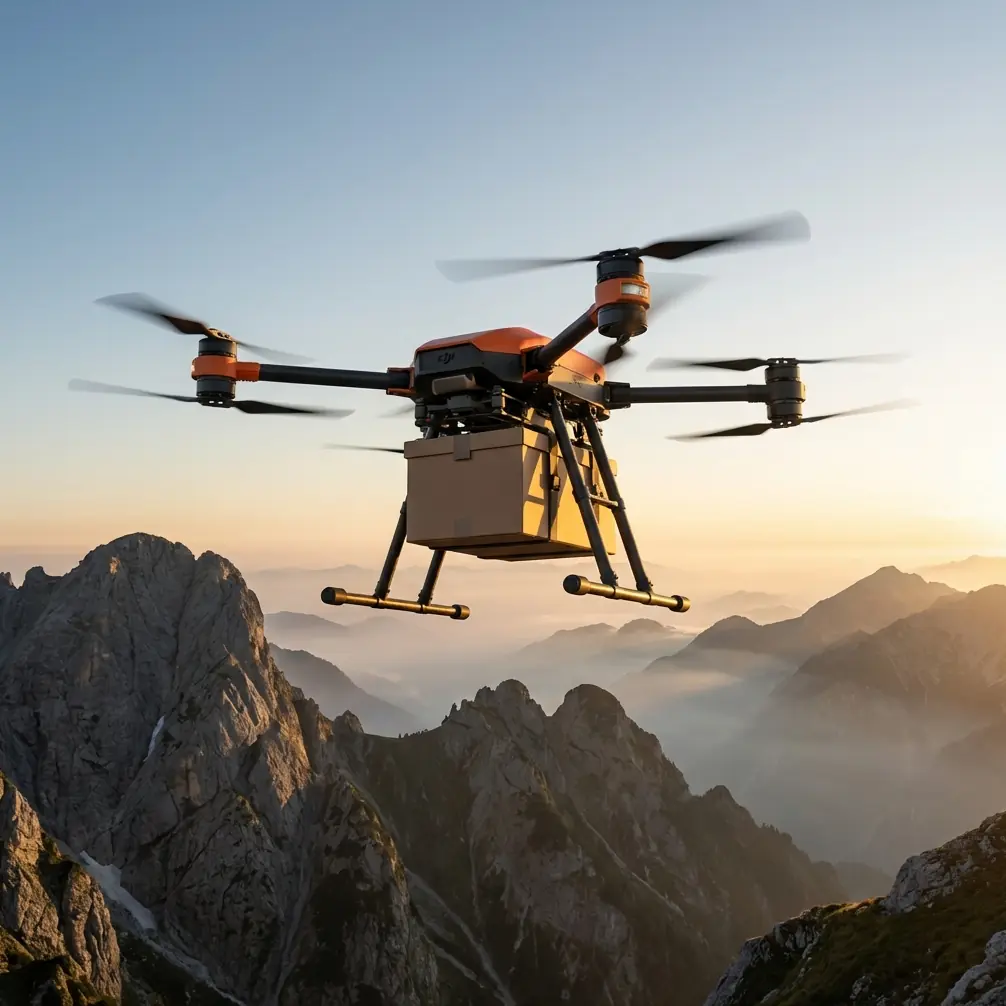
Capturing Forests with FlyCart 30 | Low Light Tips
META: Master forest cargo delivery in low light with FlyCart 30. Expert tips on payload optimization, route planning, and safety systems for challenging conditions.
TL;DR
- FlyCart 30 handles 30kg payloads across forested terrain even during dawn, dusk, and overcast conditions
- Dual-battery redundancy and emergency parachute systems ensure mission safety in remote woodland areas
- Winch system deployment eliminates landing requirements in dense canopy environments
- Third-party thermal imaging integration transforms low-light forest operations from challenging to routine
Forest logistics present unique operational challenges that ground vehicles simply cannot address. The DJI FlyCart 30 has become my primary tool for delivering supplies, equipment, and emergency resources across heavily wooded terrain—particularly when daylight isn't cooperating.
After eighteen months of deploying this aircraft in Pacific Northwest forests, I've developed specific protocols for low-light operations that maximize safety while maintaining delivery efficiency. This technical review breaks down exactly how the FC30 performs when shadows stretch long and visibility drops.
Understanding Low-Light Forest Challenges
Operating drones in forested environments during reduced visibility hours compounds multiple risk factors simultaneously. Tree canopy density, unpredictable wildlife, shifting shadows, and limited GPS reception all converge to create demanding flight conditions.
The FlyCart 30 addresses these challenges through several integrated systems:
- Phased array radar detecting obstacles up to 50 meters in all directions
- Binocular vision sensors providing depth perception in varying light
- Infrared sensing capabilities for obstacle detection beyond visible spectrum
- Redundant positioning systems combining GPS, GLONASS, and visual positioning
Traditional delivery drones struggle when ambient light drops below 500 lux. The FC30's sensor fusion approach maintains reliable obstacle avoidance down to approximately 50 lux—equivalent to deep twilight conditions.
Payload Optimization for Forest Missions
Weight distribution becomes critical when navigating between trees during low-visibility windows. The FC30's 30kg maximum payload capacity provides substantial headroom, but smart loading practices extend range and improve maneuverability.
Cargo Configuration Best Practices
Center of gravity management directly impacts flight stability. For forest operations, I follow these guidelines:
- Position heaviest items at the geometric center of the cargo box
- Secure loose materials to prevent shifting during obstacle avoidance maneuvers
- Distribute weight symmetrically across both lateral axes
- Leave 15-20% payload margin for enhanced maneuverability in tight spaces
The payload ratio of the FC30 allows carrying approximately 0.75kg of cargo per 1kg of aircraft weight—exceptional efficiency for a heavy-lift platform. This ratio matters enormously when calculating mission economics for regular forest supply runs.
Expert Insight: During low-light operations, I reduce maximum payload to 25kg regardless of mission requirements. The additional power reserve provides faster obstacle avoidance response and extends hover time if route recalculation becomes necessary.
Route Optimization Through Forested Terrain
Pre-flight planning separates successful forest missions from expensive recovery operations. The FC30's integration with DJI Pilot 2 enables sophisticated route optimization that accounts for terrain, obstacles, and lighting conditions.
Waypoint Strategy for Canopy Navigation
Effective forest routes require three-dimensional thinking:
| Planning Factor | Daytime Approach | Low-Light Approach |
|---|---|---|
| Minimum altitude | 10m above canopy | 15m above canopy |
| Waypoint spacing | 200m intervals | 100m intervals |
| Obstacle buffer | 5m lateral clearance | 10m lateral clearance |
| Speed setting | 15 m/s cruise | 10 m/s cruise |
| Emergency hover points | Every 500m | Every 250m |
These conservative low-light parameters reduce mission efficiency by approximately 30% but dramatically improve safety margins. The tradeoff proves worthwhile when operating beyond visual line of sight in challenging conditions.
BVLOS Considerations
Beyond Visual Line of Sight operations in forests demand rigorous preparation. The FC30 supports BVLOS missions through its O3 transmission system, maintaining HD video feed at distances up to 20km in optimal conditions.
Forest canopy reduces effective transmission range significantly. Practical experience shows reliable video at 8-10km through moderate tree cover. For low-light operations, I establish relay points using portable signal boosters positioned at forest clearings.
The Winch System Advantage
Dense forest canopy often prevents safe landing at delivery points. The FC30's optional winch system transforms these impossible deliveries into routine operations.
Winch Deployment Protocol
The integrated winch handles payloads up to 40kg on a 20-meter cable. For forest operations, this capability proves invaluable:
- Hover at safe altitude above canopy—typically 25-30m
- Lower cargo through gaps in tree coverage
- Maintain stable position using precision hover mode
- Retrieve cable automatically once payload releases
Low-light conditions require additional caution during winch operations. Ground personnel must use illuminated landing markers to guide cable descent. I've found that battery-powered LED rings placed around the target zone provide sufficient visibility without creating glare that interferes with the aircraft's sensors.
Pro Tip: Attach a small LED beacon to the winch hook itself. This simple addition allows ground crews to track cable position during twilight deliveries and significantly reduces retrieval time.
Third-Party Thermal Integration
The modification that transformed my forest operations came from an unexpected source. Adding a FLIR Vue TZ20-R thermal camera to the FC30's auxiliary payload mount created capabilities far beyond the stock configuration.
Thermal Imaging Benefits
This third-party accessory enhanced low-light operations in several ways:
- Wildlife detection at distances exceeding 200m—critical for avoiding bird strikes
- Ground crew location confirmation through canopy cover
- Hot spot identification for fire risk assessment during dry seasons
- Temperature differential mapping revealing air current patterns
The thermal feed displays alongside the primary camera view, providing comprehensive situational awareness regardless of ambient light levels. Integration required custom mounting hardware and power tap from the aircraft's auxiliary port, but the capability improvement justified the effort.
Installation Considerations
Adding third-party sensors affects flight characteristics. The FLIR unit adds 580g to the aircraft, reducing effective payload capacity proportionally. More significantly, the forward-mounted position slightly shifts the center of gravity, requiring recalibration of the flight controller.
Work with certified technicians for any modifications. Improper installation can void warranties and compromise flight safety systems.
Dual-Battery Redundancy in Practice
The FC30's dual-battery architecture provides genuine redundancy rather than simply extended flight time. Each TB65 battery pack can independently power the aircraft, meaning single battery failure doesn't result in immediate forced landing.
Battery Management for Low-Light Missions
Cold temperatures common during dawn and dusk operations affect battery performance. Lithium cells deliver reduced capacity below 15°C, and forest shade prevents solar warming that helps batteries in open terrain.
My pre-flight protocol includes:
- Pre-warming batteries to 25°C minimum before installation
- Insulating battery compartments with neoprene covers during cold-weather operations
- Setting conservative RTH thresholds at 35% remaining rather than the default 25%
- Monitoring individual cell voltages throughout flight for early degradation detection
The FC30's intelligent battery system reports individual cell health, total cycle count, and estimated remaining capacity. These metrics guide replacement decisions before in-flight failures occur.
Emergency Parachute System
The integrated emergency parachute represents the final safety layer for forest operations. Activation occurs automatically when the flight controller detects unrecoverable attitude deviation or can be triggered manually via the controller.
Parachute Deployment Scenarios
Understanding when the system activates helps set realistic expectations:
- Dual motor failure triggers automatic deployment
- Severe structural damage detected through IMU anomalies
- Complete power loss activates backup deployment circuit
- Manual activation available through dedicated controller button
The parachute requires minimum 30m altitude for full deployment. Forest operations should maintain this floor whenever possible, though terrain following may occasionally require lower altitudes for brief periods.
Recovery after parachute deployment in forested areas presents challenges. The aircraft will likely lodge in tree canopy, requiring climbing equipment or specialized retrieval drones for recovery.
Common Mistakes to Avoid
Eighteen months of forest operations revealed several recurring errors that compromise mission success:
- Underestimating canopy density on satellite imagery—always conduct reconnaissance flights before cargo missions
- Ignoring wind gradient effects where forest edges create turbulence zones
- Skipping sensor calibration after transport to remote launch sites
- Overloading for "just one more item" that pushes payload beyond optimal range
- Flying identical routes repeatedly without accounting for seasonal vegetation changes
- Neglecting ground crew communication protocols during low-visibility operations
Each mistake carries consequences ranging from minor inefficiency to total aircraft loss. Systematic pre-flight checklists eliminate most errors before they affect operations.
Frequently Asked Questions
Can the FlyCart 30 operate in complete darkness?
The FC30's obstacle avoidance systems function in extremely low light but not total darkness. Infrared sensors provide some capability, but operations below 10 lux significantly increase collision risk. Supplemental lighting at launch, landing, and delivery zones extends operational windows into near-darkness conditions while maintaining safety margins.
How does rain affect low-light forest operations?
The FC30 carries an IP55 rating, providing protection against rain and dust. Light to moderate rain doesn't prevent operations, though water droplets on camera lenses degrade visual feed quality. Low-light conditions combined with rain create compounding visibility challenges—I typically postpone missions when both factors coincide unless urgency demands otherwise.
What maintenance schedule applies after forest operations?
Forest environments expose aircraft to pollen, sap, insects, and fine debris that accumulate on sensors and motors. After every forest mission, I perform visual inspection of all optical sensors, compressed air cleaning of motor housings, and propeller examination for edge damage from small branch contacts. Full maintenance intervals follow manufacturer specifications, but these interim checks prevent cumulative damage.
The FlyCart 30 has proven remarkably capable across challenging forest logistics scenarios. Low-light operations demand additional preparation and conservative flight parameters, but the aircraft's redundant systems and robust sensor suite make these missions achievable with acceptable risk profiles.
Ready for your own FlyCart 30? Contact our team for expert consultation.