
FlyCart 30 in Remote Forest Operations: What Actually
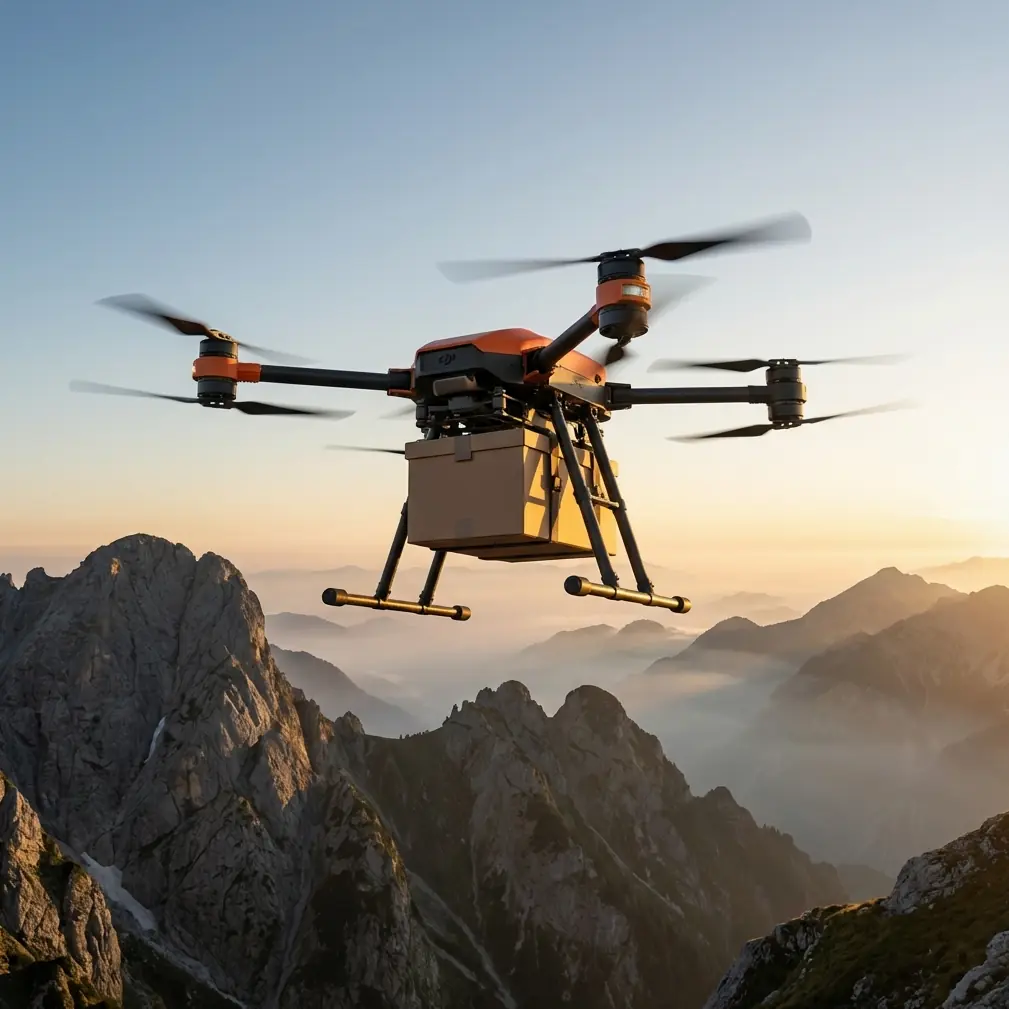
FlyCart 30 in Remote Forest Operations: What Actually Matters in the Field
META: A technical review of FlyCart 30 for remote forest logistics, focusing on payload ratio, winch workflow, battery discipline, route planning, BVLOS readiness, and safety systems that matter in real operations.
Remote forest work exposes the gap between brochure performance and operational performance faster than almost any other environment. Dense canopy, uneven terrain, weak road access, and variable weather force every aircraft system to justify its weight. That is why FlyCart 30 deserves to be discussed less as a general cargo drone and more as a logistics platform shaped by tradeoffs: payload versus endurance, range versus terrain complexity, and automation versus field judgment.
I approach FlyCart 30 from a logistics lead’s perspective. In forest operations, the aircraft is only one part of the system. The real question is whether the platform can move tools, sensors, samples, emergency supplies, and maintenance parts into places where vehicles either cannot go or arrive too late to be useful. The answer depends on how well the drone manages weight, power, and delivery mechanics under real constraints.
A useful way to think about this comes from conventional aircraft design, where propulsion-system weight has long been treated as a first-order design variable rather than an afterthought. One reference from an aircraft design handbook lists large commercial turbofan examples such as the CF6-80C2D1F at 51,500 thrust class with a propulsion-system weight figure shown as 2,204 and a related percentage entry of 275.643, while the JT8D-9/9A appears at 14,500 with a weight entry of 658.3 and another percentage entry of 64.989. The source is not about drones, but the engineering lesson carries over cleanly: propulsion is never “just the motor.” Its weight reshapes the whole aircraft, including what remains available for useful load. In forestry drone work, that principle shows up as payload ratio.
Payload ratio is the quiet metric that determines whether FlyCart 30 saves time or creates more work
People often focus on maximum lift. In the forest, that can be misleading. A drone that can technically lift a heavy load for a short hop may still underperform if the route includes elevation changes, hover time over treetops, or repeated delivery cycles in one sortie window. Payload ratio matters because every kilogram assigned to batteries, structural margin, delivery hardware, and safety equipment is a kilogram not available for field cargo.
This is where FlyCart 30 becomes interesting. It is not merely a flying box carrier. It is a platform balancing payload against delivery precision and power redundancy. In remote forest capture operations, that balance is often more valuable than raw lift. Survey crews may need to send LiDAR support gear, GNSS bases, replacement batteries for ground cameras, wildlife-safe monitoring tools, or collected samples from one ridge line to another. The payload profile changes hour by hour. A useful cargo drone is one that keeps enough performance reserve to stay predictable.
That same aircraft-handbook logic about propulsion-system weight helps frame the issue. Large aircraft designers measure how engine-related mass cascades into efficiency and mission capability. For FlyCart 30 operators, the drone equivalent is asking a simple field question before every launch: how much of my takeoff weight is genuinely mission-productive, and how much is being spent just to sustain the platform in these conditions? Teams that ask that question consistently make better routing decisions and avoid marginal flights.
The winch system is not a feature add-on; in forests it changes the whole delivery method
In open industrial sites, direct touchdown delivery can work well. In forests, ground contact is often the wrong choice. Tight clearings are rare. Sloped surfaces, roots, undergrowth, wet soil, and unstable wind around the canopy all complicate landings. That makes the winch system operationally significant.
A winch-equipped workflow allows FlyCart 30 to remain in a more stable hover position above obstacles while lowering cargo into a small receiving zone. That reduces the need to force the aircraft into terrain-constrained landings. The difference is not cosmetic. It changes site selection, crew positioning, and turnaround time. Instead of cutting a larger landing area or walking deeper into rough ground to find one, crews can designate a compact drop zone, maintain rotor clearance from branches, and retrieve loads with less exposure to moving blades or uneven footing.
For remote forest capture missions, this is especially useful when moving equipment to temporary observation points. You do not always want the aircraft touching down near sensitive vegetation, damp soils, or survey markers. The winch system gives the team an extra layer of flexibility. It also supports a cleaner chain of custody for fragile gear because the delivery path is more controlled than a bump landing in brush.
The winch also interacts with payload ratio in a way many first-time operators miss. Delivery hardware adds weight, but if it removes the need for repeated failed approaches or relocation to a secondary landing zone, the net mission efficiency often improves. Forest operations punish elegant theory and reward repeatable methods.
Dual-battery discipline is where good missions are won
Battery management in remote forests is less about percentages on a screen and more about heat, voltage behavior under load, and route realism. FlyCart 30’s dual-battery architecture matters because it supports continuity and redundancy, but only if the crew treats the pair as a matched operating system rather than two independent power packs.
Here is the field tip I keep repeating to teams: do not pair a warmer battery set with a cooler set after a rushed turnaround just because both show acceptable state of charge. In forest logistics, especially after a hard climb or repeated hover work over canopy, pack temperature mismatch can show up as uneven voltage sag when the aircraft meets the next heavy-lift segment. On paper, the numbers may still look fine. In the air, the aircraft feels less settled at the exact moment you want maximum predictability.
My practical rule is simple. After a demanding sortie, let both batteries normalize together in shade, inspect them as a pair, and keep pairs married throughout the shift whenever possible. Label them, cycle them together, and note whether a given pair has already done one high-draw route that day. This sounds basic. It is not. Forest crews working from improvised staging points often lose discipline once tempo increases.
That dual-battery mindset also helps with route optimization. A route that is acceptable on fresh, thermally balanced batteries may not be the route you want late in the day when ambient temperatures shift and reload speed becomes tempting. Conservatism here is not wasted productivity. It preserves schedule integrity.
Route optimization in forests is not just shortest path planning
Route optimization for FlyCart 30 in remote forest environments should be treated as energy-path planning. The shortest line between two points is rarely the best one if it forces long hover corrections near canopy edges, abrupt climbs over ridge structures, or poor signal geometry through terrain folds.
A better route often looks slightly longer on the map and significantly better in execution. It uses terrain-aware segments, cleaner approach angles, and known drop zones that minimize hover time. That matters because hover and repositioning over uneven forest terrain can quietly consume more mission margin than operators expect.
This is where BVLOS discussions become practical rather than theoretical. Beyond visual line of sight can be transformative for forestry logistics, but only when route design is conservative, communications are stable, and contingency logic is preplanned. In this setting, BVLOS is not about stretching distance for its own sake. It is about linking fixed operational points across inaccessible land without requiring crews to leapfrog through rough terrain just to maintain line of sight.
The most effective forest teams build route libraries. They record not only path geometry but also battery behavior, average descent control during winch drops, canopy turbulence zones, and recovery options. After a few weeks, these route notes become more valuable than generic aircraft settings because they reflect local reality.
Safety systems matter more in forests because recovery options are limited
Forest work reduces your margin for improvisation. A drone issue over a paved yard is one thing. Over dense tree cover, steep ground, or ecologically sensitive areas, the consequences become harder to manage. That is why emergency protection systems such as an emergency parachute deserve attention as part of the mission system, not as a checkbox.
The parachute’s operational significance is straightforward: it gives the crew a defined response layer for serious in-flight problems where a controlled powered recovery may not be realistic. In dense forest zones, reducing uncontrolled descent energy can be critical for protecting people, equipment, and the site itself. It is not a substitute for good planning, but it is one of the reasons a platform like FlyCart 30 fits professional logistics work better than improvised cargo adaptations.
Safety planning should also include simple discipline around launch and receive zones. In a forest staging area, rotor wash can move loose survey papers, tarps, and lightweight packaging into bad places fast. Crews should harden the ground setup, brief cargo handlers on approach positions, and avoid casual “quick drops” just because the drone appears stable overhead.
Why the aircraft design reference still matters here
At first glance, a handbook page listing engines for airliners such as the JT9D-7R4D/D1 with 48,000 thrust class and a listed weight figure of 2,179.2 seems far removed from a cargo drone in the woods. It is not. The relevance is conceptual and operational.
That reference reminds us that propulsion-related mass and integration are central to aircraft capability. In other words, useful mission performance comes from system balance. FlyCart 30 operators in remote forest settings should think the same way. Every added accessory, every battery handling shortcut, every route extension, and every delivery method choice shifts that balance. Once you understand the aircraft as a weight-and-energy system instead of a simple lifter, your decisions improve.
This matters most when crews are “capturing forests,” whether that means moving support equipment for mapping, transporting field sensors, enabling ecological survey teams, or servicing remote imaging nodes. The mission succeeds not because the aircraft can lift once, but because it can repeat the job with stable procedures.
A practical operating model for FlyCart 30 in remote forest capture missions
The best workflows I have seen follow a disciplined pattern:
First, define cargo by operational value, not convenience. Send what truly reduces ground travel or protects the schedule.
Second, choose delivery mode early. If the site is unstable or narrow, use the winch plan from the start instead of improvising a landing attempt at the last minute.
Third, manage dual batteries as matched pairs. This sounds small until a long day exposes every lazy habit.
Fourth, build routes around energy and canopy behavior, not just map distance.
Fifth, preserve contingency margin. A forest mission with no recovery margin is not efficient. It is merely lucky until it is not.
For teams building or refining that workflow, it often helps to compare notes with operators who have already dealt with terrain-induced inefficiencies, battery pairing issues, and drop-zone design. If you want to discuss field setup logic or remote forest route planning, you can reach out here via direct operations chat.
The real case for FlyCart 30 in forests
FlyCart 30 makes the most sense when the mission demands repeatable transport into places where roads, foot access, and conventional vehicle support become the bottleneck. Its value is not abstract. It is operational. The winch system reduces dependence on safe landing ground. The dual-battery setup supports professional sortie planning when treated correctly. BVLOS potential expands coverage when routes are designed with restraint. An emergency parachute supports risk management where off-nominal recovery is difficult.
And beneath all of that is the oldest aircraft-design truth in the book: weight and propulsion shape what the aircraft can really do. The handbook data on engines like the CF6-80C2D1F, JT8D-9/9A, and JT9D-7R4D/D1 may belong to a very different class of aircraft, but the design lesson is the same one remote drone crews face every morning. Mission success is not about a single spec. It is about integration.
In remote forest capture work, that is exactly where FlyCart 30 should be judged.
Ready for your own FlyCart 30? Contact our team for expert consultation.