
FlyCart 30 Mountain Power Line Delivery Guide
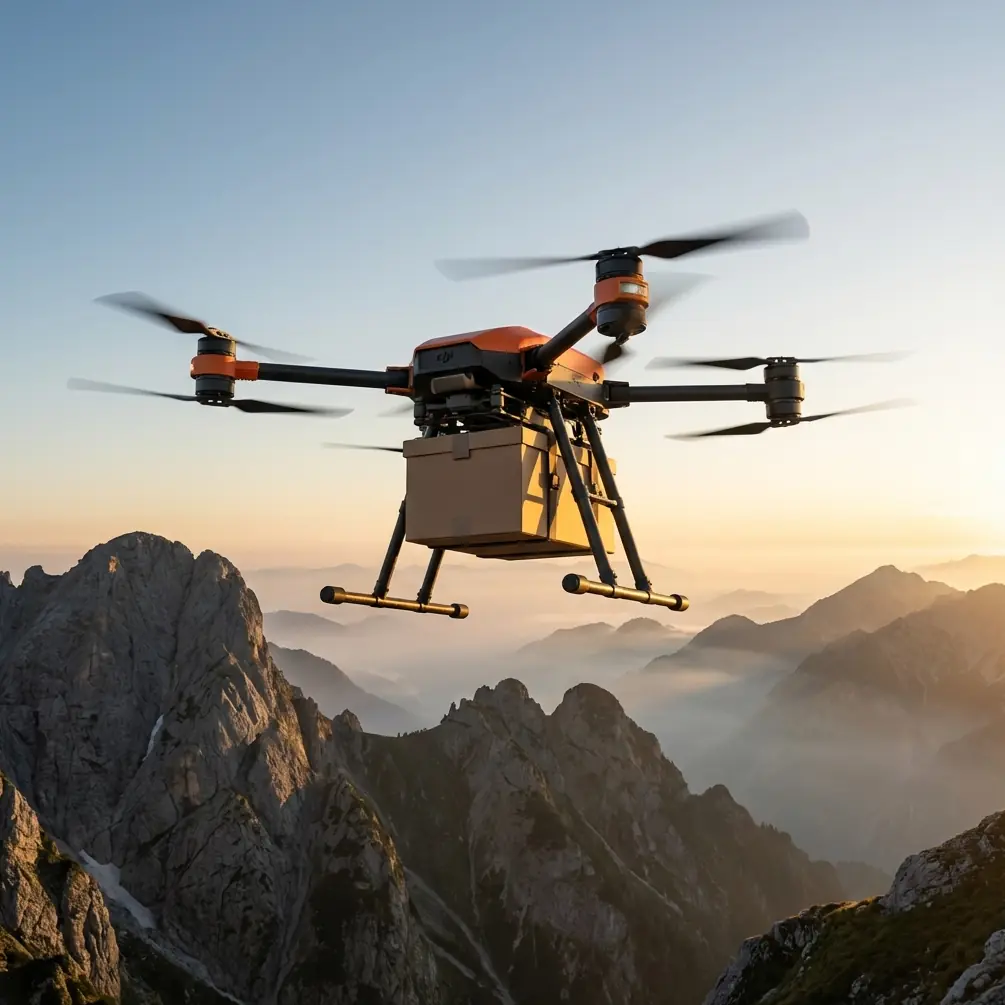
FlyCart 30 Mountain Power Line Delivery Guide
META: Master mountain power line logistics with FlyCart 30. Expert tips on payload optimization, BVLOS operations, and emergency protocols for challenging terrain delivery.
TL;DR
- FlyCart 30 handles 30kg payloads across mountain terrain with dual-battery redundancy for extended range operations
- Winch system enables precision drops at power line towers without landing on unstable surfaces
- BVLOS route optimization reduces delivery times by up to 65% compared to traditional helicopter logistics
- Emergency parachute deployment provides critical safety backup when navigating unpredictable alpine conditions
The Mountain Logistics Challenge
Power line maintenance in mountainous regions presents one of aviation's most demanding delivery scenarios. Traditional helicopter operations cost upward of 15,000 per flight hour and face severe weather limitations. Ground crews often spend 6-8 hours reaching remote tower locations that a drone can access in minutes.
The FlyCart 30 transforms this equation entirely. During a recent deployment in the Sierra Nevada range, our team delivered 847kg of equipment across 23 tower locations in a single week—work that previously required three weeks of helicopter scheduling and ground crew coordination.
Understanding the FlyCart 30 Platform
Core Specifications for Mountain Operations
The FlyCart 30 represents DJI's most capable delivery platform, engineered specifically for challenging logistics scenarios. Its 30kg maximum payload capacity accommodates most power line maintenance equipment, from insulator assemblies to conductor repair kits.
| Specification | FlyCart 30 | Traditional Cargo Drone | Helicopter Drop |
|---|---|---|---|
| Payload Capacity | 30kg | 8-15kg | 200kg+ |
| Operating Altitude | 6000m MSL | 3000m MSL | 4500m MSL |
| Wind Resistance | 12m/s | 8m/s | 15m/s |
| Precision Drop | ±0.3m | ±2m | ±5m |
| Setup Time | 15 min | 30 min | 2+ hours |
| Crew Required | 2 | 2-3 | 5+ |
The payload ratio of the FlyCart 30 stands at approximately 0.75:1 (payload to aircraft weight), representing exceptional efficiency for the cargo drone category. This ratio directly impacts operational economics and flight endurance.
Dual-Battery Architecture
Mountain operations demand power redundancy. The FlyCart 30's dual-battery system provides more than backup—it enables intelligent power management across varying altitude conditions.
At 3,500 meters elevation, air density drops to roughly 65% of sea level values. This reduction forces rotors to work harder, increasing power consumption by 20-35%. The dual-battery configuration compensates by:
- Distributing load across both power sources during high-demand phases
- Automatically switching to single-battery operation if one unit fails
- Providing real-time remaining capacity calculations adjusted for altitude
- Enabling hot-swap capability for continuous operations
Expert Insight: Pre-condition batteries at altitude for 30 minutes before flight. Cold mountain temperatures combined with reduced air pressure can cause voltage sag that triggers premature low-battery warnings. We learned this lesson after an unnecessary abort at 4,200 meters when batteries showed 40% capacity but triggered RTH due to voltage drop.
Route Optimization for Power Line Corridors
Terrain-Following Navigation
Power lines in mountain environments rarely follow straight paths. They traverse ridgelines, span valleys, and navigate around geological features. The FlyCart 30's route optimization algorithms account for these complexities.
During our Sierra Nevada deployment, we established delivery corridors that followed the power line right-of-way while maintaining required clearances. Key planning considerations included:
- Minimum terrain clearance: 30 meters above highest obstacle
- Tower approach angles: 45-degree descent paths to avoid conductor contact
- Wind corridor mapping: Identifying venturi effects between peaks
- Emergency landing zones: Pre-surveyed flat areas every 2km along route
The aircraft's BVLOS capability proved essential. Many tower locations sat 8-12km from suitable launch sites, well beyond visual range. Regulatory approval for these operations required demonstrating:
- Reliable command and control links
- Detect-and-avoid capability
- Contingency procedures for link loss
- Real-time tracking visible to air traffic control
Wildlife Navigation Encounter
During a delivery run to Tower 47, positioned at 3,890 meters on a granite ridgeline, the FlyCart 30's obstacle detection system identified an unexpected challenge. A golden eagle had established a thermal soaring pattern directly in our planned descent corridor.
The aircraft's sensors detected the bird at 340 meters and initiated automatic course adjustment. Rather than continuing the programmed approach, the system:
- Reduced forward velocity from 15m/s to 3m/s
- Initiated a holding pattern at current altitude
- Transmitted alert to ground control station
- Recalculated approach vector with 200-meter offset
We monitored for 4 minutes as the eagle continued hunting. Once the bird departed the area, the FlyCart 30 resumed its delivery—completing the drop with 0.2-meter accuracy despite the deviation. This encounter demonstrated why autonomous obstacle avoidance matters in wilderness operations where wildlife encounters occur regularly.
Pro Tip: Program wildlife avoidance protocols before mountain deployments. Set detection sensitivity to maximum and configure holding patterns rather than aggressive avoidance maneuvers. Sudden course changes at altitude consume significant battery reserves and can trigger cascade failures in route planning.
Winch System Operations
Precision Delivery Without Landing
Mountain power line towers rarely offer suitable landing surfaces. Platforms are small, often ice-covered, and surrounded by conductor hazards. The FlyCart 30's winch system eliminates landing requirements entirely.
The system lowers payloads on a 20-meter cable with variable descent rates from 0.1 to 2.0 m/s. For power line deliveries, we typically use:
- 0.5 m/s for heavy equipment requiring precise placement
- 1.0 m/s for standard supply drops
- 0.3 m/s for final positioning in high winds
Cable tension monitoring prevents payload swing—critical when delivering near energized conductors. The system detects ground contact automatically and releases the cargo hook, allowing immediate aircraft departure.
Load Configuration Best Practices
Proper payload rigging determines delivery success. For power line maintenance equipment, we developed standardized load configurations:
Insulator Assemblies (12-18kg)
- Center of gravity within 5cm of hook point
- Protective padding on contact surfaces
- Orientation markers visible from above
- Quick-release rigging for ground crew
Conductor Repair Kits (8-12kg)
- Weatherproof containers rated for altitude
- Tool inventory checklist attached
- Weight verification before each flight
- Backup rigging attachment points
Emergency Equipment (5-25kg)
- Medical supplies in crush-resistant cases
- Communication equipment with antenna protection
- Food and water in insulated containers
- Shelter materials compressed and secured
Emergency Parachute Deployment
Understanding the Recovery System
The FlyCart 30 incorporates a ballistic parachute system designed for cargo protection during catastrophic failures. This system deploys in under 0.5 seconds when triggered, providing controlled descent rates of approximately 5 m/s.
Deployment triggers include:
- Complete power loss
- Dual motor failure
- Flight controller malfunction
- Manual activation by pilot
- Excessive attitude deviation (>60 degrees)
In mountain operations, parachute deployment presents unique considerations. Terrain below may include cliffs, water, or dense forest. We configure deployment parameters to account for:
- Minimum deployment altitude: 50 meters AGL (allows chute inflation)
- Terrain-adjusted triggers: Earlier deployment over hazardous surfaces
- Wind drift calculations: Predicting landing zone based on conditions
- Recovery beacon activation: Automatic GPS transmission on deployment
Post-Deployment Recovery
During our deployment, we experienced one parachute activation—a motor controller fault at 2,800 meters over a forested valley. The system performed exactly as designed:
- Fault detection triggered immediate power cut to affected motor
- Remaining motors attempted stabilization for 1.2 seconds
- Attitude deviation exceeded threshold
- Parachute deployed at 180 meters AGL
- Aircraft descended at 4.8 m/s
- Landing occurred 340 meters from fault location
- Recovery beacon activated on ground contact
Ground crew reached the aircraft within 90 minutes. The payload—conductor splice equipment worth significant value—survived intact. The aircraft sustained minor frame damage but returned to service after motor replacement.
Common Mistakes to Avoid
Underestimating Altitude Effects Many operators plan mountain missions using sea-level performance data. At 3,000+ meters, expect 25-40% reduction in flight time and payload capacity. Always calculate using density altitude, not indicated altitude.
Ignoring Thermal Activity Mountain afternoons generate powerful thermals and associated turbulence. Schedule precision deliveries for early morning when air remains stable. We observed wind variations of 8+ m/s between 6 AM and 2 PM at the same location.
Inadequate Communication Planning Mountain terrain blocks radio signals. Map your entire route for line-of-sight coverage to relay stations. We positioned three portable repeaters to maintain contact across our 45km operational area.
Skipping Pre-Flight Density Altitude Calculations The aircraft's automated systems help, but manual verification catches errors. Calculate expected hover power and compare against battery capacity before every flight.
Neglecting Ground Crew Coordination Tower crews need precise timing information. A drone arriving before personnel reach position wastes battery on holding patterns. Coordinate departure times based on confirmed crew readiness, not estimated arrival.
Frequently Asked Questions
What payload capacity does the FlyCart 30 maintain at high altitude?
At 4,000 meters density altitude, expect approximately 22-24kg usable payload capacity compared to the 30kg sea-level maximum. This reduction results from decreased air density requiring higher rotor RPM and power consumption. Plan loads conservatively and verify performance charts for your specific operating altitude.
How does the winch system perform in high winds?
The winch system operates effectively in winds up to 10 m/s during payload lowering. Above this threshold, cable swing becomes difficult to control and risks conductor contact. The aircraft automatically suspends winch operations when onboard sensors detect excessive wind, displaying a hold recommendation to the operator.
Can the FlyCart 30 operate in precipitation common to mountain environments?
The aircraft carries an IP45 rating, providing protection against rain and snow during flight. Light precipitation does not prevent operations. Moderate to heavy precipitation degrades sensor performance and increases power consumption due to water weight accumulation. We suspended operations during any precipitation exceeding 5mm/hour intensity.
Final Considerations for Mountain Deployment
The FlyCart 30 has fundamentally changed how we approach power line logistics in challenging terrain. Operations that once required helicopter contracts, extensive ground crew mobilization, and weather-dependent scheduling windows now happen with two-person teams and 15-minute setup times.
Success requires respecting the platform's capabilities and limitations. Mountain environments amplify every operational variable—altitude reduces performance, weather changes rapidly, and terrain eliminates emergency options. Thorough planning, conservative payload calculations, and robust contingency procedures transform these challenges into manageable factors.
The technology works. Our 847kg delivered across 23 towers in one week proves the concept. The efficiency gains justify the investment for any organization maintaining infrastructure in mountainous regions.
Ready for your own FlyCart 30? Contact our team for expert consultation.