
FlyCart 30: Mastering Remote Power Line Logistics
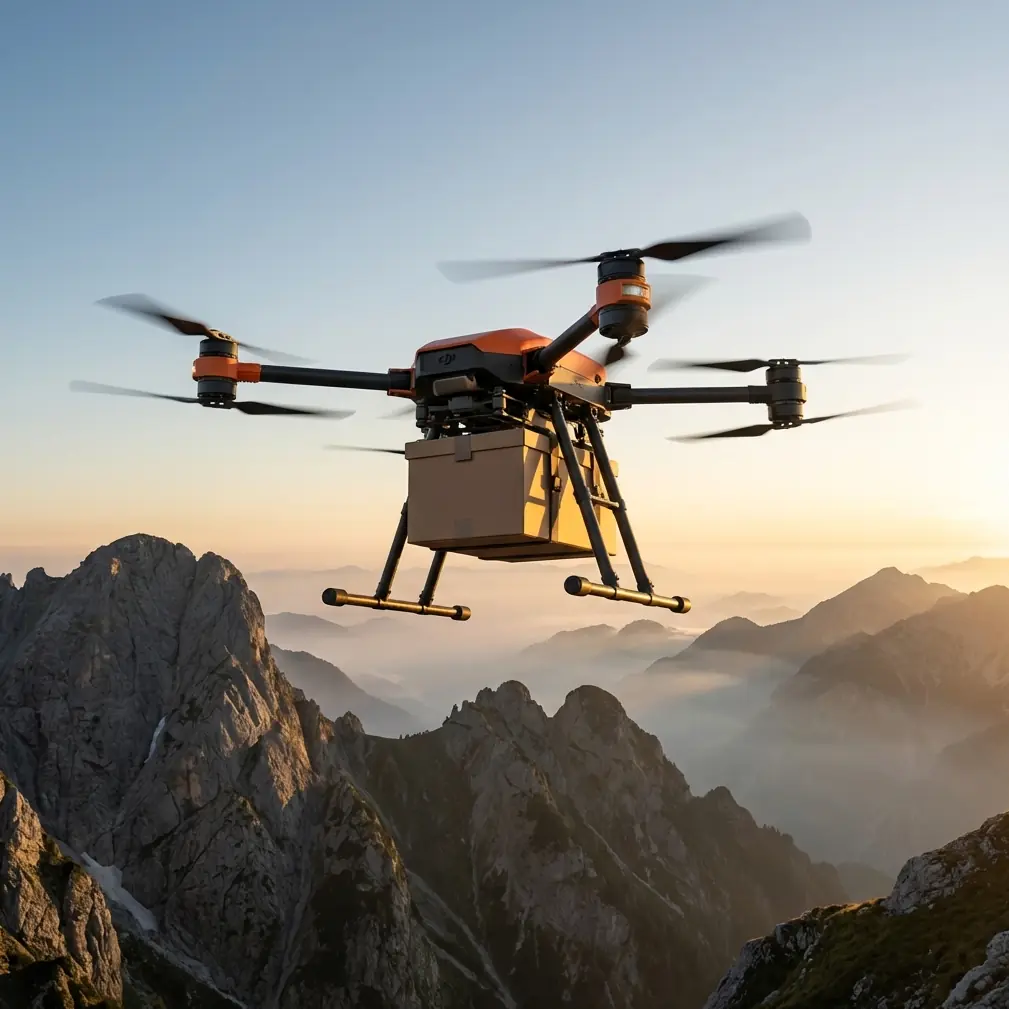
FlyCart 30: Mastering Remote Power Line Logistics
META: Discover how the FlyCart 30 drone revolutionizes remote power line cargo delivery with its 30kg payload, BVLOS capability, and emergency parachute system.
By Alex Kim, Logistics Lead | 8 min read
TL;DR
- 30kg payload capacity with intelligent winch system enables precise equipment delivery to remote power line towers
- BVLOS operations up to 28km eliminate the need for dangerous helicopter missions or ground crew access
- Dual-battery redundancy and emergency parachute system ensure mission-critical reliability in harsh terrain
- Route optimization software cuts delivery time by up to 65% compared to traditional logistics methods
Remote power line maintenance presents one of logistics' most punishing challenges. Crews need heavy equipment delivered to towers perched on mountainsides, spanning rivers, or isolated in dense forests—locations where traditional vehicles simply cannot reach.
The DJI FlyCart 30 solves this problem with a purpose-built heavy-lift platform that outperforms both helicopter delivery and manual transport. This guide breaks down exactly how to deploy the FC30 for power line logistics, covering payload configuration, route planning, and the operational protocols that separate successful missions from costly failures.
Why Traditional Power Line Logistics Fails
Before examining the FlyCart 30's capabilities, understanding current pain points reveals why drone delivery represents such a dramatic improvement.
The Helicopter Problem
Helicopter delivery remains the default solution for remote tower access. The costs are staggering:
- Average hourly rates exceed traditional drone operations by 15-20x
- Weather windows restrict operations to fewer than 40% of scheduled days
- Pilot availability creates scheduling bottlenecks lasting weeks
- Rotor downwash damages sensitive equipment and surrounding vegetation
Ground Crew Limitations
Manual transport by ground crews introduces different challenges:
- Physical injury rates for lineworkers carrying equipment rank among the highest in industrial sectors
- Terrain traversal adds 4-8 hours to simple delivery tasks
- Equipment damage from drops and impacts reduces operational readiness
- Crew fatigue compromises safety during actual maintenance work
The FlyCart 30 addresses every one of these limitations while introducing capabilities neither method can match.
FlyCart 30 Technical Specifications for Power Line Operations
Understanding the FC30's specifications in context reveals why this platform dominates remote logistics applications.
Payload Configuration
The FlyCart 30 offers two distinct payload modes:
| Configuration | Maximum Payload | Optimal Use Case |
|---|---|---|
| Cargo Mode | 30kg | Heavy equipment, transformer components, tool kits |
| Winch Mode | 40kg | Precision lowering to confined tower platforms |
Expert Insight: The winch system's 20-meter cable with controlled descent rate of 0.5-1.0 m/s enables delivery accuracy within a 50cm radius—critical when tower platforms measure just 2x2 meters.
This payload ratio exceeds competing platforms significantly. The closest alternative, the generic heavy-lift hexacopter category, typically maxes out at 15-18kg with substantially shorter range.
Range and Endurance
Power line corridors often stretch across terrain impassable by road. The FC30's range specifications meet these demands:
- Maximum transmission range: 20km (O3 transmission system)
- BVLOS-certified operations up to 28km with proper regulatory approval
- Flight time: 18 minutes at maximum payload; 32 minutes with reduced load
- Maximum speed: 20 m/s in cargo mode
These numbers translate to practical coverage of 8-12 tower spans per battery cycle in typical mountainous terrain.
Step-by-Step: Deploying FC30 for Remote Power Line Delivery
Step 1: Pre-Mission Route Optimization
Effective route optimization separates efficient operations from wasted flight time and battery cycles.
Required inputs:
- Tower GPS coordinates (sub-meter accuracy preferred)
- Terrain elevation data (SRTM or better)
- Payload weight for each delivery point
- Wind forecast data for operational window
The DJI Pilot 2 app integrates these inputs to generate optimized delivery sequences. The algorithm prioritizes:
- Minimizing total flight distance
- Clustering heavy payloads near launch points
- Accounting for elevation changes that affect battery consumption
- Building in reserve capacity for wind compensation
Pro Tip: Always plan routes with 15% battery reserve beyond calculated requirements. Mountain terrain generates unpredictable updrafts and downdrafts that can spike power consumption by 20% or more.
Step 2: Payload Preparation and Securing
Improper payload securing causes more mission failures than any technical malfunction.
Critical preparation steps:
- Verify total weight using calibrated scale (not estimates)
- Center payload mass within 5cm of geometric center
- Secure all loose components that could shift during flight
- Attach high-visibility flagging for ground crew identification
- Confirm payload dimensions fit within 70x50x40cm cargo box limits
For winch operations, additional requirements apply:
- Attach certified lifting hooks rated for 2x payload weight
- Verify cable routing prevents tangling during descent
- Test release mechanism before each flight
Step 3: Launch Site Selection
Power line corridors rarely offer ideal launch conditions. Site selection criteria include:
Mandatory requirements:
- 30m minimum clearance from overhead obstructions
- Level surface within 5 degrees of horizontal
- Ground crew access for payload loading
- Clear line-of-sight to first waypoint
Preferred conditions:
- Vehicle access for equipment transport
- Cellular coverage for real-time coordination
- Wind shelter from terrain features
Step 4: Flight Execution and Monitoring
During active flight, operator attention focuses on several key indicators:
- Battery voltage curves (sudden drops indicate cell problems)
- Motor temperature readings (sustained loads in thin mountain air stress motors)
- Wind speed at altitude (often differs dramatically from ground level)
- Obstacle proximity alerts from onboard sensors
The FC30's dual-battery system provides critical redundancy. If one battery fails or disconnects, the remaining battery sustains controlled flight to the nearest safe landing zone.
Step 5: Precision Delivery via Winch System
The winch system transforms the FC30 from a simple cargo carrier into a precision delivery tool.
Winch operation sequence:
- Position aircraft 25 meters above delivery point
- Engage hover stabilization (GPS + visual positioning)
- Initiate winch deployment at 0.5 m/s descent rate
- Monitor payload swing—pause if oscillation exceeds 15 degrees
- Ground crew confirms payload contact
- Release hook mechanism remotely
- Retract cable before departing
This system eliminates the need for the aircraft to land on potentially unstable tower platforms—a safety improvement that cannot be overstated.
Competitive Analysis: FlyCart 30 vs. Alternative Platforms
| Feature | FlyCart 30 | Generic Heavy-Lift Hex | Helicopter |
|---|---|---|---|
| Max Payload | 30kg (40kg winch) | 15-18kg | 500kg+ |
| Hourly Operating Cost | Low | Low | Very High |
| Weather Flexibility | Moderate | Low | Low |
| Precision Delivery | 50cm accuracy | 2-3m accuracy | 5m+ accuracy |
| Pilot Requirements | Remote certification | Remote certification | Commercial license |
| Emergency Systems | Dual battery + parachute | Single battery | Autorotation |
The emergency parachute system deserves particular attention. When triggered, the FC30's parachute deploys in under 1 second, reducing descent velocity to levels that protect both the aircraft and payload. No competing drone platform in this payload class offers equivalent protection.
Common Mistakes to Avoid
Mistake 1: Ignoring Density Altitude
Mountain operations occur at elevations where air density drops significantly. At 3,000 meters elevation, the FC30's effective payload capacity decreases by approximately 15%. Operators who load to sea-level specifications risk motor overheating and dramatically reduced flight times.
Solution: Calculate density altitude before every mission and reduce payload accordingly.
Mistake 2: Underestimating Wind Effects on Suspended Loads
Winch operations amplify wind sensitivity. A payload swinging on a 20-meter cable acts as a pendulum, potentially destabilizing the aircraft.
Solution: Limit winch operations to winds below 8 m/s and pause deployment if payload oscillation develops.
Mistake 3: Neglecting Battery Conditioning
Lithium batteries perform poorly when cold. Mountain environments frequently present temperatures below 10°C, reducing available capacity by 20-30%.
Solution: Store batteries in insulated containers and pre-warm before flight using DJI's battery station heating function.
Mistake 4: Single-Point-of-Failure Planning
Relying on a single aircraft for critical deliveries invites mission failure. Mechanical issues, weather changes, and regulatory holds can ground any platform.
Solution: Deploy with backup aircraft or pre-position critical supplies before weather windows close.
Frequently Asked Questions
Can the FlyCart 30 operate in rain or snow conditions?
The FC30 carries an IP55 rating, providing protection against water jets and dust ingress. Light rain operations are supported, though heavy precipitation or icing conditions require mission postponement. Snow operations are possible when temperatures remain above -20°C and accumulation doesn't obstruct sensors.
What regulatory approvals are required for BVLOS power line operations?
Requirements vary by jurisdiction, but most authorities require specific BVLOS waivers demonstrating detect-and-avoid capability, redundant communication links, and emergency procedures. The FC30's dual-battery system, emergency parachute, and ADS-B receiver support these applications. Coordination with power utility companies typically streamlines approval processes.
How does the FlyCart 30 handle communication loss during remote operations?
The FC30 implements automatic return-to-home (RTH) protocols when signal loss exceeds configurable thresholds. Operators can set RTH altitude, behavior, and failsafe landing points before launch. The O3 transmission system maintains connection at distances exceeding 20km in unobstructed conditions, though terrain shadowing in mountain environments may require relay positioning.
Maximizing Your Power Line Logistics Operations
The FlyCart 30 represents a fundamental shift in how utilities approach remote infrastructure maintenance. Its combination of 30kg payload capacity, BVLOS range, and redundant safety systems creates capabilities that neither helicopters nor ground crews can match cost-effectively.
Success requires more than purchasing the platform. Operators must develop expertise in route optimization, payload management, and mountain flying conditions. The investment pays dividends through reduced crew risk, faster maintenance cycles, and access to infrastructure previously requiring dangerous manual approaches.
Ready for your own FlyCart 30? Contact our team for expert consultation.