
FlyCart 30 for Remote Power Line Missions
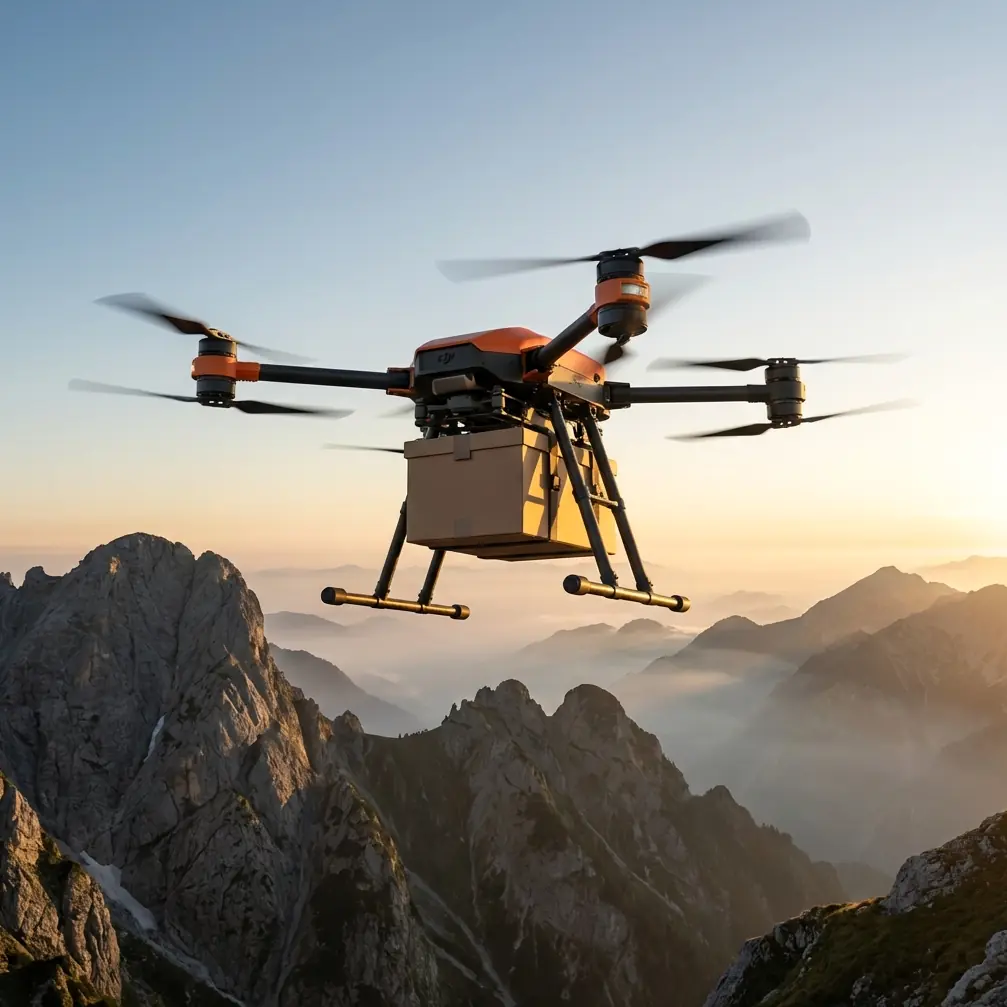
FlyCart 30 for Remote Power Line Missions: What New Airspace and Ag-Drone Policy Signals Mean in 2026
META: Expert guide to using the DJI FlyCart 30 for remote power line logistics, with practical altitude, BVLOS, winch, and route planning insights tied to 2026 aviation and drone policy news.
Remote power line work punishes weak logistics. Crews are spread out, access roads are often poor, and the cargo is rarely convenient. One sortie might involve insulators and hand tools. The next might require urgent delivery of a replacement component before weather closes in. That is where the FlyCart 30 earns attention—not as a novelty aircraft, but as a practical transport tool for field operations that need repeatable performance in difficult terrain.
What makes this moment interesting is not just the aircraft itself. Two policy signals from recent news point in the same direction: regulators are building pathways for more advanced low-altitude operations, and provincial governments are still backing heavy real-world drone use in the field.
The first signal came on March 16, 2026, when the U.S. Department of Transportation and FAA launched an eVTOL integration pilot program. On the surface, that sounds far removed from a cargo drone used around transmission corridors. It is not. Programs like that matter because they push regulators, operators, and infrastructure stakeholders to solve the same hard problems that affect FlyCart 30 deployments: airspace integration, operational approvals, route design, safety case development, and coordination around aircraft working beyond traditional visual limits. If agencies are actively building frameworks for next-generation aerial vehicles, that tends to help the broader ecosystem mature for utility drone logistics too.
The second signal is from Yunnan, where purchases of agricultural drones in 2025 reportedly rose sharply year over year, with local authorities saying subsidy funding for agricultural UAVs would remain in the budget and that eligible purchases would continue to be covered. That detail matters more than it first appears. Stable subsidy policy creates stable demand. Stable demand builds pilot familiarity, maintenance networks, spare-part access, training pipelines, and local confidence in low-altitude operations. Even if a utility team is not flying crop missions, it benefits from a market where professional drone use becomes normal rather than exceptional.
For anyone planning to use a FlyCart 30 to support crews working remote power lines, these developments should change how you think about mission design. The question is no longer whether cargo drones belong in field operations. The question is how to use them with enough discipline to reduce downtime without creating new risk.
Start with the actual mission, not the aircraft brochure
I approach this as a logistics problem first. Power line support missions usually fall into four buckets:
- transport of tools and small hardware to a tower or work site
- delivery of urgent replacement parts after fault identification
- movement of lightweight safety gear or rope systems
- resupply when terrain turns a short ground distance into a long road detour
The FlyCart 30 becomes valuable when it cuts the delay between identifying a need and getting that item into a technician’s hands. In mountain or forested corridors, that gap can define whether a repair stays on schedule.
That is why payload ratio matters. If the aircraft can move a meaningful share of what the crew needs in one lift, the mission has operational value. If every job requires multiple lightly loaded shuttles because the payload is poorly matched to the task, efficiency disappears fast. Good operators do not simply ask, “What is the max load?” They ask, “What percentage of our routine line-maintenance kit can this aircraft move in one trip with terrain and safety margins accounted for?” That is the payload ratio that matters in practice.
For remote line work, the smartest use case is often not the heaviest object. It is the item whose delay carries the highest downstream cost.
The policy news matters because BVLOS is the real unlock
The FAA and DOT eVTOL pilot program is a bigger story for FlyCart 30 users than many people will admit. Utility corridors are linear. They stretch. They cross terrain that is difficult to monitor continuously from one fixed position. So even when you are not formally running a large BVLOS program on day one, your operation planning starts to brush against the same issues: communications reliability, contingency landing thinking, route deconfliction, observer strategy, and how you prove your operation is safe and predictable.
That is the operational significance of the U.S. pilot program. It suggests regulators are investing in the architecture needed for more sophisticated low-altitude aircraft use. A cargo drone supporting power infrastructure does not need to be an air taxi to benefit from that work. Utility logistics sits downstream from the same regulatory maturity.
For FlyCart 30 teams, this means two things right now:
First, document your missions like you expect scrutiny. Route maps, risk assessments, lost-link procedures, battery reserve rules, and emergency response steps should be clean and repeatable. Sloppy utility operations do not become acceptable just because the aircraft performs well.
Second, build toward scalable corridor operations. The long-term value is not one impressive flight to a remote tower. It is a system that can support recurring deliveries along a line segment with predictable timing and acceptable risk.
Optimal flight altitude for remote power line support
This is the question crews usually ask too late. They pick an altitude based on comfort, then discover they have worsened rotor wash, reduced obstacle margin, or made the approach less precise.
For remote power line cargo runs, the best altitude is rarely “as low as possible” and rarely “as high as convenient.” A better rule is this: cruise high enough to maintain a clean obstacle buffer over uneven terrain and vegetation, then descend only when the delivery geometry is controlled and the landing or drop zone is confirmed.
In practical terms, that usually means separating the mission into three altitude bands:
Transit band: high enough to clear trees, terrain undulations, and minor structures with a comfortable margin. In hilly power corridors, this often creates a more stable workload for the pilot because the aircraft is not constantly reacting to local topography.
Approach band: lower, but only after visual and route confirmation. This is where you reduce speed, manage lateral position carefully, and prepare the cargo delivery sequence.
Delivery band: as low as needed for precision, but no lower. If you are using the winch system, this is where restraint pays off. The aircraft does not need to squeeze itself into the work zone if the suspended delivery can bridge the final vertical distance safely.
That last point is where the FlyCart 30 setup matters. A winch system changes altitude strategy. Instead of forcing the aircraft close to rocks, scrub, conductors, or uneven ground, you can hold a safer hover above the most cluttered area and lower the load into position. For remote power line sites, that can reduce both landing-zone demands and the risk of last-meter mistakes.
One caution is obvious but worth stating plainly: delivery altitude must respect conductor clearance at all times. Utility work tempts operators into “just a little closer” thinking because the target area is near the infrastructure. That is a trap. Your flight profile should be built around conservative separation, not optimism.
Why the Yunnan ag-drone story matters to utility operators
A sharp year-over-year increase in agricultural drone purchases in Yunnan during 2025, combined with continued budget support for subsidies, tells us something important about the low-altitude economy: operational density is growing because the economics are improving and public policy is staying consistent.
That has direct relevance for FlyCart 30 users.
Agricultural drone markets create disciplined habits around battery handling, field maintenance, mission planning, and operator training. They also normalize the idea that drones are work machines, not hobby devices. When a province commits to continuity and stability in subsidy support, it reduces hesitation among buyers and service providers. That, in turn, helps build the surrounding ecosystem utility operators depend on—trained personnel, repair channels, operational familiarity, and institutional comfort with drone workflows.
For remote power line missions, ecosystem maturity is often more valuable than aircraft novelty. A logistics lead does not just need a capable airframe. He needs batteries managed correctly, technicians who can troubleshoot in the field, and local teams who understand how to run safe repetitive operations under pressure.
How I would configure a FlyCart 30 mission for line crews
If the objective is delivering gear to a remote line segment, I would structure the sortie around five principles.
1. Match the load to the corridor Do not fill capacity simply because it exists. Long linear routes and changing elevations amplify the penalty for poor load planning. Keep the manifest mission-specific and balanced. If one critical part gets the repair moving again, fly that first.
2. Use the dual-battery setup to protect schedule discipline Dual-battery architecture is not just a specification line. In field operations, it supports turnaround planning and energy management discipline. Power line support work is often a sequence of short-notice tasks rather than a neat daily schedule. You need battery procedures that preserve reserve margins instead of draining every mission to convenience.
3. Prefer the winch when the ground zone is ugly Remote tower sites are not designed for aircraft landings. Loose rock, brush, slope, and rotor wash interactions all complicate the final meters. A controlled hover with a winch drop can be the cleaner option, especially when crews can receive the load from a known safe spot away from the most obstructed ground.
4. Build route optimization around terrain, not a straight line The shortest line on the map may cross ridges, turbulence-prone saddles, or communications dead areas. Route optimization for FlyCart 30 work should account for terrain exposure, alternate holding locations, and predictable approach geometry. Efficient is not the same thing as direct.
5. Treat the emergency parachute as a contingency layer, not a primary plan An emergency parachute has real value, but it does not excuse weak route design or risky proximity to infrastructure. Around power lines, prevention matters far more than fallback systems. The aircraft should never rely on a last-resort feature to compensate for an avoidable operational decision.
If your team is building this capability now, it helps to compare route concepts and load workflows with operators who understand corridor logistics in the field. I often recommend teams set up a short mission-design review before standardizing procedures; a quick discussion through a direct operations chat can reveal whether your altitude profile, observer placement, and delivery method actually match the terrain.
Common mistakes on remote power line runs
The most frequent error is flying too low for too long during transit. Pilots feel more in control when the aircraft is visually close to the terrain, but this often increases workload, obstacle exposure, and unnecessary path corrections.
The second is confusing payload capability with mission productivity. Carrying a heavier load does not automatically save time if the delivery site forces awkward handling or if the extra mass narrows your operating margin in wind and elevation changes.
The third is poor handoff planning with the ground crew. The flight may be perfect, but if technicians are not staged correctly, the last minute becomes disorganized. For winch operations in particular, crew position, communication timing, and package securing method need to be rehearsed.
The fourth is underestimating how quickly policy and infrastructure context can improve. The FAA and DOT move on eVTOL integration, and Yunnan’s continuing support for agricultural UAV procurement, are not side stories. They are signs that advanced drone operations are being absorbed into normal transportation and fieldwork planning. Operators who prepare early will have an advantage over teams that still treat cargo UAV use as an exception.
What this means for FlyCart 30 users in 2026
The bigger story around FlyCart 30 is not a single aircraft feature. It is that the environment around heavy-duty drone work is becoming more serious. In the U.S., federal agencies are creating pilot structures for advanced aerial integration. In China, local agricultural UAV adoption is expanding with policy continuity behind it. Those are different markets and different mission types, yet they point to the same conclusion: practical drone operations are moving deeper into mainstream infrastructure and field use.
For remote power line logistics, that is exactly the setting where FlyCart 30 can be judged honestly. Not as a concept demo. Not as a gadget. As a machine that either shortens repair cycles, reduces crew delay, and reaches terrain vehicles struggle to serve—or it does not.
Used well, it does.
The key is disciplined altitude selection, conservative separation from conductors, route optimization built around terrain reality, and using the winch system where the last few meters are the most dangerous part of the mission. Pair that with sound battery management, a credible contingency framework, and procedures that are written for repeatability, and the aircraft becomes a serious logistics asset for utility operations.
That is where the current news really lands. Regulation is inching toward integration. Field drone adoption is growing where policy remains stable. And for operators moving cargo to remote power line crews, the window to build competent, scalable FlyCart 30 workflows is already open.
Ready for your own FlyCart 30? Contact our team for expert consultation.