
FlyCart 30 for Urban Power Line Imaging: A Practical Field
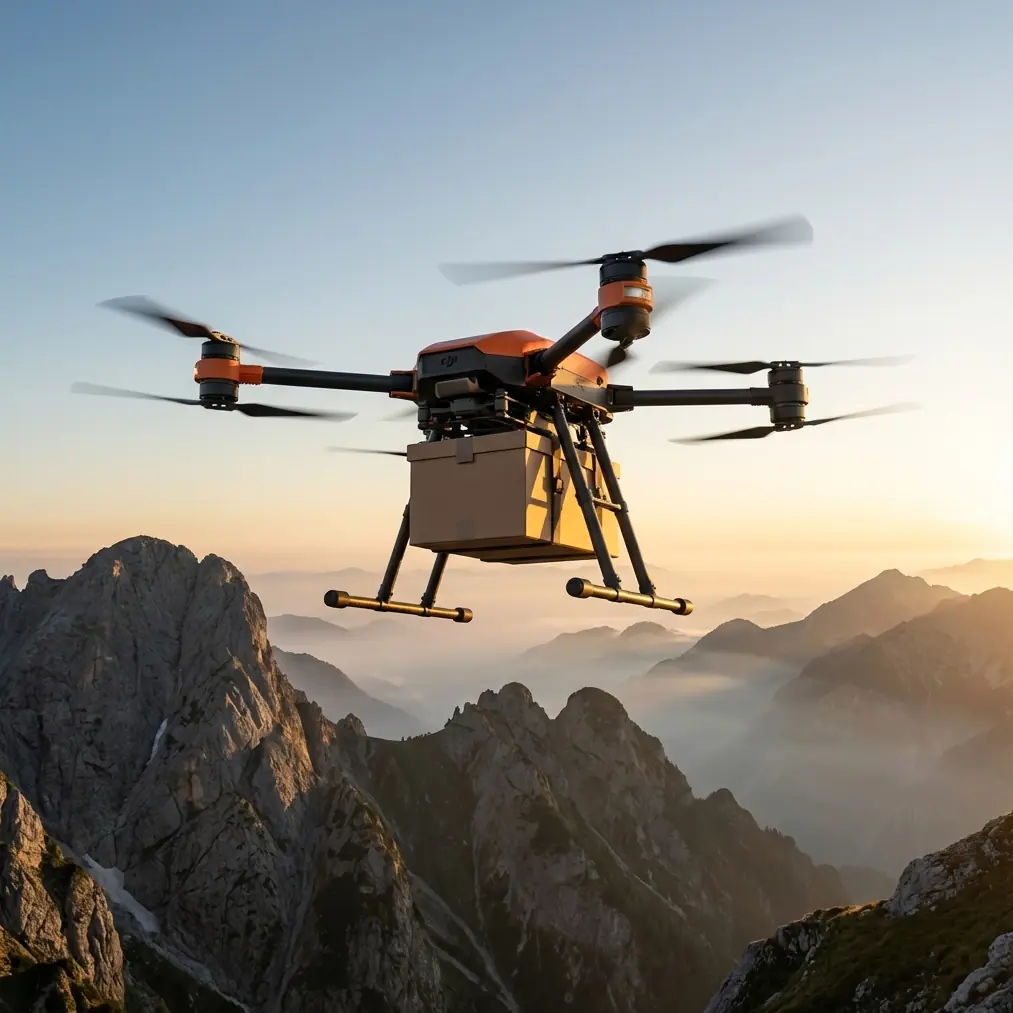
FlyCart 30 for Urban Power Line Imaging: A Practical Field Method That Respects Light, Safety, and Detail
META: Learn a field-tested FlyCart 30 workflow for capturing urban power lines with cleaner imagery, safer standoff, and better route planning—using lessons drawn from how difficult light behaves at sunrise.
Most articles about the FlyCart 30 lean on transport specs and leave out the reality of field imaging. That is a mistake, especially in urban power line work. The aircraft’s value is not only what it can carry, but how its platform stability, route discipline, and safety architecture can support repeatable visual capture in messy environments where poles, reflective surfaces, traffic corridors, and changing light all compete for your attention.
I approach this as a logistics lead, not a brochure writer. And if your assignment is capturing power lines in a city, you already know the hard part is rarely just getting airborne. The hard part is producing usable visual data when the scene looks dramatic to the eye but turns flat, gray, or washed out in the actual image. That gap between what the operator sees and what the camera records is not theoretical. It is exactly the same problem described in a recent photography piece about shooting a sunrise over the sea with a smartphone. The article’s central observation was simple: people witness the sun lifting above the horizon, turning the sky orange-red and laying golden reflections across the water, yet beginners often end up with dull, gray photos that fail to match the experience.
That lesson matters more to FlyCart 30 line documentation than it might seem.
Why a sea-sunrise photography lesson belongs in a power line workflow
Urban power line inspection and documentation often happen at the edges of the day. Early morning can reduce vehicle congestion, pedestrian interruptions, and thermal turbulence. But dawn light is deceptive. Human vision adapts beautifully. Sensors do not. The sea-sunrise article captured that perfectly: vivid in person, disappointing in the file.
Swap the horizon for a transmission corridor and the same thing happens. The sky behind the conductors glows. Glass façades bounce light into the lens. Water tanks, metal roofing, and painted building surfaces throw back highlights. The line itself is thin, dark, and easy to lose. What looked crisp in the field can come back lifeless if you do not build the mission around light behavior.
The operational significance is straightforward: your FlyCart 30 mission plan should treat lighting as a core variable, not an aesthetic afterthought. If the background is much brighter than the target, line separation suffers. If reflective clutter dominates the frame, defect visibility drops. If the drone’s path forces frequent reorientation into the sun, consistency disappears across image sets.
That is why route optimization matters here just as much as flight endurance or payload ratio.
Start with the mission geometry, not the drone settings
Before discussing the aircraft itself, define the imaging geometry of the corridor.
In urban work, three decisions shape your outcome:
- Relative angle to the line
- Sun position during the flight window
- Background complexity behind each span
Power lines are visually unforgiving. A small shift in angle can separate the conductor from a bright sky and make the difference between a useful image and a throwaway. If the line is backlit by a low sun, the scene may look spectacular to the eye but capture poorly. The sea-sunrise reference gives us the clue: bright orange-red skies and golden reflections are emotionally powerful, but they also create extreme contrast that beginner devices handle badly. In line imaging, that translates into silhouetted cables and clipped highlights.
So build the route to minimize direct backlight whenever possible. If your schedule locks you into dawn, fly the corridor in a direction that keeps the sun offset rather than centered behind the subject. For urban spans, this often means breaking a route into segments instead of forcing a single straight pass.
The FlyCart 30 is well suited to that kind of disciplined planning because it is a platform built around controlled mission execution, not improvised drifting.
Where the FlyCart 30 fits in an urban power line capture stack
The FlyCart 30 is usually discussed in terms of cargo operations, but for utility-support imaging its real advantage is platform management under operational load. A drone with a strong payload ratio gives a team more freedom in sensor configuration, mounting strategy, and accessory choices without immediately compromising mission practicality. That matters in a city, where the ideal imaging setup is often not the lightest setup.
Even if you are not lifting a heavy specialist sensor, the logic still holds. Payload flexibility allows you to carry the right camera package, protective accessories, or workflow tools while preserving a margin for stable flight behavior. For line capture, that margin shows up in image consistency.
Then there is the dual-battery architecture. Its significance in utility imaging is often understated. Redundancy is not just a safety talking point. In dense urban environments, where emergency landing choices are limited and route interruptions carry schedule costs, dual-battery design supports operational confidence. It reduces the chance that a mission ends at the worst moment: mid-corridor, mid-light window, with a partially completed data set that cannot be matched later.
The emergency parachute matters for the same reason. Not because anyone plans to use it, but because urban flights happen over constrained spaces where risk management must be built into every layer of the operation. A capture platform that acknowledges that reality is better aligned with utility work than one designed only for open-field performance.
The winch system is not just for delivery
One of the most overlooked FlyCart 30 features in infrastructure operations is the winch system. Most people hear “winch” and think transport. Fair enough. But in an urban power line context, a winch-enabled workflow can support safer positioning for specific support tasks around the operation.
No, it does not replace electrical utility procedures or line crew protocols. But it can reduce the need to place the aircraft itself into tighter vertical spaces for non-contact task support, staging accessories, or lowering lightweight items to a controlled point during a managed operation zone. The operational significance is simple: keep the aircraft farther from obstacles when the task allows it.
That matters around poles, rooftop edges, signage, and suspended urban clutter.
A field lesson from wildlife, not just wires
On one early corridor job, we planned a low-traffic morning pass along a mixed commercial-residential block. The route was straightforward on paper. Then a flock of pigeons erupted from a rooftop mechanical bay just as the aircraft transitioned near a corner structure. This is the kind of thing nobody mentions in polished marketing material, but it is exactly what crews encounter in cities. Birds, gulls near waterfront districts, kites in open lots, even curious crows around poles.
The useful point is not drama. It is sensor awareness and route discipline.
The aircraft’s sensing and obstacle-awareness framework gave the pilot enough warning to avoid a rushed manual correction into a less safe position. We widened the line, paused the run, then resumed on a cleaner track once the flock cleared. That small event reinforced a larger truth: urban power line capture is not a straight-line exercise. It is a dynamic routing problem shaped by structures, light, and living things.
If you plan for BVLOS-style corridor logic even when the operation itself remains under stricter visual procedures, your route quality improves. You think in contingencies, segment transitions, fallback points, and protected buffers rather than just a launch point and an endpoint. That mindset scales.
A practical tutorial workflow for cleaner power line imagery
Here is the method I recommend when using a FlyCart 30-oriented platform strategy for urban line imaging.
1. Scout the corridor for contrast traps
Do this before the flight day if possible. Look for:
- East-facing reflective buildings if flying near sunrise
- Water surfaces, glazed roofs, and white façades
- Tree canopies that may obscure spans at certain angles
- Rooftop bird activity near utility poles or line turns
The sea-sunrise reference reminds us that bright, beautiful light often fools the operator. What feels cinematic can flatten your result. In utility imaging, “beautiful” is not the goal. Separation and clarity are.
2. Build the route around the sun, not just the map
If dawn is your slot, note where the low-angle light will sit relative to each span. Avoid long stretches of direct backlight. In the smartphone sunrise article, the visual magic came from the sun at the horizon and the orange-red sky mirrored in water. For us, that same kind of low-angle brilliance is a warning sign. Thin conductors disappear against it.
Segment the route so each pass works with the light. Consistency across images matters more than finishing the whole line in a single flow.
3. Use payload flexibility to protect image quality
This is where payload ratio becomes practical. If your imaging package benefits from stabilization accessories, shielding choices, or support tools, do not force a stripped-down setup simply out of habit. The FlyCart 30 platform logic rewards teams that think in mission systems, not isolated components.
A utility team should ask: what configuration gives us the cleanest, most repeatable image set under actual urban conditions?
4. Preserve standoff whenever the task allows
The winch system changes how you think about proximity. If part of the operation involves staging or retrieval of lightweight non-contact materials within a controlled work zone, lowering rather than squeezing the aircraft into tighter physical space may be the smarter move. Less intrusion often means less risk.
5. Treat power continuity as data continuity
Dual-battery design is not just redundancy on a specification sheet. It protects your imaging window. Early morning light shifts quickly. If you lose the mission halfway through, repeating the pass later may produce a totally different shadow pattern and visual profile. For inspection baselines and comparative imagery, that inconsistency can be costly.
6. Keep a wildlife buffer in your route plan
Bird encounters in urban utility corridors are common enough to deserve formal planning. Mark likely congregation points: rooftops, waterfront edges, telecom structures, and trees near transformers or poles. A route with intentional buffer space gives the pilot more room to respond calmly.
7. Build for escalations and aborts
Emergency parachute capability should influence your planning discipline. Not because it replaces judgment, but because any professional urban flight operation should layer passive and active safeguards. Define your hold points, retreat vectors, and landing alternatives before takeoff.
What teams often get wrong with FlyCart 30 utility imaging
They overfocus on the aircraft’s lifting identity and underuse its systems thinking.
The FlyCart 30 earns attention because it can handle demanding operational roles. But for urban power line capture, its value is broader:
- strong payload capacity supports better sensor decisions
- dual-battery architecture supports mission continuity
- emergency parachute supports urban risk planning
- winch system can help maintain safer aircraft positioning in certain support scenarios
- route optimization thinking improves image consistency
- BVLOS-style corridor logic improves preparedness even when operations remain tightly controlled
That is the real story. Not just what the drone can carry, but how it lets a team structure the job correctly.
The biggest lesson from the sunrise reference
The smartphone article on sea sunrises was not about drones, utilities, or infrastructure. But it identified a field truth that every imaging team should remember: the eye and the camera do not experience light the same way. The article described a scene many people love—sunrise over the water, sky glowing, surface shimmering—yet noted that beginners often produce gray, lifeless photos despite the spectacle in front of them.
For power line imaging, this is more than a photography note. It is a mission planning principle.
If your FlyCart 30 operation is scheduled when the city is quiet and the light is dramatic, you must compensate for the fact that dramatic light can hide the exact details you are trying to document. The better your route design, sensor setup, and safety margins, the more likely you are to come back with images that serve engineering and maintenance teams rather than just looking atmospheric on a screen.
If your team is mapping out a utility capture workflow and wants to compare route options or payload configurations, you can share field requirements directly through this project chat line.
The strongest FlyCart 30 operations are rarely the most flashy. They are the ones that anticipate contrast problems, keep safe spacing, recover smoothly from surprises like rooftop bird movement, and deliver image sets that are consistent enough to trust.
Urban power lines do not reward improvisation. They reward structure.
Ready for your own FlyCart 30? Contact our team for expert consultation.