
FlyCart 30 at a Windy Solar Farm: A Field Report on Payload
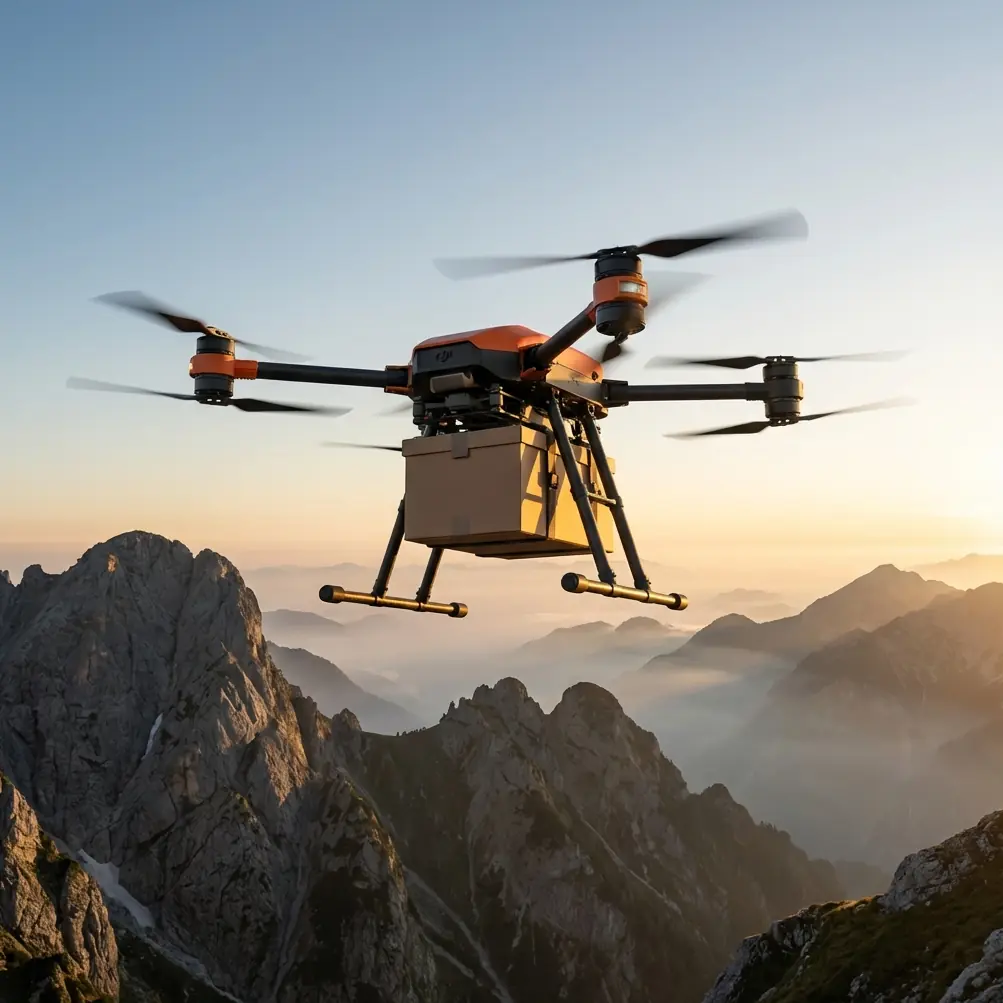
FlyCart 30 at a Windy Solar Farm: A Field Report on Payload, Precision, and Camera Discipline
META: Field report on using the DJI FlyCart 30 around windy solar farms, with practical insights on payload planning, route control, winch workflows, safety systems, and sharper image capture using manual focus techniques.
I’m Alex Kim, a logistics lead by trade, which means I tend to judge aircraft less by brochure language and more by what happens when wind starts moving across open ground and the job still has to get done.
A solar farm is a revealing place to evaluate the FlyCart 30. The site is wide, repetitive, exposed, and operationally unforgiving. Wind funnels down service lanes. Heat shimmer builds over panel rows. Access roads can be serviceable in one section and awkward in the next. Every unnecessary landing burns time. Every misjudged route compounds into delays across the day. If you are moving tools, replacement components, or inspection gear across that environment, the platform has to do more than lift. It has to manage distance, maintain predictability, and support crews who are already working under narrow maintenance windows.
That is where the FlyCart 30 starts to separate itself. Not because “cargo drone” sounds impressive, but because the airframe is built around practical site movement. Payload ratio matters here. On a solar project, carrying enough useful weight per trip changes the labor equation. If one aircraft movement replaces repeated buggy runs across long panel blocks, the advantage is not abstract. It shows up in turnaround time, technician fatigue, and how quickly a fault can be addressed before generation losses stack up.
The part people often miss is that a solar farm mission is not only a transport exercise. It is also an information exercise. You are often documenting conditions while moving supplies. Crews want visual confirmation of inverter access, cable routing congestion, obstruction points, or storm-related debris. In windy conditions, that means image capture becomes a real operational variable. If your visual records are soft, delayed, or inconsistent, the logistics chain suffers because people on the ground start making return trips to verify what should have been obvious the first time.
That brings me to a lesson from camera handling that applies surprisingly well to FlyCart 30 field work.
A recent camera reference aimed at manual shooting made a simple point: many beginners in M mode lose shots because focusing is slow and blur creeps in. It also highlighted a feature common on Sony, Fujifilm, and Canon mirrorless cameras: focus peaking. When enabled, the in-focus area is outlined in red or yellow as you rotate the focus ring. That sounds like a small photographer’s trick, but at a windy solar farm it becomes operationally useful. If your team is using mirrorless cameras on the ground to document the FC30’s cargo drops, landing zones, or infrastructure conditions, focus peaking cuts hesitation. You do not need to zoom into the image and second-guess every frame. You see the highlighted edge, confirm focus, and shoot.
That speed matters more than people think. Windy sites rarely give you static scenes for long. A sling load settles, then swings slightly. A technician steps into frame, checks a package, and moves on. Dust lifts. A service vehicle passes through the lane. The camera article also recommended pre-focusing on the point where a person or vehicle is expected to pass, then triggering the shutter when the subject enters that plane of focus. For solar farm documentation, this is one of the cleanest methods available. Instead of chasing focus while the moment is already gone, you lock onto the expected action zone: a drop-off pad, a maintenance aisle, a panel row junction, a gate crossing. Then you wait for the worker, cart, or incoming aircraft movement to hit that plane.
Why does this matter in a FlyCart 30 article? Because disciplined documentation is part of serious drone operations. The aircraft may be carrying mission-critical payloads, but the supporting imagery often decides how efficiently the next decision gets made. A clear shot of a delivered replacement string monitor, positioned at the correct array section, can close a communication loop immediately. A blurry one creates another round of calls.
On one windy inspection-support day, we had exactly that sort of compound workflow. The aircraft was moving small but essential maintenance items between staging and a distant service zone while the ground team recorded component condition and route accessibility. Mid-mission, the onboard sensing had to account for a wildlife interruption: a large wading bird had wandered near a drainage corridor that crossed the access path by one of the array edges. This is the sort of thing solar farm operators understand well. Wildlife and infrastructure share space whether the schedule likes it or not. The real test is not whether you can talk about sensors in theory. It is whether the platform’s obstacle and situational awareness systems help crews keep margins intact without turning the mission into confusion. In this case, the aircraft’s sensing suite gave enough warning to preserve separation and allow the route to be managed cleanly without forcing the team into a rushed correction.
That is where BVLOS planning and route optimization become practical subjects rather than industry jargon. On large energy sites, distance changes behavior. The farther you operate from immediate visual proximity, the more route logic matters. You want paths that reduce exposure to crosswinds, avoid unnecessary transitions over active work zones, and preserve a clear sequence for ascent, transit, delivery, and return. If the route is sloppy, payload handling gets sloppy with it. If the route is disciplined, the whole site starts feeling smaller.
The FlyCart 30’s value in that setting is not just “it can go far.” It is that route planning, payload management, and delivery method can be aligned around the structure of the solar farm itself. Long array rows create natural corridors. Service pads and inverter stations become repeatable nodes. Wind direction changes which lanes are more favorable. A well-run FC30 mission uses those realities instead of fighting them.
The winch system deserves special attention here. On uneven or restricted ground, landing is not always the best choice. Solar farms are full of surfaces and spaces that look available until you remember what is actually there: cable trenches, maintenance equipment, panel edges, fencing, drainage channels, temporary obstructions. A winch-based delivery lets the aircraft maintain safer separation from the site surface while placing a load where crews can access it. That is not just convenient. It reduces rotor wash interaction near sensitive areas and lowers the likelihood of a rushed landing decision in gusty conditions.
For solar operations managers, that changes the design of the workflow. Instead of searching for a perfect touchdown spot every time, the team can standardize elevated delivery logic around known receiving zones. Once those zones are mapped and practiced, turnaround improves. It also becomes easier to document each handoff consistently, which circles back to the camera technique point. If your ground observer knows the package will descend into a predictable box, pre-focus becomes easy. Use focus peaking, watch for the red or yellow edge highlight on the receiving area or the technician’s hands, and capture the moment sharply without delay.
The safety stack also matters more in wind than in calmer demonstrations. Dual-battery architecture is not just a specification to mention and forget. At exposed industrial sites, power redundancy contributes directly to operational confidence. Wind can force more aggressive power management and tighter decision-making around reserves. A system designed with that reality in mind gives teams more room to stay conservative rather than stretching margins. The same goes for an emergency parachute. You hope to never involve it. But on a large civilian worksite, emergency protections are part of how you justify the mission structure in the first place. They support the case that the aircraft is not merely efficient, but responsibly integrated into a live industrial environment.
There is another subtle point about windy solar farms that often gets overlooked: consistency beats headline performance. You do not need one heroic flight. You need twenty predictable ones. The payload has to arrive the same way each time. The route needs to be understandable enough that field teams trust it. The handoff process must remain clean even when the weather is less cooperative than the planning sheet suggested at sunrise.
That is why I tend to evaluate the FlyCart 30 through repetition. Can the platform hold workflow discipline when the site is noisy, bright, and gusty? Can crews maintain delivery tempo without turning every leg into an improvisation? Can documentation remain crisp enough to support maintenance decisions in real time?
With the right operating method, the answer is yes.
A productive setup for this kind of site usually includes four linked habits:
First, build routes around site geometry, not intuition. Array lanes, inverter pads, and access corridors should define the mission skeleton.
Second, use the winch system where the ground environment is cluttered or awkward. It gives the operation more options without forcing unnecessary contact with the surface.
Third, treat dual-battery and emergency parachute capability as planning tools, not marketing footnotes. Their significance is in preserving safer decision windows.
Fourth, tighten the visual documentation process. This is where the manual focus reference becomes unexpectedly valuable. If your support team is using mirrorless cameras from brands like Sony, Fujifilm, or Canon, turn on focus peaking. Watch for the in-focus region to light up in red or yellow. And for repeated action points such as package receipt or vehicle crossings, pre-focus on the expected plane and release the shutter as the subject enters it. That one adjustment alone can improve the success rate of your field imagery because the camera does not hunt, and the operator is no longer reacting late.
If you are building an FC30 workflow for solar sites and want to compare route logic, delivery zone design, or documentation habits with someone who has worked through these variables in the field, you can message the operations desk directly.
What stays with me from these deployments is not a single dramatic moment. It is the accumulation of small, correct decisions. Choosing a better lane because wind exposure is lower there. Using the winch instead of forcing a landing. Keeping extra margin because the site is busier than expected. Capturing a sharp image on the first try because the camera was pre-focused where the action would happen. Letting the aircraft’s sensing do its job when wildlife unexpectedly enters the picture near a drainage edge.
That is what mature FlyCart 30 use looks like on a windy solar farm. Not spectacle. Process.
And when the process is right, the aircraft stops feeling like a novelty and starts acting like infrastructure.
Ready for your own FlyCart 30? Contact our team for expert consultation.