
FlyCart 30 Best Practices for Windy Solar Farm Capture Missi
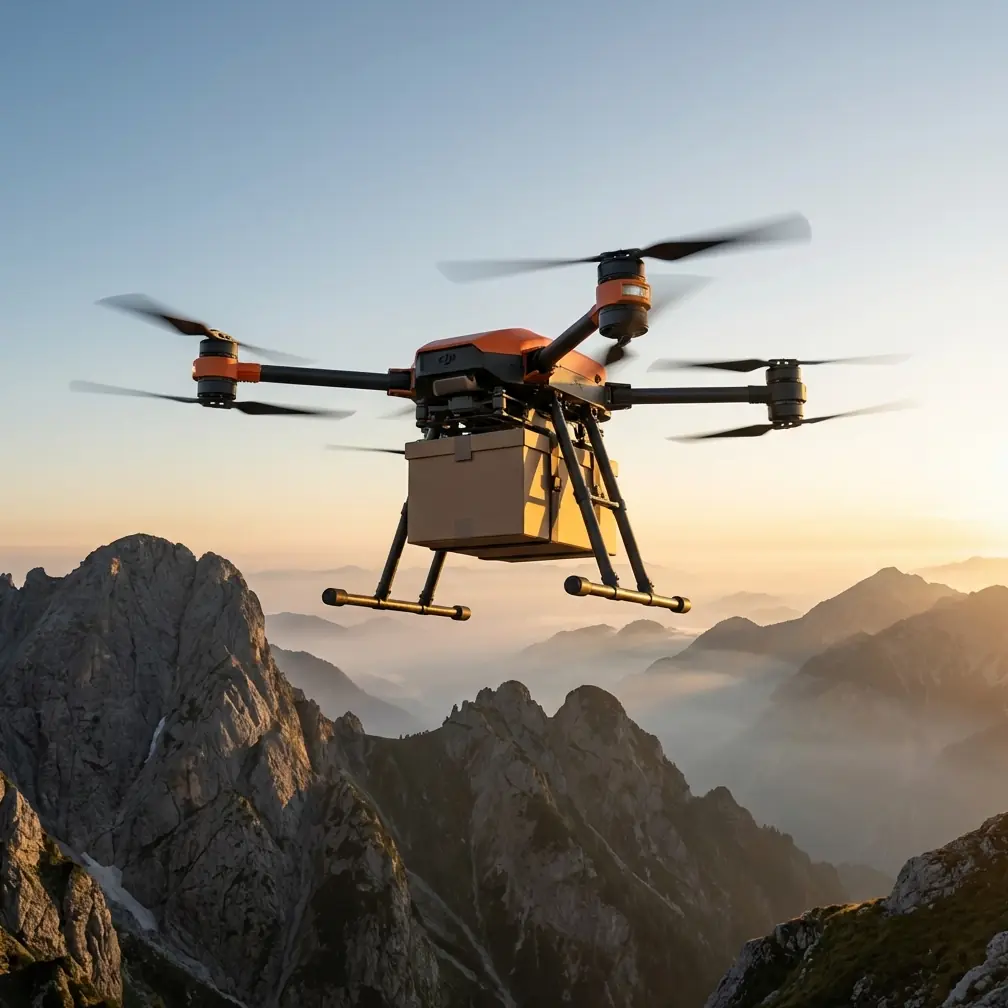
FlyCart 30 Best Practices for Windy Solar Farm Capture Missions
META: A field-driven FlyCart 30 tutorial for windy solar farm operations, covering payload ratio, route planning, winch use, dual-battery management, safety systems, and real-world workflow decisions.
Wind changes everything on a solar farm.
On paper, a panel field looks simple: long rows, open ground, predictable geometry. In practice, it is one of the more deceptive environments for drone work. Heat shimmer builds by late morning. Crosswinds accelerate through row gaps. Reflective surfaces can confuse visual judgment. Distances are larger than they first appear. If you are using the FlyCart 30 in this setting—whether for sensor deployment, line delivery, maintenance support, or inspection logistics—the mission is less about raw lift and more about discipline.
I approach this as a logistics problem first. That mindset matters. The FlyCart 30 is often discussed for payload capacity, but on a windy solar site, the real question is how you preserve mission stability while still getting useful work done per sortie. Payload ratio, route optimization, battery management, and descent control all become connected. Ignore one, and the rest start to slip.
This tutorial is built around that reality.
Start with the site, not the aircraft
Before touching the flight plan, define what the aircraft is actually doing on the solar farm.
“Capturing” can mean different things depending on the operation:
- moving compact inspection equipment to a distant inverter pad
- lowering a sensor package into a hard-to-reach corridor
- delivering a replacement component near tracker rows
- supporting a visual documentation mission by transporting tools or auxiliary devices
That distinction affects everything from your payload ratio to your preferred drop method.
Solar farms also create microclimates. Open perimeter roads may show one wind reading, while the interior of the array produces another. Rows can funnel gusts into narrow channels, especially when panel tilt creates a repeating aerodynamic structure. A FlyCart 30 mission that looks comfortable during preflight at the launch point can feel very different 400 meters down-route.
This is where route optimization stops being a software checkbox and becomes an operational habit. The shortest route is not always the safest or the smoothest. I often prefer a path that adds a little distance if it avoids the strongest lateral gust corridors between panel blocks.
Windy conditions reward conservative payload ratios
A common mistake on commercial drone jobs is planning around maximum lift instead of practical lift.
The FlyCart 30’s value comes from transporting meaningful loads, but in wind, useful capacity is determined by how much control authority you want to preserve. If the payload ratio is too aggressive, the aircraft may still fly, but your margin for correction shrinks. That shows up in slower stabilization after gusts, more battery draw, and less confidence during precision delivery.
For solar farm work, I recommend thinking of payload ratio as a stability setting rather than a weight figure. The heavier the suspended or mounted load relative to the mission conditions, the more every gust matters. Wind seldom arrives as a steady number; it pulses. Those pulses are what create delivery errors, pendulum motion, and inefficient rerouting.
The practical takeaway is simple: if the day is gusty, reduce the payload before you reduce your standards.
That may mean splitting one movement into two sorties. On a spreadsheet, that looks less efficient. In the field, it is often faster overall because you spend less time correcting unstable approaches, aborting drops, or recovering from battery consumption that climbed faster than predicted.
The winch system is more than a convenience
On solar farms, landing is often the least elegant part of a mission.
You may have gravel access roads, muddy service paths, uneven vegetation, temporary maintenance equipment, or tightly controlled areas where rotor wash is unwelcome. That is why the winch system becomes one of the FlyCart 30’s most operationally significant features. It allows the aircraft to stay clear of obstacles and complete delivery or pickup actions without committing to a landing zone that is marginal at best.
In windy conditions, though, the winch system requires its own technique.
A suspended payload behaves differently from a rigidly mounted one. If you lower too quickly in crosswind, the load can drift into panel edges, support posts, or fencing. If you hover too high while correcting, you increase exposure to gusts that amplify swing. The best results usually come from a controlled hover at a sensible working height, a deliberate descent rate, and a route choice that positions the aircraft slightly upwind of the intended set-down point.
That upwind offset matters. It gives you room to let the load settle into place instead of fighting to hold it directly above target while the wind pushes laterally. In other words, the winch is not just a delivery tool. It is a buffer between the aircraft and the messy realities of ground access.
Dual-battery planning should be treated as mission design
The dual-battery setup is often discussed as a reliability and endurance benefit, which is true, but on a solar farm it also changes how you should think about tempo.
Long rows and distributed assets tempt crews into stretching each sortie. That is usually where efficiency starts to degrade. The better approach is to use the dual-battery architecture to maintain consistent performance across repeated shorter tasks rather than one oversized mission that ends with everyone watching the percentage readout too closely.
In warm, windy conditions, energy use rarely follows ideal projections. Headwinds on the outbound leg may be manageable, then become quartering gusts on the return that force more active correction. Add a suspended load, and the battery profile changes again.
So instead of asking, “Can this mission be completed on one set?” ask:
- what reserve is needed for a stable return in deteriorating wind
- whether the route includes enough margin for an alternate path
- whether the delivery phase itself will take longer due to hover adjustments
Dual-battery capability supports continuity, but it should not become an excuse to normalize thin margins.
BVLOS thinking begins before regulation enters the conversation
Solar farms are ideal candidates for extended corridor-style drone operations. Distances can be significant, sightlines can be repetitive, and the value of minimizing vehicle movement across the site is obvious. That is why BVLOS is frequently part of the strategic conversation around this kind of work.
Even when your current operation remains within visual line of sight, BVLOS thinking improves mission design. It pushes teams to standardize route logic, define contingency points, and map communication handoffs in a way that scales.
This is one of the reasons route optimization deserves more attention than it usually gets. Once a site has recurring movement patterns—same inverter skids, same maintenance staging points, same inspection corridors—you can build repeatable aerial routes that reduce indecision and lower exposure to the worst wind lanes.
If your team is building that kind of workflow and wants a practical discussion around field setup rather than generic product talk, share your mission outline here: https://wa.me/85255379740
The main point is that disciplined repeatability beats improvisation, especially on large energy sites.
Sensors matter when the environment surprises you
Open industrial land attracts wildlife. That is normal, and crews should plan for it.
On one windy morning mission near the edge of a solar array, a small group of deer broke from scrub cover and crossed a service corridor below the flight path just as the aircraft was preparing for a low-altitude delivery transition. This was not dramatic, but it was operationally significant. The onboard sensors gave the crew the extra awareness needed to pause the approach, hold position, and re-time the descent rather than forcing the final segment while the ground scene was changing.
That kind of event is easy to dismiss in an office. In the field, it changes how you evaluate sensor systems. They are not just for fixed obstacles or emergency avoidance. They support better judgment in dynamic environments where maintenance staff, utility vehicles, birds, and wildlife all share the same working space.
The lesson is straightforward: on solar farms, your obstacle environment is not static, even if the infrastructure is.
Safety systems should influence how you plan, not just how you react
The emergency parachute is one of those features that tends to be mentioned late in product discussions, almost as an insurance note. I think that understates its role.
A safety system like an emergency parachute changes acceptable planning assumptions. It does not remove risk, and it certainly does not justify lazy route choices, but it does provide an added layer in environments where you may be operating over broad industrial footprints with limited ideal recovery areas. In a solar farm setting, that matters because panel rows, cable runs, and service structures narrow your options.
The right way to use that capability is psychological as much as technical. It should reinforce structured preflight planning: identify where a controlled response would be least disruptive, understand which segments of the route offer cleaner buffer zones, and avoid building a mission that depends on everything going perfectly.
This is also where the broader industry conversation becomes relevant. A 2026 DroneLife report described BRINC presenting a model in which drones could take on roles that had previously been considered too dynamic for them, specifically because older limitations had kept drones out of active pursuit scenarios. That story was about a very different mission set, and not one we are discussing here, but the underlying shift is useful: advanced drone operations are moving from passive support to active decision environments.
For commercial operators, the takeaway is not about public safety. It is about maturity. Aircraft are increasingly being asked to do more than observe. They are being trusted to intervene in live workflows where timing, route precision, and safety systems all matter at once. The FlyCart 30 fits that larger trend when used on industrial sites like solar farms. It is not just documenting the jobsite; it is participating in the job.
Build the mission around transitions
Most flight issues on windy solar farms happen during transitions:
- cruise to hover
- hover to winch deployment
- empty return after payload release
- approach changes caused by ground activity
Crews often focus on the mid-route segment because that is where the distance sits. In reality, transitions demand the most pilot attention and the cleanest standard operating procedure.
A loaded outbound leg and an unloaded inbound leg do not behave the same way in wind. After release, the aircraft may respond more sharply than it did minutes earlier. If the pilot is still mentally flying the heavier configuration, corrections can become uneven. This is another reason to brief each phase explicitly rather than treating the mission as one continuous action.
I also recommend setting hard criteria for aborting the final delivery phase. If the payload begins to swing beyond your acceptable window, if the hover point requires repeated aggressive correction, or if the ground team cannot maintain a clean reception zone, back out and reset. A professional operation is defined less by perfect first attempts than by disciplined decisions when conditions drift out of tolerance.
A practical workflow for windy capture missions
For teams running repeat operations, this framework works well:
1. Validate the wind where the work happens
Do not rely only on launch-point readings. Check the interior corridors and row ends.
2. Set a conservative payload ratio
Choose the load based on stability margin, not headline lift capability.
3. Design the route around airflow and obstacles
Avoid the most turbulent lanes even if the route becomes slightly longer.
4. Use the winch to avoid poor landing decisions
A controlled hover and descent is usually cleaner than forcing a compromised touchdown.
5. Manage the dual-battery advantage properly
Use it to preserve margins across repeatable sorties, not to justify overextending one mission.
6. Treat sensors as workflow tools
They support safer timing when people, vehicles, or wildlife alter the scene below.
7. Pre-brief emergency logic
The emergency parachute is part of the safety architecture, but the route should still favor the least disruptive contingencies.
What makes the FlyCart 30 effective here
The FlyCart 30 stands out on windy solar farm work not because one feature solves everything, but because several systems stack well together. The winch system reduces dependence on questionable landing zones. The dual-battery configuration supports stable operational tempo. Safety features like the emergency parachute improve resilience. And when paired with disciplined route optimization and realistic payload ratio choices, the aircraft becomes much more than a transport platform.
That is the difference experienced crews notice.
The mission stops being about whether the drone can carry the load. It becomes about whether the team can carry out the task with repeatable precision in a live industrial environment. On solar farms, especially in wind, that is the standard that matters.
Ready for your own FlyCart 30? Contact our team for expert consultation.