
FlyCart 30 for Dusty Solar Farm Work: A Practical Airspace
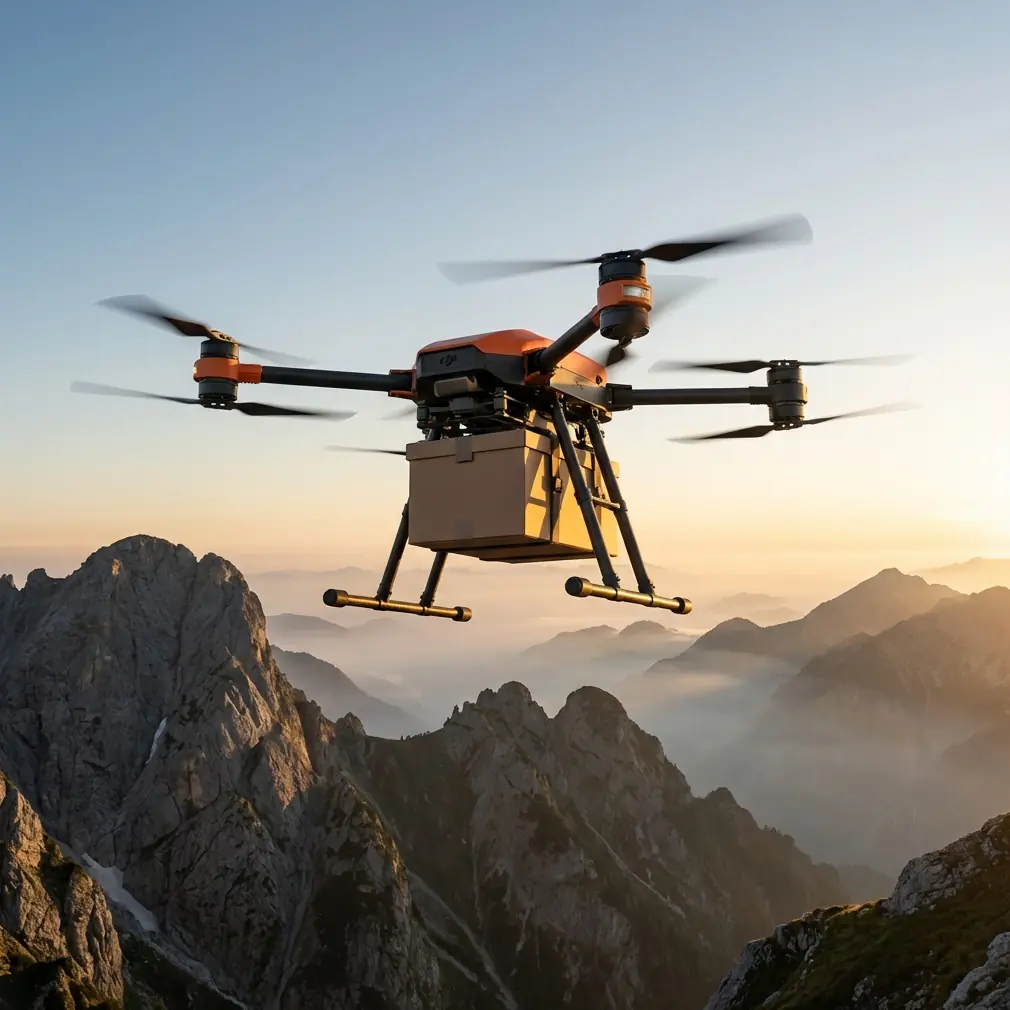
FlyCart 30 for Dusty Solar Farm Work: A Practical Airspace-and-Operations Guide
META: A field-focused FlyCart 30 guide for dusty solar farm missions, covering payload strategy, winch use, dual-battery planning, BVLOS readiness, and why shared-airspace projects like ULTRA matter.
Solar farms look simple from a distance. Long rows. Repeating geometry. Plenty of open space.
On the ground, they are anything but simple for drone teams.
Dust gets into everything. Panel rows create repetitive navigation challenges. Access roads can be rough or spread out across huge footprints. And when the job involves moving tools, sensors, replacement parts, or field kits between inspection crews, the aircraft is no longer just a camera platform. It becomes a logistics asset.
That is where the FlyCart 30 deserves a more serious conversation.
Most discussions around this aircraft stay at the feature level. Payload, batteries, winch, safety systems. Useful, but incomplete. For solar farm operators working in dusty environments, the bigger question is this: how do those features translate into a repeatable mission profile that can live inside the future of shared airspace?
That question matters more now because the wider UAS ecosystem is moving in that direction. At AUVSI XPONENTIAL 2026 in Detroit, officials tied to Project ULTRA described a joint effort involving the FAA, Department of Defense, test sites, and industry partners to normalize drone operations in shared airspace. One of the key development environments named was Grand Forks, where scalable systems are being built for UAS operations and logistics coordination. That detail is not abstract industry noise. It points directly at the kind of operating model a platform like FlyCart 30 is designed to support: repeatable, organized aerial logistics rather than one-off flights.
For solar farm work, that distinction is operationally significant.
Why solar farms are a strong fit for the FlyCart 30
As a logistics lead, I tend to look at aircraft less as flying gadgets and more as time-moving machines. A useful drone saves truck miles, compresses response times, and reduces the number of times technicians have to cross a giant site for a forgotten tool or replacement component.
Solar farms create exactly that kind of problem set.
A technician may discover a fault string issue on one side of the site while the required test equipment is parked near the inverter station on the other end. A thermal inspection team may need spare batteries, cleaning supplies, labeling materials, or a lightweight measurement device delivered without pausing the workflow. In dusty conditions, every unnecessary vehicle movement creates more airborne particulates and more contamination on equipment and panel surfaces.
The FlyCart 30 stands out here because it was conceived for transport first. That sounds obvious, but it separates the platform from many competitors that can carry something occasionally yet were not built around cargo workflow. The difference shows up in practical details like load handling and delivery method, especially when ground access is uneven or obstructed.
For solar operators, the winch system is not a side feature. It is often the mission enabler.
The winch system changes how deliveries happen on site
A dusty solar farm is not always a good landing zone. Ground surfaces may be loose, visibility can be degraded by rotor wash, and there may be sensitive equipment, fencing, cable routing, or narrow service corridors near the drop point.
That is where a winch-based delivery can outperform a land-and-release approach.
Instead of committing the aircraft to a touchdown in marginal conditions, the operator can keep the aircraft clear of dust-heavy ground effect and lower the payload precisely where the field team needs it. On a solar site, that can mean delivering a part into a maintenance lane between panel rows without exposing the aircraft to as much debris ingestion or surface instability.
Competitor aircraft that rely more heavily on landing-centric delivery profiles can lose efficiency here. They may complete the task, but with more site constraints and often more exposure to rough terrain. The FlyCart 30’s cargo handling logic is simply better aligned with industrial field realities.
That matters even more when the cargo is not bulky, but mission-critical. A small diagnostic instrument delivered 10 minutes earlier can be worth more than a larger payload delivered less elegantly.
Payload ratio matters more than headline lift
People love maximum payload numbers, but solar farm logistics is usually won by payload ratio, not brute force.
By payload ratio, I mean the balance between what the aircraft can carry and how efficiently it can complete repeated site missions without turning every flight into a range compromise or battery event. Most solar deliveries are not about pushing absolute lift limits. They are about moving the right item, at the right speed, over and over again.
This is one reason the FlyCart 30 is compelling. It fits the middle ground where industrial teams actually operate. A drone that carries enough to move field tools, small components, and support kits reliably is often more valuable than a larger system that creates more setup burden, more airspace friction, or more site disruption.
In dusty environments, overbuilding the mission is usually a mistake. You want a delivery profile that is stable, predictable, and easy to standardize. The FlyCart 30 fits that logic well.
Dual-battery planning is not just about endurance
The dual-battery architecture deserves attention for another reason: operational continuity.
On large solar sites, the cost of delay is usually hidden in labor coordination. One late aerial delivery can idle two technicians, interrupt an inspection sequence, or force a vehicle redeployment. Dual-battery systems help teams think less in terms of isolated flights and more in terms of structured sortie planning.
That becomes especially useful when building route optimization around known site patterns. For example, if technicians are working in progressive zones across a solar farm, the drone operation can map battery usage to those zones and stage delivery windows accordingly. Instead of treating each request as a random errand, the aircraft becomes part of a scheduled support network.
This is exactly why the Project ULTRA news matters to a FlyCart 30 buyer or operator. ULTRA’s stated aim is to normalize drone activity in shared airspace, and the Grand Forks environment is being used to develop scalable systems for UAS operations and logistics. Scalable systems are the key phrase. Not cool demos. Systems.
A FlyCart 30 program on a solar farm should be designed the same way: scheduled routes, defined drop procedures, documented battery swaps, and clear airspace coordination. The more the operation looks like a system, the more future-ready it becomes for BVLOS and shared-airspace integration.
BVLOS potential starts with discipline on VLOS jobs
A lot of teams talk about BVLOS as if it arrives when the paperwork does.
In reality, BVLOS readiness starts much earlier. It begins when you create clean operating habits on today’s line-of-sight work.
For FlyCart 30 missions on solar farms, that means building repeatable route logic across panel blocks, service roads, inverter pads, and maintenance staging points. It means documenting weather and dust thresholds. It means defining when to use the winch versus when a landing zone is acceptable. It means training crews so that payload attachment, release, and turnaround happen the same way every time.
This is another place where the ULTRA story has real relevance. When regulators, test sites, and industry partners are working together to normalize shared-airspace drone operations, they are effectively pushing the market toward standardized behavior. Operators who learn to run the FlyCart 30 with consistency now will be in a stronger position when broader BVLOS frameworks mature.
If your solar farm operation is likely to grow into longer route work, centralized dispatch, or multi-point logistics, this should shape how you deploy the aircraft from day one.
Emergency parachute systems are about keeping the site operational
Safety features are often framed in narrow terms. Useful for compliance. Useful for checklists.
That undersells them.
An emergency parachute matters on a solar site because the site itself is a production asset. Any aircraft incident near panels, electrical infrastructure, or working crews can shut down more than a flight. It can interrupt maintenance flow, trigger incident reviews, and reduce confidence among stakeholders who are deciding whether drone logistics should expand.
A robust safety stack supports adoption internally. Site managers are more likely to approve repeated drone transport missions when the aircraft’s risk controls are visible and specific. On a dusty solar farm where conditions can change quickly, that confidence is not optional.
The FlyCart 30 benefits here because it feels purpose-built for industrial acceptance, not hobbyist adaptation.
Route optimization for panel fields: keep it boring
Good route optimization on a solar site should look boring.
That is a compliment.
You do not want dramatic paths, fancy maneuvers, or ad hoc decision-making. You want stable corridors that avoid regular worker concentrations, respect equipment zones, and minimize unnecessary low-altitude dust disturbance. The ideal route plan uses the site’s geometry in your favor: long straight lines, predictable service intervals, and repeatable delivery nodes.
The FlyCart 30 supports this kind of planning because its whole value proposition is tied to cargo movement, not improvisation. That may sound less exciting than a performance-focused multirotor pitch, but in commercial operations, boring is profitable.
For a solar farm, I would typically frame route optimization around four layers:
- Primary cargo corridors between staging and field teams
- Alternate paths for dust or temporary obstruction conditions
- Winch-enabled drop points where landing is undesirable
- Battery turnover timing linked to technician work progression
That structure creates something close to a micro logistics network inside the site boundary.
And that circles us back to why industry developments like Project ULTRA deserve attention. If the future of drone operations is shared, normalized, and systematized, then the best aircraft choices are the ones that already fit that operational philosophy. FlyCart 30 does.
Training crews for dusty deployments
Dust changes behavior. It should change training too.
Pilots and field teams need more than aircraft familiarity. They need cargo discipline. On-site crews should know how to package items for rotor wash, how to receive a winch-lowered delivery safely, where to stand during descent, and when a ground handoff is better than a suspended release. Maintenance teams also need a clear routine for post-flight inspection in dusty conditions, especially around exposed interfaces and moving components.
The nice thing about a transport-focused platform is that training scenarios are easy to make realistic. You do not need to invent abstract drills. Build them around real field requests: replacement fuse kits, thermal tools, cleaning consumables, radios, PPE bundles, or documentation packs.
If you are shaping a solar farm cargo workflow and want a quick operator-level discussion, this FlyCart 30 field planning chat is a practical place to start.
What makes the FlyCart 30 stronger than many alternatives
The simplest answer is that it treats delivery as the main event.
A lot of competing drones can be adapted to move cargo. Fewer are naturally suited to the friction points that appear on industrial sites: poor landing surfaces, repetitive dispatch cycles, safety-sensitive infrastructure, and the need for predictable handling by mixed teams of pilots and technicians.
For dusty solar farm operations, the differentiators are not flashy. They are practical:
- A winch system that reduces dependence on touchdown zones
- A dual-battery approach that supports structured sortie planning
- Safety design, including emergency parachute considerations, that helps organizations scale usage responsibly
- A payload profile that matches the reality of field support work instead of chasing oversized edge-case lifts
- A better fit for the operational future implied by shared-airspace efforts such as Project ULTRA
That last point deserves emphasis. The ULTRA initiative is about normalizing drone operations in shared airspace, and Grand Forks is being used to develop scalable systems for logistics coordination. If your aircraft and procedures already align with logistics discipline, you are not just buying capability for today’s site. You are preparing for the operating model the industry is moving toward.
For solar farm teams, that is the real opportunity.
Not just flying cargo.
Building a drone logistics process that remains useful as regulation, infrastructure, and airspace integration mature.
Ready for your own FlyCart 30? Contact our team for expert consultation.