
FlyCart 30 in Extreme Temperatures: A Field Case Study
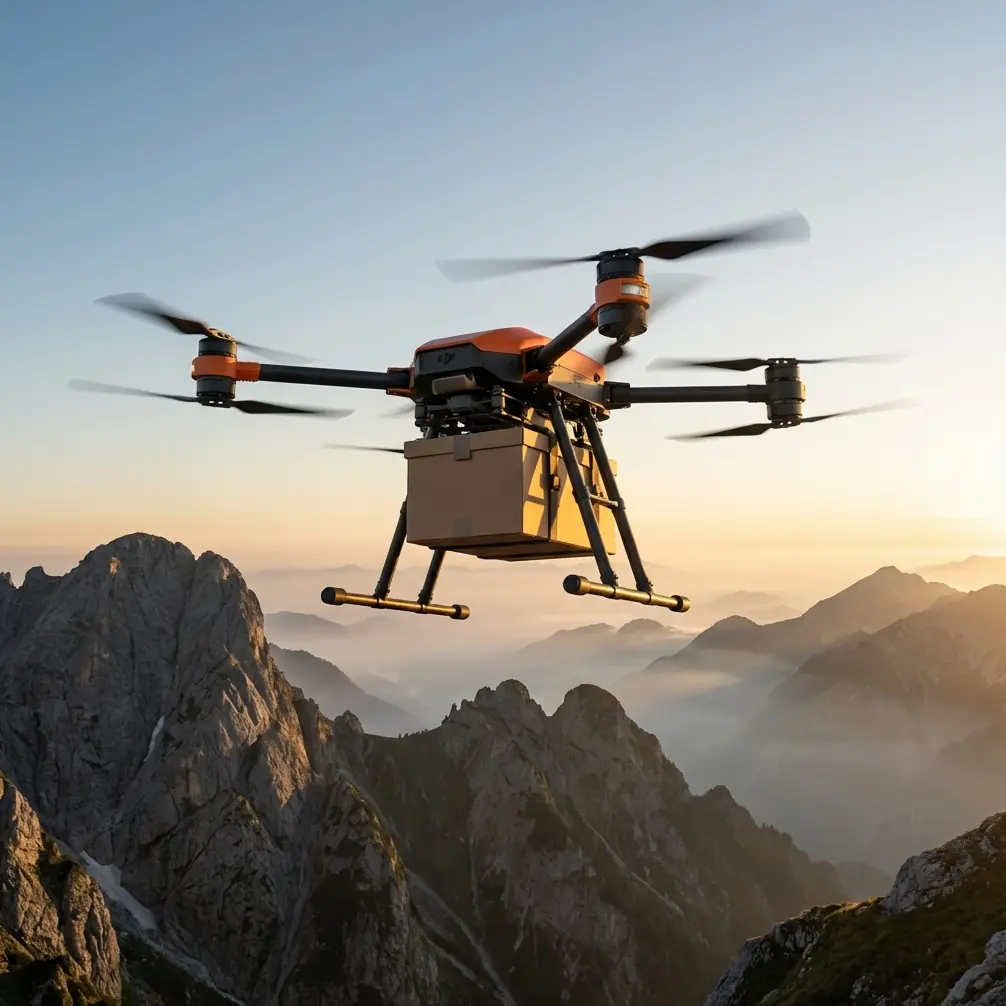
FlyCart 30 in Extreme Temperatures: A Field Case Study on Capturing Venues Without Losing the Mission
META: A practical FlyCart 30 case study for extreme-temperature venue capture, covering battery management, route planning, winch use, payload balance, and image workflow from the field.
I spend most of my time thinking about logistics, not aesthetics. If a site team asks whether a drone can document a venue in punishing heat or bitter cold, my first instinct is to look at mission reliability: battery behavior, route efficiency, payload tradeoffs, recovery margins, and whether the aircraft can finish cleanly if conditions shift halfway through the job.
That is exactly why the FlyCart 30 has become interesting for venue capture work in hard environments.
On paper, people see a cargo platform and assume the conversation begins and ends with lifting capability. In the field, that is too narrow. A heavy-lift aircraft matters not just because it carries more, but because it gives the operator margin. Margin for a stabilized imaging setup. Margin for safer reserves in rough air. Margin for choosing a winch deployment instead of a landing when the ground surface is unstable, icy, dusty, or heat-soaked.
This case study comes from a venue documentation assignment where temperature extremes shaped every decision. The brief sounded simple enough: capture a large site with enough visual clarity for planning, stakeholder updates, and ongoing operations reviews. The real challenge was consistency. Extreme temperatures punish weak workflows. Batteries sag faster than expected. Operators rush setup. Lens choices become reactive instead of planned. A mission that looks routine on a calm day can turn messy when the environment starts taking energy out of both the aircraft and the crew.
Why FlyCart 30 makes sense for venue capture
The FlyCart 30 is usually discussed through the lens of transport missions, but that misses a practical crossover. Venue capture in difficult conditions often behaves like logistics. You are moving equipment, managing energy, planning routes, and reducing unnecessary exposure on the ground. If a site has uneven access, limited landing options, or a need to move sensors and support gear between points, the aircraft’s payload ratio and winch system become operational tools rather than brochure features.
That distinction matters.
A strong payload ratio lets you build a more resilient mission profile. Instead of stripping the setup to the bare minimum, you can carry what the task actually needs and still preserve a sane reserve. In extreme temperatures, that reserve is not a luxury. It is what keeps a documentation flight from turning into a rushed return leg.
The winch system also changes how venue capture is conducted. In cold environments, landing zones may be slick, obstructed, or simply not worth the risk. In high heat, dusty surfaces can affect visibility and contaminate gear during touchdown. Being able to position, lower, retrieve, and continue without repeated landings reduces the total stress on the mission.
Then there is BVLOS planning. For civilian commercial operations where regulations and approvals allow it, beyond visual line of sight concepts influence how a large venue is mapped and documented. Even when a specific flight remains within visual constraints, thinking in BVLOS terms improves route discipline: pre-defined legs, contingencies, battery gates, communication checkpoints, and fewer improvisations.
The venue problem nobody talks about enough: image consistency
Most teams worry about whether they can get the aircraft in the air. Fewer spend enough time on whether the imagery will be consistent enough to be useful after the flight.
This is where an odd but useful lesson comes from outside the cargo-drone world. A recent Chinese reference on Huawei phone photography argued that many users fail not because the camera is weak, but because they never lock in repeatable settings. That point translates surprisingly well to aerial venue capture. The reference gives a concrete preset for shooting the Tyndall effect—ISO 100, shutter speed 1/200, white balance 5000, autofocus, with moderate zoom to emphasize light structure. The details are smartphone-oriented, yes, but the operational lesson is broader: repeatable visual output starts with disciplined parameter control.
For venue work in extreme temperatures, that matters more than people expect.
When the atmosphere is full of haze, dust, steam, frost glow, or low-angle light cutting through structural gaps, crews often chase the scene manually and create a patchwork of mismatched exposures. You come home with dramatic shots, but they do not compare cleanly across time. If the mission is documentation rather than art, that inconsistency creates downstream noise.
I have used a version of that same mindset in FlyCart 30 operations: establish a small set of tested visual baselines before launch, then adjust only with purpose. The significance is operational, not cosmetic. Consistent settings help teams compare construction progress, assess site condition, and communicate layout changes without arguing over whether a color shift came from the environment or from the operator’s camera choices.
The Huawei source also mentions a second preset for moon photography: ISO 100, shutter 1/200, white balance 4800, autofocus, using 30x telephoto zoom. I am not suggesting teams turn a FlyCart 30 venue mission into a lunar photography exercise. The useful takeaway is different. Fixed parameters reduce guesswork under pressure. In extreme weather, guesswork is the first thing that degrades.
The battery management tip that saves real missions
Here is the field lesson I wish more teams learned early: in extreme temperatures, do not treat dual-battery status as a single number.
The FlyCart 30’s dual-battery architecture is a strength, but only if the operator watches battery behavior at the pack level and in the context of task timing. I have seen crews launch with acceptable headline percentages, only to discover one pack is aging differently or cooling differently after a long setup on exposed ground. The aircraft still flies, but your confidence margin is fictional.
My rule is simple. Before any venue capture mission in harsh temperatures, I match packs not just by charge level but by temperature readiness, cycle history, and recent discharge behavior. If one battery has consistently shown earlier voltage sag in cold air or heat-soak recovery lag after transport, it does not get paired for a precision imaging assignment. That pack becomes a secondary-use candidate, not a front-line one.
The practical payoff is route stability. Your route optimization is only as good as your least predictable battery. A perfectly designed path means very little if the energy model is based on average performance while one pack is underperforming.
On one job, we split the venue into shorter legs than the software initially suggested. That looked conservative on paper. In practice, it let us avoid the most common battery-management mistake in extreme conditions: forcing the final third of the mission to carry the heaviest uncertainty. We captured the priority perimeter, structural access points, and elevated approach lines first, then used the remaining window for secondary angles. If the environment worsened, the essential work was already done.
That sequencing decision matters more than squeezing every possible minute from a sortie.
Route optimization is not just about speed
When people hear route optimization, they often think efficiency means the fastest possible flight. For venue capture, especially with a platform like FlyCart 30, efficiency is better understood as the cleanest use of energy and exposure.
In extreme temperatures, every unnecessary hover has a cost. Every repositioning leg flown because the shot list was vague eats into reserve. Every low-value detour increases thermal stress on the system.
We improved outcomes by treating the venue like a logistics network. The route started with the least forgiving sectors first: areas where wind funneling between structures could worsen later, or where thermal shimmer would increase as the day heated up. We grouped angles by altitude and direction, so the aircraft was not constantly climbing, descending, and yawing into repeated resets. That reduced workload on the platform and made the image set more coherent.
The winch system also supported the route plan in a way that is easy to overlook. Rather than land to swap small accessories and tools at a distant access point, we staged them through controlled lowering. That cut turnaround friction and kept the aircraft away from poor landing surfaces. For venue operations spread across difficult terrain, that is not a gimmick. It is a way to preserve mission tempo without adding unnecessary wear.
Emergency systems change planning behavior
An emergency parachute is one of those features people mention briefly and then move on from. I think that understates its value.
Its real effect begins before takeoff. The presence of an emergency parachute alters how teams think about corridors, buffers, and acceptable risk near structures. It does not make bad planning acceptable. It does encourage more mature planning, because the team can define contingencies with a clearer understanding of recovery layers.
For venue capture near complex infrastructure, that matters. You still need disciplined separation, clear emergency actions, and compliance with local rules. But the aircraft’s recovery provisions become part of the reason a serious operator can build a more structured mission plan instead of relying on hope and pilot improvisation.
Heat, cold, and what the image team usually misses
Extreme temperatures affect more than flight duration.
Cold tends to hide its damage until later. Setup takes longer, gloves slow handling, condensation becomes a transition risk, and battery response can be deceptively fine right until power draw rises during a demanding segment. Heat is more obvious but just as dangerous to quality. Air shimmer can reduce visual crispness. Ground crews fatigue faster. Devices left in direct sun begin to behave unpredictably.
That is why I insist the image workflow be designed before the aircraft leaves the case. We define target views, expected light direction, fallback routes, and a narrow parameter range for the capture devices involved. Again, the significance of the Huawei-style fixed-setting approach is not that one smartphone formula magically solves aerial imaging. It is that preset discipline prevents teams from rebuilding the look of the mission every 10 minutes.
Even a simple benchmark such as ISO 100 and shutter 1/200, borrowed from the reference as a starting logic rather than a universal answer, reinforces the right habit: lower noise when possible, enough shutter speed to preserve clarity, stable white balance for comparability, and autofocus used intentionally rather than lazily. For venue documentation, that foundation often matters more than flashy camera moves.
A practical workflow for FlyCart 30 venue capture
The most effective FlyCart 30 missions I have managed in extreme temperatures usually follow this pattern:
- Pre-sortie battery pairing based on real pack behavior, not just charge percentage.
- Priority-first route design so the most operationally valuable venue assets are captured early.
- Payload discipline with enough margin to avoid running the system near its comfort limit.
- Winch-first thinking where landing conditions are poor or repeated touchdown cycles add risk.
- Fixed capture presets for visual consistency across the mission.
- Contingency buffers built around weather drift, site access changes, and recovery options.
None of this is glamorous. It works.
And when it works, the final image set looks calm. That is usually the best sign of a well-run operation. No visual chaos. No mismatched exposure shifts from one side of the venue to the other. No obvious signs that the crew spent the last quarter of the mission negotiating with their batteries.
Where FlyCart 30 fits best
If your venue capture scenario is straightforward, almost any competent commercial drone can produce useful results. The FlyCart 30 earns attention when the assignment stops being straightforward—when temperatures are punishing, access is constrained, support gear has to move with the mission, landing areas are unreliable, and the cost of an interrupted sortie is higher than average.
That is where the platform’s civilian logistics DNA becomes an advantage. Payload ratio supports resilience. The winch system expands options. Dual-battery design rewards disciplined energy management. Emergency parachute planning adds another layer of operational seriousness. And when these are tied to route optimization instead of ad hoc flying, the aircraft becomes more than a transport tool. It becomes a stable venue-capture platform for environments where lighter workflows start to fray.
If your team is refining a FlyCart 30 workflow for hard-weather venue documentation, I usually recommend comparing mission plans with someone who has already dealt with battery drift, route trimming, and winch-based staging on live sites. For quick field coordination, you can reach us on WhatsApp for FlyCart 30 workflow questions.
The biggest mistake I see is assuming extreme-temperature capture is mainly a piloting problem. It is not. It is a systems problem. Aircraft, batteries, route logic, payload, light discipline, and recovery planning all interact. Get those pieces aligned, and the mission feels ordinary even when the environment is not.
That is the real standard.
Ready for your own FlyCart 30? Contact our team for expert consultation.