
FlyCart 30 for Urban Venue Capture: A Practical Field
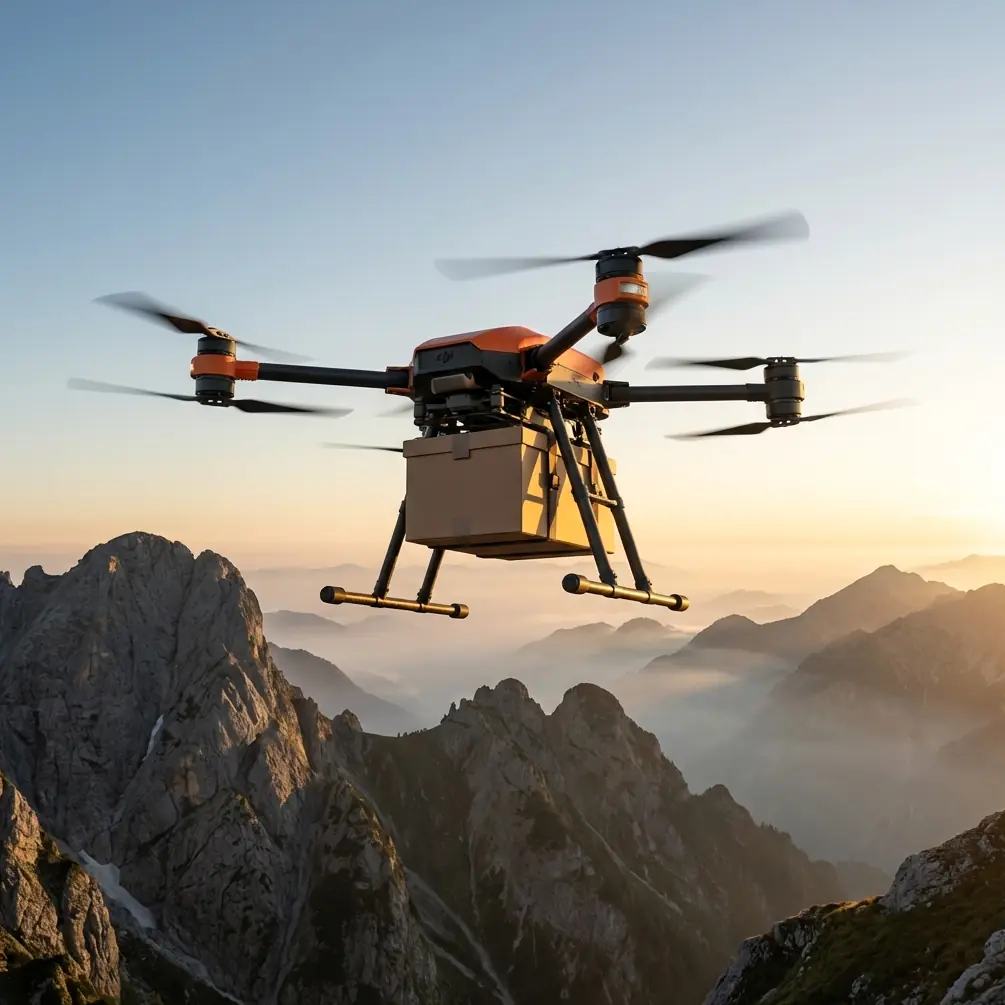
FlyCart 30 for Urban Venue Capture: A Practical Field Method That Starts With Positioning, Not Flying
META: Learn how to use FlyCart 30 for urban venue capture with better antenna positioning, route planning, payload balance, winch workflow, and safer BVLOS-minded operations.
Urban venue capture sounds simple until the site is boxed in by reflective glass, patchy GNSS conditions, rooftop clutter, delivery traffic, and a client who wants clean, repeatable footage or transport documentation on the first pass.
That is where the FlyCart 30 becomes interesting.
Most people look at this aircraft through the lens of cargo movement alone. That misses part of the story. In real commercial work, especially around urban venues, the platform’s value is not just lift. It is control under constraints: stable delivery to hard-to-reach points, disciplined route execution, and the ability to support imaging or site documentation workflows when the environment is busy and unforgiving.
I approach this from a logistics lead’s perspective. The job is rarely “fly from A to B.” The job is usually “capture the venue, move the required payload, avoid downtime, and keep the operation predictable enough that the next team can repeat it.” With FlyCart 30, that means thinking about payload ratio, the winch system, dual-battery planning, emergency parachute considerations, BVLOS-readiness in compliant frameworks, and one overlooked factor that affects all of it: antenna placement.
Why urban venue capture is harder than it looks
An urban venue is full of visual and radio-frequency traps. Tall facades create signal reflections. Temporary structures block line of sight. Narrow service lanes compress takeoff and recovery options. If you are documenting a concert space, convention center, rooftop activation, stadium edge, or mixed-use plaza, you are not just capturing a building. You are working inside a corridor of obstructions.
That changes how FlyCart 30 should be set up.
The drone’s route optimization matters because every unnecessary turn, hover, or reposition adds exposure to interference and drains usable time from the batteries. In a venue scenario, efficiency is not abstract. It directly affects whether you complete the mission before access windows close or event traffic ramps up.
This is also where payload ratio becomes more than a spec-sheet term. If your mission includes lifting event materials, sensor kits, tethered accessories, or documentation payloads between rooftop and ground-level teams, the aircraft’s handling profile changes with load distribution. A balanced mission is not simply about what the drone can carry. It is about what it can carry while preserving enough margin for smooth positioning, safe descent, and a clean reserve.
Start with the mission geometry, not the checklist
Before I launch FlyCart 30 in a city venue environment, I sketch the mission as geometry.
- Where is the true working corridor?
- Which structures block direct communications?
- Where does the payload need to move vertically rather than horizontally?
- At what points will the aircraft need to hold position?
- Which zones are visually open but radio-noisy?
That last one catches teams off guard. A broad plaza may look perfect from the ground, yet be surrounded by reflective surfaces that complicate control link reliability. This is why antenna positioning deserves much more attention than it usually gets.
Antenna positioning advice for maximum range
If you only improve one thing in your setup, improve this.
For FlyCart 30 operations in urban venues, place the ground control position where the antennas have the clearest, longest possible line through the intended route segment, not where the pilot has the best view of the takeoff pad. Those are not always the same place.
A few field-tested rules help:
1. Elevate the controller position when possible
A slight height advantage can make a major difference. Operating from a service platform, parking deck edge, or approved rooftop zone often reduces ground-level obstructions and cleans up the control path. You are not chasing altitude for its own sake. You are trying to reduce signal shadowing.
2. Keep antennas oriented toward the active route leg
Don’t set and forget. In venue capture, the aircraft may move behind stage trusses, light towers, billboard frames, or parapets. Re-orienting the antenna face toward the current operating sector helps maintain a stronger and more stable link.
3. Avoid standing close to metal clutter
Railings, scaffolding, HVAC housings, and temporary stage structures can distort signal behavior. A control station that looks protected may actually be compromised by nearby reflective surfaces.
4. Separate the control zone from spectator electronics and production gear
Large venue sites often have dense wireless activity. Put distance between your station and broadcast trucks, temporary comms racks, and concentrated crew device clusters.
5. Plan for the “turning point loss”
A common weak point is the far turn in a route, especially when the aircraft changes heading and briefly aligns with a structure that blocks the link. Antenna orientation should be planned around that transition, not just the outbound leg.
If you want a second set of eyes on your site layout, I usually recommend sharing a map and obstruction photos before the operation; the fastest way to do that is through this planning contact.
The winch system changes the way you capture a venue
The FlyCart 30’s winch system is one of its most practical advantages in urban environments because it reduces the need to land in tight or obstructed spaces. That matters operationally and visually.
For venue work, a direct landing zone is often the worst option. Rooftops may have poor clearance. Courtyards may be filled with staff movement. Elevated terraces may have fragile surfaces or difficult approach angles. The winch lets the aircraft remain in a safer hover while lowering cargo or equipment to a controlled handoff point.
That has two benefits.
First, it protects the aircraft from unnecessary close-quarters maneuvering. Second, it makes the mission more repeatable. A repeatable handoff point is easier to brief, easier to secure, and easier to document.
For capture workflows, this matters because a stable hover above a pre-defined drop zone also creates a predictable visual reference. Teams handling venue surveying, progress monitoring, or installation records can synchronize the lowering sequence with image collection and asset verification. In other words, the winch is not just a delivery tool. It is a workflow stabilizer.
Dual-battery thinking: finish the mission with margin, not hope
Urban venue operations tend to compress time. You might have one window before gates open, one rooftop access period before another contractor arrives, or one quiet interval before lighting and sound checks intensify. That creates pressure to push battery usage too far.
Don’t.
The dual-battery architecture should be treated as a planning asset, not as permission to fly aggressive margins. In practice, dual-battery setups support continuity and redundancy, but urban work is full of small energy drains that do not show up in simple route estimates: longer hovers during handoff, aborted approach lines, repositioning to recover a better signal angle, and time spent holding while the receiving team clears the drop zone.
The operational significance is obvious. A battery plan that looks comfortable on paper can tighten quickly in the field. Build your route optimization around the real mission, including hover time at handoff points and at least one unexpected pause.
BVLOS readiness is about discipline, not distance
FlyCart 30 often enters conversations about BVLOS because cargo workflows naturally push operators toward longer, more structured routes. In an urban venue context, though, the more useful mindset is BVLOS discipline even when your mission segment remains within a tighter operating envelope.
That means:
- route design before launch,
- obstacle logic before takeoff,
- emergency decision points defined in advance,
- communications roles assigned clearly,
- and fallback recovery options established before the aircraft leaves the pad.
The strongest operations do not improvise their safety structure in the air.
If your venue mission involves repeated rooftop-to-ground or building-to-building movements, route optimization becomes central. Not because the path needs to be fancy, but because consistency reduces operational noise. The fewer variables your pilots and spotters need to manage, the better the mission quality.
Emergency parachute planning belongs in the briefing
Urban flights demand layered mitigation. An emergency parachute is part of that conversation because dense surroundings reduce the margin for uncontrolled outcomes.
But the parachute should not be treated as a magic answer. Its real value is in how it shapes your planning. If the aircraft has to operate above areas with limited fallback options, then you need pre-identified zones, clear no-go sectors, and strict understanding of where the aircraft should and should not be during each mission phase.
That makes the emergency system operationally significant even when it is never used. It forces better route discipline.
What smartphone photography can teach a FlyCart 30 team
One of the reference points that stuck with me comes from an article on mobile photography published on 2026-05-11 by 御空逐影. At first glance, phone photography and FlyCart 30 logistics seem unrelated. They are not.
The article breaks image-making into four dimensions: composition, light, portrait shooting, and post-processing. More importantly, it points out that smartphones commonly work around an equivalent 24–28 mm wide-angle field of view, which makes composition more critical, not less. It recommends enabling grid lines and placing key elements on the intersections or along the lines of a nine-square frame.
That advice transfers surprisingly well to urban venue capture.
Why? Because wide views can make operators lazy. A broad field of view creates the illusion that everything important is already included. In reality, urban venue documentation gets messy fast. Service entries, loading points, roof access ladders, branding structures, crowd barriers, and temporary power zones can all collapse into a visually cluttered frame.
Using a grid-based composition mindset solves part of that problem. If your FlyCart 30 mission includes visual documentation alongside logistics support, brief the team to frame critical operational elements intentionally. Put the true subject—drop point, handoff area, rooftop landing marker, staging lane—on a control point in the frame rather than floating it in a sea of context.
The operational significance is direct: cleaner images make handoff verification, site reporting, and repeat-mission planning much easier. Good framing is not just aesthetics. It is data quality.
The article’s warning that bad composition cannot be rescued later is just as relevant here. Once an operation is complete, you can annotate a poor image, but you cannot rebuild missing visual clarity. If the venue team needs proof of delivery position, obstacle clearance, or equipment placement, intentional capture saves time for everyone downstream.
A practical mission flow for FlyCart 30 at urban venues
Here is the process I use when the assignment involves both movement and capture:
Phase 1: Site reading
Walk the route. Identify roof edges, narrow courtyards, metallic clutter, temporary structures, and likely interference sources.
Phase 2: Antenna-first control station setup
Choose the control point based on signal path, not convenience. Test the line through the far leg of the route.
Phase 3: Payload ratio assessment
Match the load to the route complexity. A straightforward short run may tolerate one profile; a vertical handoff into a constrained venue pocket demands more reserve and smoother handling.
Phase 4: Winch drop-zone rehearsal
Confirm who receives the load, where they stand, how the handoff is signaled, and what happens if the zone is blocked.
Phase 5: Composition brief for documentation
If the mission includes imagery, define exactly what must appear in frame. Use the grid-line logic borrowed from smartphone photography to keep key site elements anchored and repeatable.
Phase 6: Dual-battery margin review
Account for hover, reroute, and delay time. Do not plan to the minimums.
Phase 7: Emergency logic
Review parachute-related planning, abort routes, and no-go sectors.
That is a better framework than simply saying “we’ll fly, drop, and capture what we can.”
The real advantage of FlyCart 30 in this scenario
The FlyCart 30 earns its place in urban venue work because it can support structured operations where cargo movement, access constraints, and documentation all overlap.
The aircraft is not magically simpler than the environment. The environment remains messy. What FlyCart 30 offers is a platform around which a disciplined team can build a repeatable method: balanced payload decisions, efficient route optimization, safer vertical transfer through the winch system, battery planning with margin, and stronger control reliability through smart antenna positioning.
And if you borrow one lesson from outside the cargo world, borrow that phone photography principle: wide-angle tools reward intention. The reference article’s 24–28 mm observation is really a warning about complacency. A wide view does not guarantee a useful one.
The same is true for venue drone operations. A capable aircraft does not guarantee a clean mission. The result comes from how well the team frames the route, the signal path, the payload, and the handoff before takeoff ever begins.
Ready for your own FlyCart 30? Contact our team for expert consultation.