
FlyCart 30 in Coastal Wildlife Work: What a New Navigation
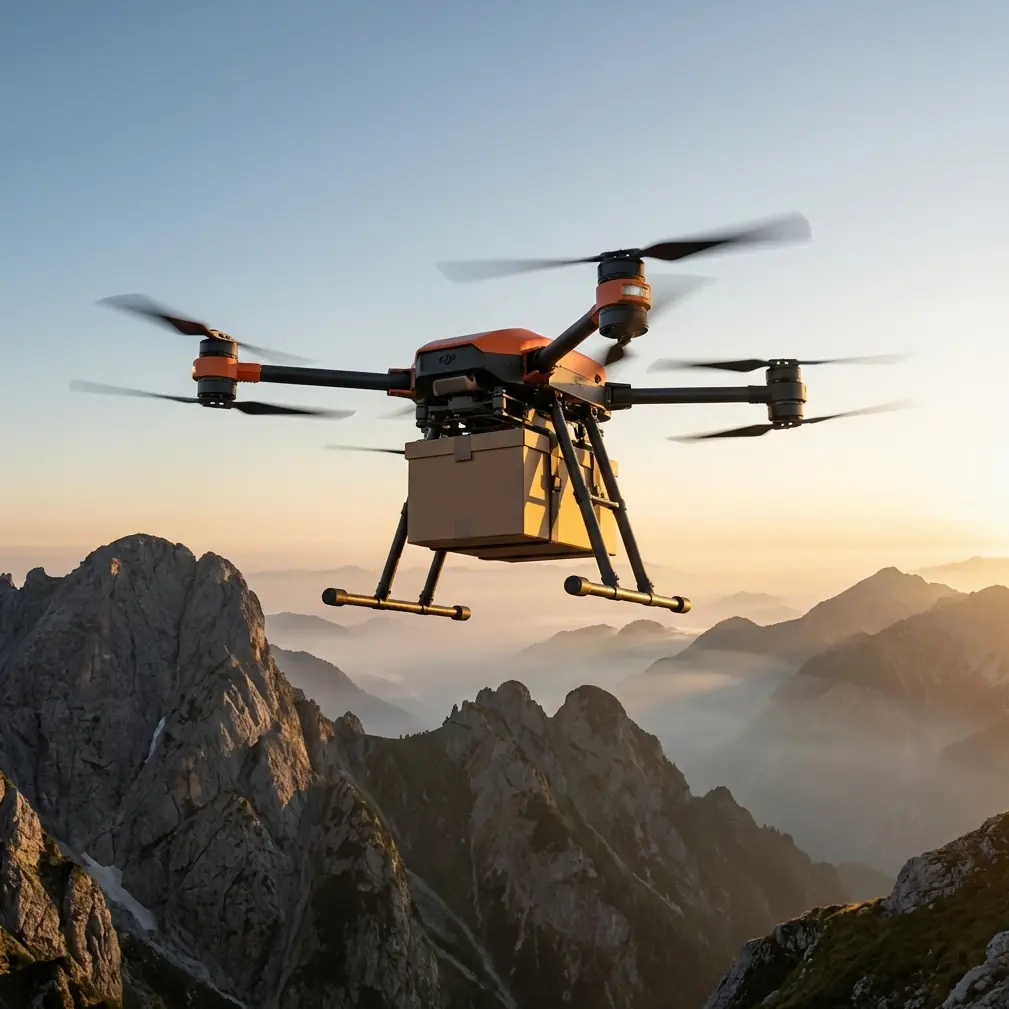
FlyCart 30 in Coastal Wildlife Work: What a New Navigation Breakthrough Means in the Field
META: A field-based FlyCart 30 case study on coastal wildlife operations, battery discipline, BVLOS reliability, and why Anhui’s new anti-jamming low-altitude navigation project matters for drone logistics.
Coastal wildlife work punishes weak assumptions.
Salt mist creeps into connectors. Wind changes direction faster than the forecast. Launch points look usable on a map, then disappear under tidewater. And when the mission involves moving bait stations, camera traps, medical supplies, or survey gear into sensitive habitat, the drone is not just a camera platform. It becomes a logistics aircraft operating in a messy low-altitude environment.
That is why the latest news out of Anhui deserves attention from anyone evaluating the DJI FlyCart 30 for serious field operations. A provincial science and technology program has selected a project led by Anhui General Aviation Holding Group to develop an anti-interference, high-precision intelligent navigation system for low-altitude flight. The stated target is not vague. It aims for strong anti-jamming performance, centimeter-level positioning accuracy, and high reliability for missions such as drone logistics, emergency response, and urban air mobility.
If you work with the FlyCart 30 in coastal wildlife scenarios, those three points—anti-interference, centimeter-level accuracy, and reliability—go directly to mission success.
This is not abstract policy language. It speaks to the exact category of operational friction that shows up when a transport drone leaves the clean conditions of a demo site and starts working over estuaries, sea walls, wetlands, offshore edges, and conservation corridors.
A Coastal Case Study: Why Navigation Quality Changes Everything
I’ll frame this from the perspective of a logistics lead because that is where the FlyCart 30 makes the most sense. The aircraft is often discussed for payload and delivery capability, but in conservation and coastal field support, payload is only half the story. The harder question is whether the aircraft can keep a stable, predictable route when the environment does its best to confuse it.
Picture a dawn operation supporting a wildlife monitoring team along a coastal reserve. The ground crew needs to move sensor batteries, tagging equipment, and sealed sample kits to a remote staging point beyond muddy access tracks. A boat transfer is possible, but tidal timing is narrow and landing near nesting zones adds risk. The FlyCart 30 becomes attractive because it can move equipment directly, using its winch system to lower loads without forcing a landing in fragile terrain.
On paper, that sounds straightforward.
In practice, coastal conditions expose every weakness in route planning and navigation integrity. Low-altitude flights can face electromagnetic noise from nearby infrastructure, changing winds over mixed land-water surfaces, and reduced margin for error when operating near protected habitat. A few meters of lateral drift may not sound dramatic in a warehouse delivery scenario. In a bird-sensitive coastal zone, it can mean the difference between placing gear precisely in a cleared service spot and dropping too close to an active habitat edge.
That is where the Anhui project becomes operationally meaningful. A navigation system designed for complex electromagnetic environments and built around Beidou anti-interference capability addresses one of the least glamorous but most important realities of low-altitude work: the route is only as good as the aircraft’s confidence in where it is.
Centimeter-level precision matters here not because it sounds impressive, but because it supports repeatability. Repeatable flights reduce time over habitat, simplify risk assessments, and make BVLOS planning more defensible when operators need to justify corridor design and drop-point selection.
Why This Matters Specifically for FlyCart 30 Operators
The FlyCart 30 already sits in a part of the market where reliability is expected, not admired. Nobody brings a cargo drone into a coastal wildlife workflow because they want interesting stories about near-misses. They want stable outcomes.
That makes this Anhui development relevant even if it is not a FlyCart 30 product announcement. The project explicitly names drone logistics and emergency rescue among its intended application areas. Those are core use cases adjacent to how many organizations deploy heavy-lift UAVs today. As enabling infrastructure improves, aircraft like the FlyCart 30 stand to benefit most because their missions are often the ones that strain today’s low-altitude navigation framework.
For coastal work, four FlyCart 30 themes become more important when paired with better navigation support:
- Payload ratio: Payload only creates value if the aircraft can place that load accurately and repeatedly where ground access is poor.
- Winch system: Precision navigation improves the usefulness of a suspended delivery, especially where landing is unsafe or ecologically disruptive.
- BVLOS potential: Beyond visual line of sight operations depend on route trust, not just aircraft range.
- Emergency management: Systems like an emergency parachute become far more effective as part of a layered safety model rather than a last-ditch patch.
The Anhui program also stands out because it is not a single-lab concept exercise. The project brings together Anhui General Aviation Holding Group, institutes under the Chinese Academy of Sciences, Anhui University, and industry partners including YUJIANG Technology. That cross-domain structure matters. Low-altitude reliability is not solved by positioning chips alone. It takes navigation, anti-interference algorithms, intelligent sensing, and low-altitude operations management working together.
For FlyCart 30 operators, that is encouraging because the real bottlenecks in field deployment are rarely isolated hardware limits. They sit at the seam between aircraft capability and airspace-grade operational support.
The Coastal Wildlife Angle Most Buyers Miss
A lot of buyers look at heavy-lift drones through the lens of headline capacity. In coastal conservation work, that can be the wrong starting point.
The smarter question is this: how much payload can you move without increasing environmental disturbance or operational fragility?
That is where route optimization becomes more than an efficiency buzzword. In wildlife work, route optimization is partly about battery savings, but it is also about disturbance minimization. A better route reduces loiter time, avoids repeated passes over sensitive zones, and helps maintain more predictable noise exposure patterns.
If a future navigation stack delivers stronger anti-jamming performance and more stable low-altitude positioning, the FlyCart 30’s practical value goes up because crews can plan tighter, cleaner missions. A winch drop onto a pre-cleared shoreline service point becomes more realistic. A dual-battery mission profile becomes easier to manage because the aircraft is not burning unnecessary reserve correcting uncertainty. BVLOS corridors become easier to document and justify in regulated operations.
This is where the news from Anhui becomes a real business signal rather than a research footnote. The province’s 2025 science and technology initiative is backing a capability layer that directly affects whether low-altitude logistics scales from trial flights to dependable operational networks.
A Field Tip on Battery Management That Actually Matters
The user brief asked for a battery management tip from field experience, so here is one that has saved more missions than any spec-sheet comparison.
Do not treat dual-battery systems as permission to relax your return threshold.
In coastal work, I’ve seen teams become too confident once they know the aircraft carries dual batteries. The psychology changes. They add one more drop, stretch one more leg, or accept a headwind on the outbound route because the battery display still looks comfortable. That is a mistake.
Salt-air environments and shifting onshore wind can turn a normal return leg into the most power-hungry segment of the mission. My rule is simple: build your return decision around the worst part of the route, not the easiest part. If the final third of the flight crosses open shoreline with unstable wind, I want reserve sized for that section, plus extra margin for a second approach if the drop zone is fouled.
Operationally, that means logging battery performance by route and wind pattern rather than by mission type alone. Two flights carrying the same payload can produce very different battery behavior if one track runs sheltered along dunes and the other crosses exposed tidal flats. Over time, this gives you something more valuable than generic battery percentages. It gives you route-specific confidence.
For FlyCart 30 teams, that discipline improves payload planning as well. A strong payload ratio is useful only when it is married to predictable energy budgeting. In wildlife operations, conservative battery planning is not lost productivity. It is what prevents rushed recoveries and habitat disruption.
Precision, Safety, and the Role of the Emergency Stack
Safety features are often discussed in isolation, but that is not how they work in the field.
Take an emergency parachute. On its own, it is an important last-resort protection layer. But its real value grows when it sits inside a broader system that includes better route design, stronger interference resistance, accurate positioning, and disciplined battery management. The point is not merely surviving a failure. The point is reducing the chain of events that leads to one.
That is why the Anhui project’s emphasis on reliability deserves equal billing with anti-jamming and high precision. Reliability is what allows an operation manager to move from “possible” to “repeatable.” Wildlife work especially needs repeatability because regulators, conservation partners, and field scientists are not evaluating drone missions as one-off demonstrations. They are judging whether the operation can be trusted across seasons, weather windows, and habitat sensitivities.
If you want a practical way to think about it, here it is: payload wins attention, navigation wins trust.
What This Means for BVLOS and Conservation Logistics
The FlyCart 30 becomes much more interesting in coastal environments when you think in BVLOS terms. Not reckless long-distance flying, but structured corridor operations where drone logistics replace difficult ground or boat movements.
That future depends on three things:
- High-confidence positioning
- Low vulnerability to interference
- Operational governance that can support repeated low-altitude traffic
The Anhui navigation project explicitly reaches into all three. It targets complex electromagnetic environments, seeks centimeter-level precision, and brings in low-altitude operation management as part of the technology mix. Those are exactly the ingredients needed to push drone logistics into broader, more regulated use.
For coastal wildlife organizations, that could eventually mean cleaner supply chains into hard-to-access zones, faster response to injured animals or habitat incidents, and better support for field teams operating under narrow environmental windows. If you can deliver equipment accurately without repeated vehicle intrusion or risky boat timing, you reduce both operational friction and ecological footprint.
That is a serious advantage.
If your team is mapping out how a FlyCart 30 could fit into coastal logistics, it helps to compare route assumptions with someone who has dealt with these constraints in practice. A quick field-operations discussion often surfaces risks earlier than any spreadsheet can, so I usually point teams to a direct mission planning chat when they need to stress-test a concept before deployment.
The Broader Signal Behind the News
There is another reason this story matters.
A lot of drone coverage still focuses on aircraft launches, sensor upgrades, or isolated demonstration flights. The Anhui announcement points to something more durable: the infrastructure layer behind low-altitude aviation is being treated as strategic technology. That changes the conversation for platforms like the FlyCart 30.
Instead of asking only what the aircraft can carry, serious operators will increasingly ask:
- How resistant is the navigation environment to interference?
- How precise is route execution at low altitude?
- How reliable is the positioning stack across real operational corridors?
- How well does the aircraft integrate into managed low-altitude systems?
Those are the questions that shape long-term adoption.
For FlyCart 30 buyers working in coastal wildlife support, that shift is welcome. Their missions are rarely simple. Loads vary. Conditions change. Environmental tolerance for error is low. Better low-altitude navigation support does not remove those complexities, but it makes them more manageable.
And that is the real takeaway from this news. The value is not in the headline phrase “science and technology plan.” The value is in what it signals for field operators: low-altitude logistics is moving toward a more precise, more interference-resistant, more operationally mature foundation.
When that foundation improves, aircraft like the FlyCart 30 stop being occasional problem-solvers and start becoming dependable tools for difficult environments.
That is exactly what coastal wildlife work needs.
Ready for your own FlyCart 30? Contact our team for expert consultation.