
FlyCart 30 in Real-World Cargo Operations
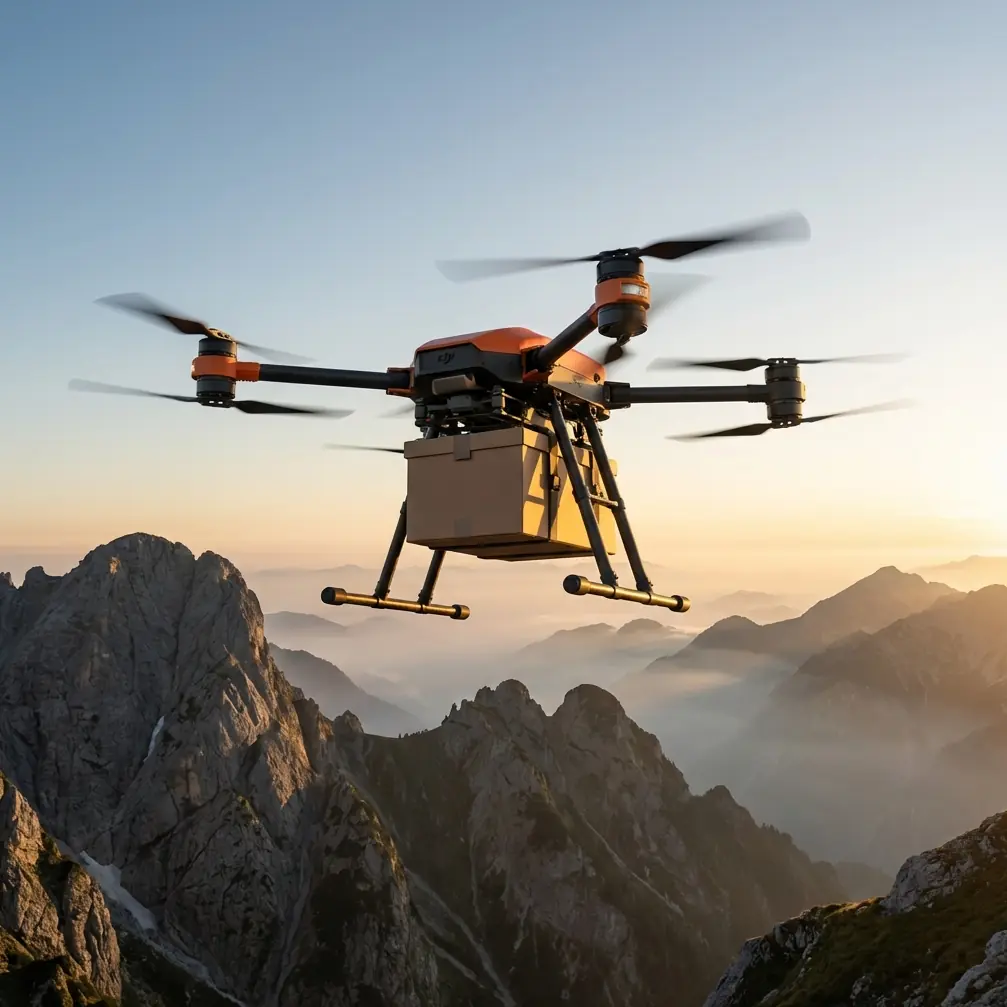
FlyCart 30 in Real-World Cargo Operations: What the New York East River Trial Reveals for Remote Wildlife Missions
META: A technical FlyCart 30 review grounded in NYC’s yearlong cargo drone trial, with practical insight on payload ratio, BVLOS thinking, winch use, dual-battery planning, and flight altitude for remote wildlife work.
By Alex Kim, Logistics Lead
The most useful way to evaluate a cargo drone is not by reading a spec sheet in isolation. It is by watching where the industry is putting real operational attention.
A strong example arrived with the Port Authority of New York and New Jersey launching a yearlong cargo drone trial starting April 27, in partnership with Skyports, to test scheduled middle-mile flights over the East River. The stated goals are clear: reduce congestion and improve medical logistics in New York City. That combination matters because it strips away the hype and points to what actually earns trust in cargo aviation—repeatability, route discipline, and the ability to move critical payloads where roads create friction.
If you are evaluating the FlyCart 30 for civilian field work, that trial is more than a city logistics story. It is a useful lens for understanding what separates a novelty aircraft from a tool that can support remote wildlife operations, especially where terrain, limited road access, and time-sensitive transport all collide.
Why an urban medical cargo trial matters to remote wildlife teams
At first glance, moving cargo over the East River sounds unrelated to wildlife work. In practice, the operating logic is surprisingly close.
Both environments punish delay. In one case, traffic congestion slows medical deliveries. In the other, rough terrain, river crossings, wetlands, mountain gaps, or protected habitats make ground transport slow, intrusive, or simply impossible. A cargo platform like the FlyCart 30 becomes relevant when the mission is not “fly for flying’s sake,” but “move equipment, samples, feed, collars, cameras, or emergency supplies on a repeatable route with minimal disturbance.”
That is exactly why the New York trial deserves attention. The Port Authority is not testing random one-off flights. It is testing scheduled middle-mile cargo flights. Scheduled middle-mile work is where drone logistics becomes operational rather than experimental. It demands route optimization, timing discipline, and aircraft behavior that remains predictable over repeated cycles.
For remote wildlife teams, those same demands show up in a different form. You may not be crossing the East River, but you may be running repeated deliveries between a field station and a remote observation zone, or between a veterinary staging area and a conservation site. The route is still the mission. Reliability still matters more than spectacle.
The FlyCart 30 makes sense when payload ratio drives the mission
The FlyCart 30 is at its best when payload is the reason the aircraft exists. That sounds obvious, but it is where many buyers misjudge cargo drones. They focus on maximum capacity and ignore payload ratio in the real operating envelope.
Payload ratio is operationally significant because it determines whether the drone remains useful once environmental penalties show up: altitude, wind, temperature, battery reserve, landing constraints, and the need for safer handling around animals or field staff. In wildlife work, those penalties are not edge cases. They are normal.
This is where the New York trial offers an indirect but important signal. A program designed for medical logistics and congestion reduction is prioritizing route efficiency over brute force. That is the right framework for evaluating the FlyCart 30. The aircraft should not be thought of as a platform that simply lifts heavy objects. It should be thought of as a logistics system where payload, route length, safety margin, and drop method all interact.
In remote wildlife scenarios, that usually means resisting the temptation to fly at the edge of capacity. A more practical payload ratio leaves room for changing wind, reroutes, and cleaner climb performance. The result is often better mission success even if the theoretical top load is not being used.
Why the winch system can matter more than landing access
For wildlife operations, the most underrated cargo feature is often not the cargo hold or top-end lift. It is the winch system.
Many remote sites are poor landing sites. That could be because the ground is uneven, muddy, densely vegetated, rocky, or too sensitive to risk rotor wash near wildlife or field equipment. A winch lets the aircraft remain above the surface while lowering cargo into a controlled pickup or drop zone. That changes the mission design completely.
Operationally, this reduces three common problems:
Landing zone preparation You do not need to clear or stabilize as much ground.
Disturbance near animals Staying higher during delivery can reduce the need to bring the aircraft into the most sensitive part of the site.
Surface risk Less chance of tip-over, debris ingestion, or rotor contact with brush.
When you connect that to the New York trial, the relevance becomes sharper. The East River operation is about moving cargo through constrained urban space without adding road congestion. The remote wildlife version is moving cargo through constrained natural space without adding habitat disruption. Different setting, same underlying need: efficient cargo transfer where conventional access is the bottleneck.
Dual-battery architecture is not just about endurance
Cargo operators often talk about battery life as if duration is the whole story. It is not. For serious field work, dual-battery architecture is valuable because it supports continuity, redundancy thinking, and mission planning discipline.
In a remote wildlife context, battery strategy affects every part of the operation:
- whether the outbound leg can be completed with reserve intact
- whether terrain-induced rerouting remains viable
- whether the aircraft can safely abort and recover
- whether repeated daily sorties are practical from a field camp
The New York program is a yearlong trial, and that duration is not a throwaway detail. A yearlong window means operators expect environmental variation, seasonal changes, and repeated scheduling demands. That is how cargo systems should be judged. Not on a perfect-weather demo day, but on whether the aircraft can support a calendar of missions.
For FlyCart 30 users, that means battery planning should be structured around consistency. Build your route around reserve, not around brochure performance. In wildlife operations, the safest and most efficient teams are usually the ones that treat each flight as part of a long campaign rather than a single dramatic run.
BVLOS thinking starts before regulation does
The New York trial centers on scheduled middle-mile cargo flights, which naturally raises the operational mindset associated with BVLOS even when your own local approvals or mission profile vary. The key point is not legal terminology. It is planning philosophy.
Once cargo work becomes route-based and recurring, you have to think beyond direct visual management:
- route deconfliction
- communication reliability
- emergency procedures
- alternate landing logic
- weather thresholds
- timing windows
For wildlife teams, this matters because remote operations often tempt crews into improvisation. A field camp can create false confidence. The route feels familiar, so discipline slips. That is exactly when trouble appears.
The better FlyCart 30 workflow borrows from structured cargo operations. Map the route. Identify terrain traps. Build alternates. Define no-go weather. Plan for delayed retrieval. Establish handoff procedures if cargo is lowered by winch. The urban medical trial over the East River underscores this point: if the objective is dependable cargo movement, process matters as much as aircraft capability.
Emergency parachute thinking belongs in wildlife logistics
An emergency parachute is easy to file under “safety feature” and move on. That undersells it.
In remote wildlife operations, safety systems influence where and how you fly. If the route passes over rough terrain, water, forest openings, or sensitive habitat, emergency descent behavior matters. Not only for asset protection, but for site impact management. The aircraft should be integrated into a risk framework, not treated as an isolated machine.
The East River trial again provides a useful reference point. Flying scheduled routes over a dense city waterway is an environment where controlled risk management is non-negotiable. The lesson for remote users is not that your mission is identical. It is that professional cargo work earns legitimacy through layered safeguards.
A FlyCart 30 deployment near conservation zones should therefore include predefined emergency areas, no-drop sectors, and recovery procedures that account for both personnel safety and habitat sensitivity.
Optimal flight altitude for wildlife cargo: low enough for efficiency, high enough for calm air and minimal disturbance
For the scenario of capturing wildlife in remote environments—better framed here as supporting wildlife field operations rather than disturbing animals—the most practical altitude guidance is this:
Use the lowest altitude that safely clears terrain and vegetation, but avoid dropping so low that rotor noise and visual presence become the dominant disturbance.
In many remote cargo runs, a working band around 60 to 100 meters above ground level, adjusted for topography and regulations, is often the most balanced starting point for route evaluation. Why this range?
- It usually provides cleaner obstacle clearance over scrub, trees, ridgelines, or uneven terrain.
- It reduces the need for abrupt climb-and-descend cycles that waste energy.
- It can limit the aircraft’s immediate presence over animals compared with very low transit.
- It still allows efficient route tracking without the penalties that often come with unnecessarily high cruising profiles.
That said, altitude should not be fixed as a universal number. It must be tuned to:
- species sensitivity
- terrain relief
- wind shear
- communication link stability
- delivery method, especially if using the winch system
If the final transfer uses a winch, the stronger approach is often to cruise at a stable transit altitude, then hold above a designated drop point rather than descending into the most sensitive zone. This can reduce ground interaction and help keep the delivery precise.
Route optimization beats raw speed in conservation logistics
One of the strongest signals from the Port Authority trial is that the mission is framed around reducing traffic congestion while supporting delivery performance. That tells you something important: cargo value often comes from bypassing bottlenecks, not from winning a speed contest.
In remote wildlife operations, the bottlenecks are different:
- washed-out roads
- protected habitats
- river crossings
- steep climbs
- long walks for field staff carrying awkward gear
This is where route optimization becomes more valuable than chasing peak aircraft performance. With the FlyCart 30, the right route may not be the shortest line on a map. It may be the route with cleaner terrain clearance, fewer wind surprises, a better emergency profile, and a more workable handoff point for staff on the ground.
That is also the route most likely to support repeat operations over weeks or months.
A practical verdict on FlyCart 30 through the lens of the NYC trial
The New York East River cargo trial is not a product review. But it does reveal what serious cargo drone work is starting to prioritize in the real world: scheduled operations, middle-mile efficiency, congestion avoidance, and support for medical logistics. Those are not abstract trends. They are proof that the market is rewarding drones that solve transport problems with discipline.
Viewed through that lens, the FlyCart 30 stands out when the mission has four characteristics:
- cargo is operationally meaningful, not incidental
- access is constrained by terrain or site sensitivity
- delivery needs to happen repeatedly, not just occasionally
- the team is ready to manage routes as logistics systems, not ad hoc flights
For remote wildlife teams, that makes the aircraft less of a camera-adjacent tool and more of a field infrastructure asset. The winch system is especially relevant where landing is undesirable. Dual-battery planning supports consistent sortie management. Emergency parachute thinking helps shape safer route design. And a disciplined payload ratio keeps missions realistic in changing field conditions.
If you are mapping out whether FlyCart 30 fits your conservation workflow, route pattern, or field station support model, you can reach out here for a practical discussion on mission design: message our logistics desk.
The broader takeaway from the Port Authority and Skyports effort is simple. Cargo drone value becomes real when flights are structured, repeatable, and tied to a transport problem that conventional infrastructure handles poorly. Over the East River, that means medical cargo and less traffic. In remote wildlife operations, it can mean fewer disruptive ground movements, faster delivery of essential equipment, and a cleaner logistical footprint across difficult terrain.
Ready for your own FlyCart 30? Contact our team for expert consultation.