
FlyCart 30 on Coastal Routes: What Actually Matters
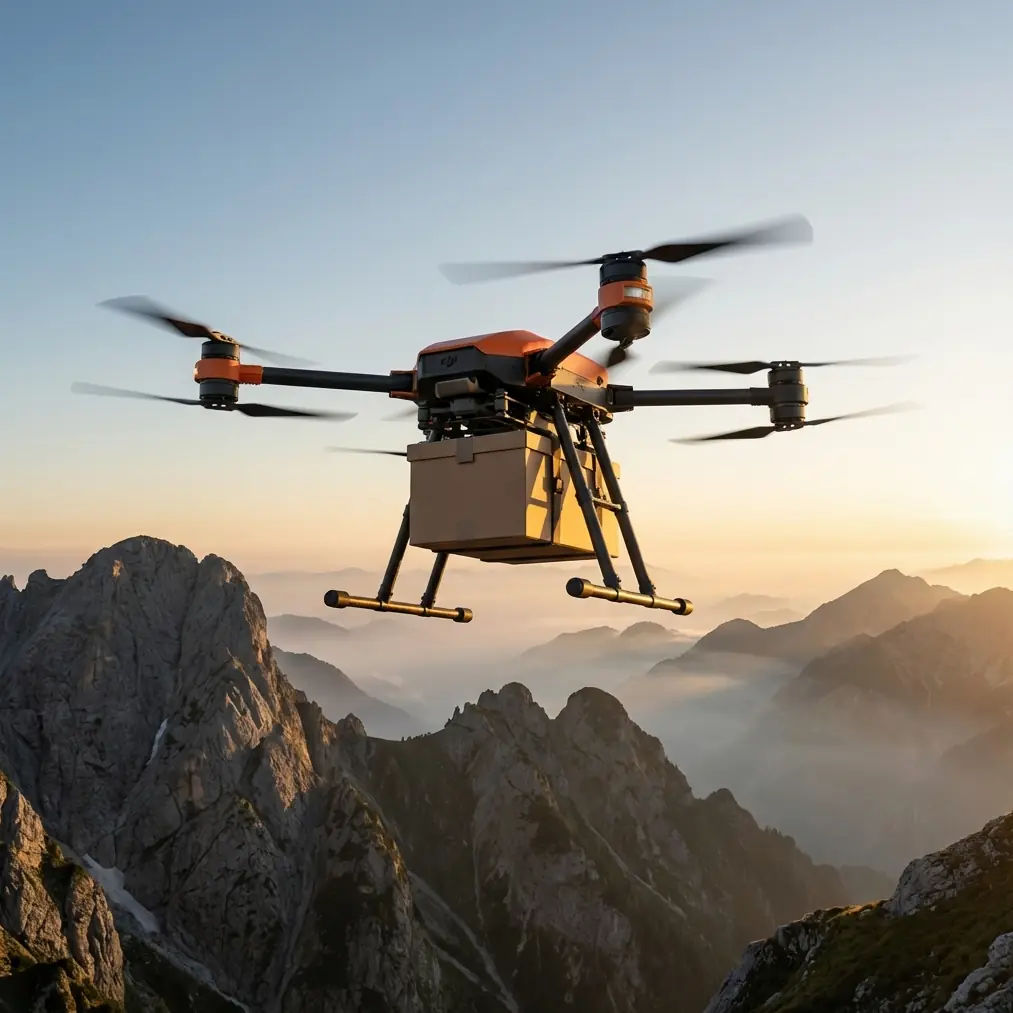
FlyCart 30 on Coastal Routes: What Actually Matters in Complex Terrain
META: A field-driven technical review of FlyCart 30 for coastline delivery, covering payload ratio, winch operations, dual-battery management, BVLOS planning, route optimization, and emergency parachute considerations.
Most FlyCart 30 discussions stay too high level. They mention payload, mention range, mention safety, and stop there. That is not how coastal delivery works in the real world.
Coastlines are unforgiving. Wind bends around cliffs. Salt haze reduces visual clarity. Launch areas are often cramped, uneven, or exposed. The route that looks shortest on a map can become the least reliable once elevation shifts and rotor wash interact with terrain. If you are evaluating the FlyCart 30 for shoreline logistics, the right question is not whether it can carry cargo. The right question is whether it can carry cargo consistently, repeatably, and with enough operational margin to make the route worth flying.
That is where this aircraft becomes interesting.
As a logistics lead, I tend to judge cargo drones less by headline capability and more by what happens in the margins: descent behavior near structures, battery handling on back-to-back sorties, load stability when the aircraft transitions across ridgelines, and whether a delivery method reduces landing risk instead of simply relocating it. The FlyCart 30 enters that conversation because its design points toward real commercial work rather than demonstration flights.
Why coastal routes expose weak assumptions
A lot of inland drone planning habits break down near the sea. Route optimization is no longer just about distance. It becomes a tradeoff between wind exposure, altitude profile, battery reserve, and delivery geometry at the destination.
Take a small clinic, utility site, or aquaculture platform on a rough stretch of coastline. You may have a direct line over open water, but that path could leave the aircraft broadside to crosswinds for too long. You may have a partial land-following route, but that introduces turbulence from cliff edges and uneven lift zones. A longer track can be safer if it produces smoother energy consumption and more predictable handling.
This is where payload ratio matters more than many operators admit. On paper, two drones may both lift a useful load. In practice, the one with a healthier relationship between empty weight, battery mass, and mission payload tends to give you better options when conditions deteriorate. Coastal work rewards flexibility. Every kilogram committed to cargo is a kilogram that interacts with wind, climb demand, and delivery precision.
The FlyCart 30 is best viewed through that lens: not as a brute-lift machine alone, but as a platform whose value depends on how intelligently you assign payload to route.
The winch system is not a convenience feature
For coastline delivery, the winch system is often the reason the mission is viable at all.
Many shoreline destinations do not offer a safe landing zone. Even when there is a nominal clearing, it may be surrounded by fencing, poles, loose debris, sloped rock, or people who are not part of your flight crew. Landing a cargo drone in those conditions can turn a simple delivery into the riskiest phase of the mission.
A controlled suspended drop changes that equation. Instead of forcing touchdown, you can hold a stable hover over a safer offset position and lower the package into the usable area below. Operationally, that reduces rotor interaction with the ground and cuts exposure to unstable surface conditions. It also allows the receiving point to be decoupled from the aircraft’s hover point, which is a significant advantage in constrained coastal sites.
This is not just about convenience. It affects site qualification, turnaround time, and the number of routes that can be standardized. If you can service five awkward locations with the same winch workflow instead of designing a separate landing procedure for each, your route network becomes much easier to scale.
That said, a winch system only helps if the operator understands load behavior. Over water gaps or cliff-side receiving points, suspended cargo can begin a pendulum motion if the aircraft is repositioned too aggressively. The pilot has to think ahead. Stop treating the hover as the end of the mission. In coastal logistics, the lowering phase is its own flight segment with its own risk profile.
BVLOS only works when battery discipline is real
BVLOS is often framed as a compliance and communications issue. It is that, but on coastal routes the hidden pressure point is energy management.
The dual-battery architecture is one of the most operationally relevant features in this class because it gives the platform redundancy and supports mission continuity. But redundancy is not permission to get casual. In field use, the biggest mistake I see is crews tracking total battery percentage while ignoring pack balance and mission phase.
My own battery management rule for coastal runs is simple: never evaluate reserve at the launch pad alone. Evaluate reserve at the most punishing point in the route. That usually means after the climb, after the wind-exposed leg, and before the return transition. A route can look comfortable at departure and still become marginal where terrain and headwind combine.
Here is the practical tip I wish more teams used. On consecutive sorties, do not rotate batteries based only on charge level. Rotate them based on thermal history and route role. If one pair just completed a climb-heavy segment along a bluff line, I do not like sending that same pair back out immediately on another demanding leg, even if the displayed state of charge suggests it is ready. Let the batteries normalize. Coastal work punishes heat-soaked packs because power demand can spike quickly when the aircraft encounters uneven wind at elevation changes.
That small discipline shift improves consistency. It also makes post-flight data more meaningful because you are not blending route effects with avoidable battery stress. Dual-battery systems are valuable, but only if the operation behind them is deliberate.
Route optimization is about shape, not just efficiency
Many teams still optimize drone routes like they are planning van deliveries. Shortest line, minimum time, done. That approach misses how aircraft interact with air.
For the FlyCart 30, route optimization in coastal terrain should be treated as geometry in motion. You are choosing where the aircraft climbs, where it turns, where it is most exposed, and where it sheds altitude before delivery. Those decisions influence energy draw, hover precision, and cargo behavior.
A smart route may deliberately shift the aircraft’s path to avoid a headland known for turbulent wind shear. It may stage the altitude gain earlier over more stable air rather than during the final approach. It may also preserve a cleaner return leg by using a different outbound corridor than the inbound one. That asymmetry is often the difference between a route that works occasionally and one that can be scheduled.
The closest analogy I can offer comes from a completely different visual discipline: face-angle control in portrait photography. In that field, even a slight adjustment changes symmetry, depth, and the overall impression. A straight-on angle can emphasize directness, but it can also flatten features or make the face appear wider. A small chin lift or slight turn introduces more dimensionality and balance. Coastal drone routing behaves in much the same way. The straight line is not always the best line. A subtle change in angle or profile can reduce flat, inefficient exposure to wind and produce a more stable, three-dimensional route through terrain.
That might sound abstract, but in operations it is concrete. Tiny changes in approach heading or delivery offset can improve winch stability, reduce hover correction, and preserve battery margin. The teams that succeed with shoreline delivery are usually the ones willing to shape the route rather than simply draw it.
Emergency parachute planning should influence normal operations
The emergency parachute tends to be filed mentally under last-resort safety equipment. That is fair, but it should also influence everyday route design.
If your aircraft includes an emergency parachute capability, you should think in advance about where a deployment would create the least downstream risk to people, property, and difficult recovery zones. On a coastline, that analysis is not trivial. A parachute event over jagged rock, surf, or inaccessible slope can turn a controlled emergency into a recovery problem with operational consequences.
That does not mean avoiding challenging routes entirely. It means mapping them with realistic contingency logic. Over certain segments, a slight route shift inland or seaward may give you better emergency outcomes without meaningfully hurting mission efficiency. This is one of those operational details that does not show up in a brochure, yet it matters more than many headline specs.
Safety systems have the most value when they change planning behavior before anything goes wrong.
Payload ratio changes the economics of service reliability
People love discussing maximum payload, but commercial users should pay at least as much attention to payload ratio. The reason is simple: reliability scales with margin.
On a benign route, you can often fill the mission close to the edge and still complete it. Along a coastline, that mindset catches up with you. Wind shifts, hover time expands, and the receiving point takes longer to clear. Suddenly the route is no longer a straightforward transport task. It is an airborne wait state with a live load and a narrowing reserve.
A healthier payload ratio gives dispatchers options. It allows the team to hold back some capacity when conditions are unstable, carry packaging that improves handling at the destination, or maintain reserve for a second approach without compromising return safety. That flexibility is what turns a useful aircraft into a dependable service asset.
For operators building recurring routes to islands, marinas, cliff-top facilities, or remote shoreline work sites, this point has direct planning significance. It is not enough that the FlyCart 30 can move a package. The route has to remain commercially acceptable when conditions are ordinary rather than perfect.
Training is where the platform’s value is either realized or wasted
The hardest part of adopting a cargo drone is rarely the aircraft. It is translating capability into standard operating discipline.
With the FlyCart 30, I would prioritize training in four areas before scaling coastal routes:
Winch-specific hover control
Crews need to practice how the aircraft feels when lowering cargo in variable air, not just how to fly to the destination.Battery role assignment
Dual-battery systems deserve explicit crew procedures, including cooldown logic and pack pairing discipline.Approach-angle refinement
Small heading changes can materially improve delivery stability. Train crews to test and document them.Contingency corridor planning
Every route should have known segments where return, hold, or diversion decisions are cleaner.
If you are sorting through those details with your own route map, this FlyCart 30 operations chat is a practical place to compare notes.
My bottom line on FlyCart 30 for shoreline logistics
The FlyCart 30 makes the most sense when you stop evaluating it as a generic heavy-lift drone and start looking at it as a route tool for difficult access points. In coastline delivery, that distinction matters.
Its operational relevance comes from the interaction between several features, not one: the winch system for landing-free delivery, dual-battery architecture for disciplined energy management, BVLOS suitability for longer and less accessible routes, and safety thinking that includes emergency parachute planning from the start. Add payload ratio to that mix and you have the framework for judging whether the aircraft fits your corridor.
The common thread is margin. Coastal logistics punishes thin margins. Thin power margin. Thin hover margin. Thin site margin. Thin procedural margin. The FlyCart 30 earns attention because it gives competent operators a chance to build those margins back into the mission.
That does not happen automatically. It comes from route shaping, battery discipline, and a willingness to treat delivery geometry as seriously as lift capacity. Even the small adjustments matter. Just as a slight turn in portrait work can improve depth and balance, a slight shift in drone approach can turn a marginal coastal drop into a repeatable one.
For teams serving complex shorelines, that is the real test. Not whether a drone can fly there once, but whether it can do the work again tomorrow under conditions that are merely acceptable, not ideal.
Ready for your own FlyCart 30? Contact our team for expert consultation.