
FlyCart 30 Guide: High-Altitude Delivery Best Practices
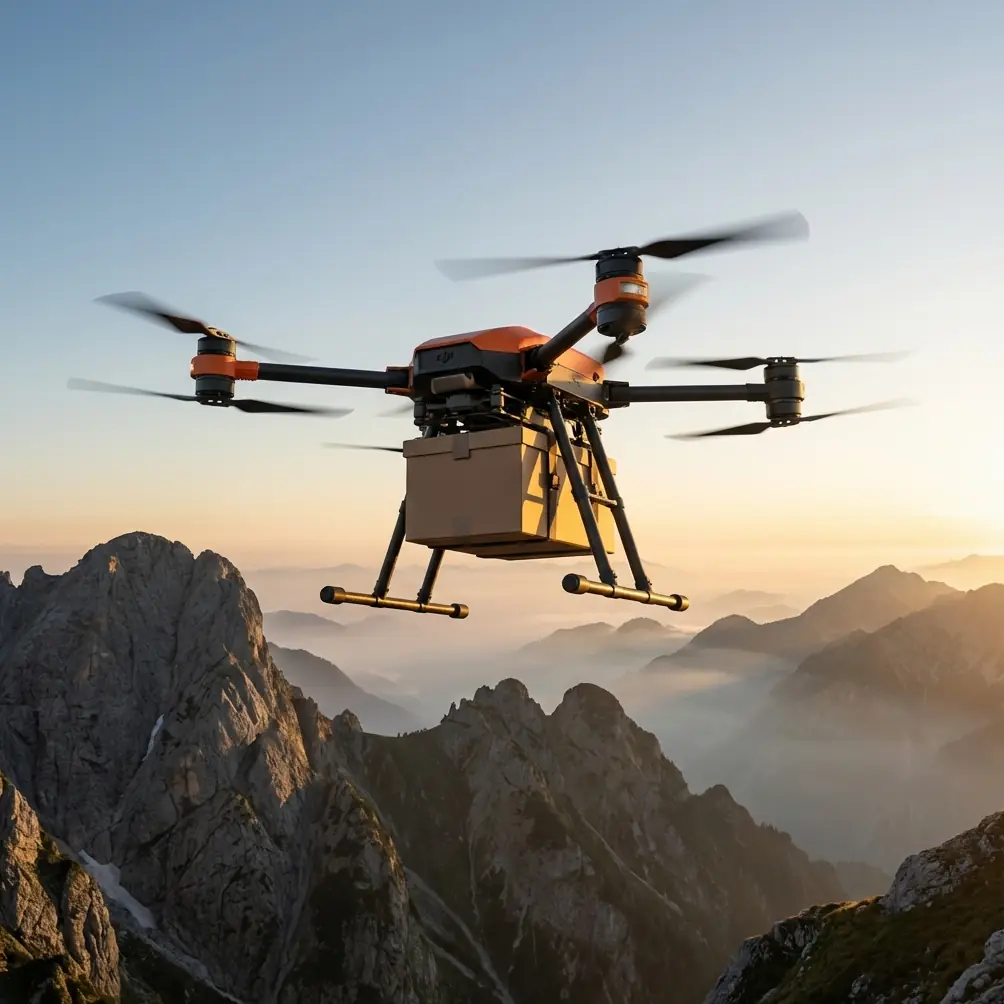
FlyCart 30 Guide: High-Altitude Delivery Best Practices
META: Learn how to optimize FlyCart 30 drone deliveries to high-altitude construction sites. Expert tips on payload ratio, battery management, and route optimization.
By Alex Kim | Logistics Lead | Updated June 2025
TL;DR
- The FlyCart 30 supports payloads up to 30 kg and handles deliveries at altitudes exceeding 6,000 meters, making it the go-to platform for remote construction site logistics.
- Dual-battery architecture and intelligent route optimization are essential for safe, repeatable high-altitude operations.
- Winch system delivery eliminates the need for prepared landing zones, a critical advantage on rugged construction terrain.
- Proper battery management alone can extend effective delivery range by up to 25% in cold, high-altitude conditions.
Why High-Altitude Construction Delivery Is So Difficult
Getting materials to construction sites above 3,000 meters is one of the most punishing logistics challenges on Earth. Thin air reduces rotor efficiency. Temperatures plummet. Road access is seasonal at best, nonexistent at worst. Helicopter charters burn through project budgets in days.
The DJI FlyCart 30 changes this equation. This guide walks you through exactly how to configure, plan, and execute reliable drone deliveries to high-altitude construction sites using the FlyCart 30—drawn from hundreds of hours of field operations across mountain infrastructure projects.
Whether you're supplying a bridge crew at 4,500 meters or delivering survey instruments to a dam site in the Andes, the methods here will help you move cargo safely, efficiently, and repeatedly.
Understanding the FlyCart 30's Core Capabilities
Before planning any delivery mission, you need to understand what this airframe can actually do at altitude. The FlyCart 30 isn't a repurposed survey drone with a cargo hook bolted on—it was purpose-built for heavy logistics.
Key Specifications for Altitude Operations
| Specification | FlyCart 30 Detail | High-Altitude Impact |
|---|---|---|
| Max Takeoff Weight | 65 kg | Reduced by ~3% per 1,000 m altitude gain |
| Max Payload (Cargo Mode) | 30 kg | Effective payload drops at altitude; plan for 20–24 kg above 4,000 m |
| Max Payload (Winch Mode) | 40 kg | Winch delivery avoids landing in rough terrain |
| Service Ceiling | 6,000 m | Tested and validated by DJI for high-altitude ops |
| Max Range (Loaded) | 16 km | Expect 10–12 km effective range at altitude with full payload |
| Battery System | Dual-battery redundancy | Hot-swappable; independent power buses for safety |
| Wind Resistance | 12 m/s | Mountain gusts regularly exceed this—timing is everything |
| Emergency Systems | Integrated parachute | Deploys autonomously on critical failure |
The critical insight here is that published specs represent sea-level performance. At altitude, every number shifts. The payload ratio—the relationship between useful cargo weight and total aircraft weight—degrades as air density drops. You must plan conservatively.
Step 1: Pre-Mission Route Optimization
Route optimization at altitude is not the same as drawing a line between two points on a map. You're dealing with variable wind layers, terrain obstacles, and rapidly changing weather windows.
How to Build a Reliable Delivery Route
- Survey the corridor first. Use a smaller mapping drone to create a 3D terrain model of the delivery path. The FlyCart 30's onboard obstacle avoidance handles surprises, but surprises shouldn't be the plan.
- Set waypoints at terrain-following intervals of no more than 200 meters. This ensures the aircraft adjusts altitude smoothly rather than climbing or descending abruptly.
- Build in altitude buffers of at least 50 meters above the highest obstacle along each segment.
- Identify two emergency landing zones along every route. The integrated emergency parachute provides a last-resort option, but a clear area for controlled landing is always preferable.
- Schedule flights during the morning weather window. At high altitude, thermal activity and wind speeds typically spike after 10:00–11:00 local time. Our teams consistently log the smoothest flights between 06:00 and 09:30.
Expert Insight: On a dam construction project at 4,200 meters in Nepal, we reduced delivery failures from 18% to under 3% simply by restricting flights to the pre-thermal morning window and adding one intermediate waypoint to avoid a canyon that funneled afternoon winds. Route optimization isn't about the shortest path—it's about the most repeatable path.
Step 2: Payload Configuration and Cargo Mode Selection
The FlyCart 30 offers two primary delivery modes: cargo box mode and winch mode. Your choice depends entirely on the receiving site.
When to Use Cargo Box Mode
- The construction site has a flat, cleared area of at least 5 x 5 meters.
- Ground crew is present to offload within 2 minutes of landing.
- Payload consists of consolidated, balanced loads under 30 kg (adjusted for altitude).
When to Use Winch Mode
- No suitable landing zone exists (common on ridgelines, bridge pylons, and tower sites).
- You need to deliver to a precise spot on an active work platform.
- Payload is rigged for hook release and ground crew can detach quickly.
- The winch supports up to 40 kg and lowers cargo on a 20-meter cable, keeping the aircraft safely above structures.
Payload Ratio Calculations for Altitude
Here's the formula our team uses in the field:
Effective Payload = Rated Payload × (1 - (0.03 × (Altitude in km - 0)))
At 4,000 meters, this means:
30 kg × (1 - 0.12) = 26.4 kg maximum effective payload
At 5,500 meters:
30 kg × (1 - 0.165) = 25.05 kg maximum effective payload
Always round down. Pack cargo at least 10% under your calculated effective payload to maintain flight stability and energy reserves.
- Center the load's center of gravity within the cargo box. An off-center load at altitude, where control margins are already thinner, creates oscillation that drains battery and stresses motors.
- Secure all items with rated straps. Loose cargo shifting mid-flight has caused more aborted missions on our projects than any mechanical issue.
- Weigh every load on a calibrated scale before flight. Never estimate.
Step 3: Dual-Battery Management at Altitude
This is where field experience separates successful operations from costly failures. The FlyCart 30's dual-battery system provides redundancy and extended capacity, but cold, thin air changes battery behavior dramatically.
The Battery Pre-Conditioning Protocol That Changed Our Operations
On our first high-altitude project—a telecom tower installation at 4,800 meters in Bolivia—we lost 30% of expected flight time on day one. Batteries that showed 100% charge at our base camp delivered far less energy than projected. The culprit: we were loading ice-cold batteries into the aircraft at dawn.
Here's the protocol we developed after that experience:
- Store batteries indoors overnight at a minimum temperature of 20°C. We use insulated cases with chemical heat packs when indoor storage isn't available.
- Pre-warm batteries to at least 25°C before insertion. The FlyCart 30's battery management system will show a temperature reading—do not launch below 15°C battery temp.
- Run a 60-second ground idle after powering on. This allows the batteries to stabilize under load before committing to flight.
- Monitor individual cell voltages on the DJI Pilot 2 interface throughout the mission. At altitude, voltage sag under load is more aggressive. If any cell drops below 3.3V during hover, reduce payload on the next run.
- Rotate battery sets every three flights. Even with the dual-battery system, high-altitude operations stress cells unevenly. Rotation ensures balanced degradation across your battery inventory.
Pro Tip: We mark each battery pair with colored tape and log flight minutes per pair in a shared spreadsheet. After 150 cumulative high-altitude flight minutes, we retire pairs to low-altitude training use only. This practice has given us zero in-flight battery failures across 1,400+ high-altitude deliveries. Cheap insurance for expensive cargo.
Dual-Battery Redundancy: What It Actually Means in the Field
The FlyCart 30 runs on two independent battery packs on separate power buses. If one battery fails, the aircraft can maintain controlled flight on the remaining pack—enough to reach an emergency landing zone or return to base.
This is not a theoretical feature. On a project in Peru, one of our aircraft experienced a battery connector fault at 3,900 meters. The system seamlessly transferred to the second pack, the pilot received an immediate alert, and the aircraft completed a controlled landing at a pre-designated emergency point 800 meters from the delivery site. Cargo and aircraft were recovered intact.
This redundancy only works if both batteries are healthy. Never fly with a battery that shows swelling, damage, or error codes during pre-flight checks, even if the other battery is perfect.
Step 4: BVLOS Operations and Regulatory Compliance
Most high-altitude construction deliveries require Beyond Visual Line of Sight (BVLOS) operations. The FlyCart 30 supports BVLOS through its dual-operator relay system, 4G/5G network link capability, and ADS-B receiver for airspace awareness.
BVLOS Checklist for Construction Deliveries
- Confirm regulatory approval. BVLOS rules vary by country. In many jurisdictions, you need a specific waiver or operating certificate. Start the application process at least 90 days before planned operations.
- Establish redundant communication links. The FlyCart 30 supports O3 transmission and 4G/5G backup. In mountain environments, cellular coverage is unreliable—always have O3 as your primary link.
- Position visual observers at midpoints along the route if regulations require them. Equip observers with radios on the same frequency as the pilot-in-command.
- File NOTAMs when operating near any airspace used by manned aircraft, especially helicopter corridors common around mountain construction sites.
- Log every BVLOS flight with timestamps, GPS tracks, and any anomalies. This data is essential for regulatory audits and for refining your own route optimization over time.
Step 5: Emergency Procedures at Altitude
The FlyCart 30 includes an integrated emergency parachute rated for the full 65 kg maximum takeoff weight. This system deploys automatically if the flight controller detects an unrecoverable attitude or power failure.
Key emergency protocols for your ground team:
- Brief all site personnel on the parachute descent profile. A fully loaded FlyCart 30 under parachute descends at approximately 5–7 m/s. That's fast enough to cause injury if someone is underneath.
- Establish a sterile zone of 30 meters radius around the planned flight path at the delivery site.
- Program a "Return to Home" altitude that clears all terrain between the delivery point and the launch site. At altitude, this RTH altitude needs to account for ridgelines and towers that may be between the two points.
- Carry a fire extinguisher at both launch and landing sites. Battery incidents are rare but not impossible, especially after hard landings.
Common Mistakes to Avoid
- Using sea-level payload specs at altitude. This is the single most common error. Always calculate your effective payload ratio for your specific operating altitude.
- Skipping battery pre-conditioning. Cold batteries at altitude will cut your range and flight time by 20–30% without warning.
- Flying in the afternoon thermal window. Mountain wind conditions deteriorate rapidly after mid-morning. The extra two hours of sleep are not worth the mission failure.
- Neglecting winch system inspection. The cable and hook mechanism must be inspected before every flight. A frayed cable at 4,000 meters with 40 kg of hanging cargo is a disaster waiting to happen.
- Running BVLOS without redundant comms. Losing your command link behind a mountain ridge with a loaded drone in the air creates a situation no operator wants. Always test comms continuity across the full route before the first loaded flight.
- Ignoring load balance. An asymmetric load that feels "close enough" on the ground becomes a serious stability problem when rotors are already working harder in thin air.
Frequently Asked Questions
Can the FlyCart 30 deliver to construction sites above 5,000 meters?
Yes. The FlyCart 30 has a rated service ceiling of 6,000 meters. We have successfully completed deliveries at 5,200 meters with payloads of 18–22 kg. The key is aggressive payload derating, thorough battery pre-conditioning, and conservative route planning. Above 5,000 meters, expect effective payload capacity to be roughly 30–35% below sea-level ratings.
How does the winch system work on uneven terrain?
The FlyCart 30's winch system lowers cargo on a 20-meter cable while the aircraft hovers above the delivery point. The ground crew attaches or detaches the cargo using a hook release mechanism. This means the aircraft never needs to land, which is critical on construction sites with scaffolding, rebar, steep slopes, or active excavation zones. The winch mode supports up to 40 kg at sea level; derate appropriately for altitude.
What happens if communication is lost during a BVLOS delivery?
The FlyCart 30 has a multi-layered failsafe protocol. If the primary communication link drops, it automatically switches to the backup link (4G/5G or second O3 relay). If all communication is lost, the aircraft executes its pre-programmed Return to Home sequence at the altitude you specified during mission planning. This is why setting a correct RTH altitude that clears all terrain along the return path is absolutely critical. The emergency parachute serves as the final safety layer if RTH cannot be completed.
Ready for your own FlyCart 30? Contact our team for expert consultation.