
FlyCart 30 for Construction Sites: A Logistics Lead’s
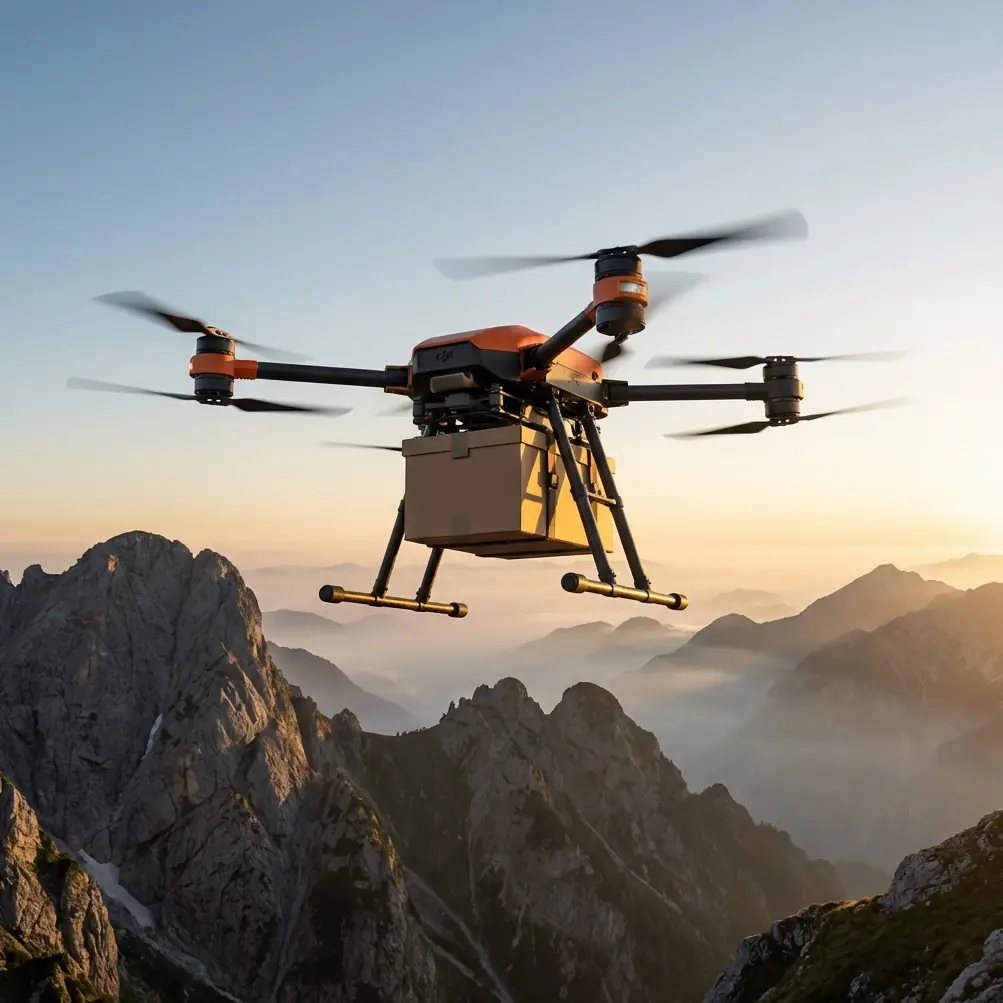
FlyCart 30 for Construction Sites: A Logistics Lead’s Technical Review of Light, Lift, and Range
META: A field-driven technical review of the FlyCart 30 for construction logistics in complex terrain, covering payload handling, winch use, BVLOS planning, antenna positioning, and why light contrast matters for safer aerial delivery.
I’ve spent enough time around difficult job sites to know that “payload capacity” is only half the story. On paper, the FlyCart 30 looks like a lifting platform. In the field, especially on construction sites cut into hillsides, wrapped around unfinished towers, or spread across uneven access roads, it behaves more like a logistics system that has to negotiate airspace, terrain, signal quality, visibility, and timing all at once.
That distinction matters.
A construction site in complex terrain is rarely a clean point-to-point delivery environment. You may be moving tools to an upper deck, concrete test samples to a temporary lab area, fasteners to a ridge-side retaining wall crew, or survey support gear to a section that is technically close on a map but operationally slow to reach by ground. The FlyCart 30 enters that picture not as a novelty aircraft, but as a way to compress travel time where roads, stairs, mud, and elevation changes punish conventional site logistics.
Still, if you want reliable results, you have to think beyond the basic specifications. The real conversation is about payload ratio, winch deployment behavior, BVLOS workflow discipline, route design, emergency recovery logic, and one issue many operators underestimate: how lighting contrast affects visual judgment during site deliveries.
Why construction logistics exposes every weakness in a drone operation
Construction terrain is unforgiving because it creates stacked variables. The launch area may be flat, but the drop point often is not. You may have reflective metal roofs, raw concrete, shadowed shafts, exposed slopes, cranes, rebar forests, and sudden wind shifts funneled by partially completed structures.
That is exactly where the FlyCart 30’s architecture starts to make sense. A serious logistics platform for these environments needs stable lift, a dependable delivery method, and systems redundancy that respects the consequences of a failed sortie. This is where details like a dual-battery setup and an emergency parachute stop sounding like brochure features and start looking like risk controls.
On a construction site, delays are expensive, but improvised recoveries are worse. A dual-battery design supports continuity and power resilience across repeated lifts, especially when altitude changes and hover time stack up around a suspended delivery. The emergency parachute matters for a different reason: if a failure occurs over a busy work zone or over terrain that makes a controlled emergency landing unrealistic, a dedicated descent safety measure can reduce the exposure footprint. On an active civilian worksite, that is a planning issue, not a marketing point.
The winch system is not an accessory. It changes the delivery geometry.
For construction use, the winch system is what transforms a cargo drone from a “flying carrier” into a practical site logistics tool.
Landing at every delivery point sounds simple until you look at actual conditions. Many handoff zones are cluttered, soft, sloped, partially obstructed, or occupied by crews and materials. Touching down near scaffolding, formwork, or unfinished surfaces may introduce more risk than value. A winch allows the aircraft to remain in a more controlled hover while lowering the payload into the workable zone.
Operationally, that changes several things:
- You no longer need every receiver point to be a safe landing point.
- You can keep rotor wash farther from loose materials.
- You can service elevated or recessed areas with less site disruption.
- You can improve delivery precision when terrain makes foot access awkward.
For steep or broken terrain, that matters more than many new operators expect. The aircraft may have a clear air path, but the final 5 to 10 meters of delivery are often the hardest part. The winch system resolves that by separating aircraft positioning from ground contact.
The tradeoff is that you now need better vertical clearance awareness and steadier hover discipline. Swing dynamics become part of the mission profile. On a breezy afternoon near exposed framing or retaining walls, a suspended load behaves differently from a rigidly mounted one. That means route optimization is not only about finding the shortest line. It is about choosing an approach that reduces lateral drift before descent.
Payload ratio is where planning gets honest
Construction teams often focus on maximum lift, but payload ratio is the better operational metric. What matters is not the top number in ideal conditions. What matters is how the carried load compares to available performance margin under the actual mission profile: terrain elevation, temperature, route shape, hover demand, reserve planning, and return requirements.
A tight payload ratio can look acceptable at takeoff and still create problems later. If the mission includes climbing along a slope line, hovering to lower a load by winch, and repositioning against crosswind near a partially shielded structure, the aircraft is working harder than a straightforward horizontal transit would suggest.
That’s why disciplined operators build payload classes, not one-off judgments. On a construction site, we usually sort loads into three categories:
- Routine loads that leave comfortable battery and control margin.
- Conditional loads that are acceptable only on proven routes and stable weather windows.
- Restricted loads that may fit physically but compress margin too much for daily operations.
The FlyCart 30 is most valuable when it helps standardize those decisions. Once crews know which tool packs, sensors, samples, or supply bundles fall into each class, dispatch becomes faster and safer. The aircraft then supports repeatable logistics rather than ad hoc lifting.
BVLOS only works when route design is disciplined
For larger construction footprints, especially infrastructure jobs spread across valleys, cut slopes, or disconnected staging areas, BVLOS thinking becomes attractive quickly. But longer range capability alone is not what makes BVLOS useful. The real requirement is predictability.
A good BVLOS construction route is not merely the most direct path between point A and point B. It is the path with the fewest signal interruptions, the most stable visual context for terminal operations, and the cleanest recovery options if conditions shift.
This is where terrain awareness and antenna positioning intersect.
Antenna positioning advice for maximum practical range
The easiest range losses on a construction site are self-inflicted. Operators focus on aircraft distance while ignoring the ground station environment. If you want stronger and more stable link performance with the FlyCart 30, treat antenna placement as part of route planning, not as a setup detail.
Here’s what consistently helps:
- Position the control point with the clearest possible line toward the longest route segment, not simply the most convenient standing area.
- Avoid placing antennas behind site offices, containers, concrete batching structures, parked machinery, or steel stockpiles.
- Get above local obstructions where feasible. Even a modest elevation improvement at the operator position can help preserve cleaner signal geometry.
- Keep antennas oriented for the route’s actual corridor rather than the launch pad alone.
- If the aircraft must pass behind ridgelines, unfinished towers, or dense material stacks, plan a route bend before the obstruction rather than after it.
The biggest mistake I see is operators standing where they can watch takeoff comfortably, even if that position is terrible for the rest of the mission. On complex terrain, the best control spot is often the one that looks inconvenient at first but gives cleaner exposure to the route’s critical middle section.
If your team is working through site-specific communications planning, this field coordination chat is a practical way to compare antenna placement options before deployment.
What photography contrast teaches us about safer cargo flights
This may sound like a side topic, but it has direct operational value. A recent discussion in Chinese photography media made a simple point: light contrast is the brightness difference between the brightest and darkest parts of an image. Under midday sun, the gap between a bright roadway and deep tree shade is large. Under overcast skies, the light is more even and the contrast is smaller.
That concept matters on construction sites because drone crews make visual judgments inside those same lighting conditions.
When contrast is high, the sky can wash out while dark work zones, lower decks, or shadowed edges lose visible detail. The photography example described a common failure: pushing an image to look generally brighter and losing important information in either highlights or shadows. That same instinct appears in operations. Crews sometimes trust a scene because it looks bright overall, while missing that the actual delivery zone sits in harsh shadow with poor surface readability.
For FlyCart 30 work, this has three practical implications:
1. Midday is not always the easiest window
A bright noon launch can create a large contrast spread between exposed slabs and shaded recesses. If the receiving crew is under partial cover, next to formwork, or inside the shadow line of a structure, depth perception and obstacle recognition may be worse than expected. The scene looks clear until you focus on the exact handoff zone.
2. Overcast conditions can improve delivery judgment
The photography reference pointed out that cloudy weather produces more even light. For cargo operations, that often means better visual consistency around winch lowering, ground clearance estimation, and receiver coordination. You may give up some visual drama. You gain readability.
3. Brighter is not automatically better
The source also highlighted a beginner mistake: chasing brightness without regard to scene conditions, which causes detail loss. In site operations, the equivalent mistake is assuming stronger sunlight equals easier flying. It can actually hide relevant detail in shadows or blow out reflective surfaces, especially around sheet metal, pale concrete, or white temporary coverings.
This is not a camera theory detour. It is a reminder that delivery safety depends partly on how well the crew reads the environment. If your team is choosing between a harsh sun window and a flatter overcast window for repeated deliveries to awkward terrain, the softer light may support cleaner operations.
Route optimization should be built around the drop, not the takeoff
A lot of route planning starts with launch convenience. That is backwards for construction logistics.
The difficult part of a FlyCart 30 mission is usually the last segment: arrival, hover stabilization, load descent, release confirmation, and egress. So the route should be optimized around the terminal environment first.
That means asking:
- Where will the aircraft encounter the worst crosswind?
- Where does terrain or structure shielding distort the link?
- Which direction gives the clearest hover reference near the drop zone?
- Can the aircraft approach with minimal load swing before winch deployment?
- Is there a clean escape path if the receiving area is suddenly occupied?
Once those answers are locked in, the rest of the route becomes easier to shape. This approach also supports battery discipline. The more predictable the terminal phase, the less reserve gets wasted in hesitation, repositioning, or repeated lowering attempts.
Redundancy is only useful if crews know how to use the margin
The FlyCart 30’s dual-battery architecture and emergency parachute support a more robust risk posture, but systems redundancy does not compensate for weak operating habits. Construction teams get value from these features only when the mission plan preserves enough margin for them to matter.
That means:
- not dispatching near the edge of acceptable payload ratio,
- not accepting poor signal geometry because the route “usually works,”
- not improvising drop zones under extreme glare or shadow,
- and not treating the parachute as permission to relax planning standards.
The strongest FlyCart 30 operations are boring in the best way. Same route logic. Same antenna discipline. Same payload classes. Same drop-zone acceptance criteria. Repeatability is what turns an advanced aircraft into a dependable construction asset.
My verdict as a logistics lead
For construction sites in complex terrain, the FlyCart 30 earns attention where ground movement is slow, steep, interrupted, or structurally inconvenient. Its value is highest when the mission needs more than simple transport: suspended delivery via winch, repeated trips, route consistency, and a safety framework that respects active work zones.
But the aircraft’s success on site has less to do with raw lift than many buyers assume. The difference between a useful deployment and a frustrating one usually comes down to four things:
- payload ratio discipline rather than spec-sheet optimism,
- winch-based delivery planning rather than forced landings,
- antenna positioning that protects the signal corridor,
- and visual awareness of high-contrast light conditions that can hide critical detail.
That last point deserves emphasis. The photography principle about bright-versus-dark balance is not academic. It explains why some midday deliveries feel oddly harder than they should. When the brightest and darkest parts of the scene are too far apart, your crew may lose detail exactly where precision matters. On a construction site, that can affect winch placement, obstacle reading, and receiver coordination in real time.
Used with that level of discipline, the FlyCart 30 is not just capable. It becomes operationally credible.
Ready for your own FlyCart 30? Contact our team for expert consultation.