
FlyCart 30 for Remote Construction Deliveries
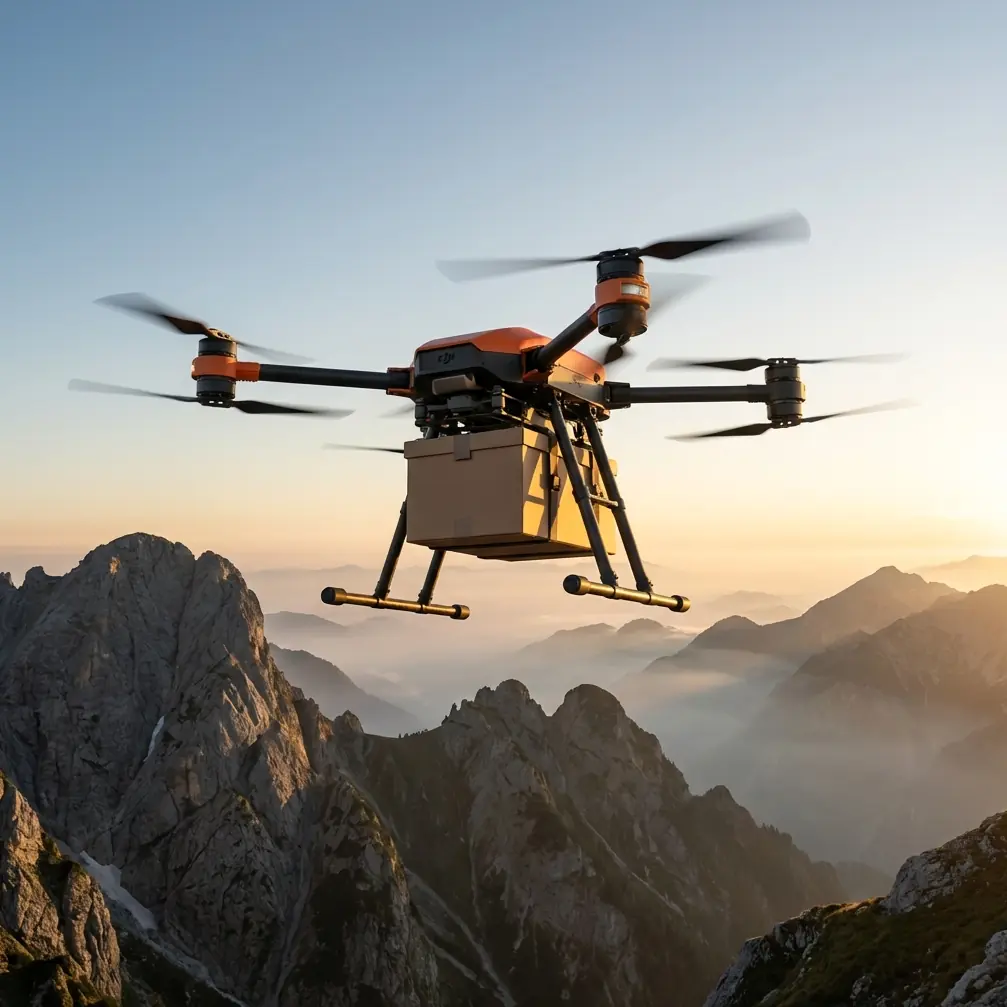
FlyCart 30 for Remote Construction Deliveries: A Field Tutorial from the Logistics Side
META: Practical FlyCart 30 tutorial for remote construction site delivery, covering payload planning, winch workflows, route design, safety layers, and why sovereign drone capacity now matters to industrial operators.
Remote construction logistics usually fail in the same places: the last mile, the weather gap, and the terrain nobody wants to admit is the real bottleneck.
I’ve seen it with ridge-top telecom builds, river-adjacent concrete work, and road projects where the access track looks acceptable on paper but collapses into delays the moment rain hits. That’s where the FlyCart 30 becomes more than a drone with lifting power. In the right workflow, it becomes a scheduling tool. It reduces waiting, limits unnecessary vehicle movement, and keeps high-friction sites supplied with the exact items they need without turning every missing part into a half-day recovery exercise.
This tutorial is written for the reader who actually has to run deliveries into remote construction sites, not just evaluate drones in a vacuum. The focus is operational: how to think about payload ratio, winch deployment, BVLOS planning, route optimization, dual-battery discipline, and emergency parachute logic in a real site environment.
There’s also a bigger industry context worth paying attention to. A recent report from DroneLife described the UK Ministry of Defence launching its largest-ever drone initiative, while also using that move to strengthen domestic drone manufacturing and broader sovereign drone capability. That story is not about construction. But it does matter to construction operators. When governments push to scale local drone production capacity, the downstream effect is often felt in civilian supply chains, parts ecosystems, training standards, and operator confidence in long-term fleet support. For companies planning around the FlyCart 30, that industrial backdrop is no longer abstract. It influences what equipment remains supportable, who can maintain it, and how resilient your delivery operation will be when international competition tightens supply.
Start with the mission, not the aircraft
The first mistake remote-site teams make is asking whether the FlyCart 30 can carry a load. The better question is whether the load should be flown at all.
A construction delivery by drone works when five things line up:
- The item is operationally urgent.
- Ground transport is slower, riskier, or disproportionately expensive.
- The landing or drop environment is constrained but manageable.
- The handoff process is repeatable.
- The payload-to-trip value is high enough to justify the sortie.
That fifth point is where payload ratio matters. If you are flying a large aircraft movement to deliver something that could have been bundled into a scheduled resupply run, you’re wasting air time and battery cycles. But if the payload is a breaker component, survey instrument, fastening kit, rope assembly, medical supply box, or concrete test equipment that keeps a team of 20 moving, the ratio shifts. A small load can still have outsized mission value.
On remote builds, I sort items into three categories:
- Work-stopping items: missing parts or tools that halt a crew immediately.
- Safety-critical items: PPE replacements, radios, first-aid kits, weather instruments.
- Efficiency items: consumables or support gear that prevent downstream delays.
The FlyCart 30 earns its place fastest in the first two.
The winch system changes the site equation
For rough sites, the winch system is often more useful than a full touchdown.
A lot of construction zones don’t offer a clean landing area. You may have rebar stacks, suspended work, loose aggregate, temporary fencing, unstable slopes, or rotor-wash-sensitive materials. If you force a landing model onto every mission, you limit the aircraft before the job even starts.
The winch gives you vertical separation between the aircraft and the handoff point. Operationally, that matters in three ways.
First, it reduces the need to prepare and protect a landing pad in places where site geometry changes every day.
Second, it cuts down dust and debris disturbance near personnel and materials.
Third, it creates options for delivering into elevation changes, trench edges, scaffold-adjacent zones, or cut-through clearings where touchdown would introduce unnecessary risk.
The workflow has to be disciplined. Don’t let the crew improvise under the aircraft. Establish a receiving zone, designate one trained receiver, and standardize the unhook process. If your site teams are rotating, train to the procedure, not the person.
I also recommend building a “no-chase” rule. If the payload swings outside the marked receiving box, the ground receiver does not pursue it until the aircraft has stabilized or reset. Most handoff mistakes come from people trying to save a few seconds.
Route optimization is where the real time savings appear
People tend to think the drone itself creates the efficiency. In practice, route design creates the efficiency.
A remote construction route should be built around terrain, communications reliability, and fallback logic. Do not simply draw the shortest line between depot and site. That line may cross wind shear pockets, bird activity corridors, reflective water surfaces, or GNSS-challenging topography.
One of our more memorable flights passed along a wooded edge near a remote civil works site where a red kite suddenly crossed into the route corridor. The aircraft’s sensing system flagged the movement early enough for a controlled adjustment rather than an abrupt evasive maneuver. That mattered because the payload was suspended on the winch, and smooth deviation preserved load stability better than a late, sharp correction would have. Wildlife encounters are not edge cases in rural logistics. They are route-planning inputs.
For route optimization, I look at four layers:
- Primary route: the most efficient standard corridor.
- Weather route: a safer alternative when valley winds or crosswinds build.
- Signal route: the corridor with the strongest communications resilience.
- Abort route: the cleanest path back if the mission needs to terminate early.
If you’re operating BVLOS, those route layers become even more significant. BVLOS is not just a permission issue. It is a systems issue. You need confidence in terrain separation, command continuity, emergency behavior, and receiving-site readiness without depending on constant visual reassurance from the pilot.
Dual-battery discipline is not a feature checklist item
A dual-battery setup sounds reassuring in marketing shorthand, but in field operations it only helps if you build your planning around battery behavior instead of battery optimism.
Remote construction teams often underestimate the compound effect of altitude, temperature, hover time during winch deployment, and repeated short-cycle missions. The aircraft may technically support your load profile, but the mission margin can shrink faster than expected once you factor in climb, station keeping, and reserve requirements.
My advice is simple: plan every sortie as if the return leg will be less forgiving than the outbound leg.
That means:
- model battery use with payload and hover time included,
- apply extra reserve for sites with unstable local wind,
- avoid stacking urgent flights back-to-back without a battery cooling and rotation plan,
- and never treat nominal range figures as construction figures.
Remote projects have a way of turning a simple delivery into a delayed handoff. Maybe the crew is clearing the receiving area. Maybe a crane movement pauses the drop. Maybe someone on site forgot the receiver tag line. Your battery plan needs to survive those human delays, not just ideal flight math.
Emergency parachute thinking should happen before launch day
If your operation relies on an emergency parachute system, that system has to be folded into your site design from the start.
The mistake I see is teams assuming the parachute is a last-resort safety blanket and therefore doesn’t need operational planning. It does. You need to think about what lies below the route, where the low-consequence zones are, and how to avoid creating a corridor that passes over workers, active machinery, temporary offices, or traffic chokepoints.
The parachute is not permission to fly casually. It is one layer in a broader risk stack.
For construction use, this means:
- define ground exclusion areas under likely flight paths,
- align routes with lower-density site edges when possible,
- brief site supervisors on contingency outcomes,
- and make sure the receiver team understands that a suspended load mission has different emergency dynamics than a camera drone sortie.
This is one reason I prefer drone delivery teams to attend early construction planning calls. By the time a site layout is fixed, your safest route may already be compromised by container placement, haul roads, or crane swing zones.
Why sovereign drone capability matters even for site deliveries
At first glance, a news item about the UK’s largest-ever drone initiative seems disconnected from a FlyCart 30 tutorial. It isn’t.
The DroneLife report pointed to two linked realities: support for Ukraine and a deliberate effort to strengthen the UK’s domestic drone manufacturing base as international competition increases. Strip away the defense context, and one civilian lesson stands out. Drone capability is now being treated as strategic infrastructure.
For industrial operators, that has real implications.
If a country is pushing for stronger sovereign drone capability, the ecosystem around drones tends to mature faster. That can mean better maintenance pathways, more local technical expertise, stronger training capacity, and a more stable environment for procurement and fleet continuity. Remote construction firms benefit from that maturity even if their work has nothing to do with government programs.
It also changes buyer behavior. Companies are becoming more cautious about long-term supportability. They want to know whether batteries, service parts, software support, and pilot training will remain dependable when market conditions shift. On a remote site, downtime is never just downtime. It can idle labor, delay inspections, and throw off dependencies across multiple contractors.
So yes, a national push to expand domestic drone manufacturing does matter to someone flying a FlyCart 30 to a ridge build. It signals that drones are moving out of the experimental bucket and into the industrial backbone conversation.
A practical delivery workflow for remote sites
Here’s the workflow I recommend for FlyCart 30 construction missions.
1. Build a site-specific payload matrix
Don’t create a generic approved-items list and call it done. Match item type to packaging, center of gravity, receiver handling method, and urgency class.
A compact spare part in a rigid case behaves differently from bundled cable or fluid containers. Your matrix should say what can be flown, how it must be secured, and whether it is a touchdown or winch-only item.
2. Standardize the receiving zone
Mark it clearly. Keep it away from loose sheet materials, exposed wiring, and active lift equipment. Assign one person to receive and one to supervise the area.
3. Define route layers in advance
Primary, weather, signal, abort. No ad-lib routing on production flights.
4. Train for delays
Run drills where the receiver is late, the drop zone is temporarily blocked, or the aircraft must hold position before release. The mission should remain orderly under friction.
5. Review wildlife and environmental triggers
Bird activity, livestock movement, water reflection, tree lines, and dust plumes all affect route quality. These are not side notes.
6. Track mission economics honestly
Measure not just flight time, but labor hours saved, prevented downtime, avoided vehicle movement, and schedule recovery. That’s the actual business case.
If you’re trying to compare deployment options for your own site conditions, you can send your route scenario and payload profile through this FlyCart 30 planning chat and sanity-check the concept before building a full operating routine.
What separates a successful FlyCart 30 program from a failed one
It’s rarely the aircraft.
Successful programs treat the drone as one part of a logistics system. They integrate site management, payload control, route planning, battery discipline, receiving procedures, and contingency logic. Failed programs do the opposite. They buy lifting capability and expect the operation to organize itself around the machine.
For remote construction, the FlyCart 30 is most effective when you stop thinking of it as an occasional emergency courier and start treating it as a structured supply link. Not every item should fly. Not every site is suitable. But when the route is designed properly and the handoff process is tight, the drone can remove some of the most expensive delays in isolated construction work.
That’s the real value. Less waiting. Fewer disrupted crews. Better control over sites where terrain, distance, and access conditions usually dictate the schedule.
And as the broader drone sector gains strategic weight—as seen in the UK’s move to expand sovereign drone capability and strengthen domestic manufacturing—the companies that learn to operationalize delivery drones well will be in a stronger position than those still treating them as demonstrations.
Remote construction doesn’t need novelty. It needs reliable movement of tools, parts, and critical supplies under imperfect conditions. That is exactly where a well-run FlyCart 30 workflow proves itself.
Ready for your own FlyCart 30? Contact our team for expert consultation.