
Delivering Fields in Low Light With FlyCart 30
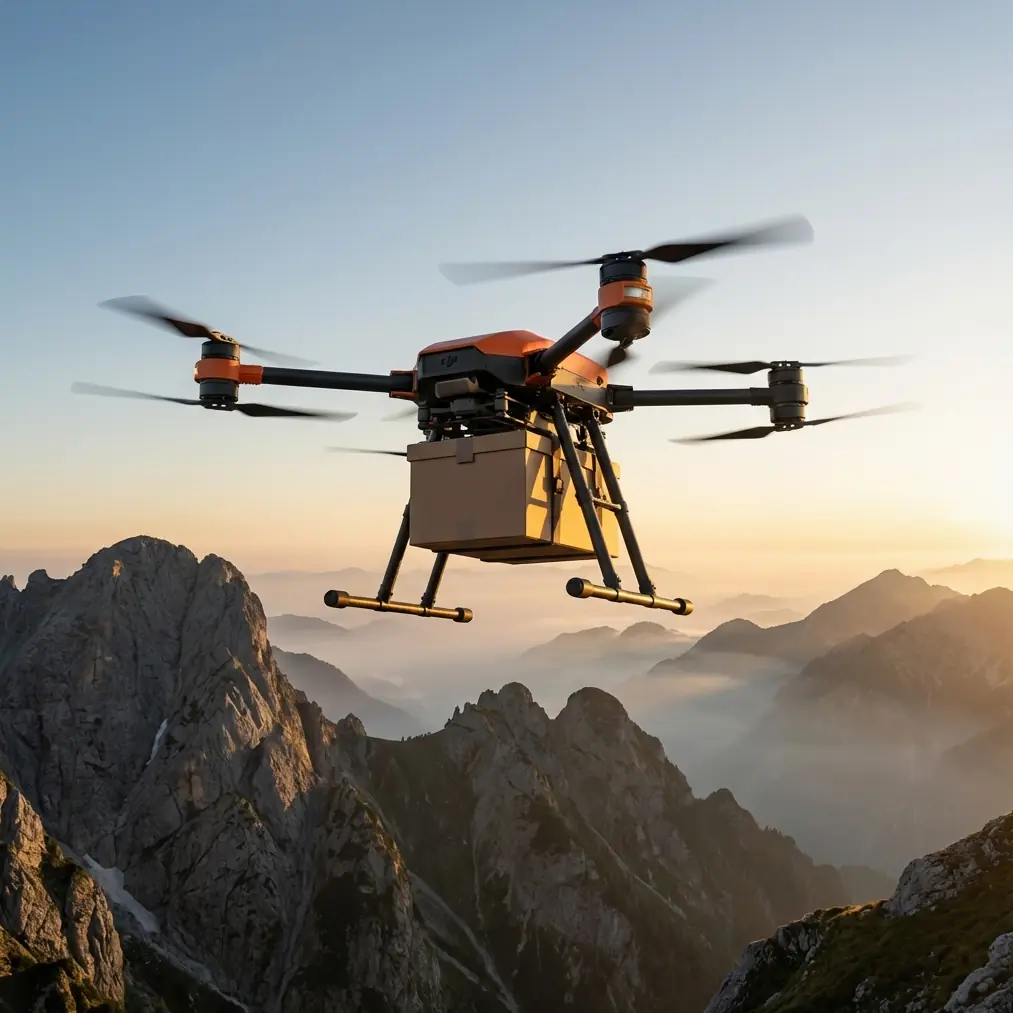
Delivering Fields in Low Light With FlyCart 30: A Practical Safety-First Playbook
META: Learn how to operate the FlyCart 30 for low-light field delivery with safer battery planning, route control, payload balance, winch use, and BVLOS-minded workflows shaped by today’s low-altitude safety priorities.
I’ve spent enough time around field logistics to know that low-light delivery is rarely about flying in the dark. It’s about everything the dim light hides from you until the job is already moving: uneven terrain, harder depth perception, last-minute route changes, battery margin anxiety, and the very human temptation to push one more trip before full recharge.
That is exactly why the broader direction of China’s low-altitude sector matters to anyone working with the FlyCart 30. A recent industry signal stands out: the Civil Aviation Administration of China has established a dedicated low-altitude safety department, with “coordinating low-altitude safety and development” named as a core responsibility. That sounds administrative on the surface. In practice, it marks a shift the field has needed for a while. Growth alone is no longer the headline. Safety now sits beside development, not behind it.
If you’re delivering tools, seed, irrigation components, or agronomy supplies to fields in low light, that shift is not abstract policy. It should directly shape how you plan every FlyCart 30 mission.
This guide is built around that reality: how to use FlyCart 30 in low-light agricultural and rural delivery scenarios with a workflow that respects both productivity and safety.
Why low-light field delivery changes the job
In daylight, field delivery is usually a geometry problem. You identify the launch point, map the drop zone, define route legs, and manage payload against distance and reserve.
In low light, it becomes a margin problem.
Margins in visibility. Margins in judgment. Margins in battery planning.
A route that looked simple at 4 p.m. can become less forgiving at dusk. Tree lines flatten visually. Poles and wires blend into the background. Surface references at the receiving point become harder to verify. Even if the aircraft systems are doing the heavy lifting, the operator’s decision quality is under more pressure.
That is where FlyCart 30’s commercial delivery design matters. Features like a winch system, dual-battery architecture, and emergency parachute are not brochure ornaments. They become operational tools for reducing exposure during the parts of the mission where low light increases risk.
The strongest low-light teams are not the ones who fly aggressively. They are the ones who reduce variables.
Start with the new rule of the sector: safety and development together
The creation of a low-altitude safety office by China’s aviation regulator is a clear response to a real issue: as the low-altitude economy has expanded quickly, safety risks have become more visible. That matters for FlyCart 30 users because logistics missions tend to normalize repetition. If a route works ten times in daylight, crews often assume it only needs small adjustments at dusk.
That assumption is where risk creeps in.
The policy signal here is useful because it reinforces a better operating mindset: do not treat safety as a compliance layer added after productivity planning. Build it into mission design from the first step.
For FlyCart 30 field delivery, that means three questions before every low-light launch:
- Can this payload be delivered without landing at the receiving point?
- Can the route be simplified enough to preserve strong battery reserve?
- Can the receiving process be standardized so visual uncertainty is reduced?
If the answer to any of those is no, the mission needs redesign before takeoff.
My field rule: battery planning starts one trip earlier than you think
Here’s the battery management tip I wish more teams learned before they needed it.
When you’re running FlyCart 30 in fading light, never judge battery readiness only by the mission in front of you. Judge it by the mission after that one. In other words, plan with the assumption that a delay, reposition, hover extension, or go-around will happen.
This is where dual-battery thinking becomes practical, not technical. Dual-battery systems give you resilience, but crews often misuse that resilience psychologically. They start treating the aircraft as if extra battery architecture means flexible risk tolerance. It does not. It means your planning should be more disciplined because you have the tools to create cleaner reserves.
My preferred approach in field delivery is simple:
- Assign a “no-discussion reserve” before the first launch of the low-light window.
- Reduce payload slightly if the route includes uncertainty at the drop point.
- Avoid letting one strong battery cycle justify a marginal next cycle.
- If ambient temperature is dropping, assume your confidence in battery behavior should drop with it.
The trap is familiar. The first evening run goes well, so the team loads similarly for the second. Then the third mission includes extra hover time while the receiver clears the drop zone. Suddenly the return segment feels tighter than it should.
That’s not a battery problem. It’s a planning problem.
Low-light delivery punishes optimistic forecasting. FlyCart 30 performs best when battery reserves are treated as route design inputs, not leftover percentages.
Payload ratio matters more than headline lift capacity
A lot of operators talk about payload in absolute terms. In the field, payload ratio is the better lens.
What matters is not just what FlyCart 30 can carry. What matters is how much of its available performance envelope you want to consume during low-light operations. If visibility is reduced and the receiving area is less defined, you do not want the aircraft operating near the edge of what the route demands.
This is especially true when the job is delivering into fields rather than onto a clear industrial pad. Agricultural environments change by the week. Crop height, moisture conditions, temporary equipment placement, and ad hoc worker movement can alter the practical shape of a delivery zone.
A more conservative payload ratio gives you options:
- more comfortable climb and return performance
- stronger reserve for route deviations
- less pressure during hover and lowering operations
- lower temptation to force the mission if the first approach looks messy
That last point matters. Once teams are operating in dim light, they tend to rationalize small complications because no one wants to reset and re-brief. A safer payload ratio buys decision space.
Use the winch system to avoid turning a delivery into a landing exercise
For field operations, the winch system is often the difference between a controlled logistics mission and an unnecessarily exposed aircraft movement.
In low light, reducing touchdown dependency is huge.
If the receiving point is uneven, muddy, obstructed, or visually ambiguous, lowering cargo by winch keeps the aircraft away from the most uncertain part of the site. That has obvious efficiency benefits, but its real significance is safety. You remove the need to commit the aircraft to a surface environment that may look clearer on screen than it is in reality.
The operational key is standardization. Do not improvise the receiving process each time.
I recommend setting a repeatable handoff routine:
- receiver stands in a predefined clear zone
- cargo line descent begins only after verbal or radio confirmation
- ground crew avoids bunching under the aircraft
- payload detachment is rehearsed before low-light use
If your team has not practiced that sequence in daylight, dusk is the wrong time to discover weak points.
FlyCart 30’s winch capability is most valuable when paired with discipline, not just convenience.
BVLOS thinking is really about route predictability
A lot of conversations around BVLOS focus on regulation and advanced operations, but in field logistics the practical lesson is more basic: routes must be predictable enough that the aircraft is not relying on operator improvisation.
That principle matters even if your local mission profile is tightly controlled.
Low-light delivery increases the cost of route ambiguity. So route optimization should not be treated as purely an efficiency exercise to save time. It is a safety tool. The cleaner the route, the less cognitive load on the crew, and the more reserve remains for handling exceptions.
For FlyCart 30 field work, route optimization in low light usually means:
- using the same approach corridor whenever possible
- avoiding terrain transitions that complicate visual interpretation
- selecting drop zones with strong contrast and simple access
- minimizing lateral deviations near the delivery endpoint
- building return legs that do not require complex repositioning
The easiest route on a map is not always the safest route in fading light. The safest route is the one your team can repeat without hesitation.
Why the emergency parachute changes your planning mindset
An emergency parachute is often discussed as a last-resort system. That’s true, but there’s a second effect people overlook: it should influence how you define acceptable operating environments in the first place.
In low-light field work, contingency systems are valuable precisely because uncertainty is higher. But they are not excuses to normalize weak planning. The parachute’s significance is that it supports a layered safety strategy. If development and safety are now being treated together at the industry level, operators need the same layered mindset at mission level.
Think of it this way:
- route discipline reduces avoidable exposure
- payload discipline preserves aircraft performance margin
- battery discipline protects return confidence
- winch use reduces risky surface interaction
- emergency parachute provides a final protective layer if another layer fails
That stack is how professional operations mature.
A practical low-light FlyCart 30 workflow for field delivery
Here’s the process I use as a baseline.
1) Tighten the mission objective
Do not launch with a vague “field drop” plan. Define the exact material, receiving point, and handoff method. If the receiver cannot clearly describe the landing or lowering zone, stop there and clarify.
2) Choose payload for margin, not maximum
Low light is not the time to chase top-end lift. Select a payload ratio that leaves room for hover extension and route correction.
3) Inspect battery readiness with the next mission in mind
Check current mission demand, but also ask whether batteries are positioned for an unexpected extension. If the answer is uncertain, change batteries now rather than after a stressful return.
4) Use the winch wherever terrain clarity is weak
If the field edge is cluttered or the surface cannot be confidently assessed, avoid landing dependency.
5) Standardize communication with the receiver
This is where many teams lose discipline. One person confirms zone readiness. One person confirms payload release. No overlapping chatter.
6) Keep route geometry boring
Boring is good. Repeatable is good. A route that feels almost too simple is usually the one that ages best in low-light operations.
7) Pre-brief the contingency point
Before launch, state the exact trigger for abort or return. Do not invent that threshold while airborne.
The industry shift should change operator culture too
The most meaningful part of the recent policy development is not just that a new department exists. It is what that move admits openly: the speed of low-altitude economic growth has brought safety risk into sharper view.
That honesty is healthy.
For FlyCart 30 operators, especially those serving agriculture and rural logistics, it signals a more mature phase of the market. The question is no longer whether these aircraft can do useful work. They clearly can. The question is whether teams can build repeatable, safety-led operating systems that deserve wider trust.
Low-light field delivery is a good test case because it sits right at the boundary between routine and elevated complexity. It is easy enough to attempt, yet demanding enough to expose weak habits.
If your FlyCart 30 workflow for evening field runs still depends on operator confidence more than system discipline, now is the time to fix it.
One final field note
When crews get busy, they often spend too much time discussing aircraft capability and too little time discussing receiving-site behavior. That’s backward. In low light, your drop-site process is often the biggest source of avoidable friction.
Create one method. Train it repeatedly. Keep it calm.
If you’re comparing setup approaches or need a second opinion on a field-delivery workflow, you can message our logistics desk here.
The future of low-altitude logistics will not be defined by how fast operators can scale flights. It will be defined by how well they can scale judgment. The recent shift from a development-only mindset toward balancing development with safety is a useful marker for everyone using FlyCart 30 in real field conditions.
And if you’re delivering to fields in low light, that balance is not theory. It’s the whole job.
Ready for your own FlyCart 30? Contact our team for expert consultation.