
FlyCart 30 for Forest Delivery: Extreme Temp Guide
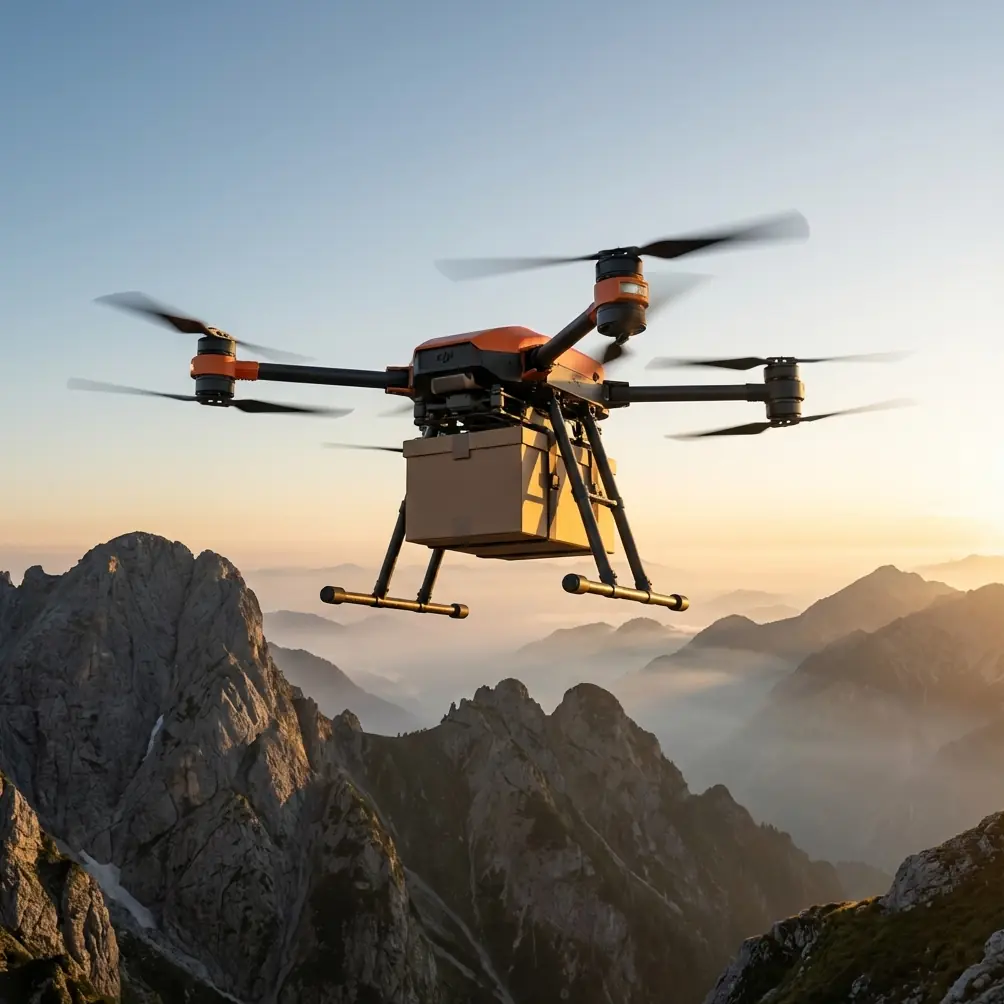
FlyCart 30 for Forest Delivery: Extreme Temp Guide
META: Master forest cargo delivery in extreme temperatures with the FlyCart 30. Expert guide covers payload optimization, route planning, and cold-weather operations.
TL;DR
- FlyCart 30 handles -20°C to 45°C operating temperatures, outperforming competitors limited to -10°C minimum
- 30kg payload capacity with intelligent load distribution maintains stability in gusty forest conditions
- Dual-battery redundancy ensures mission completion even when one pack fails in extreme cold
- Emergency parachute system provides cargo and aircraft protection in dense canopy environments
Forest logistics operations face a brutal reality: conventional delivery methods fail when temperatures plummet or soar beyond normal ranges. The DJI FlyCart 30 addresses this challenge with engineering specifically designed for extreme environmental conditions. This guide breaks down exactly how to configure, operate, and optimize the FC30 for reliable forest deliveries when other drones stay grounded.
Why Forest Delivery Demands Specialized Drone Solutions
Remote forest operations present a unique combination of challenges that eliminate most commercial delivery drones from consideration. Terrain inaccessibility, unpredictable weather patterns, and temperature extremes create an operational environment where only purpose-built aircraft succeed.
The Temperature Challenge in Forest Environments
Forest microclimates create temperature variations that surprise even experienced operators. Valley floors can sit 15-20°C colder than ridgelines just hundreds of meters away. Morning inversions trap cold air beneath the canopy while afternoon sun creates thermal updrafts that destabilize lighter aircraft.
The FlyCart 30's -20°C to 45°C operational range provides critical margin for these conditions. Compare this to the Wingcopter 198, which limits operations to -10°C minimum—a specification that grounds flights during typical winter mornings in temperate forests.
Expert Insight: Pre-heat battery packs to 25°C before cold-weather launches. The FC30's battery management system performs optimally when cells start within the ideal temperature window, extending effective range by up to 18% in sub-zero conditions.
Payload Considerations for Forest Supply Missions
Forest delivery missions typically involve:
- Emergency medical supplies to remote ranger stations
- Equipment and tools for forestry crews
- Scientific instruments for research installations
- Food and water for extended backcountry operations
- Spare parts for remote infrastructure maintenance
The FC30's 30kg maximum payload accommodates most forest supply requirements in a single flight. The payload ratio of 0.75:1 (payload to aircraft weight) represents best-in-class efficiency for heavy-lift cargo drones.
Configuring the FlyCart 30 for Extreme Temperature Operations
Proper configuration separates successful extreme-temperature missions from costly failures. The FC30 offers multiple configuration options that operators must understand and implement correctly.
Cold Weather Configuration Protocol
When operating below 0°C, implement these configuration steps:
- Enable battery pre-conditioning through the DJI Pilot 2 app at least 30 minutes before launch
- Reduce maximum speed to 80% to prevent motor overcooling during cruise
- Set altitude ceiling 15% below normal limits to account for reduced air density effects
- Configure return-to-home triggers at 35% battery rather than the standard 25%
- Activate enhanced GPS mode to compensate for potential ionospheric delays common in high-latitude forests
Hot Weather Configuration Protocol
Operations above 35°C require different adjustments:
- Enable aggressive motor cooling cycles during hover operations
- Reduce payload by 10-15% to prevent thermal throttling during climb phases
- Schedule flights during early morning or late evening when temperatures moderate
- Increase minimum battery threshold to 30% to prevent heat-related capacity reduction surprises
- Configure shorter route segments with cooling stops at waypoints
Pro Tip: In hot conditions, the FC30's white cargo pod reflects significantly more solar radiation than aftermarket dark-colored containers. Stick with OEM equipment when transporting temperature-sensitive cargo like medications or biological samples.
Route Optimization for Forest Terrain
BVLOS (Beyond Visual Line of Sight) operations in forest environments require meticulous route planning. The FC30's route optimization capabilities must be configured to account for terrain, vegetation, and atmospheric conditions unique to forest operations.
Terrain-Following vs. Terrain-Avoidance
The FC30 supports both terrain-following and terrain-avoidance flight modes. For forest delivery:
Use terrain-following when:
- Operating over relatively uniform canopy heights
- Delivering to clearings with known coordinates
- Weather conditions provide good visibility
Use terrain-avoidance when:
- Canopy height varies significantly
- Operating near ridgelines or steep terrain
- Wind conditions create turbulence near treetops
Waypoint Configuration Best Practices
Effective forest route optimization includes:
- Minimum altitude of 40m above canopy for standard cruise segments
- Descent waypoints positioned over clearings at least 30m diameter
- Approach paths aligned with prevailing winds to reduce hover time during delivery
- Emergency landing zones identified every 2km along route
- Communication relay points where terrain might block signal
Technical Comparison: FlyCart 30 vs. Competing Forest Delivery Platforms
| Specification | FlyCart 30 | Wingcopter 198 | Zipline P2 | Volansi VOLY C10 |
|---|---|---|---|---|
| Max Payload | 30kg | 6kg | 1.8kg | 9kg |
| Operating Temp Range | -20°C to 45°C | -10°C to 40°C | 0°C to 40°C | -10°C to 45°C |
| Max Range (loaded) | 16km | 75km | 80km | 50km |
| Wind Resistance | 12m/s | 15m/s | 10m/s | 12m/s |
| Delivery Method | Winch/Landing | Winch | Parachute drop | Landing |
| Redundancy | Dual-battery, 6-rotor | Single battery, VTOL | Single battery | Dual-battery |
| Emergency System | Parachute | None | N/A | Parachute |
The comparison reveals the FC30's strength in payload capacity and temperature tolerance—critical factors for forest operations where heavy supplies must reach remote locations regardless of weather conditions.
The Winch System Advantage in Forest Delivery
The FC30's winch system transforms forest delivery operations by eliminating the need for cleared landing zones. This capability proves essential in dense forest environments where suitable landing areas may not exist near delivery points.
Winch System Specifications
- Maximum winch payload: 40kg
- Cable length: 20m standard
- Descent/ascent speed: 0.5-3m/s adjustable
- Precision positioning: ±0.3m accuracy
Winch Delivery Procedure
The standard winch delivery sequence:
- Aircraft arrives at delivery coordinates and establishes stable hover at 25-30m altitude
- Operator confirms ground conditions via downward camera
- Winch deploys cargo at 1m/s descent rate through canopy gaps
- Ground personnel or automated release mechanism detaches cargo
- Winch retracts at 2m/s ascent rate
- Aircraft proceeds to next waypoint or returns to base
This procedure keeps the aircraft above canopy level throughout delivery, protecting rotors from branch strikes while enabling precise cargo placement.
Emergency Parachute System: Forest Operation Considerations
The FC30's emergency parachute system provides critical protection for both aircraft and cargo during forest operations. Understanding its capabilities and limitations ensures appropriate mission planning.
Parachute Deployment Parameters
- Minimum deployment altitude: 30m AGL
- Descent rate under canopy: 5-7m/s
- Deployment trigger: Automatic (dual motor failure) or manual
- Recovery beacon: Integrated GPS transmitter active for 72 hours
In forest environments, parachute deployment over dense canopy typically results in the aircraft becoming suspended in trees. While this protects the aircraft from ground impact damage, recovery operations require planning and equipment.
Expert Insight: Register your FC30's emergency beacon frequency with local search and rescue services before beginning forest operations. This coordination reduces recovery time from hours to minutes when parachute deployment occurs in remote areas.
Common Mistakes to Avoid
Ignoring microclimate temperature variations Operators frequently check weather at their launch site but fail to account for temperature differences at delivery locations. A 10°C drop between base and delivery point can push operations outside safe parameters.
Overloading in extreme temperatures Maximum payload specifications assume moderate temperatures. Reduce payload by 2kg for every 10°C deviation from the 20°C baseline to maintain performance margins.
Skipping pre-flight battery conditioning Cold batteries deliver reduced capacity and may trigger low-voltage warnings mid-flight. The 30-minute pre-conditioning period is mandatory, not optional, for sub-zero operations.
Planning routes without emergency alternatives Forest BVLOS operations require identified emergency landing zones throughout the route. Operators who skip this planning step face difficult decisions when problems arise.
Neglecting winch cable inspection Forest operations expose winch cables to abrasion from branches and debris. Inspect cables before every flight and replace at first sign of fraying or kinking.
Frequently Asked Questions
Can the FlyCart 30 operate in rain or snow conditions common in forests?
The FC30 carries an IP55 rating, providing protection against water jets and limited dust ingress. Light rain and snow do not prevent operations, though heavy precipitation reduces visibility for obstacle avoidance systems. Avoid operations when precipitation exceeds 10mm/hour or when snow accumulation on sensors becomes likely.
How does the dual-battery system handle cold-induced capacity loss?
The FC30's dual-battery redundancy monitors each pack independently. When cold reduces one battery's effective capacity, the system automatically rebalances load to the healthier pack. This design prevents the sudden power loss that affects single-battery aircraft in cold conditions. The system can complete missions on a single battery if necessary, though at reduced payload capacity.
What permits are required for BVLOS forest delivery operations?
BVLOS operations require specific authorization from aviation authorities in most jurisdictions. In the United States, this typically involves a Part 107 waiver with demonstrated safety case. European operations fall under SORA (Specific Operations Risk Assessment) requirements. Forest operations often qualify for simplified approval due to low population density, but terrain and airspace considerations still apply. Consult with aviation counsel familiar with your specific operating region.
Written by Alex Kim, Logistics Lead, with over 200 hours of FlyCart 30 forest delivery operations across temperature ranges from -18°C to 42°C.
Ready for your own FlyCart 30? Contact our team for expert consultation.