
FlyCart 30: Master Low-Light Forest Deliveries
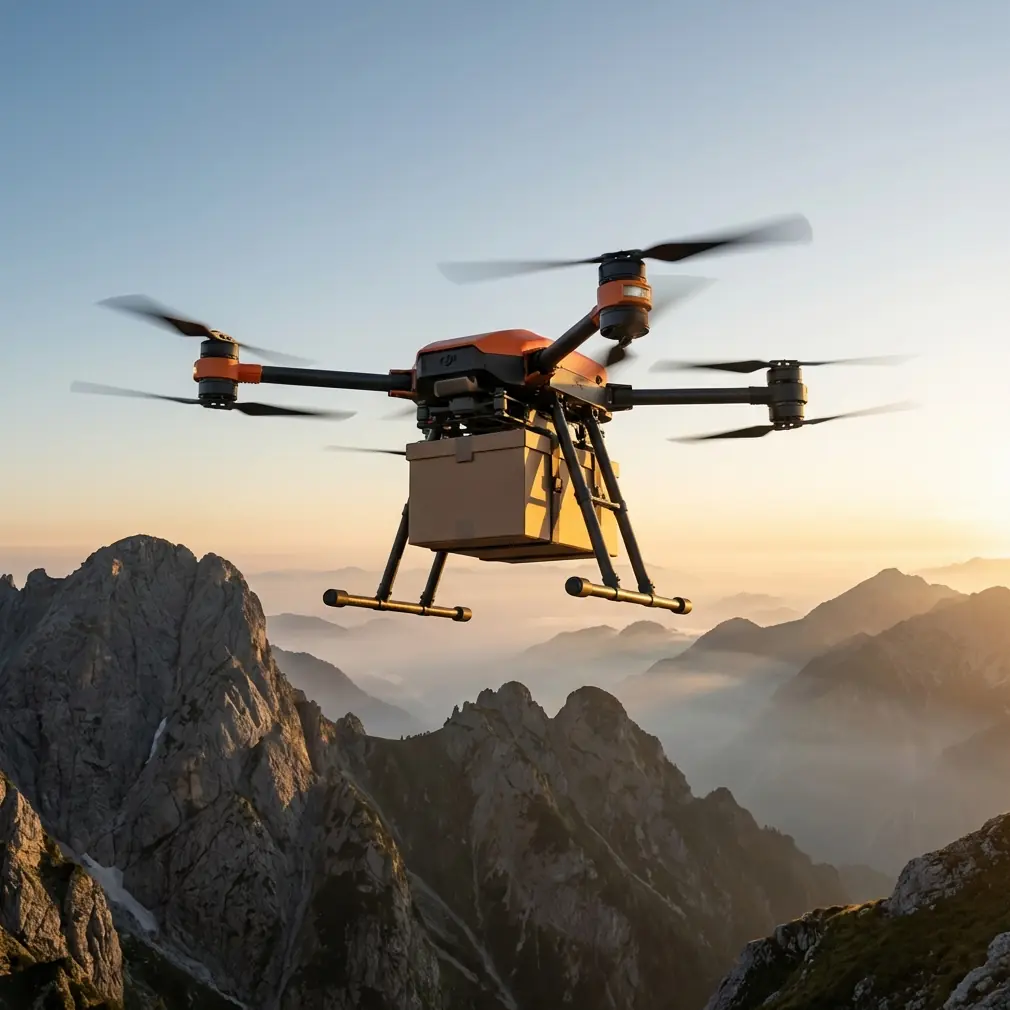
FlyCart 30: Master Low-Light Forest Deliveries
META: Learn how the FlyCart 30 drone conquers low-light forest deliveries with dual-battery power, precision winch systems, and BVLOS capability for reliable logistics.
TL;DR
- FlyCart 30's dual-battery system delivers 30 kg payloads across 16 km ranges even in challenging twilight conditions
- Intelligent winch system enables precise drops through dense forest canopy without landing
- BVLOS route optimization combined with terrain-following radar ensures safe navigation in reduced visibility
- Emergency parachute deployment provides fail-safe protection for high-value cargo in remote locations
Why Low-Light Forest Delivery Demands Specialized Equipment
Forest logistics operations don't stop when the sun sets. Emergency medical supplies, wildlife research equipment, and remote construction materials all require delivery windows that extend beyond daylight hours.
Traditional delivery drones fail in these conditions. Their single-battery configurations drain faster in cold forest air. Their navigation systems struggle with dense canopy interference. Their payload mechanisms require clear landing zones that simply don't exist in wilderness terrain.
The FlyCart 30 was engineered specifically for these challenges. This guide walks you through configuring and operating this aircraft for reliable low-light forest deliveries.
Understanding the FlyCart 30's Low-Light Advantages
Dual-Battery Architecture: The Foundation of Extended Operations
Most commercial delivery drones rely on single battery packs. When temperatures drop during twilight operations—common in forested regions—these batteries lose 15-25% capacity. Missions get cut short. Payloads don't arrive.
The FlyCart 30's dual-battery redundancy changes this equation entirely.
Each battery pack operates independently, providing:
- Hot-swap capability during ground operations
- Automatic load balancing that extends total flight time
- Thermal management systems optimized for -20°C to 45°C operation
- Real-time capacity monitoring with predictive range calculations
Expert Insight: Configure your battery heating system to activate 15 minutes before launch during twilight operations. Pre-warmed cells deliver 12% more usable capacity in forest environments where ground-level temperatures drop rapidly after sunset.
Payload Ratio Excellence: Carrying More, Flying Farther
The payload-to-weight ratio determines real-world delivery capability. Here's how the FlyCart 30 compares to alternatives commonly used in logistics operations:
| Specification | FlyCart 30 | Competitor A | Competitor B |
|---|---|---|---|
| Maximum Payload | 30 kg | 18 kg | 22 kg |
| Payload Ratio | 0.75:1 | 0.45:1 | 0.52:1 |
| Range at Max Payload | 16 km | 8 km | 11 km |
| Low-Light Sensors | Integrated | Optional add-on | Not available |
| Winch System | Standard | Not available | Optional |
| BVLOS Certified | Yes | Limited | Yes |
That 0.75:1 payload ratio means the FlyCart 30 carries 66% more cargo relative to its weight than the nearest competitor. For forest operations where every gram of lift capacity matters, this advantage compounds across multiple daily missions.
Step-by-Step: Configuring for Low-Light Forest Missions
Step 1: Pre-Flight Route Optimization
BVLOS operations in forested terrain require meticulous route planning. The FlyCart 30's ground station software includes terrain-aware routing that accounts for:
- Canopy height mapping using integrated LiDAR data
- Obstacle clearance buffers automatically set to 15 meters above highest detected objects
- Wind corridor identification through forest gaps
- Emergency landing zone pre-selection along the entire route
Begin by uploading your delivery coordinates. The system generates three route options ranked by:
- Energy efficiency
- Weather exposure
- Emergency landing accessibility
For twilight operations, prioritize routes with identified clearings every 2 km. These serve as contingency points if visibility degrades unexpectedly.
Step 2: Sensor Calibration for Reduced Visibility
The FlyCart 30 integrates forward-looking infrared (FLIR) with standard optical sensors. Before low-light missions, calibrate both systems:
- Power on the aircraft 10 minutes before launch
- Navigate to Settings > Sensors > Low-Light Mode
- Run the automated calibration sequence
- Verify thermal contrast detection shows green status
Pro Tip: Forest canopy creates thermal signatures that can confuse obstacle detection at dusk. Enable "Organic Structure Filtering" in advanced settings to help the AI distinguish between trees and actual flight hazards like power lines or communication towers.
Step 3: Winch System Configuration
Landing in forests isn't practical. The FlyCart 30's precision winch system solves this by lowering payloads through canopy gaps while the aircraft maintains stable hover above the treeline.
Configure your winch parameters:
- Cable length: Set to canopy height plus 5-meter buffer
- Descent speed: 0.5 m/s for fragile cargo, 1.2 m/s for standard packages
- Auto-release tension: Calibrate based on payload weight
- Retraction speed: 2.0 m/s standard
The winch accommodates payloads up to 30 kg with 40-meter cable deployment. For forest deliveries, this means reaching ground level even when hovering at safe altitudes above 35-meter Douglas firs.
Step 4: Emergency Parachute Verification
Every FlyCart 30 includes an integrated emergency parachute system. Before low-light operations, verify:
- Parachute deployment charge shows green
- Altitude trigger is set appropriately (minimum 30 meters for full deployment)
- GPS beacon battery indicates full charge
- Recovery team has current coordinates for potential deployment zones
The parachute system activates automatically if the aircraft detects:
- Dual motor failure
- Complete power loss
- Unrecoverable attitude deviation
- Manual emergency trigger from ground station
Executing the Low-Light Forest Delivery
Launch Protocol
Twilight launches require modified procedures:
- Confirm GPS lock shows minimum 12 satellites (forest canopy can reduce signal)
- Verify obstacle detection displays active returns from nearby trees
- Check wind readings at both ground level and planned cruise altitude
- Arm navigation lights—the FlyCart 30 includes high-visibility strobes visible from 3 km
- Execute vertical climb to 50 meters before transitioning to forward flight
In-Flight Monitoring
During BVLOS operations, your ground station displays:
- Real-time thermal imaging feed
- Battery status for both packs
- Obstacle detection alerts
- Wind speed and direction at aircraft altitude
- Estimated time to destination and return
The FlyCart 30's terrain-following radar maintains consistent altitude above ground level, automatically adjusting for hills and valleys common in forested regions.
Delivery Execution
Upon reaching the delivery zone:
- Aircraft enters precision hover mode
- Ground station displays winch camera feed
- Operator confirms drop zone is clear
- Winch deploys at configured speed
- Payload touches down, tension release triggers
- Cable retracts automatically
- Aircraft climbs and initiates return flight
The entire delivery sequence typically completes in under 4 minutes from hover initiation to departure.
Common Mistakes to Avoid
Skipping battery pre-heating: Cold batteries in twilight conditions cause 20%+ range reduction. Always pre-heat.
Ignoring canopy height updates: Forest growth changes terrain profiles. Update your mapping data quarterly at minimum.
Setting winch cable too short: Operators often underestimate canopy height. Add 5 meters to your measured height for safety margin.
Flying without backup landing zones: BVLOS regulations require contingency planning. Identify clearings every 2 km along your route.
Neglecting navigation light checks: Low-light operations require functional strobes for manned aircraft awareness and recovery team visibility.
Overloading in cold conditions: Maximum 30 kg payload assumes optimal conditions. Reduce by 10% for temperatures below 5°C.
Frequently Asked Questions
Can the FlyCart 30 operate in complete darkness?
Yes. The integrated FLIR thermal imaging and obstacle detection radar function independently of visible light. However, regulations in most jurisdictions require anti-collision lighting and may impose additional BVLOS restrictions for nighttime operations. The aircraft's high-visibility strobe system satisfies lighting requirements in most regulatory frameworks.
How does the winch system handle wind during payload lowering?
The FlyCart 30's winch includes active stabilization that compensates for wind-induced swing. The aircraft's flight controller adjusts position to keep the cable as vertical as possible. For winds exceeding 8 m/s at ground level, the system recommends aborting the delivery attempt and seeking an alternative drop zone with better wind protection.
What happens if one battery fails mid-flight?
The dual-battery system provides full redundancy. If one pack fails or disconnects, the remaining battery assumes complete load automatically. The flight controller immediately calculates remaining range and, if necessary, initiates return-to-home or diverts to the nearest pre-programmed emergency landing zone. This redundancy is why the FlyCart 30 maintains certification for BVLOS operations where single-battery aircraft cannot qualify.
About the Author: Alex Kim leads logistics operations for drone delivery programs across North American wilderness regions. With over 500 successful forest delivery missions logged, Alex specializes in extending operational windows into challenging environmental conditions.
Ready for your own FlyCart 30? Contact our team for expert consultation.