
FlyCart 30 for Urban Forest Delivery: What a Business Jet
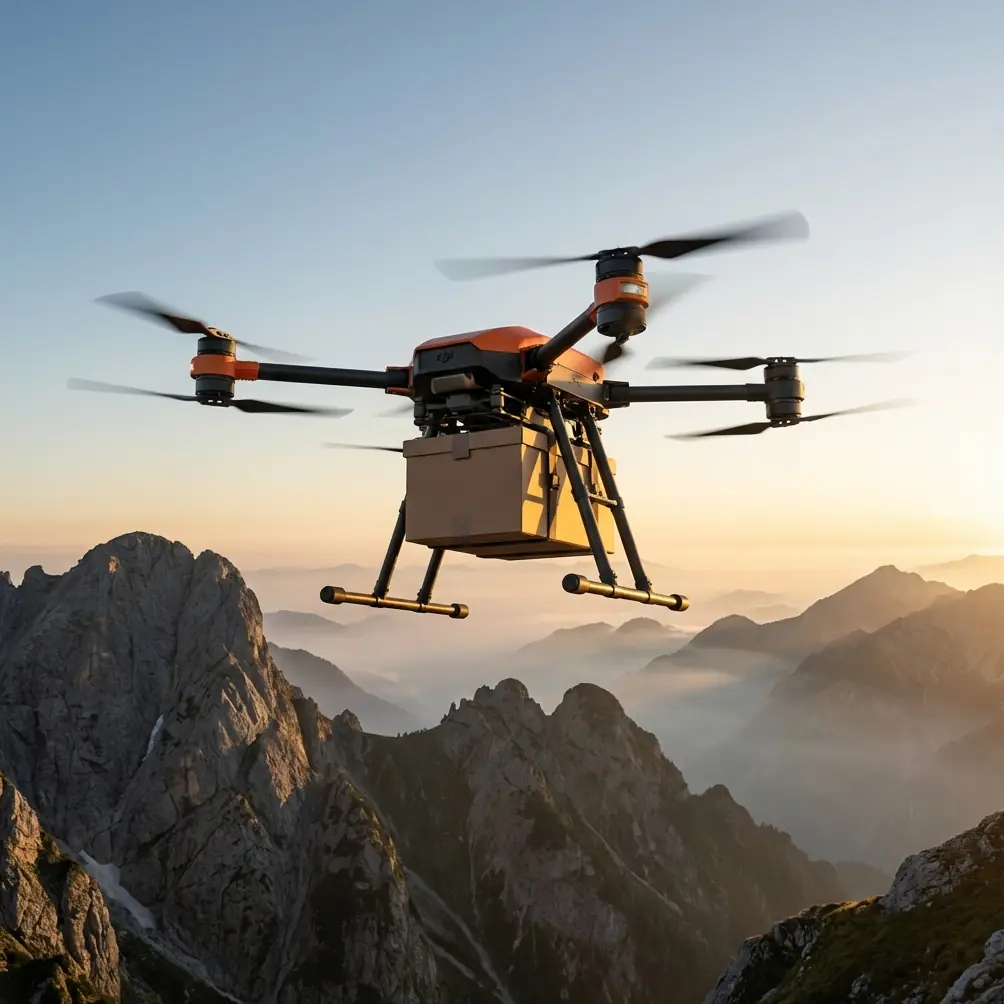
FlyCart 30 for Urban Forest Delivery: What a Business Jet Test Flight Teaches Us About Real-World UAV Logistics
META: A case-study style analysis of FlyCart 30 urban forest delivery, using the Gulfstream G300 first flight as a lens for pre-flight discipline, BVLOS readiness, route planning, winch operations, and safety-first cargo execution.
I lead logistics planning, so I tend to read aviation news a little differently than most people. A headline about a new aircraft’s first flight is never just a headline. It is a signal. It tells you where the engineering is mature, where the testing burden begins, and how serious the manufacturer is about turning specifications into dependable operations.
That is why a recent report on the Gulfstream G300 caught my attention, even though my day-to-day work is focused on unmanned cargo systems like the FlyCart 30 rather than crewed business jets. On December 5, Gulfstream announced that its new G300 super-midsize jet had completed its first flight. The aircraft reportedly departed at 8:05 a.m. local time from Ben Gurion International Airport, flew for 2 hours and 25 minutes, reached 30,000 feet, and cruised at Mach 0.75. Just as significant, the report framed the flight not as a marketing milestone, but as the point where the aircraft enters a rigorous flight-test phase.
That distinction matters.
In UAV logistics, especially when the mission involves moving forestry materials through dense urban environments, operators often obsess over payload capacity and forget the real dividing line between a workable concept and a repeatable service: disciplined testing and operational maturity. The FlyCart 30 sits in exactly that conversation. It is not just a platform for lifting cargo. In the right hands, it is a tool for managing constrained delivery corridors, rooftop or courtyard drop zones, uneven canopy-adjacent sites, and jobs where a winch system can make the difference between a clean handoff and a hazardous landing attempt.
This article is a case study in that mindset. The G300 story is the trigger, but the practical question is much closer to the ground: what does a serious test culture look like when you are using a FlyCart 30 to support urban forest delivery?
Why the G300 first flight is relevant to FlyCart 30 operators
At first glance, a super-midsize jet and a heavy-lift delivery drone occupy different universes. One carries people at high altitude. The other moves cargo at low altitude in complex local airspace. But the operational lesson is the same.
The G300’s first flight was not presented as the finish line. It marked entry into structured validation. That is how experienced aviation teams think. The first successful sortie proves that the aircraft can fly. It does not prove that it can work, repeatedly, under real operational pressure.
For FlyCart 30 missions in urban forestry, that distinction is critical. Delivering saplings, tools, irrigation hardware, mulch bags, or replacement canopy-care equipment into built-up districts sounds straightforward until you stack up the variables: tree cover, pedestrian movement, narrow access lanes, rooftop turbulence, radio interference, local airspace restrictions, and the need to lower cargo precisely without sending the aircraft into a risky hover profile.
A professional operator should treat every new route, payload class, and landing or winch zone the way Gulfstream treats a new aircraft program. You validate, document, refine, and only then scale.
The mission profile: delivering forests in urban environments
“Delivering forests in urban” sounds odd until you work around municipal greening programs, commercial landscape contractors, campus restoration projects, or resilience initiatives that need materials moved into spaces where trucks are a poor fit.
These jobs usually involve one of four scenarios:
- Moving young trees, soil amendments, and planting equipment into courtyards or pedestrianized districts.
- Resupplying arborist crews inside traffic-restricted downtown areas.
- Delivering replacement plants and maintenance tools to rooftop gardens or elevated green infrastructure.
- Supporting post-storm recovery where streets are partially blocked but small aerial corridors remain usable.
The FlyCart 30 becomes attractive here because payload ratio matters more than headline lift alone. If too much of your lift budget is consumed by packaging inefficiency, battery penalties, or awkward load geometry, the sortie count rises fast. That affects labor, cycle time, and risk exposure. In a congested urban environment, fewer movements done with more precision usually beats brute-force repetition.
The route also matters. A ground vehicle may drive a longer path but maintain stable access. A drone can cut distance, yet still lose efficiency if the aerial route forces detours around geofenced zones, building clusters, or unreliable approach sectors. Good route optimization is not just software selecting the shortest path. It is selecting the path with the best safety margin, communication consistency, and delivery precision.
A FlyCart 30 case study: the pre-flight cleaning step that prevents bigger problems
One habit I insist on in field operations sounds minor until you see what it prevents: pre-flight cleaning of the safety-critical surfaces and mechanisms.
Not cosmetic cleaning. Functional cleaning.
Before a FlyCart 30 goes up for an urban forestry mission, the crew should inspect and clean the winch system interfaces, landing gear contact areas, obstacle-sensing surfaces if exposed, battery connection points, and any area where dust, sap residue, moisture, leaf debris, or fine grit can interfere with moving parts or sensor reliability.
Urban forest work is messy. You are dealing with mulch dust, pollen, damp leaves, bark fragments, rooftop particulates, and construction residue from surrounding infrastructure projects. Those contaminants do not need to be dramatic to cause trouble. A small amount of residue on a connector or mechanism can degrade confidence in a mission that already has little margin for error.
This is where the G300 story becomes useful as a mental model. When a new aircraft enters a strict test phase after first flight, every subsystem is scrutinized because reliability emerges from consistency, not hope. FlyCart 30 teams should adopt the same posture. If your emergency parachute system, release mechanism, or winch line routing is part of your safety stack, then basic cleaning and inspection are not side chores. They are operational controls.
I have seen crews rush this. They assume yesterday’s successful flight means today’s setup is fine. That assumption does not survive long in city operations.
Winch system over touchdown: the smarter urban forestry move
For many urban forest jobs, the real value of the FlyCart 30 is not just that it can carry cargo. It is that it can deliver without committing to a full touchdown in a bad location.
That is where the winch system earns its keep.
In courtyard planting projects or tight streets bordered by trees and facades, landing space can be unreliable even when a site looks acceptable on paper. Loose debris, bystanders, drainage slopes, temporary fencing, and gust behavior around buildings all complicate the final meters. A controlled winch drop lets the aircraft remain in a more stable hover envelope while the payload is lowered into a managed receiving zone.
Operationally, that does three things:
- It reduces the need to place the aircraft near ground-level obstacles.
- It gives the receiving crew more flexibility in cramped spaces.
- It shortens the time spent trying to perfect a landing in turbulent or visually deceptive environments.
That last point is often overlooked. Urban wind does not behave like open-field wind. Air wraps around corners, drops down walls, and spills over roof edges. The difference between a clean delivery and a poor one may come down to whether the aircraft needs to settle onto a surface at all.
BVLOS only works when route discipline is real
A lot of teams talk about BVLOS as if it is simply an authorization milestone. In practice, it is an operational discipline. If you are planning repeated FlyCart 30 deliveries for urban greening or forestry support, BVLOS value comes from route predictability, contingency planning, and communication resilience.
The G300 article included two details worth remembering: the aircraft first appeared publicly on September 30, 2025 in Savannah, and then moved into real flight testing with a measured first sortie. That sequence is how credible programs develop. Public reveal first. Hard validation next.
Drone logistics often flips that logic. Operators showcase use cases before the route architecture is truly mature. That is backwards.
For FlyCart 30 urban missions, BVLOS planning should answer questions such as:
- Which segments maintain the strongest command and telemetry confidence?
- Where are the safest abort corridors if a landing zone becomes unavailable?
- What alternate drop points are viable if pedestrian density changes?
- How do battery reserves change when route legs are adjusted around temporary restrictions?
This is where dual-battery thinking becomes more than a specification checkbox. Redundancy in the power architecture supports continuity and risk management, but it does not erase poor planning. A dual-battery setup helps preserve margin. Route optimization is what stops you from wasting that margin.
Payload ratio decides whether the job scales
In urban forestry work, payloads are rarely neat cubes. Root balls shift. Irrigation components are awkward. Hand tools create uneven weight distribution. Protective packing adds bulk faster than expected. If you do not manage payload ratio carefully, the aircraft may technically lift the load while still operating in an inefficient or uncomfortable part of its envelope.
The best FlyCart 30 teams treat payload preparation as part engineering, part logistics craft. They standardize sling points, stabilize the center of mass, and package cargo so the winch system can lower it cleanly without spin or snag risk. That reduces hover corrections, protects the airframe, and shortens on-station time above the receiving site.
A useful rule in urban forest delivery is that the best payload is not the heaviest payload. It is the payload that moves with the least drama.
That may sound obvious, but it affects everything from sortie throughput to safety-event probability. One unstable load can erase the efficiency gains of several well-planned flights.
Emergency systems are not a footnote
When operators discuss safety, they usually jump to pilot skill. Skill matters, but system design matters just as much. On a FlyCart 30 mission, an emergency parachute is not there to decorate a spec sheet. It is there to create an additional layer of consequence management if the mission breaks outside the normal envelope.
In dense urban operations, that matters more than in rural work. The environment is less forgiving. There are more surfaces, more people, more parked vehicles, more power lines, and more secondary hazards near any descent path.
But here is the key point: emergency systems are only useful when crews build them into the mission from the beginning. That means confirming activation logic, clear deployment conditions, exclusion zones beneath the route, and the status of all related hardware during the pre-flight clean-and-check sequence. Again, the small step matters. Dirt, residue, or simple neglect around critical mechanisms is not a maintenance issue alone. It is a safety planning failure.
If a manned-aircraft manufacturer treats first flight as the start of disciplined evidence gathering, drone operators should do the same with every safety layer they rely on.
What urban forestry operators should take from this moment
The recent G300 first-flight report does not tell us how to fly a cargo drone. It tells us how serious aviation programs behave when they want reliability to mean something. The aircraft flew at Mach 0.75, climbed to 30,000 feet, and stayed airborne for 2 hours and 25 minutes. Those numbers belong to another category of aviation, but the philosophy translates directly.
Aviation credibility comes from repeatable process.
For FlyCart 30 operators serving urban forestry projects, that means:
- Treating each route like a test program before treating it like a productized service.
- Using the winch system where touchdown risk is unnecessary.
- Designing around payload ratio, not just nominal lift.
- Building BVLOS routes with alternates, reserves, and communication confidence.
- Verifying emergency parachute readiness as part of routine workflow.
- Respecting pre-flight cleaning as a practical safety barrier, not a cosmetic ritual.
If your team is trying to build a repeatable urban forest delivery operation, the conversation should sound less like a gadget demo and more like an aviation program review. That is where dependable drone logistics begins.
I have found that crews make better decisions when they adopt that frame early. They stop asking, “Can the FlyCart 30 carry this?” and start asking, “Can we deliver this, on this route, in this environment, with margins we trust?” That is a better question. It usually leads to better outcomes.
If you are mapping out an urban greening workflow and want to compare route options, winch procedures, or pre-flight check standards, you can start the discussion here: message the operations desk.
Ready for your own FlyCart 30? Contact our team for expert consultation.