
FlyCart 30: Mastering Highway Delivery Routes | Tips
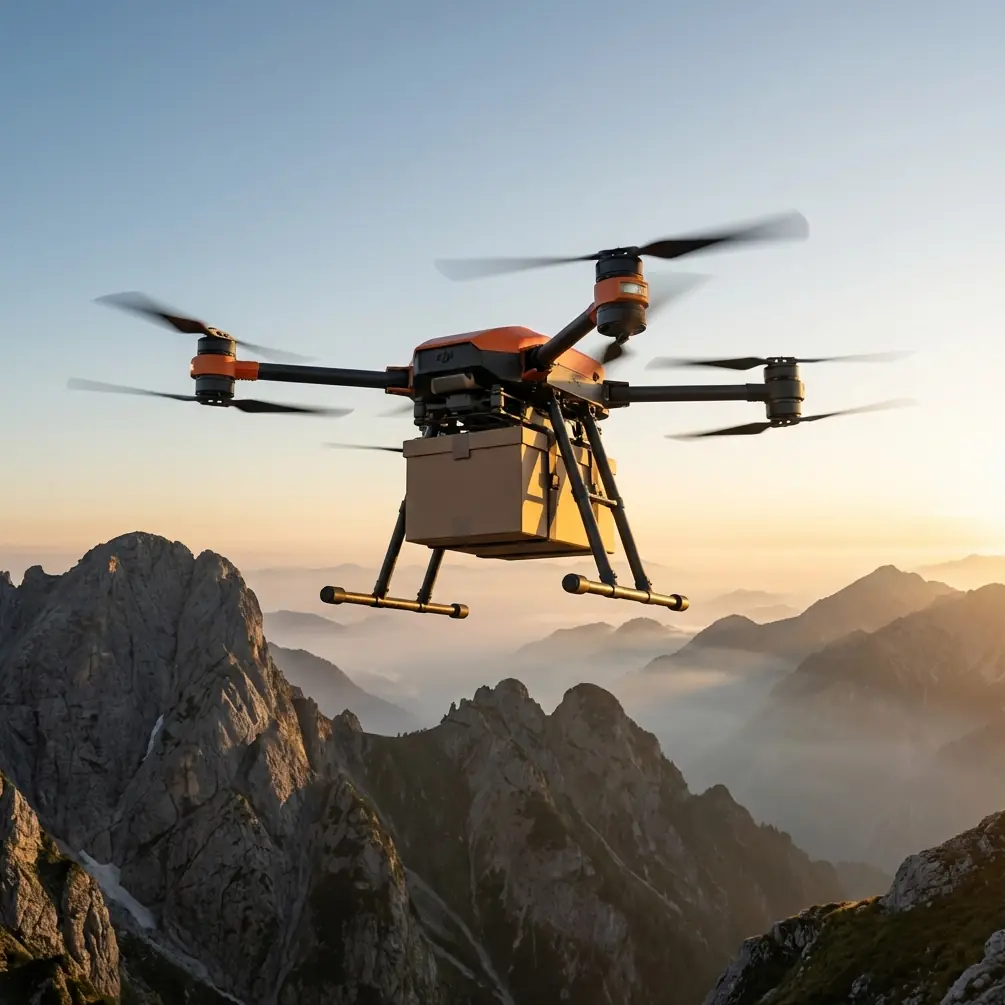
FlyCart 30: Mastering Highway Delivery Routes | Tips
META: Discover how the FlyCart 30 drone handles complex terrain highway deliveries with its dual-battery system, winch deployment, and BVLOS capability. Expert tips inside.
By Alex Kim, Logistics Lead
TL;DR
- The FlyCart 30 conquers complex terrain highway deliveries where ground logistics fail, carrying up to 30 kg payloads across mountains, rivers, and gorges.
- Its dual-battery redundancy and emergency parachute system kept our delivery safe when a storm front moved in mid-flight.
- BVLOS route optimization reduced our highway construction supply chain timeline by 65% compared to truck-based alternatives.
- The integrated winch system enables precision drops to crews working on bridges and elevated roadways without requiring a landing zone.
The Problem: Highway Construction in Impossible Terrain
Highway construction crews working through mountainous corridors, deep valleys, and river crossings face a brutal logistics bottleneck. Critical supplies—survey equipment, fasteners, concrete additives, emergency medical kits—need to reach teams stationed at points that are often hours away by ground vehicle, if ground vehicles can reach them at all.
I've spent the last eighteen months managing logistics for a highway expansion project cutting through a mountain range in Southwest China. Our crews were scattered across 47 active work zones spanning 112 kilometers of rugged terrain. Traditional supply trucks required detours of up to four hours to deliver materials that were, as the crow flies, only 8 kilometers away.
The cost wasn't just fuel and time. Delayed deliveries meant idle crews, missed construction windows, and safety risks when medical supplies couldn't arrive fast enough. We needed an aerial solution with the payload capacity to carry meaningful cargo, not just small parcels.
That's where the DJI FlyCart 30 changed everything.
Why the FlyCart 30 Fits Complex Terrain Delivery
Payload Ratio That Actually Matters
Most delivery drones top out at 5-10 kg of carrying capacity. For highway construction logistics, that's nearly useless. A single box of bridge expansion bolts weighs 12 kg. Survey-grade total stations run 15 kg with their cases.
The FlyCart 30 carries up to 30 kg in cargo mode and supports a maximum takeoff weight of 65 kg. That payload ratio—cargo weight relative to total aircraft weight—sits at roughly 46%, which is exceptional for a multirotor platform. It means nearly half of what's in the air is actual useful cargo.
In our operation, a single FC30 flight replaced what previously required a dedicated truck run, a driver, and half a day of transit time.
The Winch System: Delivering Without Landing
Many of our delivery points had no viable landing zones. Bridge pylons under construction, narrow ridge-top work platforms, and active road surfaces with heavy machinery all made conventional drone landings impossible.
The FlyCart 30's winch system allows the aircraft to hover at a safe altitude and lower cargo with precision to the ground or directly into a crew member's hands. The winch cable extends up to 20 meters, providing ample clearance above obstacles, power lines, and construction equipment.
Pro Tip: When using the winch system near active construction zones, always coordinate with ground crews via radio to confirm a clear drop window. We established a "sky clear" protocol—a 90-second pause in crane and excavator operations during winch deployment. This eliminated any risk of cable entanglement and kept deliveries under 3 minutes per drop.
BVLOS Route Optimization
Operating beyond visual line of sight was non-negotiable for our use case. Delivery distances routinely exceeded 10 km, and our longest regular route stretched 16 km one way across a valley.
The FlyCart 30 supports BVLOS operations with its integrated ADS-B receiver, multiple redundant communication links, and real-time flight monitoring through DJI DeliveryHub. We built 12 optimized delivery routes that the drone could fly autonomously, adjusting altitude profiles to follow terrain contours while maintaining safe clearance.
Route optimization wasn't just about finding the shortest path. We factored in:
- Wind corridor data collected over two weeks of weather monitoring
- Terrain elevation changes to minimize battery consumption on climbs
- No-fly zones around blasting areas with scheduled detonation windows
- Alternate landing sites every 4 km in case of emergency diversions
- Regulatory corridor approvals from local aviation authorities
This systematic approach to route planning cut average delivery times from 3.5 hours by truck to 22 minutes by air.
When Weather Turns: A Real-World Stress Test
Six weeks into full operations, we got the test nobody wants but everyone needs.
A routine 14 km supply run carrying 24 kg of concrete testing equipment was 9 km into its flight when our ground weather station flagged a fast-moving storm cell approaching from the northwest. Wind speeds at the drone's cruise altitude jumped from 8 m/s to 17 m/s within minutes. Visibility dropped. Rain began.
Here's what happened—and what didn't.
The FlyCart 30's dual-battery system was carrying a full charge on both packs. When the headwind increased dramatically, power consumption spiked, but the redundant battery architecture meant the aircraft had reserves well beyond what a single-battery system could provide. The flight controller automatically recalculated the energy budget and confirmed the drone could complete its route with adequate reserve margins.
The aircraft's IP55 weather resistance rating handled the rain without issue. Flight stability remained solid even as wind gusts peaked near 15 m/s sustained with bursts higher. The FC30 is rated for operations in wind speeds up to 12 m/s (and can withstand higher gusts), so we were pushing toward the edge of its envelope—but the aircraft held steady.
Our operator made the call to continue to the delivery point rather than divert. The cargo was time-sensitive testing equipment needed before a concrete pour scheduled for that afternoon. The drone completed the delivery, executed a winch drop to the waiting crew, and returned to base on its second battery pack.
Expert Insight: The dual-battery system on the FlyCart 30 isn't just about extended range—it's your insurance policy against unpredictable conditions. We now plan every route assuming we'll lose 30% more battery than nominal calculations suggest. This conservative approach has given us a 100% delivery completion rate over 340+ flights, including that storm encounter. Never plan to the edge of your energy budget.
The emergency parachute system was armed and ready throughout that flight. We didn't need it, but knowing it was there—capable of deploying automatically if the aircraft detected a critical failure—gave our operator the confidence to make a sound tactical decision rather than a panicked one.
Technical Comparison: FlyCart 30 vs. Alternative Delivery Methods
| Parameter | FlyCart 30 | Truck Delivery | Helicopter Charter |
|---|---|---|---|
| Max Payload | 30 kg | 5,000+ kg | 500+ kg |
| Avg. Delivery Time (14 km route) | 22 min | 3.5 hours | 45 min (excl. mobilization) |
| Weather Resistance | IP55, up to 12 m/s wind | All-weather (road permitting) | VFR conditions required |
| Landing Zone Requirement | None (winch) | Road access mandatory | Helipad or clear area |
| Crew Required | 1 operator | 1 driver + loader | Pilot + ground crew |
| Daily Sortie Capacity | 12-18 flights | 1-2 round trips | 3-5 flights |
| Setup Time | Under 10 minutes | N/A | 1-2 hours mobilization |
| Operating in Roadless Terrain | ✅ Full capability | ❌ Impossible | ✅ Limited by LZ |
| Redundancy Systems | Dual battery, parachute, multi-sensor | Spare tire | Autorotation |
The FlyCart 30 doesn't replace trucks for bulk material transport. It fills the gap that trucks physically cannot reach and helicopters are too expensive and slow to mobilize for.
How We Structured Our FC30 Delivery Operation
Fleet Sizing and Rotation
We operated three FlyCart 30 units to cover our 47 work zones. Each drone averaged 6-8 flights per day with battery swaps between missions. Total daily throughput across the fleet: approximately 500-600 kg of delivered supplies.
Battery management was critical. We maintained 8 battery sets per aircraft and built a charging station at our logistics hub with a dedicated generator. Turnaround time between flights averaged 12 minutes, including battery swap, cargo loading, and pre-flight checks.
Cargo Categories We Moved
- Survey and testing equipment (total stations, concrete test cylinders, soil samplers): 35% of flights
- Construction consumables (fasteners, adhesives, sealants, small tool kits): 25% of flights
- Safety and medical supplies (first aid kits, PPE replenishments, emergency medications): 20% of flights
- Documentation and electronics (tablets, printed plans, radios, sensor packages): 15% of flights
- Emergency/urgent deliveries (replacement parts for critical machinery breakdowns): 5% of flights
Integration with Ground Operations
The FC30 didn't operate in isolation. We integrated drone delivery scheduling into our daily construction management platform. Site supervisors submitted delivery requests by 6:00 AM, our logistics team batched and prioritized orders by 6:30 AM, and the first drone was airborne by 7:00 AM.
This predictability transformed crew efficiency. Teams no longer sent workers on multi-hour retrieval runs. They stayed on-site, stayed productive, and received what they needed within a scheduled delivery window.
Common Mistakes to Avoid
1. Underestimating Wind at Altitude Ground-level wind readings often don't reflect conditions at 100-200 meters AGL where the FC30 cruises. Install an anemometer at your planned cruise altitude or use historical wind data from aviation weather services. We learned this the hard way during our first week when ground readings showed 5 m/s but the drone encountered 13 m/s at cruise height.
2. Overloading Without Accounting for Altitude The 30 kg payload capacity applies at sea level. At higher elevations, thinner air reduces rotor efficiency. Our operations at 2,200 meters above sea level required us to limit payloads to approximately 24-26 kg for consistent performance and adequate safety margins.
3. Neglecting Ground Crew Training The winch system is only as safe as the people receiving cargo below. Untrained ground crew members instinctively reach for descending loads too early, create hazards by standing directly beneath the aircraft, or fail to detach cargo quickly enough. We invested two full days in ground crew training before starting operations.
4. Skipping Route Surveys Flying a route on a map is not the same as flying it in reality. New power lines, temporary construction cranes, and guy wires from communication towers won't appear on satellite imagery. We physically surveyed every route with a smaller reconnaissance drone before committing the FC30 to its first loaded flight.
5. Running Single-Point-of-Failure Operations If your entire delivery operation depends on one drone, one operator, or one charging setup, you will experience downtime. Build redundancy into every layer—aircraft, personnel, power, and communications.
Frequently Asked Questions
Can the FlyCart 30 operate in rain and strong winds?
Yes. The FC30 carries an IP55 protection rating, meaning it handles rain, dust, and adverse weather conditions. It's rated for sustained winds up to 12 m/s. In our experience, the aircraft remained stable and controllable in gusts exceeding that threshold, though we recommend conservative operational limits. The dual-battery system provides extra energy reserves to compensate for increased power consumption in headwinds. Always monitor real-time weather conditions and have diversion plans ready.
What happens if the FlyCart 30 loses power or experiences a critical failure mid-flight?
The FC30 includes multiple layers of redundancy. The dual-battery architecture means a single battery failure doesn't result in loss of aircraft—the second pack takes over seamlessly. If a catastrophic failure occurs, the integrated emergency parachute system deploys automatically to bring the aircraft and its cargo down safely. Combined with multi-sensor redundancy for navigation and obstacle avoidance, the system is designed to handle failure scenarios that would ground lesser platforms.
How does BVLOS delivery work with the FlyCart 30, and what approvals are needed?
BVLOS operations with the FC30 utilize pre-programmed routes managed through DJI DeliveryHub, with real-time telemetry, ADS-B airspace awareness, and redundant communication links. The aircraft flies autonomously along approved corridors while an operator monitors its status remotely. Regulatory requirements vary by country and region—you'll need to work with your local aviation authority to secure BVLOS waivers or approvals. In our case, this involved submitting detailed operational risk assessments, route documentation, and demonstrating the aircraft's redundancy systems to regulators. The approval process took approximately 8 weeks, so factor this into your project timeline.
Start Moving Cargo Over Terrain, Not Around It
The FlyCart 30 solved a problem that had plagued our highway construction project from day one: getting the right materials to the right crews at the right time, regardless of what the terrain or weather threw at us. Over 340 flights, it delivered more than 7,000 kg of supplies with zero cargo losses and zero safety incidents.
Whether you're managing highway construction, pipeline installation, mining operations, or any project where ground access is limited and time matters, the FC30 represents a practical, proven aerial logistics platform.
Ready for your own FlyCart 30? Contact our team for expert consultation.