
FlyCart 30 for Highway Delivery at Night
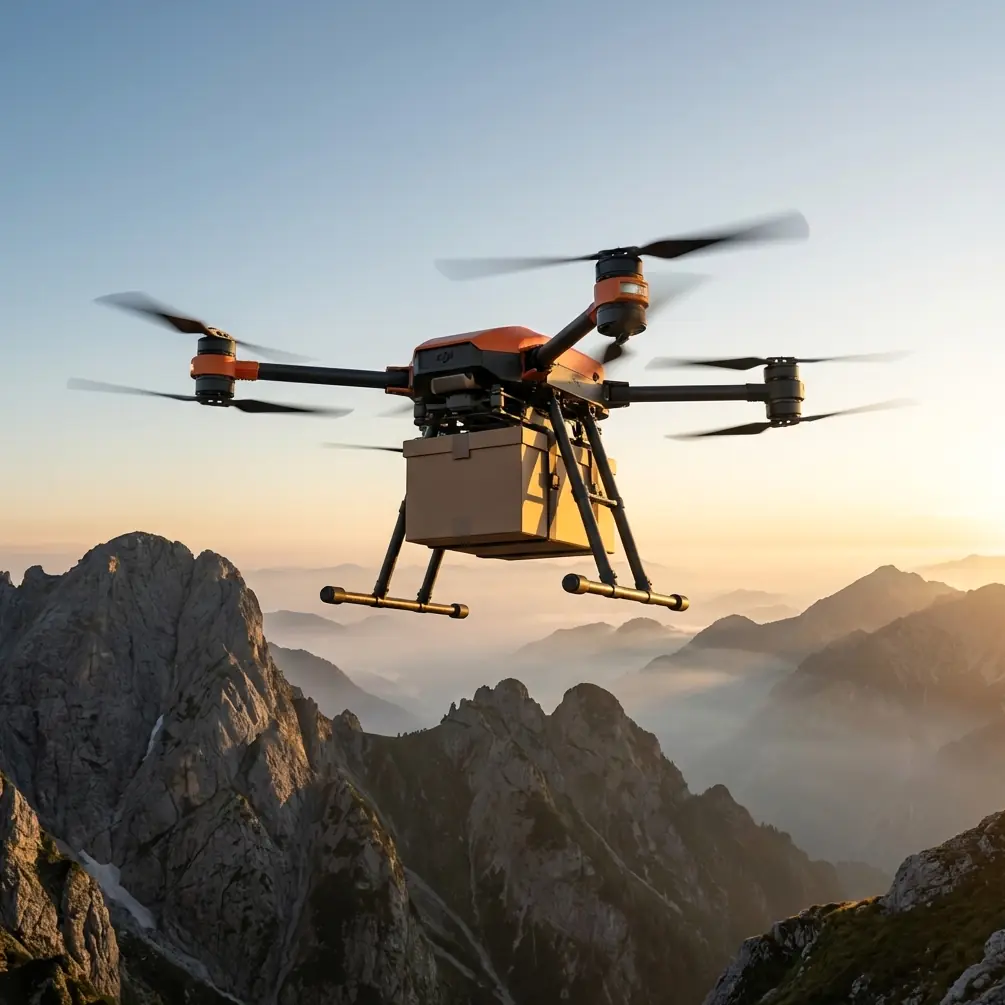
FlyCart 30 for Highway Delivery at Night: What Actually Matters When Visibility Drops
META: A practical FlyCart 30 guide for low-light highway delivery, covering optics, route planning, winch workflow, BVLOS considerations, dual-battery resilience, and why true telephoto matters more than digital zoom.
Highway delivery looks simple on a map. Long corridors. Predictable routes. Clear endpoints. At night, that illusion disappears fast.
A roadside drop near an expressway shoulder is a very different task from moving cargo across an empty field in daylight. Headlights create glare. Reflective surfaces throw off depth perception. Signage, wires, barriers, and moving traffic compress the visual scene. If you are flying a FlyCart 30 in low light, the margin for lazy decisions gets small.
I’ve seen one issue repeatedly in logistics planning: teams talk about payload, range, and battery swaps, but they underweight what the camera is actually telling the pilot and support crew. That becomes expensive when the mission involves highways after dark, especially under BVLOS workflows where every visual confirmation has to count.
The most useful lesson here comes from a seemingly unrelated camera discussion: the difference between true telephoto and simple magnification. That distinction matters much more for FlyCart 30 operations than many cargo teams realize.
Start with the image, not the aircraft brochure
The reference point is straightforward. Telephoto imaging uses physical lens behavior to bring distant subjects closer without sacrificing effective pixel detail. Basic magnification, by contrast, often works by cropping the center of the image and enlarging it computationally. As the enlargement increases, detail falls away. Blur and noise become more visible.
On a phone, that means prettier vacation photos versus mushy ones.
On a highway logistics route at night, it means something more serious: the difference between identifying a safe drop zone and merely thinking you did.
That is not a minor technicality. It affects whether your crew can distinguish:
- a clear shoulder from debris near a barrier
- a waiting receiver from a reflective signpost
- a stable lowering point from a sloped or obstructed surface
- a stopped service vehicle from active traffic spillover
If your team relies too heavily on digital enlargement in low light, the image may appear bigger while becoming less trustworthy. The subject fills more of the screen, but the information content is weaker. For FlyCart 30 missions, that is the trap.
Why highway delivery punishes weak visual verification
FlyCart 30 operators usually focus first on transport logic: payload ratio, route optimization, battery planning, and lowering method. Those are all valid. A dual-battery setup, for example, has obvious operational significance in corridor work. It supports continuity and risk management when you are covering long linear routes, dealing with diversion options, or preserving reserve capacity for a return leg or alternate landing decision.
But the more linear and “routine” a route appears, the easier it is to assume the endpoint is equally routine. Night operations around highways break that assumption.
The problem is not just darkness. It is contrast instability. One second the camera sees a dim shoulder. The next second an oncoming set of headlights washes part of the frame. Then reflective lane paint pulls exposure in another direction. If your visual assessment tool is digital zoom instead of true telephoto optics, the cropped image may amplify exactly the wrong things: noise, compression artifacts, and false confidence.
A proper telephoto view preserves detail because the scene is being optically resolved rather than just enlarged after capture. That matters when the FlyCart 30 is carrying a load that will be lowered via a winch system. The aircraft does not simply need to arrive. The crew needs to judge the receiving area with enough fidelity to avoid swing, snagging, unstable ground contact, or a handoff over the wrong spot.
The winch system is only as good as the confirmation process behind it
A lot of operators treat the winch as the capability and the camera as a convenience. In low-light highway delivery, I would reverse the logic.
The winch system expands your delivery options because it reduces the need to land. That is especially useful near roadside infrastructure where full touchdown may be impractical or undesirable. But the winch only solves the last meter problem if the crew can confidently read the drop zone before and during lowering.
This is where the telephoto-versus-magnification distinction becomes operationally significant.
A physically resolved telephoto view helps the crew keep more real detail in the image. That means better assessment of:
- cable clearance around poles, railings, and signs
- whether the receiver is standing in a safe retrieval position
- whether the package is descending into a flat area rather than brush or drainage slope
- whether background blur helps isolate the target rather than confuse it with roadside clutter
That last point is often overlooked. True telephoto can make background separation easier. In practical terms, that helps the pilot or payload operator isolate the intended receiving point from the messy visual environment common near highways. Digital enlargement does not create that optical separation. It just makes the center crop bigger.
A useful upgrade: add optics discipline, not just accessories
The context here suggests mentioning a third-party accessory that improved capability. I’ll be specific: a high-brightness field monitor with a hooded mount made a bigger difference for one night logistics team than another battery case or cargo hook variation ever did.
Why? Because low-light route work is rarely defeated by lack of screen size alone. It is defeated by poor image interpretation under glare, fatigue, and rushed decision-making. A better external monitor, properly shielded from ambient light, allows the payload operator to judge fine scene details more reliably. Paired with true optical reach rather than digital enlargement, it becomes a real operational enhancement.
That accessory does not change the FlyCart 30 airframe. It changes the quality of decisions being made around it.
If you are building a highway delivery workflow, this is the order I would recommend:
- Confirm what portion of your visual inspection is based on optical detail versus digital enlargement.
- Improve operator viewing conditions with a monitor setup suited for night work.
- Standardize what the crew must visually verify before winch deployment.
- Only then optimize speed.
Teams that skip straight to route tempo usually discover their bottleneck is not aircraft performance. It is uncertainty at the drop point.
How to build a FlyCart 30 highway night-delivery workflow
This is the structure I use when advising logistics teams.
1) Design routes around verification windows, not just shortest distance
Route optimization for highway work should include where the aircraft can safely slow, hold, or offset for visual confirmation. The shortest line is not always the best line if it forces a poor angle over barriers, light glare, or moving traffic.
A smart route gives the payload operator a stable look at the drop zone before the winch sequence begins. This becomes even more relevant in BVLOS-oriented operations, where visual assurance depends heavily on onboard imaging and disciplined procedure rather than casual line-of-sight intuition.
2) Separate “spotting” from “confirming”
Spotting is finding the destination. Confirming is validating that the exact handoff point is safe.
Digital zoom can be enough for spotting in some circumstances. It is not the standard I would trust for confirming a night drop beside a highway. If the image has been enlarged by center cropping and stretching, rising noise and softness can hide the very detail you need. Use optical telephoto where possible for the final check.
That one distinction can prevent a lot of false positives.
3) Build a pre-drop visual checklist
Before lowering cargo, the crew should verify a short set of conditions. Not twenty. Just the ones that matter.
- Is the receiving point clear of immediate overhead or side obstructions?
- Is the ground or surface visually stable enough for retrieval?
- Is the recipient positioned away from active traffic exposure?
- Is the package path clear during descent?
- Has the image been confirmed with true optical detail rather than excessive digital enlargement?
That final question deserves to be written into SOPs. Many teams never formalize it, which is why inconsistent image quality becomes an invisible risk.
4) Use dual-battery capacity as a safety buffer, not a scheduling excuse
Dual-battery architecture is valuable, but it can create bad habits if crews start treating the extra resilience as permission to press marginal conditions. For highway night missions, the right use of battery redundancy is decision margin. It gives you more flexibility to hold, reposition, reassess the drop, or abort cleanly.
That is especially important if the scene is visually ambiguous. If the endpoint requires repeated checks because of glare or uncertain ground conditions, your reserve should support caution rather than speed pressure.
5) Integrate the emergency parachute into route risk logic
Emergency parachute systems are not a substitute for planning, but they do affect corridor selection and operational confidence. On highway-adjacent routes, any mitigation that reduces consequences in the event of a critical failure deserves attention.
The key is not to mention the parachute and move on. The key is to think about what it means for where you fly, where you avoid holding, and how you manage transitions near complex roadside infrastructure. Risk tools only matter when they shape behavior.
The camera lesson most cargo teams learn late
The reference camera facts may sound basic: telephoto relies on physical optics and typically preserves effective pixel detail, while magnification through cropping and enlargement degrades image quality, especially at higher levels.
Basic, yes. But highly relevant.
A FlyCart 30 deployed for highway delivery in low light is not just a cargo machine. It is a decision platform. The cargo mission succeeds or fails according to what your team can verify from the air, and whether the image supports a defensible go/no-go call.
That makes optics part of logistics, not a side topic for camera enthusiasts.
I would go further: in many night-delivery scenarios, image truth is as important as payload capacity. A heavier load does not help if the receiving zone cannot be read accurately. A fast route does not help if the final descent has to be delayed because the crew is squinting at a noisy enlarged image.
What I’d tell any operations lead planning roadside runs
If you are preparing FlyCart 30 missions along highway corridors, do not ask only how far, how much, or how fast.
Ask:
- How are we visually validating the endpoint?
- Are we relying on real optical reach or just making the picture look bigger?
- Can the payload operator actually distinguish critical scene details under glare?
- Does the winch workflow include a genuine confirmation phase?
- Are our BVLOS procedures built around image quality, not assumptions?
Those questions are usually more valuable than another round of generic aircraft comparisons.
And if you are trying to sort out field setup, optics workflow, or monitor choices for a real deployment, this is the kind of discussion that benefits from operator-level detail rather than brochure language. You can reach out here for a direct workflow conversation: message the logistics team on WhatsApp.
The practical takeaway
For FlyCart 30 highway delivery at night, the hidden variable is not just weather or range. It is whether your visual system preserves enough real detail to support safe, efficient cargo handoff.
True telephoto matters because it gathers usable information without throwing away effective detail. Digital enlargement can make an image look closer while making judgment worse. On a low-light roadside mission, that difference affects route confidence, winch timing, recipient positioning, and abort decisions.
So yes, think about payload ratio. Yes, use route optimization. Yes, value the dual-battery setup and emergency parachute in your risk model. But if your team cannot reliably tell what it is seeing at the destination, the rest of the stack is working harder than it should.
That is the real lesson. Night delivery performance is not only about moving cargo through the air. It is about preserving clarity all the way to the handoff.
Ready for your own FlyCart 30? Contact our team for expert consultation.