
How We Planned a Remote Highway Delivery Corridor Around
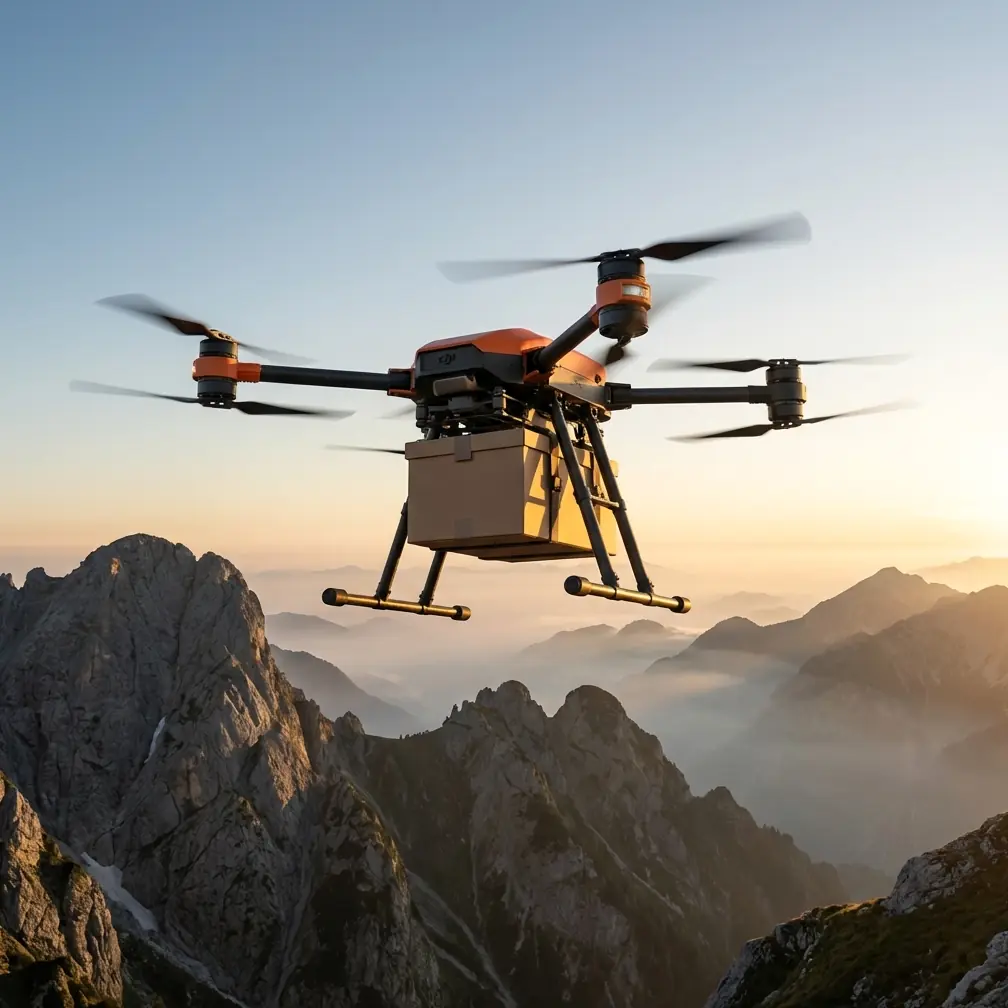
How We Planned a Remote Highway Delivery Corridor Around the FlyCart 30’s Battery Reality
META: A practical FlyCart 30 case study for remote highway delivery, covering battery supply-chain implications, BVLOS planning, weather shifts, winch operations, dual-battery strategy, and route optimization.
I’m Alex Kim, and when people talk about remote highway drone delivery, they usually jump straight to payload, range, or whether the aircraft can hold a line in crosswinds. Those matter. But on actual projects, another variable sits underneath all of it: battery availability, battery sourcing, and how confident you are that your energy system will still be supportable six months from now.
That’s why a recent development caught my attention. Tulip Tech, a Dutch drone battery company, announced a new strategic investment from Parcom and KKR to expand European UAV battery production. On the surface, that sounds like supply-chain news. For operators building delivery corridors with aircraft like the FlyCart 30, it is operational news.
If you’re running highway logistics in remote areas, batteries are not just consumables. They shape route design, turnaround timing, weather margins, spare inventory, maintenance scheduling, and the confidence to commit to repeat service. When a battery manufacturer says it is expanding production in Europe because demand is rising for non-Chinese drone components and stronger regional supply chains, that signals a shift that commercial drone teams need to pay attention to.
This case study is about that shift, and how it affects the way I would structure a FlyCart 30 deployment for remote highway delivery.
The mission problem was not simply distance
The highway section we modeled was the kind of corridor that looks manageable on a map and more complicated in the field. Long stretches. Limited roadside access. Uneven terrain around staging points. Pockets of exposure where wind behavior changes faster than the forecast suggests. The cargo profile was civilian and practical: tools, replacement sensors, survey kits, light repair components, and urgent consumables for crews working far from a central depot.
On paper, the FlyCart 30 fits this category well because it is built for cargo movement rather than improvised adaptation. That distinction matters. A real logistics airframe lets you think in terms of repeatable workflows: loading, dispatch windows, approach control, drop method, battery swaps, and route optimization. You stop treating each flight like an experiment.
But one of the first questions I ask in these environments is not “What can it lift?” It’s “What energy assumptions are we willing to build the network around?”
That’s where the Tulip Tech news becomes relevant. The company’s expansion is tied directly to two market realities: demand for non-Chinese drone components, and the push for stronger regional supply chains. For a highway delivery operation, those are not abstract procurement preferences. They affect continuity.
If your program depends on dual-battery rotation, you need stable replenishment. If you need to standardize battery health checks across several launch points, you need predictable sourcing and support. If you’re operating under a client’s infrastructure compliance framework, the origin of key components can influence approval timelines.
Why battery sourcing changes route design
A lot of drone planning discussions treat the battery as a fixed number in a spreadsheet. Endurance gets entered, reserve gets assigned, payload gets attached, and the route gets approved. That is too static for remote highway work.
The smarter approach is to view the battery system as a living operational constraint. Capacity retention changes over time. Dispatch confidence changes by season. Replacement cycles are tied to supply-chain reliability. That means battery sourcing directly affects route design.
Here’s the practical link.
The FlyCart 30’s dual-battery configuration is operationally significant because it supports continuity and helps structure safer turnaround planning. In remote delivery, a dual-battery architecture is not just about keeping the aircraft airborne. It gives the operations team cleaner logic for battery rotation, charging discipline, and reserve management. When the mission profile includes repeated flights to roadside crews, your route optimization model depends on known battery behavior across the day.
Now add the supply-chain angle. Tulip Tech is scaling European UAV battery production specifically to strengthen regional availability. If more battery options become supportable within Europe, operators serving infrastructure clients there gain something valuable: less dependence on long, opaque procurement chains for one of the most operationally sensitive parts of the aircraft ecosystem.
That can influence how aggressively you build a delivery corridor. A team with dependable regional battery support can plan for sustained service. A team with uncertain battery replenishment may remain conservative, limiting sortie frequency or carrying excess spare inventory that ties up working capital and complicates field logistics.
The day weather changed mid-flight
One scenario from our planning exercises keeps coming up because it captures how battery strategy, aircraft systems, and route logic all connect.
The mission was straightforward at launch: deliver a small but urgent maintenance package to a highway crew stationed beyond a ridge line where vehicle access would add a long detour. Conditions looked acceptable. Nothing exceptional. The route had already been optimized to reduce exposure over the most turbulent section and preserve a comfortable reserve. The plan called for a winch delivery rather than a full touchdown because the receiving area was narrow, dusty, and partially obstructed.
Then the weather moved.
Not a dramatic storm cell. Just the kind of mid-flight shift that matters in remote corridors: wind direction changed, gust behavior became less predictable, and the air over one section of terrain got rougher than expected. This is where people who have only flown demonstrations tend to underestimate the mission. In cargo operations, changing weather doesn’t just test stability. It tests the margin built into the whole chain.
The FlyCart 30’s value in a situation like this is not one isolated feature. It’s the combination.
The route optimization had already avoided the least forgiving line. The dual-battery setup gave us a stronger energy buffer than a tightly planned single-margin mission would have allowed. The winch system meant the crew on the ground did not need the aircraft to settle into a compromised landing zone while winds were deteriorating. And the emergency parachute, while not part of normal operations, changed the overall risk posture when evaluating the route in the first place. It is one of those systems that influences planning even when you hope never to use it.
That is how real-world drone logistics should be evaluated: not by isolated specs, but by how subsystems absorb uncertainty together.
Payload ratio is not just a performance metric
In remote highway delivery, payload ratio decides whether the mission architecture stays elegant or becomes wasteful.
If too much of your airborne energy budget is consumed simply carrying the platform and preserving excess contingency for unstable conditions, the useful cargo delivered per sortie starts to fall below what the project needs. Then route frequency increases. Battery cycling intensifies. Ground crew workload climbs. The operation begins to look viable only in good weather windows.
A healthier payload ratio means each flight does enough useful work to justify the launch. For the FlyCart 30, that becomes especially important in a corridor where some items are urgent but not heavy: test devices, cabling modules, sealants, compact tools, communication hardware, or medical kits for civilian field teams. You don’t need maximum lift every time. You need a platform that can move meaningful loads efficiently, repeatedly, and with enough reserve to manage non-ideal conditions.
That is another reason battery supply matters. When a battery ecosystem is unstable, operators tend to become conservative in ways that hurt payload efficiency. They preserve larger practical reserves, reduce sortie ambition, and overcompensate on inventory planning. When supply confidence improves, the operation becomes easier to optimize around actual mission need rather than fear of component scarcity.
BVLOS planning starts long before the first waiver or approval
Readers focused on highway delivery already know that BVLOS is where the business case begins to make sense. Visual-line-only operations can be useful for testing, but they rarely solve the logistics problem along a remote corridor. The minute you need repeated service across long sections of road, BVLOS planning enters the picture.
What often gets overlooked is that BVLOS readiness is partly a supply-chain question.
Why? Because regulators, infrastructure clients, and internal safety teams do not only assess the aircraft’s flight capability. They evaluate whether the operation is durable and supportable. A delivery network that depends on fragile procurement pathways for critical components has a weaker long-term profile than one backed by a more regionalized supply base.
This is where the Tulip Tech announcement matters beyond manufacturing headlines. A Dutch company expanding European UAV battery production, backed by Parcom and KKR, suggests that the supporting ecosystem for commercial drone operations in Europe is maturing. Not just aircraft sales. Core components. That is a different level of market signal.
For FlyCart 30 operators serving remote highways, especially in regulated infrastructure environments, stronger regional battery supply chains can help with internal stakeholder confidence. That won’t replace operational approvals, but it can make the case for long-term deployment more credible.
Why the winch system changes the entire ground workflow
I’ve mentioned the winch system already, but it deserves more attention because highway operations live or die on ground friction.
Remote roadside teams are rarely standing in a perfect landing zone. They may be next to barriers, grading equipment, temporary structures, or uneven shoulders. If you require every delivery to end in a touchdown, you narrow your options and add risk. Dust, rotor wash, debris, and surface inconsistency become recurring problems.
A winch-equipped workflow changes that. The aircraft can maintain a safer hover profile while lowering the package precisely to the team below. That reduces the need for site preparation and makes more delivery points usable. It also shortens the decision loop when weather starts to drift away from forecast.
In the mid-flight weather shift scenario, that mattered more than any single speed or endurance metric. The package still got delivered. The aircraft avoided committing to a questionable landing area. The crew received what they needed without delaying the maintenance window.
That is what good drone logistics looks like: not spectacle, just less operational friction.
A stronger battery market means fewer hidden weak points
The drone industry has spent years discussing aircraft capability while quietly inheriting weak points from the supply side. Batteries sit at the center of that issue. They determine endurance and they also determine how scalable your service actually is.
So when Tulip Tech says it is expanding European UAV battery production to meet demand for non-Chinese components and stronger regional supply chains, I read that as a sign of practical industry maturation. Not hype. Maturation.
For FlyCart 30 users, especially those planning remote corridor delivery, the significance is straightforward:
- Better regional battery production can reduce supply uncertainty.
- Reduced supply uncertainty supports more disciplined battery rotation and fleet planning.
- Better fleet planning improves route optimization, reserve management, and dispatch confidence.
- All of that makes commercial BVLOS cargo operations more credible over time.
That chain is not theoretical. It shows up in schedules, maintenance logs, spare planning, and whether your client trusts the service enough to rely on it for recurring field support.
If you’re evaluating how to structure a remote highway delivery program around the FlyCart 30, battery sourcing should be one of the first strategic conversations, not the last. Aircraft capability gets you airborne. Supply-chain resilience keeps you operational.
If you’re comparing deployment models or want to pressure-test a route design, you can start the discussion here: message our logistics desk.
The broader lesson from this case
The strongest remote drone operations are rarely built on one headline feature. They come from alignment.
A cargo platform with a workable payload ratio. A dual-battery strategy that supports repeat sorties. A winch system that reduces landing-zone constraints. An emergency parachute that strengthens the total risk posture. BVLOS planning grounded in real corridor behavior, not demo assumptions. And behind all of that, a battery supply chain that is regional enough, stable enough, and mature enough to support commercial continuity.
Tulip Tech’s expansion in Europe is not a FlyCart 30 product update. But for operators who think beyond the aircraft itself, it is exactly the kind of market movement that should influence deployment planning. Remote highway delivery is unforgiving of weak links. Batteries are one of the biggest.
That’s the real takeaway. The future of FlyCart 30 logistics in remote infrastructure work will not be decided by lift alone. It will be shaped by whether the energy ecosystem behind the mission is strong enough to turn successful flights into a dependable service.
Ready for your own FlyCart 30? Contact our team for expert consultation.