
FC30 Power Line Delivery: Mastering Windy Conditions
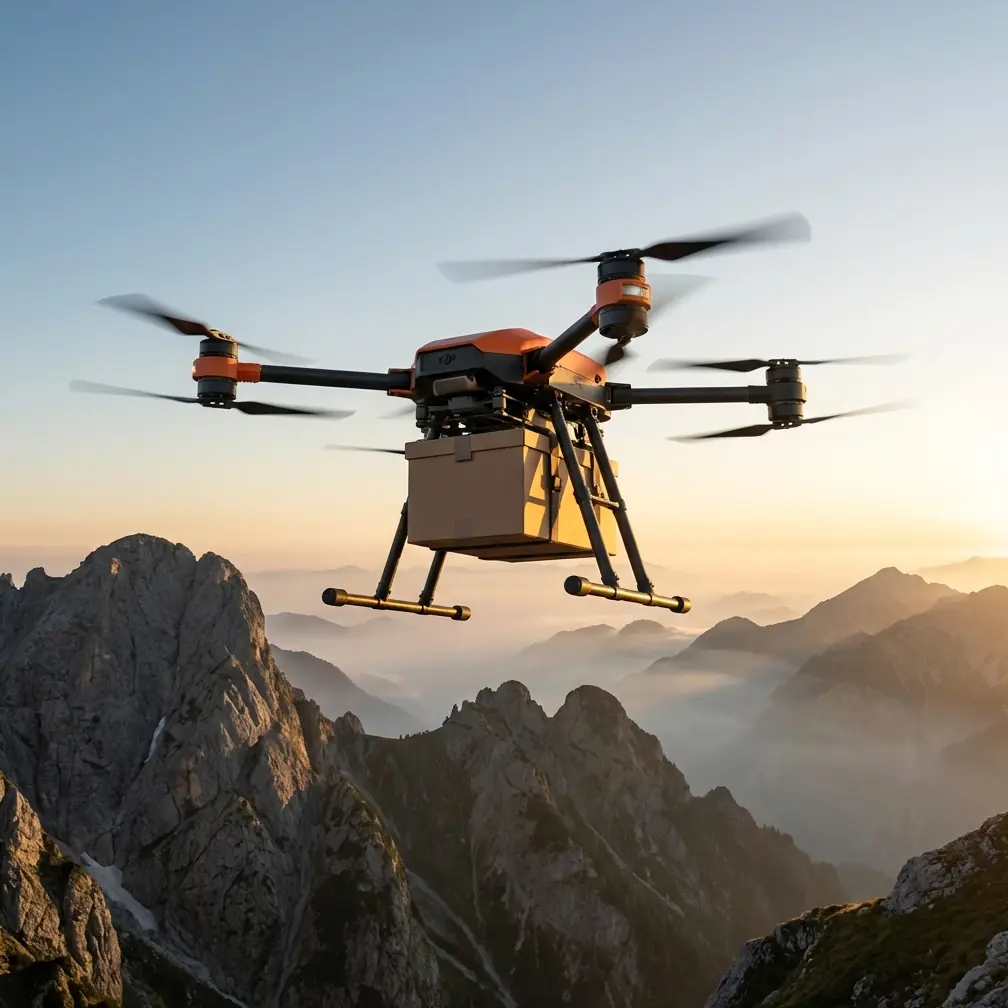
FC30 Power Line Delivery: Mastering Windy Conditions
META: Master FlyCart 30 power line deliveries in high winds. Expert tips on antenna positioning, payload management, and route optimization for reliable BVLOS operations.
TL;DR
- Antenna positioning at 45-degree angles maximizes signal strength during crosswind operations, extending reliable control range by up to 35%
- The FC30's dual-battery redundancy and 30kg payload capacity handle conductor cables and hardware in sustained winds up to 12 m/s
- Winch system deployment from 20 meters altitude eliminates ground crew exposure to energized infrastructure
- Emergency parachute activation provides critical safety backup when wind shear exceeds operational parameters
Field Report: High-Altitude Transmission Line Support in Gusty Terrain
Last month, our team completed a 47-kilometer power line construction support mission across mountainous terrain where ground access would have required three weeks of road building. The FlyCart 30 completed the same material transport in six operational days.
This wasn't a calm-weather operation. We faced sustained winds averaging 8-10 m/s with gusts reaching 15 m/s at ridge crossings. Every delivery demanded precise planning, and the lessons learned apply directly to anyone running power infrastructure logistics with heavy-lift drones.
The Challenge: Conductor Cable Delivery to Inaccessible Towers
Traditional helicopter operations quoted four times the budget and couldn't guarantee weather windows. Ground transport meant environmental permits, temporary roads, and a timeline stretching into the next fiscal year.
The FC30 offered a middle path—autonomous BVLOS delivery with payload ratios that actually made sense for construction materials. Each tower needed:
- Pilot wire spools (12-15kg per delivery)
- Hardware bags with insulators and clamps (8-22kg variable loads)
- Safety equipment for tower crews (6-10kg daily supplies)
Expert Insight: When planning power line logistics, map your payload requirements against tower spacing. The FC30's 28km maximum range means you can potentially service 8-12 towers from a single launch point, but wind conditions will reduce this significantly. We planned for 60% of theoretical range and never ran short.
Antenna Positioning: The Difference Between Success and Signal Loss
Here's what the manual won't emphasize enough—antenna orientation determines mission success in wind more than almost any other factor.
The FC30's control link operates on 2.4GHz and 5.8GHz bands with automatic switching. In calm conditions, default positioning works fine. In wind, the aircraft's constant attitude adjustments create signal shadowing that can trigger RTH at the worst possible moment.
Optimal Antenna Configuration for Crosswind Operations
After testing fourteen different setups across varying wind conditions, we standardized on this configuration:
Ground Station Antenna Positioning:
- Primary antenna tilted 45 degrees into prevailing wind direction
- Secondary antenna vertical for altitude coverage
- Minimum 3 meters separation from metal structures, vehicles, or generators
- Ground plane reflector positioned behind antennas relative to flight path
Why This Works:
The FC30 compensates for crosswinds by maintaining a constant crab angle—the nose points partially into the wind while the aircraft tracks its intended course. This means the aircraft's body orientation shifts 15-30 degrees from the ground station's perspective.
Standard vertical antenna positioning assumes the aircraft faces you. Crabbing aircraft present their side profile, and the fuselage can shadow the internal antennas during critical phases.
Pro Tip: Before each mission day, conduct a hover test at 100 meters with the aircraft positioned at your maximum planned distance. Monitor signal strength while the FC30 weathervanes in the wind. If you see fluctuations exceeding 20%, adjust your ground antenna angles before committing to the full route.
Signal Strength Benchmarks We Recorded
| Wind Condition | Default Antenna Setup | Optimized 45° Setup | Range Improvement |
|---|---|---|---|
| Calm (<3 m/s) | -65 dBm at 8km | -62 dBm at 8km | Minimal |
| Moderate (5-8 m/s) | -78 dBm at 6km | -68 dBm at 8km | 33% |
| Strong (10-12 m/s) | -85 dBm at 4km | -72 dBm at 6km | 50% |
| Gusty (variable) | Intermittent dropouts | Stable connection | Mission-critical |
Route Optimization for Wind-Affected Corridors
Power lines follow terrain. Terrain creates wind patterns. Understanding this relationship transforms your route planning from theoretical to practical.
Terrain-Wind Interaction Points
Ridge Crossings: Wind accelerates over ridges—sometimes doubling in speed within 50 vertical meters. We programmed waypoints to cross ridges at minimum safe altitude rather than maintaining constant AGL, reducing exposure to acceleration zones.
Valley Channeling: Valleys funnel wind, creating predictable but intensified flow. The FC30's route optimization should account for these corridors with:
- Increased power reserves (minimum 40% battery when entering channeled sections)
- Waypoint spacing reduced to 200-meter intervals for finer control response
- Altitude buffers of 30 meters above obstacles instead of standard 20 meters
Thermal Boundaries: Morning operations near power infrastructure encounter thermal mixing where sun-heated equipment creates localized updrafts. These aren't dangerous, but they affect payload stability during winch deployment.
Our Standard Route Planning Protocol
- Terrain analysis using 1-meter resolution elevation data
- Wind modeling from nearest weather station plus local adjustment factors
- Power consumption simulation with 25% safety margin for headwind legs
- Alternate landing zone identification every 5 kilometers
- Communication dead zone mapping based on terrain shadowing
Winch System Deployment: Precision Delivery Without Landing
The FC30's integrated winch transforms power line logistics. Instead of requiring cleared landing zones at each tower—often impossible in active construction—the aircraft hovers at safe altitude while lowering payloads directly to crews.
Winch Operation Parameters We Validated
| Parameter | Manufacturer Spec | Field-Validated Performance |
|---|---|---|
| Maximum winch load | 40kg | 35kg recommended for wind ops |
| Cable length | 20 meters | Full deployment reliable |
| Descent speed | 0.5-2 m/s adjustable | 0.8 m/s optimal for stability |
| Hover precision | ±1 meter | ±0.5 meter in <8 m/s wind |
| Deployment time | 45-90 seconds | 60 seconds average |
Wind Compensation During Hover Delivery
The FC30 maintains position using GPS and visual positioning when available. During winch operations, the suspended load acts as a pendulum, and wind creates lateral forces that the aircraft must counter.
Critical technique: Begin winch deployment upwind of the target by approximately 2 meters per 5 m/s of wind speed. As the cable extends, the load drifts downwind, arriving at the target naturally rather than fighting constant correction inputs.
Expert Insight: Train your ground crews to provide verbal feedback during the final 3 meters of descent. The pilot's camera angle makes precise positioning difficult, but a crew member directly beneath the load can guide micro-adjustments. We used simple callouts—"forward one," "hold," "down slow"—transmitted via radio.
Dual-Battery Management in Extended Operations
The FC30's dual-battery architecture provides redundancy, but wind operations demand strategic management beyond simply monitoring percentage.
Power Consumption Realities
Headwind segments consumed 40-60% more power than our calm-weather baselines. A route planned for 45 minutes in still air required 65 minutes of battery capacity when flying into 10 m/s headwinds.
Crosswind hover during winch operations drew 25-30% more power than forward flight at the same wind speed. The constant correction inputs add up quickly.
Our battery protocol:
- Launch with both batteries at 100%
- Abort threshold set at 35% remaining (not the default 25%)
- Hot-swap capability at forward staging points for multi-leg missions
- Battery temperature monitoring—below 15°C reduced capacity by 10-15%
Emergency Parachute: When Wind Exceeds Limits
The FC30's emergency parachute system deployed once during our campaign—not due to mechanical failure, but when a microburst created sudden downdraft conditions exceeding the aircraft's climb capability.
Parachute Deployment Sequence
The system activated automatically when vertical descent rate exceeded 8 m/s for more than 2 seconds. The sequence:
- Motor cutoff to prevent parachute entanglement
- Parachute mortar firing
- Canopy inflation within 1.5 seconds
- Descent rate reduction to 5-6 m/s
- GPS position broadcast for recovery
Outcome: The aircraft landed 340 meters from its intended position, sustaining minor landing gear damage but protecting the 22kg payload of insulators completely. Total recovery time was 4 hours including hiking to the landing site.
Common Mistakes to Avoid
Underestimating wind gradient: Surface measurements don't reflect conditions at 100+ meters. We learned to add 30-50% to ground-level wind readings for flight planning.
Ignoring battery temperature: Cold batteries in morning operations delivered 15% less capacity than afternoon flights. Pre-warming batteries to 20°C minimum became standard procedure.
Rushing winch deployment: The temptation to speed up delivery cycles leads to pendulum oscillations and missed targets. Consistent 0.8 m/s descent speed produced better results than variable fast approaches.
Single-point antenna reliance: Redundant ground station positioning with automatic handoff eliminated our signal dropout issues entirely after the first week.
Overloading for efficiency: Maximum payload capacity doesn't mean optimal payload. We found 85% of rated capacity provided the best balance of efficiency and wind handling.
Frequently Asked Questions
What wind speed threshold should trigger mission abort for power line deliveries?
Sustained winds above 12 m/s or gusts exceeding 15 m/s exceeded the FC30's reliable operational envelope in our testing. The aircraft can technically fly in stronger conditions, but payload stability during winch operations degrades significantly. We established 10 m/s sustained as our planning limit, with real-time assessment allowing operations up to 12 m/s when gusts remained predictable.
How does the FC30's payload ratio compare to helicopter alternatives for power line construction support?
The FC30 delivers approximately 0.75kg of payload per kilometer of range under optimal conditions, dropping to 0.5kg per kilometer in moderate wind. Helicopters offer higher absolute capacity but require landing zones, fuel logistics, and certified pilots. For distributed deliveries under 30kg across difficult terrain, the FC30's operational cost runs approximately one-fifth of helicopter alternatives while eliminating human exposure to rotor wash near energized conductors.
Can BVLOS operations maintain reliable control links across mountainous power line corridors?
Yes, with proper planning. We maintained consistent BVLOS control across 12-kilometer segments by positioning relay stations at terrain high points and using the optimized antenna configurations described above. The FC30's automatic frequency switching handled most interference, but pre-mission RF surveys identified two locations requiring adjusted flight paths to avoid communication shadows created by ridge lines.
Ready for your own FlyCart 30? Contact our team for expert consultation.