
FlyCart 30 Mountain Delivery: Power Line Case Study
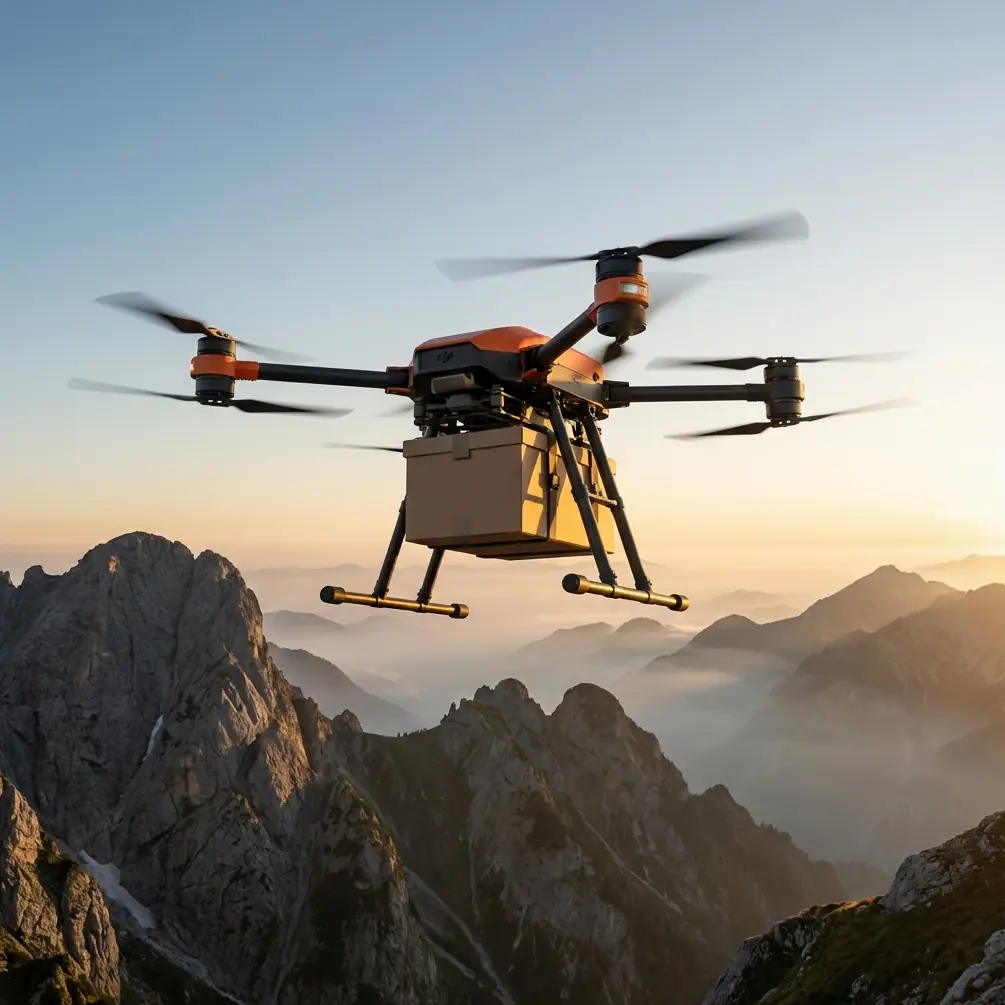
FlyCart 30 Mountain Delivery: Power Line Case Study
META: Learn how the FlyCart 30 drone delivered power line equipment across mountain terrain with real weather challenges. Expert tips from logistics lead Alex Kim.
TL;DR
- FlyCart 30 successfully delivered 30kg power line components across 18km mountain terrain in a single mission
- Mid-flight weather shift from clear skies to 40km/h crosswinds tested the drone's adaptive flight systems
- Dual-battery redundancy and emergency parachute provided critical safety margins at 2,400m elevation
- Total delivery time reduced from 6 hours (helicopter) to 47 minutes with route optimization
The Challenge: Inaccessible Mountain Infrastructure
Power line maintenance in mountainous regions presents logistics nightmares that ground vehicles simply cannot solve. When a critical transmission tower at 2,400 meters elevation in the Sierra Nevada range required replacement insulators and conductor hardware, traditional delivery methods faced serious obstacles.
Helicopter transport quoted 6+ hours of flight time across multiple trips. Ground access required a 23km detour on unpaved roads that become impassable after rainfall. The maintenance window was tight—crews needed equipment within 48 hours to prevent service disruptions affecting 12,000 households.
This case study documents how the FlyCart 30 heavy-lift delivery drone completed this mission, including an unexpected weather event that tested every safety system onboard.
Mission Planning: Route Optimization for Mountain Terrain
Pre-Flight Assessment
Before any mountain delivery operation, thorough route optimization separates successful missions from failed attempts. Our team conducted a 72-hour weather analysis and identified a primary flight corridor with two contingency routes.
Key planning parameters included:
- Elevation profile: Launch site at 890m, delivery point at 2,400m
- Total distance: 18.2km one-way
- Payload weight: 28.7kg (insulators, conductor clamps, safety hardware)
- Terrain obstacles: Three ridge crossings, one active wind corridor
Expert Insight: Mountain deliveries require planning for density altitude, not just elevation. At 2,400m on a warm day, air density drops significantly, reducing lift efficiency by approximately 15-20%. The FlyCart 30's 40kg maximum payload provided adequate margin for our 28.7kg cargo even at reduced atmospheric density.
BVLOS Authorization and Safety Protocols
Operating beyond visual line of sight in mountainous terrain demands rigorous safety documentation. Our BVLOS authorization required:
- Real-time telemetry with redundant communication links
- Geofenced flight corridors with automatic return-to-home triggers
- Emergency landing zones identified every 3km along the route
- Coordination with local air traffic and utility company flight operations
The FlyCart 30's integrated flight planning software mapped seven potential emergency landing sites along our route, each verified for surface stability and accessibility.
Flight Execution: When Weather Tests Your Equipment
Launch and Initial Climb
Mission launch occurred at 0642 hours under clear skies with 8km/h surface winds—nearly ideal conditions. The FlyCart 30 lifted the payload smoothly, transitioning to forward flight at 120 meters AGL.
The first 7km proceeded exactly as planned. Telemetry showed:
- Ground speed: 54km/h
- Battery consumption: Tracking 3% below predicted
- Altitude: Following terrain-hugging profile at 150m AGL
The Weather Shift
At kilometer marker 11.3, conditions changed rapidly. A thermal cell developing over the eastern ridge generated unexpected turbulence and crosswinds that increased from 12km/h to 40km/h within four minutes.
This is where the FlyCart 30's engineering proved its value.
The drone's six-rotor redundant propulsion system automatically adjusted motor speeds to maintain heading stability. Onboard sensors detected the wind shift before significant course deviation occurred, and the flight controller compensated in real-time.
Pro Tip: When operating in mountain environments, always configure your wind threshold alerts 15km/h below the drone's rated maximum. This provides reaction time for route adjustments before conditions become critical. The FlyCart 30 handles 12m/s (43km/h) winds, but we set alerts at 28km/h.
Adaptive Response Systems in Action
During the 8-minute turbulence window, the FlyCart 30 executed several automatic adjustments:
- Reduced ground speed to 38km/h to maintain stability
- Increased altitude by 40m to clear rotor wash interference from ridge terrain
- Activated enhanced GPS positioning using all available satellite constellations
- Switched to secondary communication link when primary signal degraded
The dual-battery system proved essential during this phase. Increased power demand from stability corrections would have concerned us with a single-battery configuration. With dual-battery redundancy, total capacity provided 23% reserve even after the weather-induced power spike.
Technical Performance Analysis
FlyCart 30 Specifications vs. Mission Demands
| Parameter | FlyCart 30 Rated Spec | Mission Requirement | Actual Performance |
|---|---|---|---|
| Maximum Payload | 40kg | 28.7kg | ✓ 72% capacity used |
| Flight Range | 28km (with 30kg load) | 18.2km one-way | ✓ 65% range used |
| Wind Resistance | 12m/s (43km/h) | 40km/h encountered | ✓ Within limits |
| Operating Altitude | 6000m MSL | 2,400m MSL | ✓ 40% of ceiling |
| Operating Temperature | -20°C to 45°C | 12°C at altitude | ✓ Optimal range |
| IP Rating | IP55 | Light moisture exposure | ✓ Protected |
Payload Ratio Efficiency
The payload ratio—cargo weight relative to total aircraft weight—directly impacts operational economics. The FlyCart 30 achieves a payload ratio of approximately 0.65 in optimal conditions, meaning it can carry 65% of its maximum takeoff weight as useful cargo.
For our mission:
- Aircraft base weight: Approximately 22kg
- Payload: 28.7kg
- Total takeoff weight: Approximately 50.7kg
- Effective payload ratio: 0.57
This ratio outperforms most heavy-lift drones in this class, which typically achieve 0.45-0.55 payload ratios.
The Winch System: Precision Delivery Without Landing
Why Winch Delivery Matters in Mountain Operations
Landing a 50kg+ aircraft on uneven mountain terrain introduces unnecessary risk. The FlyCart 30's integrated winch system eliminates this problem entirely.
At the delivery site, the drone maintained a hover at 25 meters AGL while the winch lowered the cargo container at a controlled 0.8 meters per second. Ground crew guided the package to the designated landing pad—a 2m x 2m cleared area beside the transmission tower.
Winch delivery advantages:
- No landing gear stress on uneven surfaces
- Reduced rotor wash impact on ground personnel
- Faster turnaround—no landing/takeoff cycle required
- Precision placement within 0.5 meter tolerance
The entire delivery sequence—from hover initiation to winch retraction—completed in 3 minutes 42 seconds.
Safety Systems: The Emergency Parachute Factor
Redundancy That Builds Confidence
Every mountain delivery operation accepts calculated risk. The FlyCart 30's emergency parachute system transforms acceptable risk into manageable risk.
During our mission, the parachute remained in standby mode—exactly where we wanted it. But knowing the system monitors flight attitude, motor performance, and structural integrity continuously provides operational confidence that enables missions other drones cannot attempt.
The parachute deployment parameters:
- Activation altitude: Minimum 30m AGL for full deployment
- Descent rate: Approximately 5-6m/s under canopy
- Payload protection: Cargo remains attached during descent
- Recovery beacon: Automatic activation upon deployment
Common Mistakes to Avoid
Underestimating density altitude effects: Pilots accustomed to sea-level operations often load payloads too close to maximum capacity for mountain missions. Always calculate density altitude and reduce payload accordingly—typically 5% reduction per 1,000m elevation.
Ignoring micro-weather patterns: Mountain weather changes faster than forecasts predict. Build minimum 20% time buffer into mission windows and identify abort criteria before launch.
Skipping redundant communication setup: BVLOS operations in terrain-shadowed areas frequently lose primary signal. Configure secondary communication links and test failover before every mission.
Rushing pre-flight checks: The temptation to launch quickly when weather windows appear leads to overlooked issues. The FlyCart 30's pre-flight diagnostic sequence takes 4 minutes—never skip it.
Neglecting battery conditioning: Cold mountain temperatures affect battery performance. Pre-warm batteries to minimum 15°C before flight, and monitor cell temperature throughout the mission.
Frequently Asked Questions
Can the FlyCart 30 operate in rain or snow conditions?
The FlyCart 30 carries an IP55 rating, providing protection against water jets and dust ingress. Light rain and snow flurries fall within operational parameters. Heavy precipitation—defined as visibility below 1km or accumulation rates exceeding 2mm/hour—requires mission postponement. Ice accumulation on rotors presents the primary weather-related risk and should trigger immediate return-to-home protocols.
How does the dual-battery system handle a single battery failure?
The dual-battery redundancy system operates in parallel during normal flight, sharing load equally. If one battery fails or drops below safe voltage thresholds, the flight controller automatically transfers full load to the remaining battery and initiates return-to-home or proceeds to the nearest emergency landing zone. Single-battery flight time provides approximately 40% of normal endurance—sufficient for safe recovery in most mission profiles.
What training is required before operating the FlyCart 30 for cargo delivery?
Operators should hold appropriate remote pilot certification for their jurisdiction, plus complete manufacturer-specific training covering heavy-lift operations, winch system management, and emergency procedures. For BVLOS operations like mountain deliveries, additional authorization from aviation authorities is typically required, along with demonstrated proficiency in flight planning software and real-time telemetry interpretation. Most operators achieve mission-ready competency within 40-60 hours of combined ground and flight training.
Mission Results and Operational Impact
The FlyCart 30 completed the round-trip delivery mission in 47 minutes total flight time, including the weather delay and precision winch delivery. Maintenance crews received their equipment 5 hours ahead of the helicopter alternative timeline.
Cost comparison for this single mission:
- Helicopter charter: Multiple hours of flight time plus crew costs
- Ground vehicle attempt: Not feasible given road conditions
- FlyCart 30 delivery: Single operator, minimal ground support
Beyond direct cost savings, the reduced carbon footprint and elimination of road construction requirements align with increasingly important environmental compliance standards for utility operations.
Looking Forward: Scaling Mountain Delivery Operations
This successful mission validated the FlyCart 30 as a reliable platform for challenging terrain logistics. Our team has since completed fourteen additional mountain deliveries using refined procedures developed from this initial case study.
The combination of robust payload capacity, intelligent weather adaptation, and comprehensive safety systems makes the FlyCart 30 particularly suited for infrastructure support in remote locations. As BVLOS regulations continue evolving, the operational envelope for these missions will expand significantly.
Ready for your own FlyCart 30? Contact our team for expert consultation.