
Delivering Power Lines with FC30 | Pro Tips
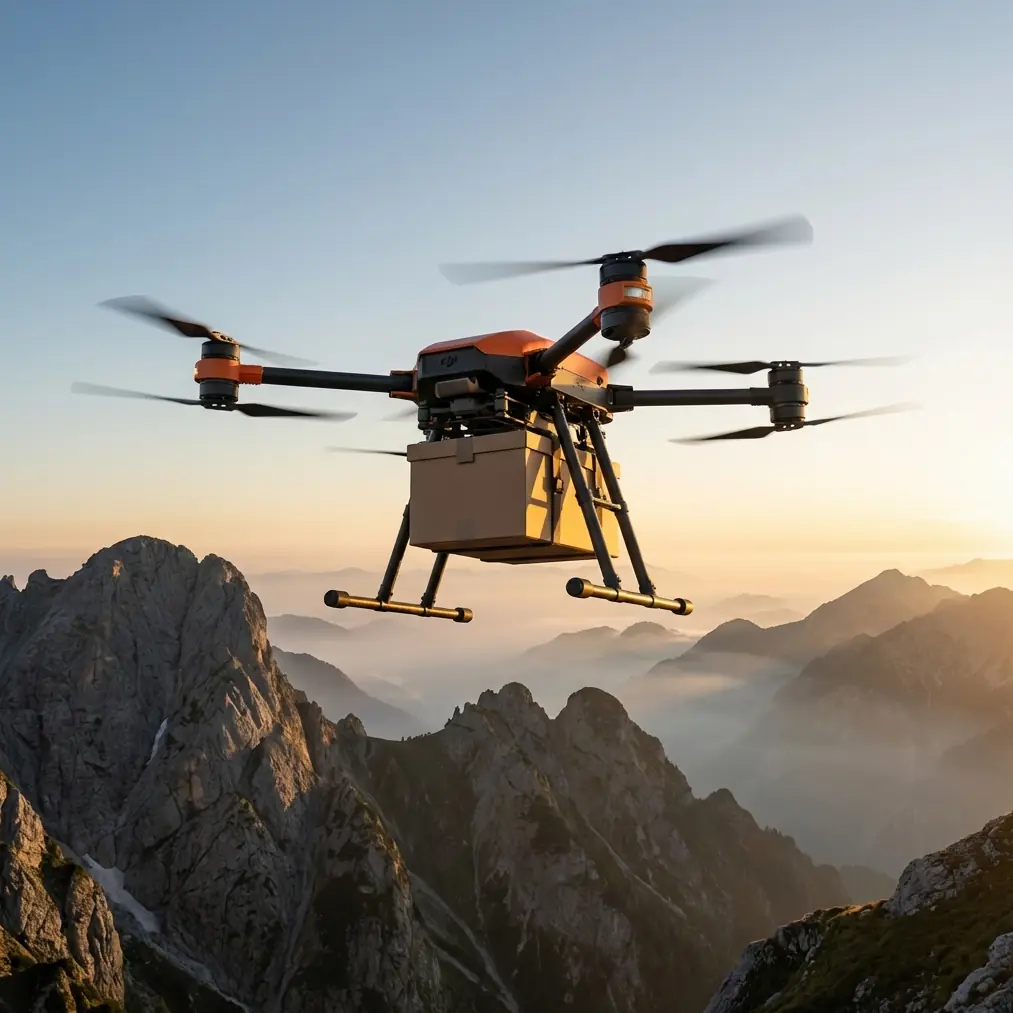
Delivering Power Lines with FC30 | Pro Tips
META: Learn how the DJI FlyCart 30 delivers power lines to remote areas. Expert tutorial covers payload ratio, BVLOS ops, winch system setup, and route optimization.
Author: Alex Kim, Logistics Lead Last Updated: July 2025 Reading Time: 8 minutes
TL;DR
- The FlyCart 30 handles up to 30 kg payloads, making it ideal for delivering power line cables, insulators, and hardware to remote terrain where ground access is impossible.
- Pre-flight cleaning of the emergency parachute system and sensor arrays is a non-negotiable safety step that most operators overlook.
- The dual-battery architecture and winch system allow precision drops at altitudes and locations that eliminate the need for helicopter charters.
- Proper route optimization and BVLOS planning can cut delivery cycles by 60% compared to traditional mule-train or helicopter methods.
Why Power Line Delivery to Remote Sites Is Broken
Getting materials to remote power line construction sites has been one of the most expensive and dangerous bottlenecks in electrical grid expansion for decades. Helicopter charters run tens of thousands per day. Mule trains take days. Manual carry teams face injury risks on steep, unstable terrain.
The DJI FlyCart 30 changes that equation entirely. This tutorial walks you through every step of using the FC30 for power line delivery operations—from pre-flight prep to final cable drop—based on real-world deployments across mountainous and forested corridors.
Whether you're a utility contractor, a logistics coordinator, or a drone operations manager, this guide gives you the repeatable framework to execute these missions safely and efficiently.
Step 1: Understanding the FlyCart 30's Delivery Capabilities
Before planning a single flight, you need to understand what the FC30 can and cannot do in a power line delivery context.
Key Specifications for Payload Operations
| Specification | FlyCart 30 Detail | Relevance to Power Line Delivery |
|---|---|---|
| Max Payload (Cargo Mode) | 30 kg | Sufficient for cable spools, insulators, clamps |
| Max Payload (Winch Mode) | 40 kg | Enables heavier hardware drops via winch |
| Max Range (Loaded) | 16 km | Covers most remote tower-to-tower spans |
| Max Flight Altitude | 6,000 m ASL | Critical for high-elevation mountain corridors |
| Winch Cable Length | 20 m | Allows drops below dense canopy |
| Wind Resistance | 12 m/s | Operable in moderate mountain wind conditions |
| Emergency Parachute | Integrated | Mandatory for BVLOS and over-terrain ops |
| Battery System | Dual-battery redundant | Flight continues if one battery fails |
The payload ratio is the number you should focus on first. Power line cable weighs approximately 1.5–3.0 kg per meter depending on gauge and type. A 30 kg payload means you can deliver 10–20 meters of cable per flight, or a full set of insulators and mounting hardware in a single run.
Expert Insight: Don't max out the payload to exactly 30 kg. Keep a 10–15% margin below the rated maximum. At altitude, air density drops, and rotor efficiency decreases. A 26–27 kg working payload gives you safe performance margins in mountain environments.
Step 2: The Pre-Flight Cleaning Protocol You Cannot Skip
Here's the step that separates professional operators from amateurs—and it happens before anyone touches a controller.
The FlyCart 30's safety systems, particularly the emergency parachute deployment mechanism and the obstacle sensing arrays, must be physically inspected and cleaned before every flight in remote power line environments.
Why This Matters
Remote construction sites generate airborne particulates: sawdust from tree clearing, rock dust from blasting, fine soil from excavation. These particles accumulate on:
- Parachute release latches — Grit can delay deployment by critical milliseconds
- IR and visual obstacle sensors — Dust films create false readings or blind spots
- Propeller motor bearings — Fine dust accelerates wear under load
- Battery contact terminals — Debris causes resistance and inconsistent power delivery
- Winch system cable guides — Particulates cause cable friction and uneven spooling
Cleaning Checklist (5 Minutes, Every Flight)
- Parachute housing: Open the inspection panel. Use compressed air (never canned air with propellant) to clear the release mechanism. Visually confirm the latch moves freely.
- Sensor arrays: Wipe all 8 sensing surfaces with a microfiber cloth dampened with isopropyl alcohol. Check for scratches that could diffuse the sensing beam.
- Propellers and motor hubs: Spin each rotor by hand. Listen for grit. Wipe the hub seam with a dry brush.
- Battery terminals: On both batteries, wipe the gold contact points with a dry lint-free cloth. Check for corrosion or green oxidation.
- Winch mechanism: Run the cable out 2 meters and retract. Watch for jerky spooling. Clean the guide rollers.
This 5-minute protocol has prevented multiple in-flight anomalies in our deployments. It's the single highest-ROI safety habit you can build.
Step 3: Planning BVLOS Routes for Power Line Corridors
Power line delivery almost always requires Beyond Visual Line of Sight (BVLOS) operations. Towers are spaced 200–500 meters apart in remote terrain, and your launch point rarely has direct line of sight to the drop zone.
Route Optimization Framework
Effective route optimization for the FC30 in power line delivery follows a 4-phase approach:
Phase 1: Terrain Mapping Use satellite imagery and, if available, LiDAR data to map the corridor. Identify:
- Elevation changes between launch and drop points
- Tree canopy heights along the route
- Potential turbulence zones (ridgelines, valley funnels)
Phase 2: Waypoint Configuration The FC30's DJI DeliveryHub software supports multi-waypoint mission planning. Set waypoints at:
- Every significant elevation change (greater than 50 m)
- Every heading change exceeding 30 degrees
- 200 m intervals minimum along straight segments for telemetry checkpoints
Phase 3: Altitude Stratification Set your cruise altitude at a minimum of 30 m above the highest obstacle along each route segment. For power line corridors with existing cables, increase this to 50 m above the highest cable.
Phase 4: Contingency Waypoints Program at least 2 emergency landing zones along every route. The FC30 can execute automated landing at designated GPS coordinates if communication drops or battery levels hit critical thresholds.
Pro Tip: Fly every new route unloaded first. The FC30 consumes significantly less battery without payload. Use the unloaded flight to validate telemetry, check for GPS shadow zones behind ridgelines, and confirm wind conditions at each waypoint. This scouting flight typically costs less than 8% of a single battery cycle and can prevent catastrophic payload loss.
Step 4: Winch System Operations for Precision Drops
The FlyCart 30's winch system is what makes it exceptional for power line delivery compared to other cargo drones that rely on landing at the drop site.
Landing at a remote tower site is often impossible. The terrain is steep, uneven, and cluttered with construction materials. The winch solves this by allowing the FC30 to hover at a safe altitude and lower the payload on a 20 m cable to the ground crew.
Winch Drop Procedure
- Approach the drop zone at reduced speed — Transition from cruise speed to 2 m/s within 100 m of the target.
- Establish a stable hover — The FC30's RTK positioning holds hover accuracy to within 10 cm. Wait 5 seconds for stabilization.
- Initiate winch deployment — Lower the payload at the default 0.8 m/s descent rate. Do not exceed 1.2 m/s to avoid swing oscillation.
- Ground crew confirms position — Use the FC30's integrated camera and two-way communication to coordinate with the ground team.
- Release and retract — Once the payload is detached, retract the winch fully before transitioning to return flight.
Payload Rigging Tips
- Use certified lifting slings rated for 2x the payload weight
- Attach the load at a single point to minimize pendulum effects
- For cable spools, rig the spool axis horizontally so it doesn't unwind during flight
- Mark every load with high-visibility tape so the ground crew can track it visually during descent
Step 5: Dual-Battery Management for Multi-Run Operations
Power line delivery is rarely a one-flight job. You'll run 10–30 delivery flights per day on a typical project. The FC30's dual-battery system is your operational backbone.
Each battery pack provides redundancy in flight—if one fails, the other sustains the aircraft long enough to land safely. But for multi-run operations, the real advantage is hot-swap efficiency.
Battery Rotation Strategy
- Maintain a minimum fleet of 6 battery sets for continuous operations
- Charge batteries to 95% (not 100%) to extend cycle life across a multi-week project
- Swap batteries immediately after landing—the FC30's tool-free battery bay allows swaps in under 60 seconds
- Track cycle counts per battery. Retire any set exceeding 200 cycles from payload missions (reserve for scouting flights)
- Store idle batteries between 25°C and 35°C—cold mountain nights degrade lithium cells rapidly
Common Mistakes to Avoid
1. Overloading the winch without accounting for dynamic forces. A 30 kg static payload can exert 45+ kg of dynamic force during wind gusts or sudden stops. Always rig for dynamic load, not static weight.
2. Skipping the pre-flight cleaning protocol. One dust-blocked sensor can send the FC30 into an obstacle avoidance maneuver mid-delivery, wasting battery and potentially losing the payload.
3. Flying identical routes in both directions. Wind conditions change with altitude and direction. Optimize your outbound route (loaded) for headwind minimization and your return route (empty) for speed. They should rarely be the same path.
4. Neglecting ground crew communication drills. The winch drop requires precise coordination. Run at least 3 dry runs with every new ground crew before live payload operations.
5. Using consumer-grade weather data for flight planning. Mountain microclimates shift in minutes. Deploy a portable anemometer at the launch site and have the ground crew report conditions at the drop zone in real time.
Frequently Asked Questions
Can the FlyCart 30 deliver live electrical cable that's already under tension?
No. The FC30 is designed to deliver coiled cable, hardware, and materials to the construction site. It does not pull or string cable under tension between towers. Crews use the delivered materials to perform stringing operations manually or with ground-based tensioning equipment.
What regulatory approvals are needed for BVLOS power line delivery?
Requirements vary by jurisdiction, but most civil aviation authorities require a specific BVLOS waiver or exemption. In the United States, this falls under FAA Part 107.31 waivers. You'll typically need to demonstrate a safety case that includes the FC30's emergency parachute system, dual-battery redundancy, and a robust communication and tracking plan. Engage with your local authority 6–12 weeks before planned operations.
How does the FlyCart 30 perform in rain or wet conditions?
The FC30 carries an IP45 protection rating, meaning it can operate in light to moderate rain. Heavy rain, thunderstorms, or icing conditions are no-go. For power line delivery projects in wet climates, schedule flights during dry windows and keep spare microfiber cloths on hand to wipe sensors between flights. Moisture on the obstacle avoidance sensors creates the same problems as dust—false readings and degraded performance.
Ready for your own FlyCart 30? Contact our team for expert consultation.