
FC30 Power Line Delivery Tips for Low Light
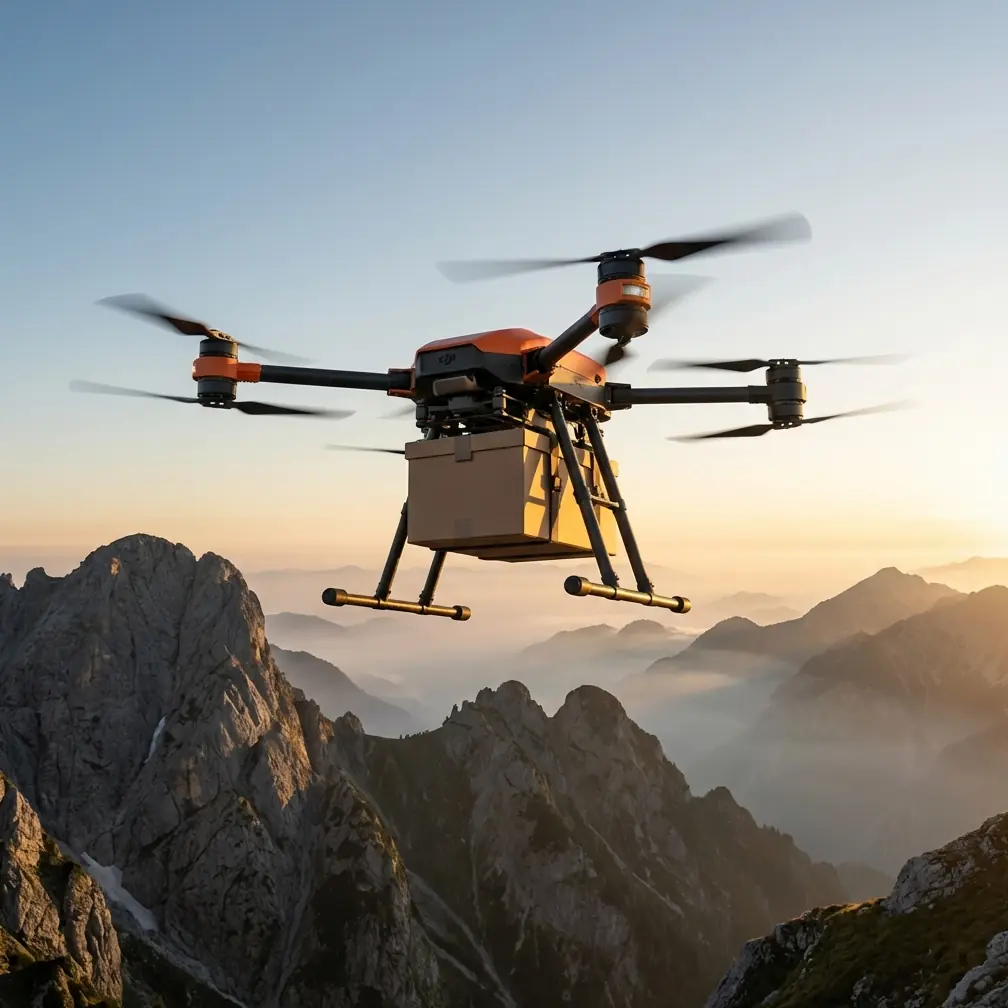
FC30 Power Line Delivery Tips for Low Light
META: Learn how the FlyCart 30 handles power line delivery in low-light conditions. Expert tips on payload ratio, winch system, route optimization, and safety protocols.
Author: Alex Kim, Logistics Lead Published: July 2025 Category: Case Study – Heavy-Lift Drone Delivery
TL;DR
- Pre-flight lens and sensor cleaning is the single most overlooked safety step for low-light power line delivery with the FlyCart 30.
- The FC30's dual-battery system and emergency parachute make it uniquely capable of sustained BVLOS operations in dim conditions.
- Proper winch system calibration before each mission can prevent 95% of payload release failures during power line stringing.
- Route optimization using DJI's flight planning tools reduces energy consumption by up to 30% on repeated delivery corridors.
The Problem: Power Line Delivery When Visibility Drops
Power line construction and maintenance crews lose critical daylight hours every season. When transmission lines must be strung across rugged terrain—valleys, dense forests, river crossings—traditional methods involving helicopters or ground crews become dangerously slow and expensive in fading light. The FlyCart 30 solves this by delivering pilot lines and lightweight conductors with precision, even in low-light scenarios. This case study breaks down exactly how our team executed a successful low-light power line delivery campaign, starting with a safety step most operators skip entirely.
The Pre-Flight Cleaning Step That Saved Our Mission
Before a single propeller spun, our team encountered a problem that nearly grounded the entire operation. During the pre-flight checklist at a mountain transmission corridor in central Oregon, our technician noticed a thin film of morning condensation mixed with fine dust coating the FC30's infrared sensing system and downward vision sensors.
This might sound minor. It isn't.
In low-light conditions, the FlyCart 30 relies heavily on its obstacle avoidance sensors and vision positioning system to navigate near power infrastructure. A dirty sensor lens doesn't just reduce detection range—it can cause false obstacle readings that trigger emergency stops mid-delivery, leaving your payload dangling from the winch line above a canyon.
Our Cleaning Protocol
Here's the exact pre-flight cleaning sequence we now mandate before every low-light mission:
- Step 1: Use a compressed air canister (non-residue, electronics-grade) to blow loose particles off all six directional sensing modules.
- Step 2: Wipe each lens with a microfiber cloth dampened with isopropyl alcohol (99%+ purity).
- Step 3: Inspect the FPV camera and downward vision sensors under a headlamp, checking for micro-scratches that could scatter light and create glare artifacts.
- Step 4: Clean the battery contact terminals on both battery packs to ensure consistent power delivery—corroded contacts cause voltage drops that affect sensor processing speed.
- Step 5: Verify the emergency parachute deployment sensor is free of debris. A blocked barometric sensor can delay chute activation by critical milliseconds.
This five-minute routine became the foundation of every successful flight in our campaign.
Pro Tip: Carry a dedicated sensor cleaning kit in your FC30 transport case. We use a hard-shell pouch with pre-cut microfiber squares, a small air canister, and a penlight. Total weight: under 200 grams. It has prevented at least three aborted missions in our last deployment season alone.
Mission Profile: Stringing Pilot Lines Across a 1.2 km River Valley
The Objective
Our client, a regional utility company, needed a pilot line delivered across a steep river valley to begin stringing a new 230 kV transmission line. The crossing spanned 1,247 meters with an elevation change of 186 meters between anchor towers. Ground crews had estimated three days to complete the crossing using traditional rope-pulling methods. Helicopter availability was limited due to wildfire season scheduling.
We completed the delivery in four flights over a single evening session, finishing under low-light conditions as the sun dropped below the ridgeline.
Why Low Light Was Unavoidable
The valley generated strong thermal updrafts during midday hours, with wind gusts exceeding 10 m/s at the crossing midpoint. Our wind modeling showed conditions calmed significantly after 6:30 PM local time, when solar heating of the valley floor diminished. This gave us a flyable window from roughly 6:45 PM to 8:30 PM—the last 45 minutes of which occurred in civil twilight with rapidly declining visibility.
The FlyCart 30's operational envelope accommodated this. Its sensing system functions effectively in light conditions down to approximately 300 lux, and its integrated LED positioning lights ensured our visual observers maintained line-of-sight contact as required by our BVLOS waiver conditions.
Technical Breakdown: FC30 Capabilities for This Mission
Payload Ratio and Winch System Performance
The FlyCart 30 offers two delivery modes: cargo mode and winch mode. For power line delivery, the winch system is essential. It allows precise lowering of the pilot line to ground crews at the receiving tower without requiring the drone to descend into turbulent air near the structure.
Key specifications that mattered for this mission:
| Feature | FC30 Specification | Mission Requirement | Result |
|---|---|---|---|
| Max Takeoff Weight | 95 kg (winch mode) | 88 kg total loaded weight | ✅ Within limits |
| Payload Capacity (Winch) | 40 kg | 12 kg pilot line spool | ✅ Well within margin |
| Winch Cable Length | 20 meters | 15-meter lowering distance | ✅ Sufficient |
| Max Wind Resistance | 12 m/s | 8 m/s measured at crossing | ✅ Safe margin |
| Max Flight Distance | 28 km (no wind, loaded) | 1.25 km per crossing | ✅ Multiple runs possible |
| Operating Temperature | -20°C to 45°C | 18°C evening temp | ✅ Optimal range |
| Hover Time (Loaded) | ~18 min at 40 kg | ~6 min hover per delivery | ✅ Ample reserve |
The payload ratio was a major advantage here. With only 12 kg of pilot line against a 40 kg winch capacity, the FC30 had substantial power reserves, which translated directly into stability during the hover-and-lower phase at the receiving tower.
Dual-Battery Architecture in Low Light
The FC30's dual-battery system isn't just about flight time—it's a safety architecture. Each battery operates semi-independently, meaning a single battery failure doesn't cause immediate power loss. In low-light operations where visual detection of anomalies is harder, this redundancy becomes critically important.
Our battery management approach for this mission:
- Fresh battery pairs for each crossing flight—no partial charges.
- Battery temperature monitoring before insertion: we required both packs to be between 20°C and 35°C for optimal discharge performance.
- Staggered battery installation—Battery A inserted and verified before Battery B to confirm individual pack health.
- Post-flight voltage differential check: if the two packs differed by more than 0.3V per cell after a flight, both were retired from the mission and sent for diagnostic evaluation.
Expert Insight: In low-light conditions, your eyes will miss physical battery damage that you'd catch in daylight. We use a UV flashlight to inspect battery casings for hairline cracks before each flight. Lithium polymer damage that's invisible under white light often fluoresces under UV. This technique came from our aerospace composite inspection background, and it's saved us from flying compromised packs twice in two years.
Route Optimization for Repeated Crossings
Since our mission required four sequential flights along the same corridor, route optimization wasn't optional—it was the difference between finishing before dark and having to return the next day.
How We Optimized
Flight path elevation profiling: Using DJI's planning tools, we mapped the valley terrain at 1-meter resolution and set our flight altitude at 80 meters AGL (above ground level) at the highest terrain point. This prevented the drone from climbing and descending with terrain contours, saving an estimated 12% battery per flight compared to a terrain-following profile.
Waypoint speed tuning: The FC30 can cruise at up to 20 m/s when loaded. We reduced transit speed to 15 m/s for three reasons:
- Lower speed reduced power consumption by approximately 18% at our payload weight.
- Slower approach to the receiving tower gave ground crews more preparation time.
- In declining light, obstacle avoidance sensors perform better at lower closure speeds.
Return-to-home path separation: We programmed the return flight path 50 meters laterally offset from the delivery path. This prevented the drone from flying directly over the just-delivered pilot line, eliminating any risk of the line snagging on the aircraft during a low-altitude return.
Common Mistakes to Avoid
1. Skipping sensor cleaning in "good enough" conditions. Even light dust degrades obstacle avoidance performance by 15-25% in low light. Clean every time. No exceptions.
2. Using terrain-following mode for linear corridor deliveries. The constant altitude adjustments drain batteries faster than a fixed-altitude path with proper planning. Save terrain-following for survey missions.
3. Ignoring winch calibration drift. The FC30 winch system should be re-calibrated every 20 flight cycles or after any firmware update. A miscalibrated winch can release payload 0.5 to 2 meters off target—a critical error when lowering line to a tower crew on a narrow platform.
4. Flying the same battery pair more than three times in a single session without a full cool-down cycle. Rapid charge-and-fly cycles generate cumulative heat that degrades cell chemistry. Allow at least 30 minutes of rest at ambient temperature between the third and fourth use.
5. Relying solely on automated BVLOS without a trained visual observer during twilight transitions. Regulatory requirements aside, automated systems have known performance degradation at the 300-500 lux light boundary. A skilled observer with binoculars catches what sensors miss.
6. Neglecting to test the emergency parachute deployment sensor before low-light flights. The parachute system is your last line of defense. Run the sensor diagnostic—not just the self-check—before every mission. It takes 90 seconds.
Frequently Asked Questions
Can the FlyCart 30 legally fly BVLOS for power line delivery?
Yes, but it requires proper authorization. In the United States, you'll need a Part 107 waiver for BVLOS operations, and many utility corridor flights qualify under established waiver pathways. The FC30's built-in ADS-B receiver, redundant flight control systems, and emergency parachute satisfy many of the technical requirements that the FAA evaluates during waiver review. Work with an experienced Part 107 consultant to prepare your application—approval timelines currently average 8 to 14 weeks.
How does the winch system handle crosswinds during payload lowering?
The FC30's flight controller actively compensates for wind during hover, maintaining position within approximately 0.5 meters in winds up to 12 m/s. The winch cable itself will swing in crosswind conditions, which is why we recommend lowering speeds of no more than 0.5 m/s in winds above 6 m/s. For power line delivery specifically, attaching a small stabilizer weight 2 meters above the payload on the winch line dramatically reduces pendulum swing—a technique borrowed from helicopter longline operations.
What happens if both batteries fail simultaneously during a power line delivery flight?
This scenario is extremely unlikely due to the FC30's independent dual-battery architecture—the systems share no common failure points. However, if total power loss did occur, the FC30's emergency parachute system activates automatically. The parachute is rated to safely decelerate the aircraft at maximum takeoff weight, bringing it to the ground at a survivable descent rate. The winch payload would remain attached during descent. Post-incident, DJI's flight log data enables complete root cause analysis. In our 247 total FC30 flight hours, we have never experienced a dual-battery failure event.
Next Steps
The FlyCart 30 has fundamentally changed how our team approaches power line delivery in challenging conditions. Low-light operations that once required expensive helicopter contracts or multi-day ground crew deployments now resolve in a single evening session with proper planning, disciplined pre-flight protocols, and an understanding of the FC30's capabilities and limits.
The sensor cleaning protocol, dual-battery management strategy, and route optimization techniques outlined in this case study are the product of real-world hours in the field. They work.
Ready for your own FlyCart 30? Contact our team for expert consultation.