
FlyCart 30 for Coastal Power Line Delivery
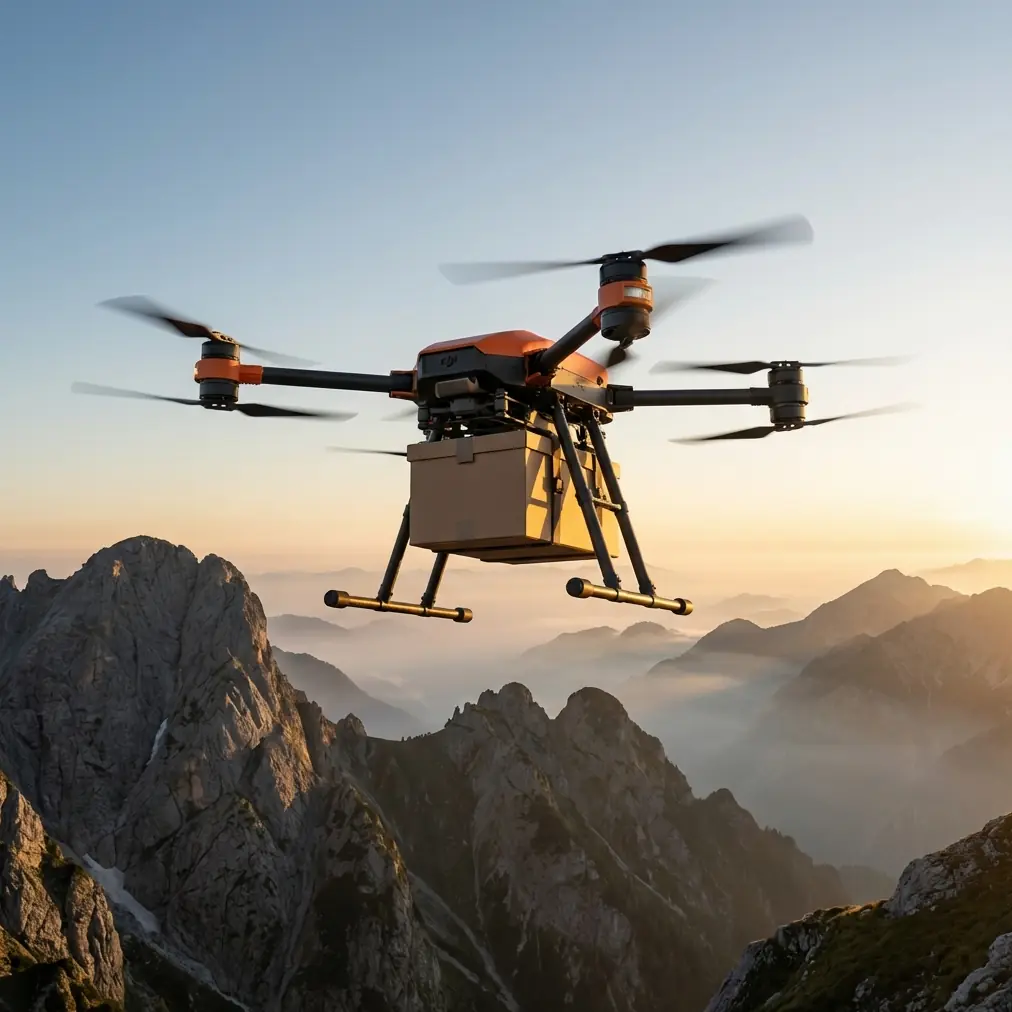
FlyCart 30 for Coastal Power Line Delivery: Practical Flight Strategy From the Field
META: Expert FlyCart 30 guidance for coastal power line delivery, including payload planning, winch use, BVLOS workflow, dual-battery strategy, and optimal flight altitude insights.
Coastal power line work punishes lazy planning.
Salt air attacks exposed hardware. Wind shifts faster than many inland crews expect. Access roads disappear into mud, sand, vegetation, or rock. And when a line crew is waiting on insulators, spacers, tools, or repair components, the real bottleneck is rarely the aircraft alone. It is the handoff between logistics, flight safety, and site conditions.
That is exactly where the FlyCart 30 becomes useful.
I’m writing this from the perspective of a logistics lead looking at one question: how do you move equipment to power line teams in coastal environments with fewer delays and less exposure to ground risk? Not in theory. In actual operations, where route selection, flight altitude, payload configuration, and recovery method all matter more than brochure-level specs.
The FlyCart 30 is not just “a drone that carries cargo.” Its value comes from how its transport design fits awkward, infrastructure-heavy jobs. For coastal power line delivery, two features stand out immediately: the dual-battery architecture and the winch system. Those are not side notes. They reshape how crews can plan missions around reliability and placement accuracy.
The real problem in coastal power line logistics
Most coastal utility delivery jobs break down in one of three places.
First, ground access becomes the hidden cost center. A short distance on a map can mean a long and messy vehicle approach, especially near dunes, tidal flats, marsh edges, embankments, or storm-damaged corridors. Sending a truck or small crew through unstable terrain can take far longer than the actual installation task.
Second, payload movement near energized or partially restricted infrastructure is rarely simple. The challenge is not only lifting weight. It is placing it without forcing field workers into awkward retrieval positions or requiring the aircraft to get unnecessarily close to structures.
Third, coastal weather narrows the margin for sloppy decisions. Wind direction may be stable at launch and completely different near the line corridor. Sea spray, humidity, and low-level gusting make low-altitude cargo delivery less forgiving than many teams assume.
That is why the FlyCart 30 should be evaluated as a workflow tool, not just a transport platform.
Why the FlyCart 30 fits this scenario
For power line support, payload ratio matters because every kilogram you fly has a direct effect on route length, reserve planning, and the type of delivery method you can use safely. The FlyCart 30 gives operators a practical middle ground: enough lift to move meaningful field supplies, but in a form factor that is still deployable for targeted logistics missions rather than large-site aviation programs.
The dual-battery design has real operational significance here. On coastal jobs, you often launch from the nearest safe staging area rather than the perfect one. That creates longer outbound legs, more hover sensitivity, and tighter return calculations. Dual-battery redundancy and energy management improve mission resilience when crews are forced to work from offset launch points. It also supports faster turnaround planning because battery handling becomes part of a repeatable system rather than an improvised workaround.
Then there is the winch system. For power line delivery, this may be the most practical feature on the aircraft. It reduces the need to land on poor surfaces and allows controlled placement when the drop point is uneven, narrow, obstructed, or unsafe for rotor wash exposure. On coastal corridors, where sand, grass, standing water, and debris all complicate touchdown options, a winch-based handoff often gives the cleaner solution.
If you are delivering hardware to a line crew positioned near poles, towers, or maintenance access points, a winch lets the aircraft remain in a more controlled hover while the payload is lowered into a workable pickup zone. That decreases the pressure to thread the aircraft into terrain or vegetation just to complete the final meter of the mission.
Optimal flight altitude for coastal power line delivery
This is where many otherwise capable teams make avoidable mistakes.
For this scenario, I generally favor a cruise altitude that is high enough to smooth out ground-effect turbulence and terrain obstacles, but not so high that the aircraft spends unnecessary energy fighting stronger coastal wind layers. In practical terms, that often means operating in a moderate corridor rather than hugging the ground or climbing excessively.
For many coastal power line delivery runs, an initial planning range around 40 to 60 meters above ground level is a strong starting point, then adjusted based on conductor height, local obstacles, and wind profile. That number is not a universal setting. It is a decision framework.
Why that band works well in many cases:
- Below that range, the aircraft can encounter sharper mechanical turbulence from vegetation, embankments, buildings, and irregular coastal terrain.
- Very low flight can also create more interaction risk with work zones, vehicles, birds, and last-minute obstacles.
- Pushing much higher without reason may expose the aircraft to stronger crosswinds that reduce route efficiency and increase payload swing.
The best altitude is the one that protects aircraft stability while preserving control over payload behavior. That matters even more when using the winch. If the hover point is too low in unstable air, the descent line can drift and complicate retrieval. If the aircraft is too high in a strong coastal crosswind, the payload can pendulum enough to delay the handoff. The sweet spot is usually where the aircraft is aerodynamically calm and the lowering operation remains predictable.
In other words: choose altitude for stability first, not just obstacle clearance.
Route optimization matters more than raw range
In coastal utility operations, straight-line thinking can be expensive.
A route that looks shortest on the map may pass through the worst wind channel, cross restricted access areas, or force the aircraft over zones where emergency descent options are poor. Smart route optimization with the FlyCart 30 should account for more than distance:
- Wind exposure on the outbound and return legs
- Safe loiter points for hover checks
- Emergency landing or recovery zones
- Terrain-induced turbulence
- Crew position relative to final delivery angle
- Communication continuity for command and control
This becomes even more relevant for BVLOS planning. If the mission profile extends beyond direct visual range, the operation must be built around predictable route behavior, not reactive piloting. Coastal infrastructure corridors can actually support disciplined BVLOS workflows when mapped correctly, because the line path itself often provides a logical service route. But that only works if operators have already validated signal integrity, obstacle environment, and contingency points.
The FlyCart 30’s usefulness grows when those routes are standardized. Repeating the same corridor with well-documented launch points, altitude bands, weather thresholds, and drop procedures can turn a difficult site into a manageable logistics lane.
The winch system changes last-meter delivery
Most drone delivery discussions spend too much time on airborne transport and not enough on the handoff.
For line crews, the handoff is the mission.
If a payload arrives but forces workers to walk into a muddy drainage zone, scramble down an unstable shoulder, or retrieve gear from rotor wash, the aircraft solved only half the problem. The FlyCart 30 winch system is significant because it allows the aircraft to stop short of bad landing surfaces and lower the load directly into a selected area.
That makes a difference with items such as repair hardware, lightweight tools, or bundled components needed to keep a maintenance sequence moving. It also helps crews maintain distance from the aircraft during descent and pickup, which is especially valuable in gusty coastal conditions.
There is a secondary benefit too: less pressure to land means less exposure of the aircraft to abrasive surfaces and salt-heavy spray kicked up near the ground. Coastal operations wear equipment down. Every avoided touchdown on suspect terrain is not just a convenience measure. It can reduce maintenance burden over time.
Safety systems are not background features here
The emergency parachute deserves serious attention in this environment.
Power line corridors near coastal communities, roadways, and utility easements leave little room for casual risk assumptions. An emergency parachute is operationally significant because it adds a final-layer mitigation measure when route planners must traverse areas with constrained recovery options. It does not replace good planning. It strengthens the safety architecture behind it.
That matters even more when carrying cargo.
A cargo drone over a coastal utility corridor is managing aircraft risk, payload risk, and public-space risk at the same time. The presence of an emergency parachute should shape how operators think about acceptable route corridors, contingency planning, and incident response readiness.
The point is not to rely on it. The point is to include it in a disciplined risk model.
Building a workable coastal mission profile
If I were planning FlyCart 30 support for coastal power line delivery, I would structure the mission around five practical decisions.
First, classify the payload by mission priority, not just weight. A lighter, time-critical component often deserves a dedicated flight because it can keep a line crew productive. Payload ratio should be evaluated against mission urgency and return reserve, not just maximum lift potential.
Second, predefine altitude bands by corridor segment. Open shoreline edges, vegetated approaches, and line-side delivery zones may each need different target altitudes. Start with that 40 to 60 meter planning band, then refine by observed wind and structure clearance.
Third, use the winch whenever the landing surface is uncertain or the receiving zone is tight. It is usually the cleaner option for coastal line work.
Fourth, keep BVLOS ambitions tied to repeatability. The best BVLOS route is not the longest one. It is the one that can be flown consistently with stable communications, clear contingencies, and documented emergency actions.
Fifth, rotate through a battery management routine that respects coastal realities. Dual-battery operations should include strict inspection discipline for connectors, seal integrity, thermal behavior, and turnaround timing. Salt-rich air is unforgiving. The process matters as much as the hardware.
If your team is building this kind of workflow and wants to compare route setups or payload handling methods, you can message our operations desk here.
Where crews get the biggest advantage
The biggest advantage is not headline capability. It is continuity.
A FlyCart 30 can help prevent small logistics delays from becoming operational standstills. When a coastal crew is waiting on a replacement component or installation item, every hour matters. Drone delivery becomes valuable when it compresses the delay between “we need it” and “it is in the technician’s hands.”
That is particularly relevant after storms, during fault repair windows, and at sites where vehicle access remains technically possible but operationally slow. In those conditions, the aircraft is not replacing all transport. It is removing the most painful segment of the job: the last stretch where terrain, time, and safety costs stack up.
For coastal power line support, that is the FlyCart 30 story that actually matters.
Not abstract innovation. Not vague efficiency claims. A cargo platform with a useful payload ratio, dual-battery architecture, winch-enabled placement, BVLOS potential, and emergency parachute support can slot into utility logistics in a way that directly improves field response.
Used well, it lets crews move what matters, where it matters, without turning every delivery into a ground access problem.
That is the standard I would hold it to. And in the coastal power line scenario, it is a standard the FlyCart 30 is well positioned to meet.
Ready for your own FlyCart 30? Contact our team for expert consultation.