
FlyCart 30 for Urban Power-Line Delivery
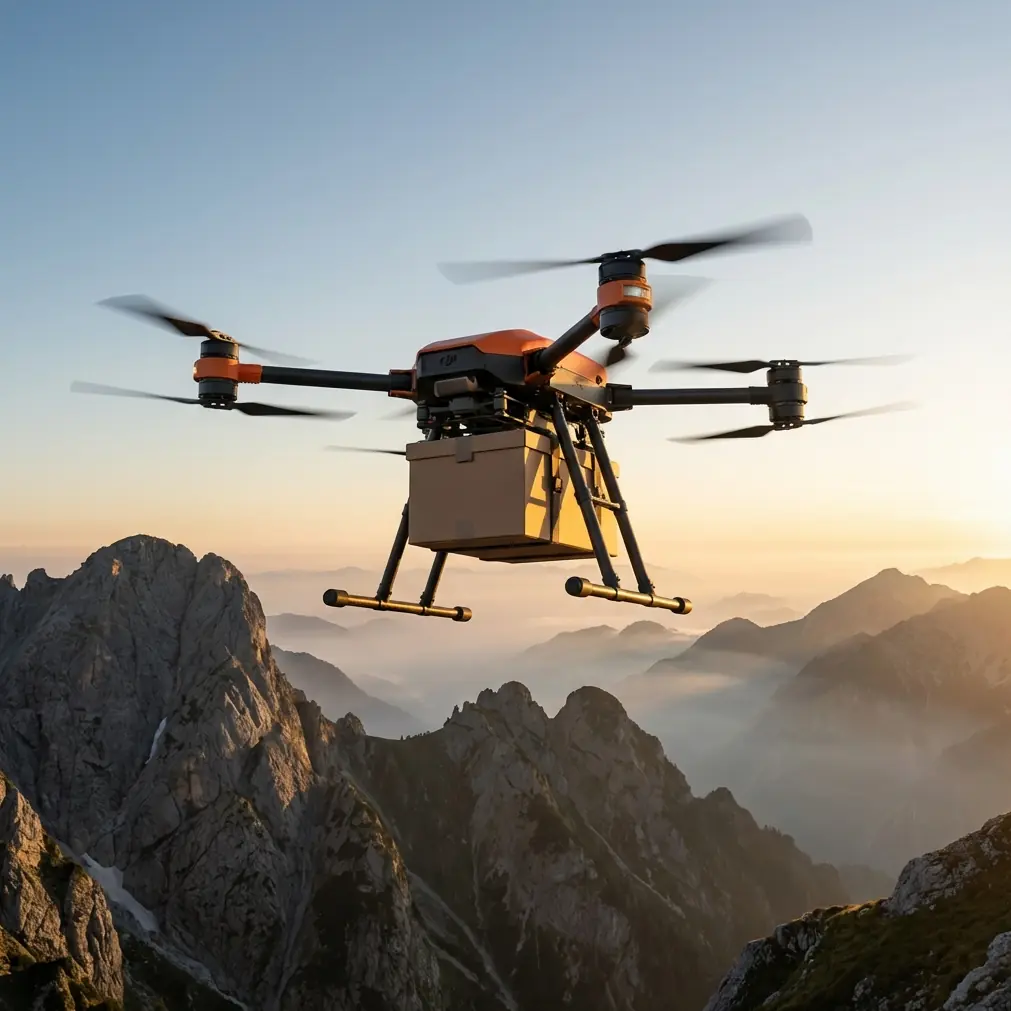
FlyCart 30 for Urban Power-Line Delivery: What Airworthiness Milestones Really Mean for Real-World Operations
META: A technical review of FlyCart 30 for urban power-line delivery, with insights on payload handling, winch workflow, BVLOS planning, and why China’s latest type-certification milestone matters.
When you move power-line materials through a city, the bottleneck is rarely flight alone. It is the total chain: staging, route access, roof clearances, handoff precision, downtime between sorties, and the confidence to operate around dense infrastructure without improvising every mission. That is the lens I use when looking at the DJI FlyCart 30.
This is not just a payload drone story. It is a systems story.
The latest airworthiness news out of China gives that discussion more weight. On January 4, Yufeng Future announced that its subsidiary, Zhongshan Fukun Aviation Technology, had secured a type certificate for the E40H civil unmanned aircraft system. The certificate, issued by the Civil Aviation Administration of China’s South Central Regional Administration, carries the number TC0105A-ZN. Operationally, that matters because the E40H is described as the world’s first medium-sized compound-wing, hybrid-powered unmanned aircraft to satisfy the regulator’s airworthiness requirements.
At first glance, that might seem unrelated to a multicopter like the FlyCart 30. It is not. It signals something broader: regulators are moving from tolerating heavy-duty drone logistics as an experiment to assessing these aircraft as certifiable working machines. The report also says 19 civil unmanned aircraft models from 10 Chinese companies have now obtained type certificates, with most earlier approvals concentrated in multirotor agricultural platforms. That shift is worth watching if your work involves urban utility delivery, because power-line logistics sit right at the intersection of payload lifting, route discipline, and regulator trust.
For operators considering the FlyCart 30 in city utility work, this backdrop changes the conversation. The question is no longer whether drones can carry line materials. They can. The more serious question is whether your operating model is built to match where the industry is heading.
Why the FlyCart 30 fits urban power-line delivery
Urban power-line jobs are awkward by nature. Crews often need to move coils, pilot ropes, lightweight fittings, tools, or hardware into spots where truck access is slow, where cranes are excessive, or where ground movement causes more disruption than the lift itself. In those settings, the FlyCart 30’s value is not just raw lifting. It is payload-to-friction reduction.
A useful way to think about payload ratio is this: how much useful material can each sortie deliver compared with the time and site complexity required to move it conventionally? In cities, that ratio matters more than top-end specs on paper. A drone that trims road closures, reduces rooftop hauling, and avoids sending crews through tight access corridors can produce operational gains even before you count labor savings.
The FlyCart 30 is especially relevant here because its design philosophy is practical. It is built for transport tasks, not adapted to them after the fact. That shows up in sling-load workflow, controlled delivery, and the ability to work with a winch system rather than relying only on hard landings or manual unload points.
For power-line delivery in dense districts, the winch is often the deciding feature.
The winch system is not a convenience feature
On utility jobs, a good winch changes what counts as a viable drop zone.
That matters in urban settings because ideal landing areas are rare. You are dealing with rooftops cluttered by HVAC units, narrow service alleys, tower setbacks, fenced compounds, and energized infrastructure nearby. In these situations, a suspended delivery method gives the pilot room to hold the aircraft in a safer hover position while lowering the payload into the exact handoff area.
That does three things.
First, it reduces rotor-downwash interaction with people and equipment at the drop point. Second, it minimizes the need to bring the aircraft close to obstructions. Third, it allows the receiving crew to work in a controlled footprint rather than chasing a marginal landing zone.
For line-stringing support, those differences are operational, not cosmetic. If your payload is pilot rope or a compact hardware kit, being able to lower it to a crew positioned on a roof edge, service platform, or restricted access point can remove a surprising amount of site risk.
This is also where third-party accessories can genuinely extend the platform. One example I have seen improve urban utility workflow is a high-visibility anti-sway hook and line guide assembly added to the cargo interface. That kind of accessory does not change the aircraft’s core performance, but it can make suspended loads track more predictably in gusty corridors between buildings. In a power-line context, better load stability means fewer aborted drops and less time spent re-positioning over infrastructure.
Route optimization matters more in cities than maximum range
A lot of operators still evaluate delivery drones by asking how far they can go. For urban power-line work, that is usually the wrong first question.
The better question is: how repeatable is the route?
A short route flown twenty times a day through a controlled corridor can be far more valuable than a long route that looks impressive on a map. Utility delivery is often repetitive by design. You are shuttling specific items between a material staging area and a constrained work point. That makes route optimization central to safe, efficient use of the FlyCart 30.
In practice, route optimization for urban delivery should account for:
- building-induced wind effects
- rooftop elevation changes
- temporary construction cranes
- GNSS variability near dense structures
- visual observers or support crew locations
- battery reserve margins for return and hover contingencies
This is where the broader certification trend becomes relevant again. The CAAC milestone for the E40H shows regulators are formalizing how serious cargo UAVs are assessed. For multirotor operators, that means ad hoc route planning will age badly. Standardized routes, obstacle surveys, and disciplined mission envelopes will increasingly separate professional utility teams from hobby-era habits.
If you are planning FlyCart 30 deployments for power-line delivery, build your route library now. Do not wait until compliance pressure forces it.
BVLOS is the real unlock, but only if the workflow is mature
For urban utility logistics, beyond visual line of sight operations can change the economics. A FlyCart 30 running short, repetitive logistics legs across a service district becomes much more useful when the crew is not constrained to direct visual tracking on every segment.
But BVLOS only works when the rest of the operation is boring in the best possible sense: known route, predictable payload profile, stable weather windows, documented emergency procedures, and clean communication between dispatch, pilot, and receiving crew.
This is another reason the E40H type-certification news deserves attention even if your aircraft of choice is the FlyCart 30. An approved medium-sized compound-wing hybrid system reaching airworthiness recognition tells the market that heavier, more complex unmanned logistics operations are being evaluated through a certification lens, not treated as one-off demonstrations. That affects expectations around documentation, maintenance discipline, redundancy planning, and how operators justify route safety.
For city power-line delivery, the FlyCart 30 can be a strong platform in that environment, but the aircraft itself is not enough. You need a BVLOS-ready operating concept.
That means:
- validated alternate landing or recovery areas
- communications continuity across the route
- controlled pickup and delivery protocols
- pre-defined no-fly triggers around utility faults or emergency scenes
- a clear battery reserve policy for urban obstacle environments
The aircraft may carry the load, but the paperwork and process carry the operation.
Why dual-battery architecture matters on utility missions
Power-line delivery flights often involve frequent launch cycles, payload variation, and short hover-intensive profiles. That makes energy management less straightforward than simple point-to-point transport.
A dual-battery setup matters because it adds resilience in exactly the phases where utility work becomes messy: takeoff under load, hover while aligning with a drop point, and return legs when wind shifts around buildings. Those are not edge cases in the city. They are normal conditions.
In practical terms, dual-battery architecture supports operational continuity and risk control. It gives maintenance teams a clearer battery rotation rhythm, and it helps flight crews avoid pushing single-pack systems through high-stress logistics cycles. For organizations handling regular line-material movement, this translates into more consistent sortie planning and fewer last-minute compromises because one pack is running hotter, aging faster, or recovering slower than expected.
That may sound mundane. It is not. Utility aviation succeeds on boring reliability.
Emergency parachute systems change the risk discussion
Any serious urban logistics review of the FlyCart 30 has to address what happens when the plan fails.
In dense service environments, emergency protection is not a talking point for brochures. It is part of the acceptability equation. If your route crosses roads, rooftops, yards, or utility compounds, stakeholders want to know what risk controls exist beyond pilot skill.
An emergency parachute system matters because it gives operators another layer in their mitigation stack. Not a substitute for route discipline, not a substitute for maintenance, but a meaningful fallback. For utility teams trying to gain internal approval from safety managers or asset owners, that can make the difference between a limited pilot project and a scalable operating program.
It also aligns with the larger certification direction suggested by the Chinese market. As more UAV categories move through formal airworthiness review, expectation shifts from “Can it fly?” to “How is failure managed?” Operators who answer that well will be in a stronger position as urban delivery oversight becomes more structured.
Operational significance of the CAAC certification milestone
Let’s make the connection explicit.
The E40H’s type certification is significant for two reasons beyond the aircraft itself.
First, it demonstrates that regulators are now evaluating medium-sized, hybrid-powered, compound-wing logistics-capable systems against formal airworthiness requirements. That raises the standard for what commercial cargo drone programs should look like, even when using different aircraft architectures.
Second, the fact that only 19 civil unmanned aircraft models from 10 companies have reached that milestone underlines how selective this environment still is. Approval is not routine. It reflects design maturity, documentation strength, and an ability to satisfy a regulator that the aircraft can operate safely in intended civil roles.
For FlyCart 30 users in urban power-line delivery, the takeaway is practical: treat your platform as part of an emerging certified logistics ecosystem. Build procedures that could survive scrutiny. Log maintenance cleanly. Document payload envelopes. Record route hazards. Standardize your winch workflows. If the market is moving toward airworthiness-based trust, operational sloppiness will become expensive.
My view as a logistics lead
If I were setting up a FlyCart 30 program for urban power-line work today, I would focus less on headline capability and more on three measurable outcomes:
- Drop accuracy under real urban wind conditions
- Turnaround time between repeat sorties
- Crew exposure reduced at hard-to-access delivery points
Those are the metrics that determine whether the aircraft actually improves utility logistics.
I would also budget attention for accessories and integration, not just the aircraft. A well-chosen third-party cargo management add-on can improve suspended-load behavior enough to change mission reliability. That is especially true in built-up areas, where stability and visibility at the hook point matter more than raw transport speed.
And I would keep one eye on regulation at all times. The E40H certification event is not just another news item. It is evidence that civil drone logistics in China is moving deeper into formal acceptance. Anyone operating the FlyCart 30 in serious infrastructure work should read that signal clearly.
If you are comparing deployment options or want to discuss an urban utility setup in more detail, you can reach the team through this direct line: message us here.
The FlyCart 30 is a capable tool for moving power-line materials through difficult urban environments. But capability alone is not the story. The real story is whether the aircraft, route design, payload method, safety systems, and operating discipline come together into something repeatable. That is what utility organizations can scale. And that is where the industry is clearly heading.
Ready for your own FlyCart 30? Contact our team for expert consultation.