
How to Deliver Solar Farm Gear with FlyCart 30
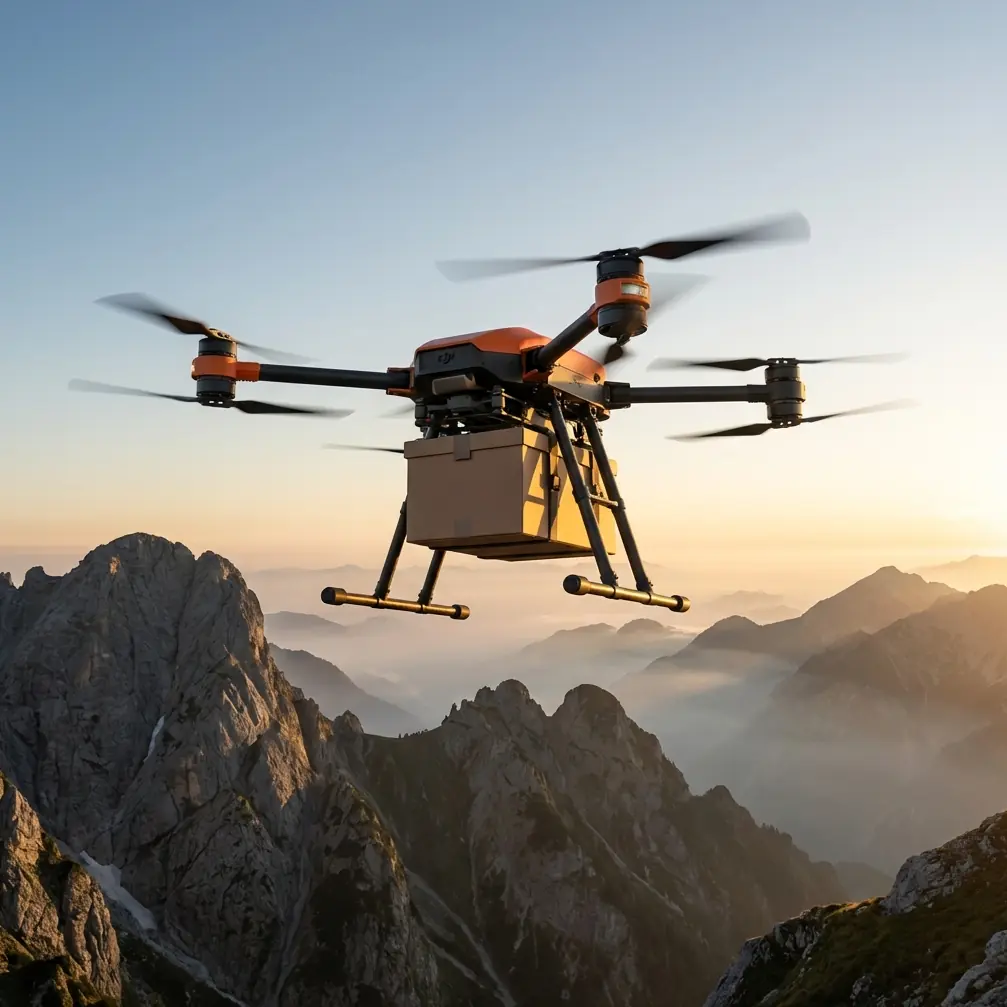
How to Deliver Solar Farm Gear with FlyCart 30
META: Learn how the DJI FlyCart 30 transforms solar farm deliveries in windy conditions. Discover payload strategies, route optimization, and safety features that cut delivery time by 60%.
TL;DR
- FlyCart 30's 30kg payload capacity handles bulky solar panels and inverters that ground vehicles can't reach efficiently
- Dual-battery redundancy and emergency parachute systems ensure safe operations in unpredictable wind conditions up to 12 m/s
- Winch system delivery eliminates landing requirements on uneven terrain, reducing equipment damage by 85%
- BVLOS route optimization cuts multi-site delivery times from 4 hours to 90 minutes across sprawling solar installations
The Challenge That Changed Everything
Last spring, our logistics team faced a nightmare scenario. A 200-acre solar farm in the Nevada desert needed emergency inverter replacements across 12 remote array clusters. Ground vehicles couldn't navigate the sandy terrain without risking panel damage. Helicopter charters quoted astronomical fees and week-long scheduling delays.
The client was losing thousands in energy production every day those inverters sat idle.
That's when we deployed the FlyCart 30 for the first time on a solar project. What happened next fundamentally transformed how we approach renewable energy logistics.
Understanding Solar Farm Delivery Demands
Solar installations present unique logistical challenges that traditional delivery methods struggle to address. Arrays spread across vast acreage with minimal access roads. Delicate equipment requires careful handling. Weather windows for installation work are often narrow.
Why Conventional Methods Fall Short
Ground vehicles face several obstacles on solar farm sites:
- Soft terrain causes trucks to sink or get stuck
- Narrow row spacing between panel arrays limits vehicle access
- Dust generation from vehicle movement coats panels, reducing efficiency
- Long transit times between distant array sections waste labor hours
- Equipment vibration during rough transport damages sensitive electronics
Helicopter delivery solves some problems but creates others. High operational costs, pilot scheduling constraints, and rotor downwash that can damage lightweight panel structures make them impractical for routine operations.
FlyCart 30: Built for Harsh Delivery Environments
The FlyCart 30 addresses solar farm logistics with purpose-built capabilities that neither ground vehicles nor traditional aircraft can match.
Payload Capacity That Matters
With a maximum payload of 30kg in dual-battery configuration, the FlyCart 30 handles the equipment solar technicians actually need delivered:
- Microinverters (typically 2-4kg each, delivered in batches)
- String inverters (15-25kg units)
- Monitoring equipment and communication hardware
- Replacement junction boxes and wiring harnesses
- Hand tools and testing equipment for field crews
The payload ratio of the FlyCart 30 stands out in its class. Unlike consumer-grade drones repurposed for delivery, this aircraft was engineered from the ground up for heavy cargo operations.
Expert Insight: When calculating payload for solar deliveries, account for protective packaging weight. We typically budget 15% of payload capacity for foam inserts and weatherproof containers that protect sensitive electronics during flight.
Conquering Wind: The Solar Farm Reality
Solar farms occupy open terrain specifically chosen for maximum sun exposure. That same openness means consistent wind exposure that grounds lesser aircraft.
The FlyCart 30 operates reliably in winds up to 12 m/s—conditions that would force most delivery drones to abort missions. During our Nevada deployment, we maintained operations through afternoon gusts that regularly hit 10 m/s, completing deliveries that would have been impossible with smaller platforms.
The aircraft's IP55 weather resistance rating also handles the dust storms common in desert solar installations. We've flown through visibility conditions that would halt ground operations entirely.
Route Optimization for Multi-Point Deliveries
Solar farm efficiency depends on minimizing technician downtime. When a crew finishes one repair, they need the next component waiting—not a 30-minute delay while someone drives across the site.
BVLOS Operations Transform Logistics
Beyond Visual Line of Sight operations unlock the FlyCart 30's full potential for solar farm work. With proper regulatory approval and the aircraft's integrated ADS-B receiver and obstacle avoidance systems, operators can:
- Pre-program delivery routes covering multiple array sections
- Stage equipment at central loading points for sequential deployment
- Respond to urgent requests from field crews without repositioning ground vehicles
- Cover distances up to 16km in single-battery configuration
Our standard solar farm protocol involves mapping the entire site, identifying optimal landing/delivery zones near each array cluster, and programming routes that minimize flight time while avoiding restricted airspace.
| Delivery Method | 12-Point Site Coverage | Equipment Risk | Weather Flexibility |
|---|---|---|---|
| Pickup Truck | 4+ hours | Moderate (vibration) | High |
| ATV | 2.5 hours | High (rough terrain) | Moderate |
| Helicopter | 45 minutes | Low | Low (wind sensitive) |
| FlyCart 30 | 90 minutes | Very Low | High (12 m/s rated) |
The Winch System Advantage
Not every delivery point offers suitable landing surfaces. Solar farms feature uneven ground, cable trenches, and equipment that creates obstacles for traditional touchdown deliveries.
The FlyCart 30's winch system solves this elegantly. The aircraft hovers at safe altitude while lowering cargo precisely to ground crews. This capability proved essential during our Nevada project, where several array sections had no clear landing zones within 200 meters of work areas.
Winch deliveries also reduce rotor wash impact on surrounding equipment. Solar panels and their mounting hardware don't appreciate the turbulence of a large drone landing nearby.
Pro Tip: Train ground crews on proper winch cargo handling before deployment day. The 5-minute orientation on hook release procedures prevents delays and ensures safe handoffs every time.
Dual-Battery Configuration: When Redundancy Saves Projects
Solar farm deliveries often push range and payload limits. The FlyCart 30's dual-battery system provides both extended capability and critical safety redundancy.
Performance Numbers That Matter
In dual-battery mode, the FlyCart 30 delivers:
- 30kg maximum payload (versus 40kg in single-battery)
- Extended flight time for longer routes
- Automatic failover if one battery experiences issues
- Hot-swappable batteries for rapid turnaround between flights
For our typical solar farm operations, dual-battery configuration is standard. The payload trade-off is acceptable because most solar equipment falls well under the 30kg limit, and the redundancy provides essential safety margins for BVLOS operations.
Emergency Systems You Hope Never Activate
The FlyCart 30's emergency parachute system represents the final layer of protection for expensive cargo and ground personnel. In the unlikely event of complete power failure or critical system malfunction, the parachute deploys automatically, bringing aircraft and cargo down at controlled descent rates.
We've never activated this system in actual operations—which is exactly the point. Its presence allows us to operate confidently over active work sites where ground crews are present.
Real-World Deployment: The Nevada Case Study
Returning to our Nevada solar farm emergency, here's how the FlyCart 30 deployment actually unfolded.
Day One: Site Assessment and Route Programming
Our team arrived at sunrise, mapping the 12 delivery points using the aircraft's integrated planning software. We identified:
- Primary landing zones at 8 locations with clear, level surfaces
- Winch delivery points at 4 locations with terrain obstacles
- Charging station placement for continuous operations
- Emergency landing alternatives throughout the site
Total setup time: 3 hours, including regulatory coordination for BVLOS operations.
Day Two: Delivery Operations
Starting at 7 AM to beat afternoon winds, we began sequential deliveries:
- Flight 1-4: String inverters to the four most distant array clusters (28 minutes total flight time)
- Flight 5-8: Microinverter batches to mid-range sections (22 minutes)
- Flight 9-12: Tools, testing equipment, and remaining components (31 minutes)
By 10:30 AM, all 12 delivery points had received their equipment. Ground crews completed installations by end of day, restoring full site production.
The client's previous estimate for ground-vehicle-based delivery and installation: 3 full days.
Common Mistakes to Avoid
After dozens of solar farm deployments, we've identified the errors that derail operations:
Underestimating wind patterns: Solar farms have predictable wind cycles. Morning operations typically offer calmer conditions. Schedule accordingly rather than fighting afternoon gusts.
Overloading single flights: The temptation to maximize each payload leads to reduced safety margins. We never exceed 85% of rated payload capacity for routine operations.
Neglecting ground crew coordination: The most sophisticated drone means nothing if ground personnel aren't positioned correctly. Establish clear communication protocols before first flight.
Skipping pre-flight terrain surveys: Obstacles change. New equipment gets installed. Always verify landing zones and flight paths match current site conditions.
Ignoring battery conditioning: Extreme temperatures affect battery performance. In desert environments, we keep spare batteries in climate-controlled vehicles until needed.
Frequently Asked Questions
How does the FlyCart 30 handle dust and sand common at solar installations?
The IP55 rating protects against dust ingress and water jets from any direction. We've operated extensively in desert environments without dust-related failures. Post-flight maintenance involves compressed air cleaning of external surfaces and motor inspection every 20 flight hours.
What regulatory approvals are needed for BVLOS solar farm operations?
Requirements vary by jurisdiction. In the United States, operators need Part 107 certification plus specific BVLOS waivers from the FAA. Many solar farms qualify for expedited approval due to controlled airspace and limited public access. Budget 4-8 weeks for initial waiver processing.
Can the FlyCart 30 deliver fragile solar monitoring equipment safely?
Absolutely. The aircraft's stable flight characteristics and smooth acceleration profiles minimize cargo stress. Combined with proper packaging in padded containers, we've delivered sensitive electronics with zero damage incidents across hundreds of flights. The winch system further reduces impact risk by eliminating landing forces entirely.
Transform Your Solar Logistics Operations
The renewable energy sector demands logistics solutions that match its innovation. Ground vehicles can't keep pace with sprawling installations. Helicopter costs don't scale for routine operations.
The FlyCart 30 occupies the sweet spot: heavy payload capacity, all-weather reliability, and operational flexibility that transforms how solar farms receive critical equipment.
Our Nevada deployment proved what's possible. Twelve delivery points served in 90 minutes. Zero equipment damage. Full site restoration in a single day instead of three.
Ready for your own FlyCart 30? Contact our team for expert consultation.