
FlyCart 30 Case Study: Moving Critical Solar Farm Gear When
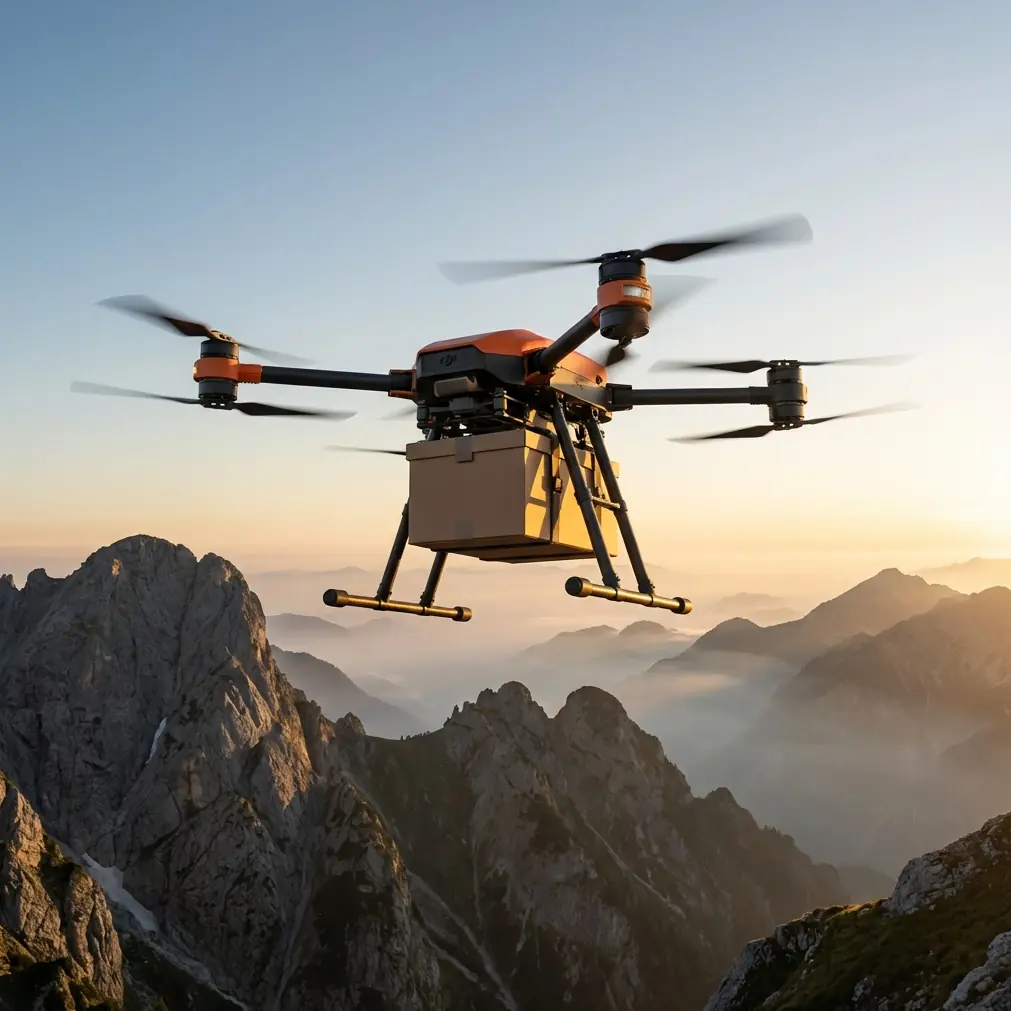
FlyCart 30 Case Study: Moving Critical Solar Farm Gear When the Weather Turns
META: A field-tested FlyCart 30 case study for remote solar farm logistics, covering payload planning, winch use, route optimization, BVLOS considerations, and mid-flight weather response.
Remote solar sites expose every weak point in a delivery plan. Roads wash out. Pickup trucks burn hours crossing rough access tracks. Crews wait on one missing tool, one connector, one replacement component that costs little on paper and a full afternoon in the field.
That is exactly where the DJI FlyCart 30 starts to make operational sense.
I have looked at heavy-lift drones through the lens that matters most to logistics teams: not as a novelty, but as a tool that either reduces downtime or it does not. For remote solar farm support, the FlyCart 30 stands out because its design is unusually practical. It is built around two things field teams care about every day: moving a meaningful load and completing the job without turning the delivery itself into a risk event.
This case study walks through how I would structure a FlyCart 30 mission profile for a remote solar farm, based on the aircraft’s real capabilities and the realities of utility-scale operations. The scenario is straightforward: a field crew needs replacement electrical hardware and specialized tools delivered to an inverter block on a difficult section of the site after weather begins to shift mid-flight. The drone is not saving the day in a cinematic sense. It is doing something better. It is preserving work continuity when conditions become less forgiving.
The operating problem at solar farms is usually time, not distance
Large solar installations look accessible on a map. In practice, they often are not.
A site may have long internal roads, drainage cuts, muddy service lanes, fenced sections, and terrain that becomes a problem the moment weather changes. If a technician is parked 20 minutes from the main laydown area and needs a replacement combiner component, torque tool, or insulated equipment, the delay compounds quickly. One crew waits. Another gets pulled off task. A vehicle gets redirected. A simple parts movement can absorb an hour.
That is the real opening for the FlyCart 30. It is not just about carrying gear. It is about compressing internal logistics.
The aircraft’s headline numbers matter because they translate directly into fewer split loads and fewer partial missions. The FlyCart 30 supports a maximum payload of up to 30 kg with a dual-battery setup and up to 40 kg in a single-battery configuration. For solar farm work, that payload band is significant. It means operators can move a serious package of tools, cable assemblies, connectors, fasteners, test gear, or maintenance kits in one trip rather than treating drone delivery as a lightweight courier exercise.
That changes payload ratio calculations immediately. If the aircraft can move a complete task package instead of one isolated item, the crew on the receiving end gets back to work faster. That is the metric that matters.
Why the winch system is more valuable than most teams first assume
For solar sites, landing space is often the hidden constraint.
Even when a drone can reach the destination easily, the receiving area may be uneven, dusty, obstructed by trackers, or too close to energized equipment and active personnel. This is where the FlyCart 30’s winch system becomes more than a convenience. It becomes the safer delivery method.
A suspended drop lets the aircraft hold position above a constrained area while lowering the load to a controlled point. Operationally, that means less rotor wash around loose materials, less need to clear a broad landing zone, and less pressure on the ground team to receive the payload in a perfect open patch. On a solar farm, that matters because the geometry of the site is repetitive but not truly simple. Rows, wiring infrastructure, fencing, and maintenance activities create countless small constraints.
In this scenario, the receiving crew is working near a string inverter pad where the surrounding ground is wet after a passing weather cell. A conventional landing would mean searching for a stable surface away from pooled water and equipment. Using the winch, the drone can remain above the work area and lower the replacement kit precisely where the crew has already staged a safe handoff point.
That cuts ground disturbance and keeps the aircraft out of a messy landing cycle.
Mid-flight weather changed. The mission did not collapse with it
This is where remote delivery stops being theoretical.
Let’s say the mission launches under acceptable conditions. The route has been planned along a corridor that avoids active crew clusters and known obstructions. A delivery package containing a replacement DC isolator, hand tools, and protective gear has been weight-checked and secured for stable transport. The aircraft departs cleanly.
Then the weather shifts.
Anyone who has spent time on utility-scale solar projects knows how quickly this happens. Wind starts moving across the open rows with more force than forecast. Visibility changes subtly first, then enough to matter. Ground conditions worsen at the destination before the flight is complete.
The FlyCart 30’s usefulness in this kind of event comes from layered design choices, not one flashy feature.
First, route optimization matters before the aircraft ever takes off. On a large site, the best route is rarely the straight line. You want a path that preserves margin around structures, minimizes exposure to localized gust corridors, and gives the pilot clean decision points for return, hold, or reroute. Good route planning is not software theater. It is how you keep small weather shifts from turning into rushed judgment calls.
Second, the dual-battery architecture is operationally important because it gives teams redundancy and endurance planning flexibility. In practical terms, a dual-battery setup supports the FlyCart 30’s 30 kg payload class while reducing single-point energy concerns. On remote industrial sites, that matters because every mission should be built around reserve logic, not optimistic math. When conditions begin to deteriorate, battery margin becomes decision-making room.
Third, the aircraft’s emergency parachute should not be treated as a marketing bullet. It is a risk-control layer. No professional operator plans to use it, but on a job site with workers, vehicles, equipment, and uneven terrain below, the existence of an emergency parachute changes the safety conversation. It is part of a broader mitigation framework for operating heavier payloads over complex environments.
In the weather-turn scenario, those layers work together. The pilot sees the wind trend changing, verifies delivery feasibility against reserve thresholds, adjusts approach behavior, and opts for a winch drop rather than any landing attempt. The cargo gets delivered. The aircraft exits on a more conservative return line. The mission finishes because the system was planned with changing conditions in mind.
That is very different from “the drone can fly in bad weather.” Serious teams should never reduce the conversation to that. The better question is whether the aircraft gives you enough operational flexibility to make disciplined choices when the weather becomes less cooperative. For remote solar work, the FlyCart 30 is compelling because the answer is often yes.
BVLOS is not just a regulatory topic here
A lot of people discuss BVLOS as if it exists only in policy decks. On remote solar projects, BVLOS is tied directly to site productivity.
If the receiving point is far enough across the property, line-of-sight constraints can force awkward launch positions, extra staffing, or vehicle repositioning that erodes the drone’s time advantage. That is why any serious FlyCart 30 deployment plan for large energy sites should consider how BVLOS operations fit into the long-term operating model, assuming local approvals and procedures are in place.
The significance is simple. Remote sites are large by design. If each drone mission requires crews to constantly chase line-of-sight positions around the property, the logistics benefit narrows. If BVLOS frameworks are available, the drone becomes much closer to what logistics managers actually need: an internal aerial transport layer rather than a short-range demonstration asset.
For solar developers, EPC firms, and O&M teams, this is where the aircraft’s value scales. A heavy-lift drone with meaningful payload capacity becomes far more useful when route structure, observer placement, site mapping, and operating approvals are developed as part of a repeatable system rather than a one-off flight.
Payload ratio is the quiet planning discipline that determines success
Most failed drone logistics programs do not fail because the aircraft cannot fly. They fail because teams keep building missions around the theoretical maximum instead of the practical loadout.
With the FlyCart 30, payload ratio deserves disciplined planning. Just because the aircraft can support up to 30 kg in dual-battery mode or 40 kg in single-battery mode does not mean every site mission should push those numbers. Solar operations need repeatability more than heroics.
The right question is: what bundle of items solves the field problem while preserving weather margin, battery reserve, and drop stability?
For example, instead of loading the heaviest possible crate, the smarter package may be a weather-sealed maintenance module that includes the exact replacement component, a compact tool set, PPE, and a return pouch for the failed part. That kind of load planning increases first-trip success. It also reduces the chance that the crew receives one critical part but still lacks what they need to complete the fix.
This is where good logistics leadership shows up. Payload ratio is not just aircraft math. It is task completion math.
What the receiving crew actually experiences
From the field team’s point of view, a strong drone delivery workflow should feel boring. That is a compliment.
They receive an ETA. They move to the designated handoff area. The aircraft arrives on a predictable path. The load comes down under control via the winch. They detach, confirm receipt, and go back to work.
No improvisation. No last-second scramble to find a landing spot. No confusion about where the package is going.
That is one reason I like this aircraft for solar farm use. Its strongest case is not spectacle. It is routine reliability under industrial constraints.
If you are building internal drone logistics procedures around the FlyCart 30 and want to compare mission design ideas with other field teams, this practical support channel is worth keeping handy: message the operations desk.
Best practices I would use for a remote solar farm deployment
If I were implementing the FlyCart 30 for remote solar logistics, I would build around five non-negotiables.
First, standardize delivery kits. Do not let every mission become a custom packaging exercise. Create repeatable payload modules for electrical repair, mechanical maintenance, inspection support, and emergency field response.
Second, prioritize winch-based delivery zones over ad hoc landing plans. On most solar sites, that will be safer and more consistent.
Third, treat weather-trigger thresholds seriously. If the site regularly experiences fast wind changes across open terrain, define conservative go, hold, reroute, and return criteria before launch. The mid-flight weather shift is not the moment to invent your rules.
Fourth, plan routes around operational reality, not map aesthetics. The cleanest digital line may cross work crews, temporary obstacles, or localized wind exposure. Route optimization is a field discipline.
Fifth, build battery policy around reserve confidence. The dual-battery setup is useful, but only when paired with conservative dispatch logic and disciplined turnaround procedures.
The bigger takeaway for FlyCart 30 buyers
The FlyCart 30 makes the strongest impression when you stop viewing it as a drone first and a logistics asset second. For remote solar farms, the order should be reversed.
Its payload envelope is large enough to move real work packages. The winch system solves one of the biggest site-level constraints. Dual-battery operation supports safer mission planning. The emergency parachute adds a meaningful risk-control layer. And when weather shifts mid-flight, the aircraft gives skilled teams options instead of forcing a brittle yes-or-no outcome.
That is why this platform deserves attention from anyone managing distributed energy sites. The value is not in abstract capability. It is in preserving technician time, reducing vehicle dependency inside difficult sites, and keeping maintenance workflows moving when the environment becomes less predictable.
For remote solar operations, that is not a minor advantage. It is the difference between a drone program that looks interesting on paper and one that earns its place in the daily logistics stack.
Ready for your own FlyCart 30? Contact our team for expert consultation.