
How to Plan FlyCart 30 Deliveries for Remote Solar Farms Wit
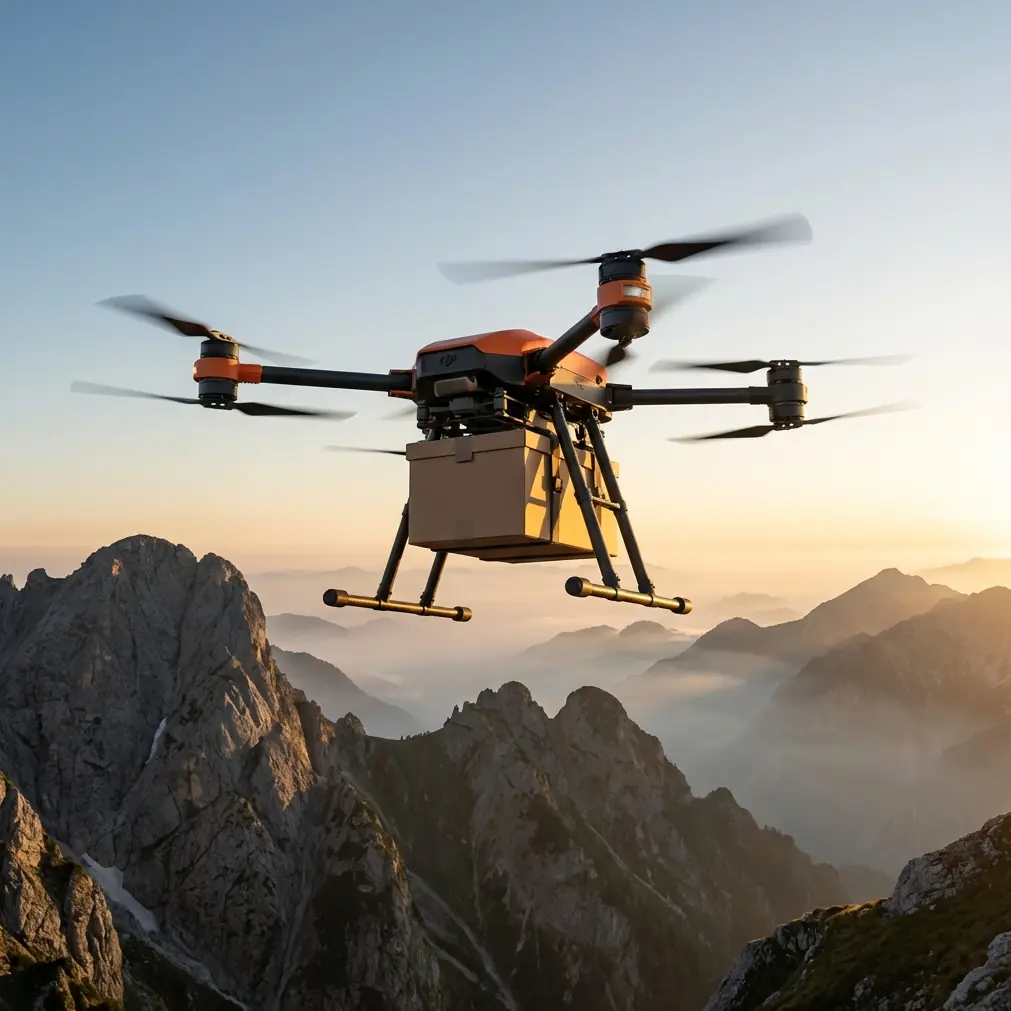
How to Plan FlyCart 30 Deliveries for Remote Solar Farms Without Turning Logistics Into a Bottleneck
META: A practical expert guide to using FlyCart 30 for remote solar farm delivery, with route planning, winch operations, payload strategy, BVLOS considerations, wildlife avoidance, and compliance context.
Remote solar sites have a way of exposing weak logistics. A warehouse team can palletize parts perfectly, procurement can hit every date, and field technicians can still lose half a day because one inverter component, tool kit, or replacement combiner fuse is stuck behind rough access roads.
That gap is where a cargo drone starts making sense.
I’ve seen this most clearly in solar projects built far from paved roads, with long internal tracks, seasonal washouts, and security rules that make constant truck movement a headache. For teams evaluating the FlyCart 30, the real question is not whether a delivery drone looks impressive on a spec sheet. It’s whether it can reliably move the right item, to the right pad, with fewer delays than ground transport and without creating new operational risk.
That is the standard to use.
This guide is built for that exact scenario: delivering into remote solar farms with the FC30 as a working logistics tool, not as a demo aircraft.
Start with the jobs that actually justify a cargo drone
The biggest mistake I see is trying to force every transport task into the drone program. That usually ends with poor payload efficiency, too many flights, and a management team deciding the system is more complexity than value.
Instead, identify the deliveries that have outsized operational impact:
- urgent replacement parts needed to restore string output
- small but high-priority electrical components
- inspection kits and test instruments
- tools for technicians already deployed deep inside the site
- consumables needed at distant substations or inverter blocks
- lightweight maintenance items that prevent a second truck run
For remote solar farms, the drone is often most valuable when it eliminates a delay, not when it replaces the entire truck fleet.
That distinction matters because the FlyCart 30 should be measured on time-to-task completion. If one fast aerial drop gets a technician back to work before a weather window closes, the logistics value is obvious. If you try to make it carry everything, you’ll burn cycles on low-value trips.
Build your operating model around payload ratio, not just maximum lift
Cargo drone planning often gets reduced to a single question: how much can it carry?
That is too crude for real solar-farm work.
Payload ratio is the better metric. In practical terms, you want to know how much useful mission weight you’re moving relative to the total system effort, flight count, battery turnover, and site handling time. A compact tool bag, relay module, torque wrench, or spare communications unit may deliver better mission economics than a heavier mixed load that requires repacking and a tighter landing zone.
On solar sites, the payload itself is rarely the only variable. Packaging shape, rigging stability, weather exposure, and handoff time at the drop location all matter. The FC30’s cargo concept becomes more effective when teams standardize loads into a few repeatable delivery classes:
Critical repair load
One technician-critical item plus essential install tools.Routine maintenance load
Consumables or scheduled replacement items.Inspection support load
Sensors, meters, handheld diagnostic devices, and PPE.Remote camp support load
Small operational supplies for isolated field crews.
This approach improves route planning and battery forecasting because you stop reinventing each flight.
Use the winch system where landing adds unnecessary risk
A remote solar farm may look open from above, but usable landing space is often less available than expected. Cable trays, uneven ballast, trackers, fencing, loose debris, and work crews create clutter. In those environments, a winch system can be more than a convenience. It becomes the safer delivery method.
That is especially true near active maintenance zones where rotor wash could spread dust onto equipment or where a touchdown area cannot be kept sterile.
A controlled suspended delivery lets the aircraft remain above obstacles while placing the package into a narrow, pre-marked handoff zone. Operationally, this reduces three common problems:
- repeated repositioning to find a clean landing spot
- field-worker congestion around the aircraft
- avoidable wear from frequent landing cycles on rough surfaces
The result is faster drop execution and less disruption to technicians already working on energized or sensitive systems.
For solar operations managers, the significance is simple: if the site layout makes landings messy, the winch is not an accessory. It is the mechanism that makes drone delivery practical.
Dual-battery discipline is what keeps the schedule real
Any logistics team can create a drone route on paper. The hard part is sustaining it through a full operating day without turning batteries into the bottleneck.
This is where dual-battery planning matters. Not just because redundancy supports safer operations, but because power management defines sortie rhythm. If your charging, swap timing, and reserve thresholds are poorly designed, your “fast” delivery network becomes a waiting game.
For remote solar farms, I recommend planning around three battery realities:
- Heat exposure at site level can affect turnaround expectations.
- Distance variation across arrays changes reserve assumptions from one route to the next.
- Payload inconsistency can distort estimated flight schedules if teams are loose about packaging.
A disciplined dual-battery workflow gives you cleaner launch timing and more predictable dispatch windows. That matters a lot when technicians are standing by at inverter stations waiting on parts. Logistics is only useful if the field team trusts the ETA.
BVLOS is an operations design issue, not a checkbox
Many remote solar farms are large enough that line-of-sight operations quickly become limiting. That pushes teams toward BVLOS thinking, whether for current deployment planning or future scale.
But BVLOS should not be treated as a buzzword. It changes the entire structure of the program.
Once you begin planning beyond visual line of sight, route design has to account for communication reliability, terrain variation, site traffic patterns, emergency procedures, and handoff coordination. It also means your drone workflow starts to resemble a true dispatch system rather than a pilot-centered task.
This is where external policy context matters. On May 18, 2026, DroneLife reported that the FCC issued a new notice expanding the list of conditionally approved foreign-made drone systems exempted from Covered List restrictions, including systems from Elevon Aerial and Air6 Systems. That development does not directly define the FC30’s field performance, but it is operationally significant for anyone building a long-term drone logistics program in energy infrastructure.
Why? Because federal agencies are still adjusting how Covered List restrictions affect drone systems. In practice, that means procurement, communications architecture, and fleet standardization decisions can’t be made in a vacuum. If your remote solar delivery concept depends on scaling across multiple sites, compliance uncertainty can influence what platforms get approved internally, how connectivity components are assessed, and whether a fleet can be expanded without disruption.
For logistics leads, the takeaway is not panic. It is planning maturity. Drone delivery at solar farms is no longer just about aircraft capability. Regulatory interpretation around technology systems can shape deployment timelines just as much as route design.
Route optimization for solar farms is mostly about ground reality
People hear “route optimization” and imagine software drawing the shortest line between two points. At a remote solar site, that’s the easy part.
The harder part is selecting routes that fit the site’s operating rhythm.
A strong FC30 delivery corridor should avoid:
- active crane or telehandler movement
- regular technician congregation points
- dust-heavy service lanes during windy periods
- wildlife-sensitive areas near perimeter fencing or drainage channels
- security choke points where low-altitude movement creates confusion
One of the more memorable examples I’ve been involved with came during an early-morning delivery run to a remote combiner station. The aircraft’s sensors detected movement near a service corridor that, from the operations map, looked completely clean. It turned out to be a pair of kangaroos crossing between scrub patches near the array edge. Because the route had enough lateral tolerance and the aircraft had obstacle-awareness support, the mission team paused and shifted the path rather than pushing through a low, fast transit. That sounds minor until you realize what it prevented: startled wildlife, an unnecessary aborted mission, and a field team waiting on a time-sensitive replacement part.
That is the kind of operational detail that separates a polished deck from a workable system. Sensors are not just there for structures. On remote sites, they help the aircraft coexist with the environment.
Set up handoff zones like a logistics network, not an aviation experiment
If every delivery requires a radio debate about where the package should go, your drone program will stall fast.
Create fixed handoff points across the solar farm:
- inverter block transfer pads
- substation support zones
- maintenance laydown points
- perimeter access relay spots
- emergency technical resupply points
Each zone should have a simple identifier, clear surface rules, and a standard receiving process. If a winch delivery is used, mark the exact drop envelope. If a landing is used, define safe approach clearance and who is authorized to enter the area.
This structure matters because drone efficiency comes from repeatability. The FC30 should be inserted into the site’s logistics map the same way you would treat a tool crib, charging bay, or vehicle dispatch point.
Emergency parachute planning belongs in the SOP, not the marketing slide
On remote industrial sites, people sometimes assume open land means low consequence. That can lead to lazy safety planning.
An emergency parachute system changes the risk conversation only if it is integrated into route approval, exclusion zones, and worker briefings. Teams need to know what areas beneath the route are acceptable overflight areas and what areas should remain minimized because they contain personnel concentration, critical assets, or fragile infrastructure.
For solar farms, that usually means paying close attention to:
- control buildings
- energized electrical areas
- active maintenance clusters
- stocked materials yards
- contractor vehicle staging points
The parachute is not the plan. It is the last protective layer in the plan.
How to launch a FlyCart 30 workflow at one remote solar site
Here is the operational sequence I recommend.
1. Audit the site’s real transport delays
Pull maintenance logs and identify the parts and tools that most often cause technician idle time.
2. Classify loads into repeatable drone-ready kits
Do not let every request become a custom packing exercise.
3. Establish fixed launch and handoff zones
Use the same transfer points repeatedly so crews build confidence.
4. Decide where winch delivery beats landing
On rough or congested sections of the farm, the answer will often be obvious after one site walk.
5. Build battery turnover around field demand peaks
Morning dispatch, midday maintenance support, and late-day recovery each create different rhythms.
6. Design routes around site activity and environmental patterns
Avoid the temptation to use the mathematically shortest path if it crosses the busiest operational area.
7. Write emergency actions for worker-facing clarity
Include lost-link logic, weather holds, exclusion zones, and parachute response expectations.
8. Align the program with current communications and procurement policy
The FCC’s evolving Covered List exemption landscape should be tracked by anyone scaling drone systems in critical commercial infrastructure. The latest notice adding conditionally approved exemptions for Elevon Aerial and Air6 Systems is one more sign that policy interpretation is still moving, and operations teams should stay coordinated with compliance staff rather than treating this as an afterthought.
Where FlyCart 30 fits best in remote solar logistics
The FC30 makes the most sense where a site is large enough to create real internal distance, remote enough to make road access inefficient, and structured enough to support repeatable aerial routes.
That combination is common in utility-scale solar.
When deployed well, the aircraft is not replacing every truck. It is compressing the gap between problem discovery and corrective action. That can mean a technician gets the right part in minutes rather than waiting through a rough-road round trip. It can mean fewer unnecessary vehicle movements across the site. It can mean more disciplined routing of urgent items during weather-sensitive maintenance windows.
If you are designing a remote solar delivery program, focus less on spectacle and more on friction removal. The best FC30 operation is the one that field crews stop talking about because it becomes part of the site’s normal rhythm.
If you want to compare workflows or pressure-test a route layout for your own site, you can message our logistics team here.
Ready for your own FlyCart 30? Contact our team for expert consultation.