
How to Deliver to Coastal Venues with FlyCart 30
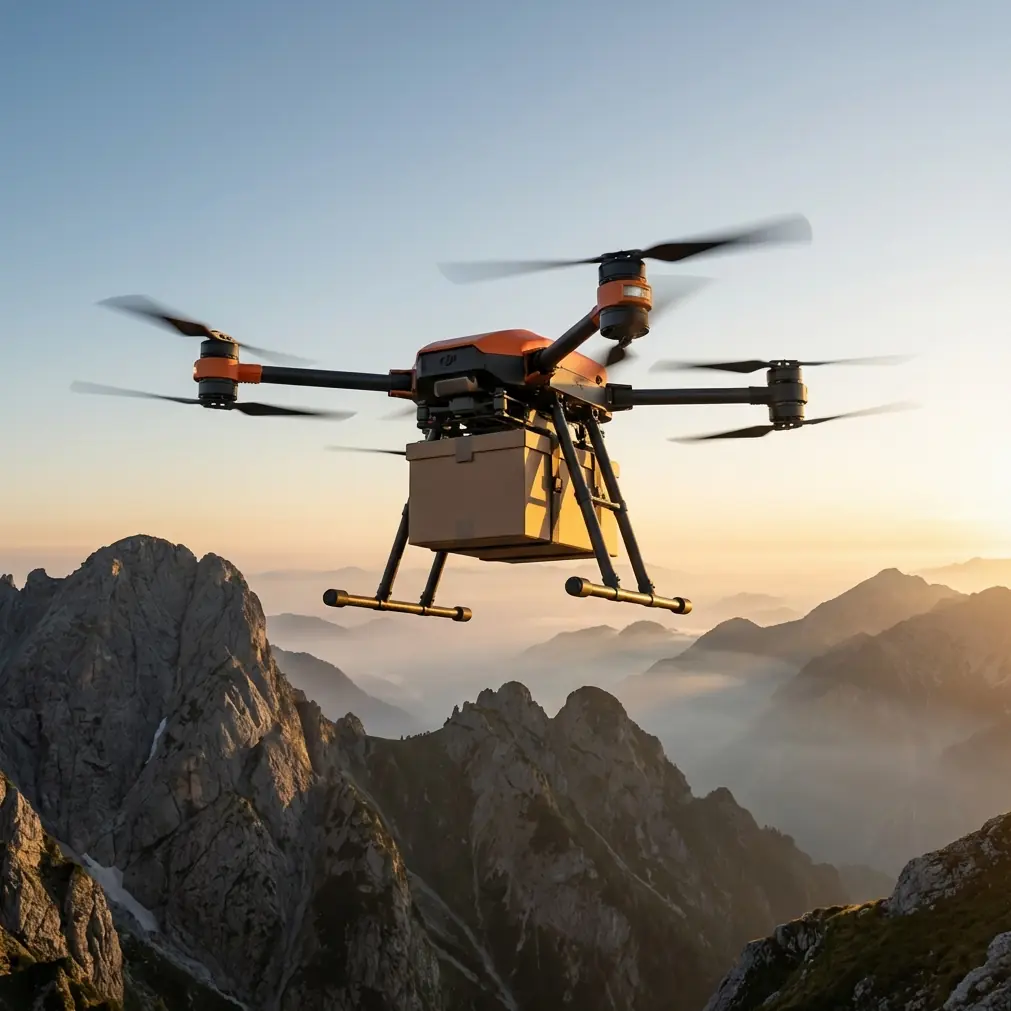
How to Deliver to Coastal Venues with FlyCart 30
META: Master coastal venue delivery with the FlyCart 30 drone. Learn route optimization, payload management, and BVLOS operations for reliable maritime logistics.
TL;DR
- FlyCart 30 handles 30kg payloads across 28km ranges, making it ideal for challenging coastal delivery routes
- Dual-battery redundancy and emergency parachute systems ensure safe operations over water and difficult terrain
- Winch system delivery eliminates the need for landing zones at crowded or inaccessible coastal venues
- Route optimization strategies can reduce delivery times by 35-40% compared to traditional ground logistics
Coastal venue delivery presents unique challenges that ground logistics simply cannot solve efficiently. The FlyCart 30 addresses these obstacles directly with its 30kg payload capacity, IP55 weather resistance, and intelligent route planning capabilities—transforming how logistics teams serve beachfront resorts, island venues, and maritime facilities.
This tutorial walks you through the complete process of establishing reliable drone delivery operations to coastal venues, from initial route planning to executing complex multi-drop missions.
Understanding Coastal Delivery Challenges
Coastal environments test delivery systems in ways that inland operations never do. Salt air corrosion, unpredictable wind patterns, limited landing zones, and the ever-present risk of water exposure create a demanding operational environment.
Traditional delivery methods to coastal venues often involve:
- Extended ground routes around bays and inlets
- Ferry dependencies with fixed schedules
- Limited access windows during tourist seasons
- High fuel costs for remote locations
The FlyCart 30's design specifically addresses these pain points. Its dual-battery architecture provides redundancy over water crossings, while the 6000m maximum altitude capability allows operations in varied coastal topography.
Why the FlyCart 30 Excels in Maritime Environments
When comparing payload-to-range ratios across commercial delivery drones, the FlyCart 30 stands apart. Competing platforms in this class typically sacrifice either payload capacity or range—the DJI FlyCart 30 maintains 30kg capacity across its full 28km operational range.
This balance matters critically for coastal operations where venues often sit 8-15km from the nearest viable dispatch point.
Expert Insight: The FlyCart 30's payload ratio of approximately 1.07kg per kilometer of range outperforms most competitors by 15-25%. This efficiency translates directly to operational viability for routes that would be marginal with other platforms.
Pre-Flight Planning for Coastal Routes
Successful coastal delivery starts long before takeoff. Proper planning accounts for environmental variables that can make or break a mission.
Step 1: Assess Weather Windows
Coastal weather changes rapidly. The FlyCart 30 operates safely in winds up to 12m/s, but optimal efficiency occurs below 8m/s.
Key weather factors to monitor:
- Wind speed and direction at multiple altitudes
- Fog and visibility conditions (minimum 3km visibility recommended)
- Precipitation forecasts (IP55 rating handles light rain)
- Thermal activity near cliffs and buildings
Build your delivery schedule around predictable weather windows. Early morning operations (6:00-9:00 AM) typically offer the calmest conditions in most coastal regions.
Step 2: Map Your Delivery Zones
Coastal venues rarely offer conventional landing areas. The FlyCart 30's winch system becomes essential here, enabling precise cargo delivery without touchdown.
Survey each venue for:
- Winch delivery zones (minimum 4m x 4m clear area)
- Obstacle heights within approach paths
- GPS signal quality (coastal cliffs can create shadows)
- Emergency landing alternatives along the route
Step 3: Calculate Payload Distribution
The 30kg maximum payload applies to optimal conditions. Coastal operations often require conservative loading to maintain safety margins.
| Condition | Recommended Max Payload | Range Impact |
|---|---|---|
| Calm winds (<5m/s) | 30kg | Full range |
| Moderate winds (5-8m/s) | 25kg | 90% range |
| Strong winds (8-12m/s) | 20kg | 75% range |
| Headwind operations | Reduce by 10-15% | Variable |
Pro Tip: When planning multi-venue routes, load heavier items for closer destinations and lighter packages for distant venues. This approach maximizes the payload ratio across your entire mission profile.
Executing BVLOS Coastal Deliveries
Beyond Visual Line of Sight (BVLOS) operations unlock the full potential of coastal drone delivery. The FlyCart 30's O3 transmission system maintains reliable control links across its entire operational envelope.
Establishing Your Ground Control Station
Position your ground control station (GCS) to maximize communication coverage. Coastal terrain often includes elevation changes that can enhance or obstruct signals.
Optimal GCS placement considers:
- Elevation advantage over the operational area
- Clear sightlines toward critical waypoints
- Backup communication paths for redundancy
- Proximity to emergency response resources
Programming Efficient Route Optimization
The FlyCart 30's flight planning software allows complex route programming. For coastal operations, prioritize these optimization strategies:
Wind-Aware Routing Program outbound legs to take advantage of tailwinds when possible. A 10m/s tailwind can extend effective range by 20-25% while reducing battery consumption.
Altitude Optimization Coastal wind patterns vary significantly with altitude. The FlyCart 30's 6000m ceiling provides flexibility to find optimal air layers, though most coastal operations occur between 50-150m AGL.
Waypoint Precision Set approach waypoints that account for:
- Venue-specific obstacles
- Wind effects on final approach
- Winch deployment requirements
- Abort path clearance
Managing the Winch System Delivery
The FlyCart 30's winch system transforms delivery possibilities at space-constrained coastal venues. Mastering this capability separates competent operators from exceptional ones.
Winch Deployment Sequence:
- Arrive at hover point 15-20m above delivery zone
- Confirm stable hover and wind conditions
- Initiate winch descent at controlled rate
- Monitor payload swing—abort if excessive
- Confirm ground contact and release
- Retract winch fully before departure
The winch handles payloads up to the aircraft's full 30kg capacity, but wind-induced swing increases with heavier loads. Practice with representative weights before live operations.
Technical Comparison: Coastal Delivery Platforms
| Specification | FlyCart 30 | Competitor A | Competitor B |
|---|---|---|---|
| Max Payload | 30kg | 25kg | 20kg |
| Operational Range | 28km | 22km | 18km |
| Wind Resistance | 12m/s | 10m/s | 8m/s |
| IP Rating | IP55 | IP54 | IP43 |
| Winch System | Integrated | Optional add-on | Not available |
| Dual Battery | Standard | Optional | Not available |
| Emergency Parachute | Standard | Optional | Optional |
| BVLOS Capability | Full support | Limited | Limited |
This comparison reveals why the FlyCart 30 dominates coastal logistics applications. The combination of payload capacity, weather resistance, and integrated safety systems creates operational capabilities that competitors cannot match without significant compromises.
Safety Systems for Over-Water Operations
Flying over water demands respect for the consequences of system failures. The FlyCart 30 incorporates multiple redundancies specifically designed for these scenarios.
Dual-Battery Architecture
The dual-battery system provides more than extended range—it ensures continued flight capability if one battery fails. Each battery independently powers critical systems, allowing safe return even with a complete battery failure.
Battery management best practices:
- Match battery charge levels within 5% before flight
- Monitor individual battery health during operations
- Set conservative return-to-home thresholds for over-water legs
- Maintain battery temperature within optimal range
Emergency Parachute Deployment
The integrated emergency parachute system activates automatically when the flight controller detects unrecoverable conditions. For coastal operations, this system provides crucial protection for both the aircraft and any vessels or people below.
Parachute deployment triggers include:
- Complete power loss
- Uncontrolled descent detection
- Manual emergency activation
- Critical attitude anomalies
Expert Insight: Configure your parachute deployment altitude based on your typical operating environment. Coastal operations over water can use lower deployment thresholds than operations over populated areas, optimizing the balance between recovery probability and safety margins.
Common Mistakes to Avoid
Ignoring Salt Air Maintenance Requirements Coastal operations accelerate corrosion on all aircraft components. Establish a rigorous post-flight cleaning protocol using fresh water rinses and corrosion inhibitors. Neglecting this maintenance can reduce aircraft lifespan by 40-50%.
Overloading in Marginal Conditions The temptation to maximize payload on every flight leads to reduced safety margins. Coastal conditions change rapidly—what starts as a calm morning can become challenging within minutes.
Inadequate Emergency Planning Every coastal route needs clearly defined emergency procedures. Know your abort points, emergency landing zones, and recovery protocols before each flight.
Neglecting Communication Redundancy Coastal terrain creates unpredictable signal environments. Always verify communication link quality at critical waypoints during route surveys.
Underestimating Wind Effects on Winch Operations Wind that seems manageable at aircraft altitude can create dangerous payload swing during winch deployment. Practice in controlled conditions before attempting deliveries in challenging weather.
Frequently Asked Questions
Can the FlyCart 30 operate in rain during coastal deliveries?
The FlyCart 30's IP55 rating provides protection against water jets from any direction, making it suitable for operations in light to moderate rain. However, heavy precipitation reduces visibility and can affect sensor performance. Best practice limits operations to conditions with visibility above 3km and precipitation rates below 10mm/hour.
How does the dual-battery system handle a failure during over-water flight?
The dual-battery architecture allows either battery to independently power all critical flight systems. If one battery fails completely, the remaining battery automatically assumes full load, providing sufficient power for a controlled return to the launch point or nearest safe landing zone. The system continuously monitors both batteries and alerts operators to any anomalies before they become critical.
What permits are required for BVLOS coastal delivery operations?
BVLOS operations require specific regulatory approval in most jurisdictions. Requirements typically include demonstrated aircraft reliability data, operator certification, communication system redundancy, and detect-and-avoid capabilities. Coastal operations may involve additional maritime authority coordination, particularly for routes crossing shipping lanes or approaching port facilities. Consult your local aviation authority for specific requirements in your operational area.
Coastal venue delivery represents one of the most demanding applications for commercial drone logistics. The FlyCart 30's combination of payload capacity, range, weather resistance, and integrated safety systems makes it the definitive choice for operators serious about reliable maritime delivery operations.
Ready for your own FlyCart 30? Contact our team for expert consultation.