
FlyCart 30 for Dusty Venue Deliveries: What Actually
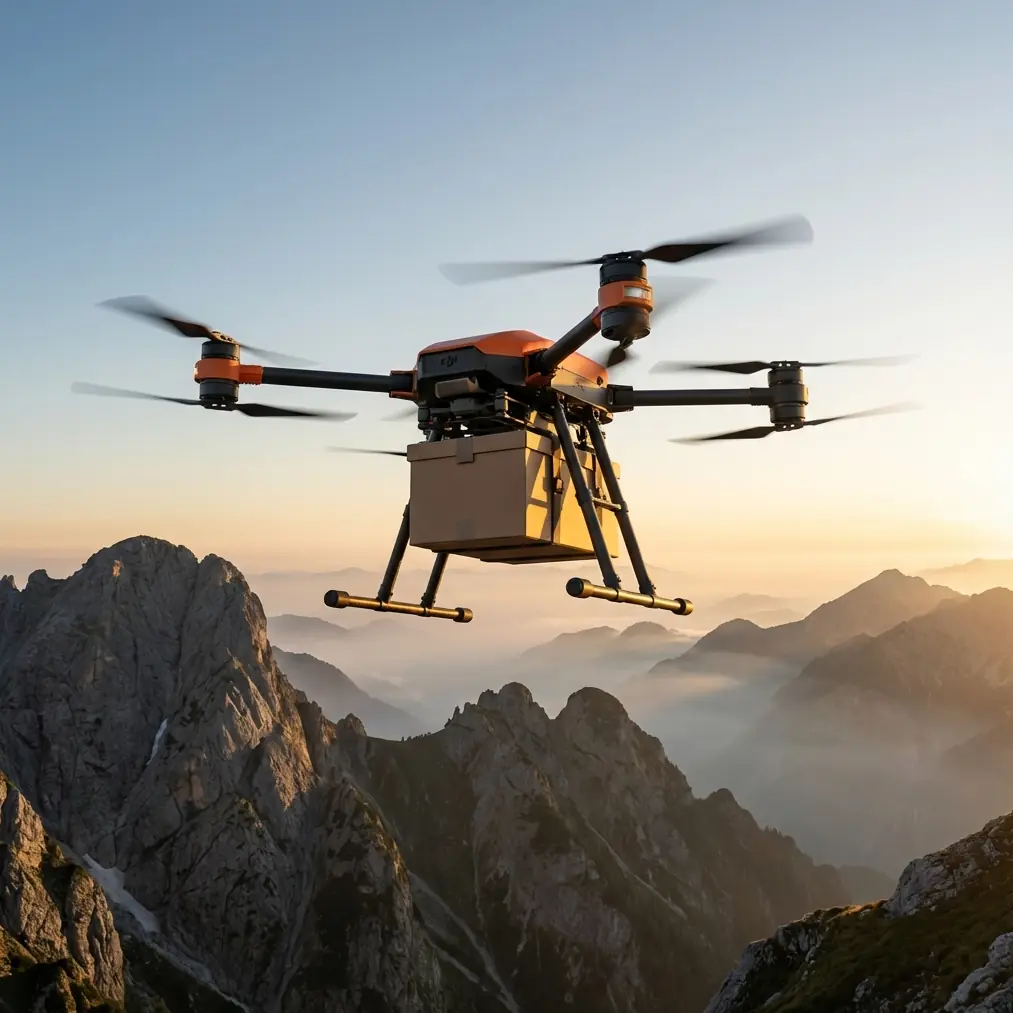
FlyCart 30 for Dusty Venue Deliveries: What Actually Matters in the Field
META: A practical FlyCart 30 guide for dusty venue logistics, with altitude strategy, winch use, BVLOS planning, payload balance, and operational lessons drawn from education-sector standardization trends.
Dust changes everything.
If you are delivering into large venues with unpaved access roads, temporary event infrastructure, or constant vehicle movement, the drone itself is only half the story. The harder problem is repeatability: can you move payloads into the site safely, on schedule, and without turning every landing zone into a visibility problem?
That is where the FlyCart 30 becomes interesting. Not because it is simply a cargo drone, but because its design choices line up with the kind of operational friction venue teams deal with every day: inconsistent ground conditions, shifting drop points, short turnaround expectations, and the need to keep people clear of the aircraft.
There is also a bigger pattern worth paying attention to. One of the recent education-sector items shared by youuav highlighted the release of the Chinese Youth Reading Literacy Framework by the Ministry of Education, packaged within a broader weekly briefing that combined policy updates, industry developments, and deeper analysis. On the surface, that has nothing to do with venue logistics. In practice, it says a lot about where professional drone operations are heading. Sectors mature when they stop improvising and start working from standards. Education is formalizing literacy frameworks; drone logistics teams need the same discipline around route planning, operating envelopes, and crew training.
For dusty venue delivery work, that mindset is not optional.
The real problem at dusty venues
Most venue delivery discussions focus on payload capacity first. That matters, but it is rarely the first thing that breaks an operation.
Dusty environments introduce three immediate complications:
Landing and takeoff can create their own hazard Rotor wash pushes dust outward and upward. That can obscure the touchdown zone, reduce visual confirmation for the crew, and affect nearby staff working on the ground.
Ground access is often unstable Event venues, outdoor exhibition grounds, sports compounds, and temporary staging areas may not offer a clean, hardened landing pad near the point of need.
Drop locations move A venue is dynamic. The medical team shifts. Production storage relocates. Maintenance requests come from different corners of the site. Fixed-point logistics does not hold for long.
This is why I usually tell operators not to think of the FlyCart 30 as a “flying truck.” In venue environments, it is closer to an aerial handoff system. That distinction changes how you set altitude, route geometry, and delivery method.
Why the winch system often matters more than landing
For dusty venues, the winch system is usually the operational advantage that earns its keep fastest.
If you can keep the aircraft above the dust layer and lower the cargo rather than land, you remove a large portion of the site friction in one step. You reduce the need for a cleared touchdown area, limit dust disturbance at the delivery point, and keep the drone separated from people, loose materials, and temporary structures.
That is especially useful when delivering to:
- field medical tents
- backstage support areas
- maintenance teams near lighting or utility zones
- hospitality points set up on compacted dirt
- temporary operations cabins
In these cases, the best delivery is often the one that never becomes a landing.
Operationally, the winch also gives you flexibility with venue congestion. If forklifts, carts, or foot traffic suddenly block a planned landing spot, the mission does not necessarily collapse. You can hold a safe hover, lower the load into a controlled handoff zone, and depart without introducing the extra complexity of touchdown and relaunch.
Optimal flight altitude in dusty venue scenarios
Altitude is not just an airspace decision here. It is a dust-management decision.
For FlyCart 30 deliveries into dusty venues, the goal is to separate the transit profile from the ground-disturbance profile. In simple terms: cruise high enough to stay efficient and predictable, then descend only as much as needed for a stable winch delivery or carefully managed landing.
A practical rule is to avoid low, extended approaches over dusty open ground unless there is a compelling reason. Long low-level arrivals expose the aircraft to more particulate turbulence close to the surface and increase the time rotor wash interacts with loose dust.
The better pattern for many venues is:
- Transit at a conservative, obstacle-aware cruising altitude
- Approach from above rather than skimming in
- Pause over the delivery point in a stable hover
- Use the winch to complete the final vertical transfer
The exact number depends on local obstacles, site rules, and line-of-sight or BVLOS permissions, but the insight is straightforward: in dusty venues, lower is not automatically better. Operators who stay too low in the name of speed often create their own visibility and contamination problem.
If I were building a repeat route for this scenario, I would typically test a higher inbound segment first, then tune the final hover height to the shortest winch drop that still avoids strong dust recirculation at the handoff area. That gives you a cleaner arrival profile and more consistent delivery outcomes.
Payload ratio is not just about maximum lift
Cargo drone discussions often drift toward headline payload. In venue work, payload ratio matters more than raw maximum capacity because it shapes stability, battery planning, and turnaround rhythm.
A well-run operation does not load every mission to the edge. It balances payload against route length, hover time, reserve margin, and the site’s delivery geometry. Dusty venues amplify this because hovering for a winch drop can consume more mission margin than a simple point-to-point landing on a clean pad.
That means the payload question should be framed like this:
- How much weight can the mission carry while preserving a reliable hover for handoff?
- How much reserve is left after route deviation?
- How does the payload affect the aircraft’s ability to maintain a stable vertical delivery in local airflow?
When teams ignore payload ratio and only chase load size, the result is usually inefficient. Fewer missions look good on paper, but operations become less forgiving. For venue work, especially where schedules matter, a slightly lighter, more repeatable mission profile often beats a heavier one that narrows your options.
Dual-battery thinking changes venue logistics
The dual-battery concept is not just a hardware feature. It changes how supervisors can think about continuity.
In venue logistics, delays often come from interruptions rather than flight time alone. If one urgent request appears while another is already queued, your operation needs resilience more than theoretical throughput. Battery architecture and swap discipline determine whether the aircraft can return to service cleanly between short-cycle tasks.
For dusty deployments, this matters for another reason: every minute spent on the ground in an exposed environment is a minute of handling, staging, and preventable contamination risk. Faster, more structured energy management supports a cleaner operation overall.
The strongest teams build battery rotation into route optimization instead of treating it as an afterthought. They align load type, mission duration, and charging cadence so the aircraft is not waiting on the power plan.
BVLOS and route optimization at venues
Venue operators sometimes assume drone routes are too short to justify serious route engineering. That is a mistake.
Even on compact sites, BVLOS-capable planning principles can improve safety and consistency. You may not always be flying full BVLOS, depending on regulations and permissions, but the discipline behind BVLOS planning is valuable either way: pre-mapped corridors, obstacle accounting, predictable emergency procedures, and reduced ad hoc decision-making.
Dusty venues benefit from route optimization in three specific ways:
1. Fewer low-level conflict points
A good route avoids repeated passes near busy ground corridors, temporary towers, lighting rigs, and vehicle lanes.
2. Cleaner approach geometry
Instead of improvising the last 100 meters, the aircraft follows a tested path with a known hover and handoff point.
3. Better schedule integrity
When missions repeat over similar tracks, timing becomes more predictable for both the flight crew and the receiving team.
That last point sounds mundane, but it is one of the biggest markers of operational maturity. Again, this echoes the signal from the education weekly cited earlier. That report was not just a single policy note; it was part of a structured digest covering policy, industry information, and deeper articles. Professional systems improve when information is organized, standardized, and reviewed on a cadence. Drone logistics teams need that same weekly discipline around flight logs, route performance, and delivery exceptions.
Emergency parachute planning is about venue trust
In crowded commercial spaces, trust is operational currency.
An emergency parachute system matters not because crews expect to use it, but because venue managers, insurers, and onsite safety coordinators want to understand the fallback layers built into the operation. In a dusty environment, where visual conditions near the surface can degrade quickly during takeoff or delivery, risk communication becomes part of the deployment process.
The drone team that earns repeat access is usually the one that can explain:
- where the aircraft will fly
- how deliveries will be completed without unnecessary landing
- what the crew will do if the site changes mid-mission
- what safety systems exist if an unrecoverable failure occurs
That is a different conversation from simple product capability. It is operational credibility.
A training lesson from outside the drone sector
The most useful part of the education-sector reference is not the reading standard itself. It is the fact that a ministry-level body released a formal framework, and that the update appeared inside a curated weekly report designed to keep professionals current on policy and sector shifts.
That structure is a lesson for FlyCart 30 teams.
If you are delivering into dusty venues, create your own internal framework:
- standard hover heights for winch delivery in dusty conditions
- standard landing criteria for when a touchdown is truly necessary
- standard route review frequency
- standard crew briefing format
- standard dust exposure checks before and after mission blocks
This is how ad hoc flying turns into a logistics program.
And if your team is still defining those SOPs, it helps to compare notes with operators already working through similar scenarios. A practical place to start is this direct FlyCart operations channel: message the logistics team here.
Problem-solution view: when the FlyCart 30 fits best
Let’s reduce it to the actual venue problem.
Problem:
You need to deliver supplies across a dusty, active venue where ground access is slow, landing zones are inconsistent, and personnel safety around the aircraft matters.
Solution logic with FlyCart 30:
- Use the aircraft as a controlled aerial transfer tool, not just a landing platform.
- Prioritize winch deliveries to avoid dust-heavy touchdown cycles.
- Set cruise altitude for obstacle clearance and route consistency, then minimize low-level transit.
- Keep payloads inside a ratio that preserves hover stability and reserve margin.
- Build repeatable routes with BVLOS-style discipline even on short venue sectors.
- Use dual-battery workflow and safety systems to protect continuity and trust.
That combination is where the aircraft becomes operationally valuable.
What experienced operators usually learn after the first few deployments
The first instinct is to focus on whether the drone can carry the load.
The better question is whether the whole mission architecture fits the site.
With dusty venues, the strongest FlyCart 30 operations are usually the ones that:
- avoid unnecessary landings
- maintain a deliberate altitude strategy
- treat route design as a repeatable asset
- document what changes with each venue layout
- train crews to work from standards, not improvisation
That final point ties back neatly to the one concrete signal in the source material: a formal standard released by the Ministry of Education and highlighted in a weekly briefing context. Standards are how sectors get better at repetition. Drone logistics is no different. If your venue operation relies on memory and informal adjustments, it will stay fragile. If it relies on defined procedures, measured hover profiles, and route reviews, the FlyCart 30 can become a dependable part of the delivery stack.
For dusty venue scenarios, my altitude advice is simple: stay higher during transit than many crews first assume, keep the low-level phase short, and let the winch do the final work whenever the site allows it. That one shift often improves visibility, site safety, and mission consistency all at once.
Ready for your own FlyCart 30? Contact our team for expert consultation.