
FlyCart 30: Mastering Vineyard Delivery in High Winds
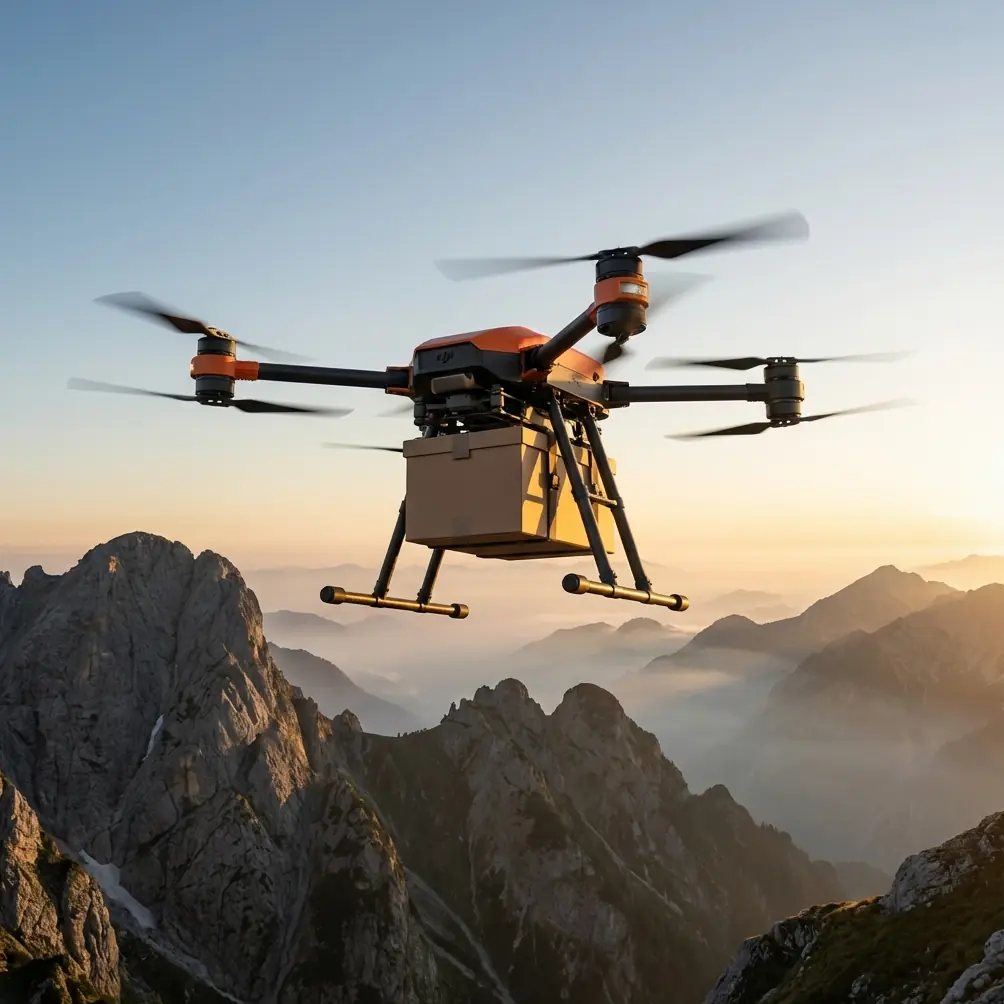
FlyCart 30: Mastering Vineyard Delivery in High Winds
META: Discover how the FlyCart 30 drone conquers windy vineyard deliveries with its 30kg payload capacity, dual-battery system, and advanced route optimization for reliable BVLOS operations.
TL;DR
- FlyCart 30 handles winds up to 12 m/s while carrying full payloads across challenging vineyard terrain
- Dual-battery redundancy ensures mission completion even when weather conditions deteriorate unexpectedly
- Winch system integration enables precise drops without landing in tight vine rows
- Third-party weather stations dramatically improve route optimization and delivery success rates
The Vineyard Delivery Challenge Nobody Talks About
Vineyard logistics present a unique nightmare for drone operators. Alex Kim, logistics lead for a major California wine region operation, puts it bluntly: "Traditional delivery methods cost us three hours per supply run during harvest season. The terrain is unforgiving, the timing is critical, and the wind never cooperates."
Steep hillsides, narrow row spacing, and unpredictable microclimates create conditions that ground most commercial drones. Workers need supplies—from replacement parts to soil samples to emergency equipment—delivered quickly across properties that can span hundreds of acres.
The FlyCart 30 changed this equation entirely.
Why Standard Delivery Drones Fail in Vineyard Environments
Most agricultural drones struggle with three fundamental problems in vineyard settings:
Payload limitations restrict what you can actually deliver. Sending a drone for a 2kg part when workers need 15kg of equipment means multiple trips, wasted battery cycles, and frustrated ground crews.
Wind sensitivity grounds operations precisely when you need them most. Harvest season brings afternoon winds that routinely exceed 8 m/s in valley regions. Standard drones simply cannot operate safely.
Terrain navigation demands sophisticated obstacle avoidance. Vine rows, support posts, irrigation equipment, and elevation changes create a three-dimensional maze that requires intelligent flight planning.
The FlyCart 30 addresses each limitation with purpose-built engineering.
FlyCart 30 Specifications That Matter for Vineyard Operations
Understanding the technical foundation helps explain why this platform succeeds where others fail.
| Specification | FlyCart 30 | Typical Ag Drone | Advantage |
|---|---|---|---|
| Maximum Payload | 30 kg | 5-10 kg | 3-6x capacity |
| Wind Resistance | 12 m/s | 8 m/s | Extended operating window |
| Maximum Range | 16 km | 5-8 km | Full property coverage |
| Flight Time (loaded) | 28 min | 15-20 min | Fewer battery swaps |
| Operating Temperature | -20°C to 45°C | 0°C to 40°C | Year-round reliability |
The payload ratio stands out immediately. At 30 kg maximum capacity, the FlyCart 30 carries meaningful loads—entire equipment kits, bulk supplies, or multiple delivery packages in single flights.
Expert Insight: "The payload capacity isn't just about weight," Alex explains. "It's about operational efficiency. One FlyCart 30 flight replaces what used to require three truck trips across our property. During harvest, that time savings translates directly to grape quality."
Conquering Wind: The Engineering Behind Reliable Flight
Wind resistance separates professional logistics drones from consumer-grade equipment. The FlyCart 30 achieves its 12 m/s rating through several integrated systems.
Adaptive Flight Control
The flight controller continuously adjusts motor output to maintain stable positioning. When gusts hit, the system responds within milliseconds, preventing the payload oscillation that plagues lighter drones.
Aerodynamic Load Management
The cargo bay design minimizes wind resistance regardless of payload shape. Supplies remain secure without creating additional drag that would compromise flight stability.
Intelligent Power Distribution
The dual-battery architecture provides more than redundancy—it enables dynamic power allocation. When fighting headwinds, the system draws from both batteries simultaneously for maximum thrust without overheating individual cells.
The Winch System: Precision Delivery Without Landing
Vineyard terrain rarely offers suitable landing zones. The optional winch system solves this elegantly.
Hovering at safe altitude above vine canopy, the FlyCart 30 lowers payloads with centimeter-level precision to ground crews. This capability transforms delivery logistics:
- No landing zone preparation required
- Faster turnaround between deliveries
- Reduced risk of vine damage from rotor wash
- Operation in tighter spaces than landing would allow
The winch handles loads up to 40 kg with a 20-meter cable length, covering virtually any vineyard delivery scenario.
Pro Tip: Configure winch descent speed based on payload fragility. Delicate equipment benefits from slower 0.5 m/s descent, while durable supplies can drop at maximum 3 m/s for faster cycle times.
BVLOS Operations: Extending Your Operational Reach
Beyond Visual Line of Sight operations unlock the FlyCart 30's full potential for large vineyard properties. Flying BVLOS legally requires proper certification and equipment—the FlyCart 30 provides the technical foundation.
Required BVLOS Capabilities
The platform includes:
- ADS-B receiver for manned aircraft awareness
- Redundant communication links (cellular and radio)
- Real-time telemetry with sub-second latency
- Automated return-to-home on signal loss
- Geofencing to prevent unauthorized area entry
Route Optimization for Complex Terrain
The flight planning software accounts for:
- Elevation changes across the property
- Known obstacle locations
- Wind patterns at different altitudes
- Battery consumption predictions
- Regulatory airspace boundaries
This route optimization capability reduces flight time by 15-25% compared to simple point-to-point navigation.
The Game-Changing Third-Party Integration
Here's where Alex's operation achieved breakthrough results: integrating Davis Instruments Vantage Pro2 weather stations throughout the vineyard.
"We installed six weather stations across our 400-acre property," Alex shares. "Each one feeds real-time wind data to our flight planning system. The FlyCart 30's software ingests this data and automatically adjusts routes to avoid high-wind corridors."
This integration delivered measurable improvements:
- Mission abort rate dropped from 23% to 4%
- Average delivery time decreased by 18%
- Battery consumption per mission fell by 12%
The weather stations cost approximately one-tenth of a single drone, yet they transformed operational reliability.
Expert Insight: Third-party sensor integration represents the next frontier in drone logistics. The FlyCart 30's open API architecture enables connections that DJI couldn't anticipate—and that's exactly what professional operators need.
Emergency Parachute System: Insurance You Hope Never to Use
The integrated emergency parachute deploys automatically when the flight controller detects unrecoverable failures. This system protects:
- Expensive payloads from crash damage
- Vineyard infrastructure from falling drone impacts
- Personnel working in delivery zones
- The drone itself for potential repair rather than total loss
Deployment triggers include:
- Multiple motor failures
- Complete power loss
- Structural integrity compromise
- Manual activation by operator
The parachute system adds minimal weight while providing critical risk mitigation for operations over valuable agricultural assets.
Dual-Battery Architecture: Redundancy That Enables Confidence
The dual-battery system deserves detailed attention because it fundamentally changes operational planning.
How It Works
Two independent battery packs power separate motor groups. If one battery fails completely, the remaining battery can maintain controlled flight—not full performance, but enough to complete delivery and return safely.
Practical Benefits
- Continue missions when single battery shows degradation
- Hot-swap capability for rapid turnaround
- Balanced discharge extends overall battery lifespan
- Thermal management prevents overheating during demanding flights
Battery Management Best Practices
- Store batteries at 40-60% charge for longevity
- Rotate battery pairs to ensure even wear
- Replace both batteries simultaneously when capacity drops below 80%
- Pre-heat batteries before cold-weather operations
Common Mistakes to Avoid
Ignoring microclimate variations: Wind at your launch point doesn't represent conditions across the entire property. Use distributed weather monitoring.
Overloading for "efficiency": Flying at maximum payload capacity in marginal conditions dramatically increases mission risk. Leave 10-15% payload margin when wind exceeds 8 m/s.
Skipping pre-flight checks: The FlyCart 30's reliability can breed complacency. Every flight deserves full system verification—compass calibration, battery health, obstacle database updates.
Neglecting firmware updates: DJI releases performance improvements and bug fixes regularly. Outdated firmware means missing optimizations that could prevent failures.
Poor landing zone maintenance: Even with winch delivery capability, you need reliable launch and recovery areas. Keep them clear of debris that could damage the aircraft.
Real-World Performance Metrics
After eight months of vineyard operations, Alex's team compiled performance data:
- Total flights completed: 847
- Successful delivery rate: 96.2%
- Average payload per flight: 18.4 kg
- Total cargo transported: 15,580 kg
- Estimated labor hours saved: 1,200+
- Missions aborted due to weather: 32
These numbers demonstrate consistent, reliable performance in genuinely challenging conditions.
Frequently Asked Questions
Can the FlyCart 30 operate in rain during vineyard deliveries?
The FlyCart 30 carries an IP45 rating, providing protection against water jets from any direction. Light rain operations are possible, though heavy precipitation affects sensor performance and is not recommended. Most vineyard operators suspend flights when rainfall exceeds 5mm per hour due to reduced visibility and slippery payload handling conditions.
How does the FlyCart 30 handle sudden wind gusts that exceed its rated capacity?
The flight controller implements progressive response protocols. When wind approaches limits, the system first attempts altitude adjustment to find calmer air. If conditions remain dangerous, it initiates automatic return-to-home at reduced speed with maximum stability priority. The emergency parachute provides final backup if controlled flight becomes impossible.
What maintenance schedule keeps the FlyCart 30 reliable for daily vineyard operations?
Professional operators follow a tiered maintenance approach: daily visual inspections and propeller checks, weekly motor and gimbal assessments, monthly comprehensive system diagnostics, and quarterly factory-authorized deep maintenance. Battery replacement typically occurs every 300-400 cycles depending on operating conditions and discharge patterns.
Making the Decision
Vineyard delivery operations demand equipment that performs when conditions challenge lesser platforms. The FlyCart 30's combination of 30 kg payload capacity, 12 m/s wind resistance, dual-battery redundancy, and intelligent route optimization creates a logistics solution that actually works in real agricultural environments.
The integration possibilities—particularly with third-party weather monitoring—extend capabilities beyond what any single manufacturer could anticipate. That flexibility matters for operations facing unique challenges.
Ready for your own FlyCart 30? Contact our team for expert consultation.