
FlyCart 30 in Dusty Vineyards: A Practical Delivery
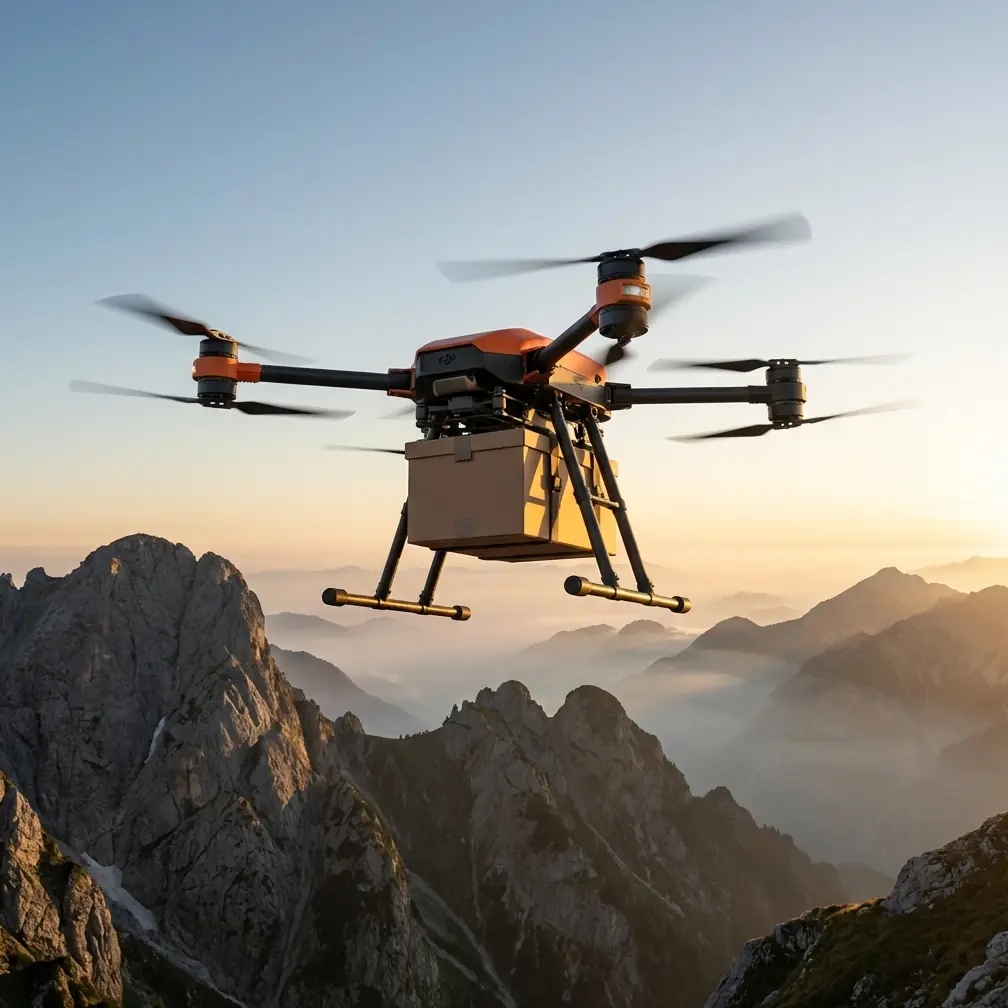
FlyCart 30 in Dusty Vineyards: A Practical Delivery Playbook for News-Grade Reliability
META: A field-focused guide to using the FlyCart 30 in dusty vineyards, with practical tips on payload ratio, winch delivery, dual-battery operations, BVLOS planning, and why stable aerial logistics matters when high-quality results are non-negotiable.
Vineyards are unforgiving places for logistics. Rows are tight. Ground vehicles lose time doubling back. Dust hangs in the air, settles into equipment, and turns a simple supply drop into a planning exercise. If the job is moving tools, samples, irrigation parts, sensors, or time-sensitive materials across a working vineyard, the aircraft has to do more than lift weight. It has to stay dependable when visibility is messy, landing zones are uneven, and every extra trip burns daylight.
That is where the FlyCart 30 deserves a serious look.
I say that as someone who spends more time thinking about route efficiency and uptime than spec-sheet bragging rights. In vineyard delivery, the best platform is not the one with the loudest headline. It is the one that keeps missions moving when conditions are less than ideal. Dusty estates expose weaknesses quickly: poor payload efficiency means more flights, awkward drop methods force risky landings, and power limitations show up right when crews are waiting at the far edge of a block.
The FlyCart 30 stands out because its design lines up with how real field delivery works. Not theoretical work. Real field work.
Why dusty vineyards change the aircraft decision
A vineyard is not an open test range. It is a fragmented operating environment full of practical constraints. One minute you are moving replacement emitters to an irrigation crew. Next, you are sending canopy sensors to a technician on a slope road that a truck cannot reach efficiently. Dust adds another layer. It affects visibility around touchdown points, contaminates staging areas, and makes repeated precision landings less attractive than controlled suspended delivery.
That last point matters more than many buyers realize.
A drone that can deliver without fully landing has a clear operational edge in vineyards. If you can lower cargo by winch instead of forcing the aircraft onto uneven or dusty ground, you cut exposure during the most vulnerable phase of the mission. You also reduce rotor wash disturbance at the delivery site. For vineyards, that is not a luxury feature. It is often the cleaner workflow.
The FlyCart 30’s winch system gives it a practical advantage here over cargo drones that rely too heavily on touchdown-based handoff. In dusty conditions, a winch-supported delivery method can preserve aircraft cleanliness, keep turnaround tighter, and let operators serve more delivery points without hunting for a safe landing patch every time.
What a “professional tool” really means in the field
One reference point from outside agriculture helps frame this. CNN recently disclosed an agreement with the U.S. Federal Aviation Administration to use drones for news gathering in the United States. That development matters because a major media organization is not chasing novelty. It is looking, in the words attributed to CNN senior vice president David Vigilante, for more professional tools for journalism, including the use of multiple unmanned aircraft and camera devices to capture high-quality footage.
That tells us something broader about the UAV market. Serious organizations adopt drones when the aircraft can deliver repeatable, professional outcomes under operational pressure.
Replace “high-quality news footage” with “reliable vineyard logistics” and the logic is the same. A professional platform is one that performs consistently, supports a structured workflow, and can be integrated into mission planning rather than treated like a gadget. The FlyCart 30 fits that category better than lighter, less delivery-focused aircraft because it is built around transport tasks first. In a dusty vineyard, that difference shows up in fewer compromises.
The CNN example also highlights another key idea: multi-aircraft thinking. They specifically want to use multiple unmanned aircraft and camera devices, not a one-size-fits-all setup. Vineyard operators should think similarly. The FlyCart 30 is not meant to replace every drone in your operation. It is the heavy logistics piece in a broader UAV stack. Mapping drones survey rows. Inspection drones check trellis damage or irrigation anomalies. The FlyCart 30 moves what crews actually need after the problem is identified. That is a mature workflow.
Start with payload ratio, not maximum lift
Plenty of teams fixate on raw lift numbers. That is understandable, but in vineyards, payload ratio is the more useful metric. You are not trying to win a lift contest. You are trying to move the most useful cargo with the fewest flights while keeping reserve capacity for safety margins, route adjustments, and wind shifts along slope corridors.
A strong payload ratio changes the economics of the mission without ever mentioning cost. Better payload efficiency means fewer cycles, less battery handling, less crew waiting, and lower cumulative wear across a workday. In a dusty environment, reducing unnecessary sorties has another benefit: fewer exposure events for the aircraft and ground handling team.
This is one area where the FlyCart 30 compares favorably with lighter-duty alternatives that may be capable on paper but become inefficient once you factor in real cargo packaging, protective containers, and the need for stable operations over distance. In vineyards, payload is rarely just a clean lab weight. It includes practical packaging, tie-down considerations, and the need to move awkward items safely. A platform that maintains mission usefulness after those realities are added is the better choice.
Why the winch system is more than a convenience
In dusty vineyards, the winch system is the feature that often shifts the operation from possible to genuinely efficient.
Here is the field logic:
- You avoid repeated landings on loose, dusty surfaces.
- You can deliver to narrow service points between rows.
- You reduce the need for crews to prepare improvised landing zones.
- You keep the aircraft clear of obstacles such as trellis wire, posts, and irregular terrain.
That changes route planning. Instead of mapping missions around where the drone can land, you can map them around where the work is happening. The delivery point becomes task-centered rather than aircraft-centered.
Competitor platforms that lack a mature suspended-delivery workflow often force operators into workarounds. In vineyards, workarounds add friction fast. Every extra minute spent coordinating a landing point or walking cargo from a compromise drop zone chips away at the value of aerial delivery. The FlyCart 30’s winch-centered utility is one reason it excels in this specific environment.
Dual-battery thinking in long vineyard days
Dusty vineyard operations rarely happen as a single clean mission. They unfold in waves: morning setup, mid-day urgent requests, afternoon resupply, occasional re-tasking after field observations. That pattern makes power management a strategic issue, not a checklist item.
A dual-battery architecture matters because it supports continuity. The practical benefit is not just endurance. It is operational resilience. In field logistics, resilience means fewer interruptions, smoother turnaround planning, and more confidence when dispatching to distant blocks where retrieval or manual fallback is slow.
For a logistics lead, that changes scheduling. You can batch deliveries more intelligently, align launches with crew movement, and avoid underloading flights just to stay conservative on power. Dual-battery setups also support a more disciplined maintenance rhythm since battery rotation can be planned around actual route demand rather than improvised under pressure.
If you are building a vineyard drone program, this is one of the clearest dividing lines between a platform that looks useful and one that actually supports daily operations.
BVLOS matters when rows turn into distances
Large vineyard estates are deceptive from the ground. Distances that look manageable in a utility vehicle become time sinks once roads bend around blocks, elevation changes slow movement, or crews are spread across multiple sectors. This is exactly why BVLOS planning enters the conversation.
Even when regulations and approvals vary by region, the operational principle is clear: the farther your vineyard workflow stretches, the more value you extract from route designs that reduce direct line-of-sight dependency. The FlyCart 30 becomes significantly more useful when it is treated as part of a structured route network rather than as a one-off dispatch aircraft.
That means defining repeatable corridors, delivery nodes, holding points, and emergency decision gates. Dust should be factored into these plans, especially around pickup and drop zones where visibility and surface disturbance can affect consistency.
The CNN story again offers a useful analogy. Their interest in multiple aircraft for professional news collection reflects a shift from isolated flights toward coordinated aerial operations. Vineyards benefit from the same mindset. A FlyCart 30 mission should sit inside a system: requests come from field teams, dispatch priorities are ranked, routes are optimized, and delivery confirmation loops back into operations. That is how drone logistics grows up.
Emergency parachute planning is not optional
When operations move over active worksites, agricultural infrastructure, and uneven terrain, recovery planning cannot be an afterthought. An emergency parachute feature matters because it adds a layer of risk mitigation for commercial missions where people, equipment, and crop assets may be below or near the operating area.
In vineyards, safety systems have practical value beyond compliance language. They influence where you can confidently route aircraft, how you brief ground crews, and how conservative you need to be with payload planning in marginal conditions. A platform that includes this kind of safety architecture supports more disciplined operations and better internal acceptance from managers who need to sign off on UAV deployment in active production zones.
For many teams, that internal trust is the hidden bottleneck. The aircraft may be capable, but the program stalls unless stakeholders believe the risk controls are credible. Safety features help bridge that gap.
A practical how-to workflow for vineyard delivery
If your goal is to deploy the FlyCart 30 effectively in dusty vineyard conditions, the process should look something like this.
First, classify cargo by urgency and handling method. Not every item deserves the same routing logic. Time-sensitive repair parts, scouting sensors, lab samples, and routine tools should sit in different dispatch categories. That lets you reserve the aircraft for missions where aerial transport creates real operational gain.
Second, build routes around work zones, not just geography. A vineyard map is not enough. You need to know where crews actually stop, where road access slows down, and where dust is worst during different parts of the day.
Third, use the winch system as the default when the ground surface is loose, uneven, or crowded with vines and support structures. Landing should be the exception where site conditions are clearly favorable.
Fourth, optimize around payload ratio rather than chasing the largest possible single load. The best route is often the one that combines the right cargo groupings with the least handling friction, not the one that stuffs every flight to the limit.
Fifth, create battery rotation rules that match the rhythm of the estate. A dual-battery platform becomes more valuable when your charging, swapping, and dispatch logic are all aligned with actual field demand.
Sixth, define emergency procedures before peak season begins. Include parachute-related response protocols, drop-zone clearance steps, and recovery responsibilities for field supervisors.
If you are planning a vineyard setup and want to compare route layouts or delivery methods for your blocks, this direct WhatsApp line is useful: https://wa.me/85255379740
Where the FlyCart 30 pulls ahead
The FlyCart 30 is not interesting because it is a drone. Plenty of drones are available. It is interesting because its feature set lines up unusually well with the friction points of vineyard delivery.
The payload ratio supports fewer, more useful missions. The winch system suits dusty, awkward delivery points better than landing-dependent designs. Dual-battery planning gives operations teams more continuity across long field days. BVLOS-oriented route thinking expands the value of the platform on larger estates. The emergency parachute strengthens commercial risk management.
Taken together, those capabilities make the aircraft feel less like an experimental add-on and more like a logistics asset.
That distinction matters. CNN’s move to work with the FAA and explore multiple unmanned aircraft for high-quality news gathering shows what happens when drones mature into professional tools. The same shift is visible in agriculture. Vineyards do not need novelty. They need reliability, workflow fit, and results under messy conditions. The FlyCart 30 answers that brief better than many alternatives because it is built for the realities that field teams deal with every day, not the ideal conditions of a demo field.
If your vineyard operation struggles with distance, dust, and delivery delays between crews and supply points, the right question is no longer whether drone logistics has a place. The right question is whether your aircraft is built for the actual job. In this environment, the FlyCart 30 makes a strong case for itself.
Ready for your own FlyCart 30? Contact our team for expert consultation.