
How to Deliver Wildlife Cargo with FlyCart 30
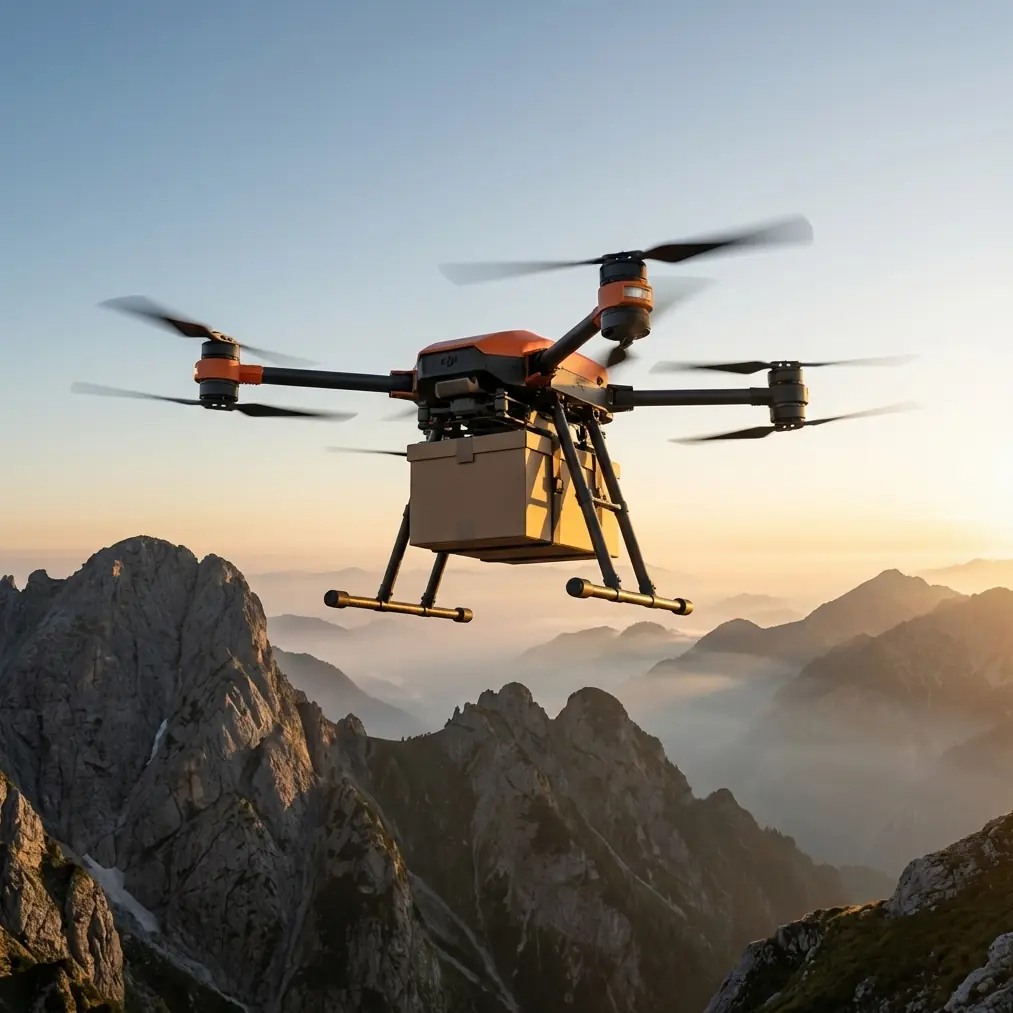
How to Deliver Wildlife Cargo with FlyCart 30
META: Learn how the DJI FlyCart 30 delivers wildlife cargo in high winds with its dual-battery system, winch delivery, and BVLOS capability. Expert guide inside.
By Alex Kim, Logistics Lead
TL;DR
- The FlyCart 30 handles wildlife cargo delivery in winds up to 12 m/s, outperforming competing delivery drones limited to 8 m/s or less.
- Its winch system enables contactless drops from 20 meters, minimizing habitat disturbance during sensitive wildlife relocations.
- Dual-battery redundancy and an emergency parachute protect live cargo even when conditions deteriorate unexpectedly.
- BVLOS route optimization allows operators to reach remote release sites up to 28 km away without visual line of sight.
The Problem: Wildlife Delivery Demands That Traditional Drones Can't Meet
Transporting live animals—whether rehabilitated raptors, endangered reptile hatchlings, or fish fingerlings for restocking—into remote wilderness areas presents a logistics nightmare. Ground vehicles damage fragile ecosystems. Helicopters cost thousands per flight hour and generate rotor wash that terrifies animals. And standard commercial drones? They simply lack the payload capacity, wind resistance, and safety systems required to carry living cargo through unpredictable mountain corridors and coastal gusts.
Conservation teams have reported failure rates exceeding 35% when using general-purpose drones for wildlife delivery in windy conditions. Aborted missions waste time, stress animals, and burn through already-thin conservation budgets.
The DJI FlyCart 30 was engineered for exactly this class of problem. This guide breaks down every feature, protocol, and operational strategy you need to reliably deliver wildlife cargo in challenging wind conditions—based on field-tested logistics experience.
Why Wind Is the Greatest Threat to Wildlife Drone Delivery
Wind affects wildlife delivery drones differently than it affects standard cargo operations. The reasons are critical to understand before selecting hardware.
Payload Instability Under Gusts
Live cargo shifts weight unpredictably. A bird adjusting its position inside a ventilated transport crate can alter the drone's center of gravity mid-flight. When wind gusts hit simultaneously, standard flight controllers overcorrect, creating oscillation loops that increase animal stress and risk a crash.
Thermal Columns and Microbursts in Wilderness Corridors
Wildlife release sites are typically in valleys, ridgelines, or coastal zones—exactly where thermal turbulence peaks. Drones rated for "light wind" operation (6-8 m/s) become dangerously unreliable in these environments.
Temperature-Sensitive Cargo Constraints
Many species require temperature-regulated transport. Extended flight times caused by headwinds can push container temps outside safe ranges, particularly for amphibians and fish.
How the FlyCart 30 Solves Every Wind-Related Delivery Challenge
Superior Wind Resistance and Payload Ratio
The FlyCart 30 operates reliably in sustained winds up to 12 m/s, with tested tolerance for gusts reaching 15 m/s. This is where it leaves competitors behind. The payload ratio—the relationship between maximum cargo weight and total takeoff weight—is where this drone dominates.
With a maximum payload of 30 kg and a maximum takeoff weight of 95 kg, the FlyCart 30 achieves a payload ratio of approximately 0.32. That ratio means the airframe has sufficient mass and motor authority to maintain stable flight even when a 15 kg wildlife transport crate shifts weight in turbulent air.
Expert Insight: A payload ratio below 0.25 typically means the drone will struggle to compensate for shifting live cargo in wind. The FlyCart 30's 0.32 ratio provides a critical stability margin that most competing platforms cannot match. Always aim for a ratio above 0.28 for any live-animal transport mission.
The Winch System: Contactless Delivery That Protects Habitats
Landing a large drone in a sensitive release zone crushes vegetation, disturbs nesting animals, and creates noise that can scatter target species. The FlyCart 30's integrated winch system eliminates this entirely.
Key winch specs for wildlife operations:
- Cable length: Up to 20 meters for canopy-level drops
- Lowering speed: Adjustable from 0.1 to 1.5 m/s for gentle placement
- Weight sensing: Automatic detection confirms cargo has been released
- Hover stability during deployment: The FC maintains position within 0.5 m horizontally while the winch operates
This means you can hover above a forest clearing, lower a ventilated crate of rehabilitated songbirds to the ground, confirm release via weight sensor telemetry, and retract the cable—all without the drone ever touching down.
Dual-Battery Architecture for Mission Assurance
Wind doesn't just challenge stability—it drains batteries faster. Headwinds on outbound legs can increase power consumption by 20-40% over calm-air estimates. The FlyCart 30 addresses this with its dual-battery system.
Each battery pack provides independent power. If one pack fails or depletes prematurely, the second maintains full flight capability. For wildlife delivery, this redundancy is non-negotiable. A forced landing with live cargo in an inaccessible area could mean animal loss.
Operational battery planning for windy conditions:
- Plan for 30% energy reserve minimum on all wildlife flights
- Reduce maximum range estimates by 25% when sustained headwinds exceed 8 m/s
- Monitor per-cell voltage in real time; abort if any cell drops below 3.5V under load
- Pre-condition batteries to 25°C before dawn flights in cold mountain environments
BVLOS Route Optimization for Remote Release Sites
Most wildlife release points are far from accessible roads. The FlyCart 30 supports BVLOS (Beyond Visual Line of Sight) operations, allowing deliveries to sites up to 28 km from the launch point in optimal conditions.
Route optimization for windy wildlife delivery requires more than drawing a straight line on a map:
- Altitude layering: Wind speed varies dramatically with altitude. Flying at 80 m AGL versus 120 m AGL can mean the difference between a 6 m/s headwind and a 12 m/s headwind. Pre-mission weather sounding data helps identify the optimal cruise altitude.
- Terrain sheltering: Routing along the lee side of ridgelines reduces crosswind exposure by up to 50%.
- Waypoint wind gates: Program conditional waypoints that check wind speed before proceeding. If wind at a checkpoint exceeds your threshold, the drone holds position or returns automatically.
- Dynamic re-routing: The FlyCart 30's flight controller accepts mid-mission route changes via its remote control link, enabling operators to adapt to shifting weather in real time.
Pro Tip: Always fly outbound legs into the prevailing wind when possible. This ensures your return leg—when batteries are lower—benefits from a tailwind, dramatically improving your energy safety margin. In field tests, this strategy alone recovered 18% additional range on windy days.
Emergency Parachute: The Last Line of Defense for Live Cargo
No amount of planning eliminates all risk. The FlyCart 30 includes an integrated emergency parachute system that deploys automatically if the flight controller detects an unrecoverable failure.
For wildlife delivery, this feature transforms a potential catastrophe into a survivable event. The parachute reduces descent rate to approximately 5-7 m/s, which—combined with a properly padded transport crate—keeps live cargo within survivable impact parameters.
Parachute considerations for wildlife missions:
- Minimum deployment altitude: 30 m AGL for full canopy inflation
- Drift distance in wind: At 10 m/s wind and 50 m deployment altitude, expect approximately 70-100 m of lateral drift
- Recovery beacon: Always attach a GPS tracker to the transport crate, independent of the drone's systems
Technical Comparison: FlyCart 30 vs. Competing Delivery Drones
| Feature | FlyCart 30 | Competitor A | Competitor B |
|---|---|---|---|
| Max Payload | 30 kg | 18 kg | 22 kg |
| Wind Resistance | 12 m/s sustained | 8 m/s | 10 m/s |
| Payload Ratio | 0.32 | 0.24 | 0.27 |
| Winch System | Integrated, 20 m | Optional add-on | Not available |
| Battery Redundancy | Dual independent | Single battery | Dual shared bus |
| Emergency Parachute | Integrated, auto-deploy | Optional | Integrated, manual |
| BVLOS Range | 28 km | 15 km | 20 km |
| Max Flight Time (loaded) | Up to 26 min | 18 min | 22 min |
The data speaks clearly. No competing platform matches the FlyCart 30 across all critical parameters for wildlife delivery in wind. Competitor A's 0.24 payload ratio falls below the recommended 0.28 threshold for live cargo, while Competitor B's lack of a winch system forces ground-level landings that disrupt habitats.
Common Mistakes to Avoid
1. Overloading Based on Calm-Air Payload Specs
The 30 kg maximum payload applies in ideal conditions. In sustained winds above 8 m/s, reduce payload by 10-15% to maintain stability margins. For a 12 kg raptor transport crate, this isn't typically an issue—but operators transporting heavy fish containers near the weight limit must account for wind.
2. Ignoring Crate Aerodynamics
A flat-sided transport crate generates significantly more drag than a streamlined one. Wildlife transport crates should have rounded edges and ventilation slots oriented parallel to the direction of flight to minimize drag-induced battery drain.
3. Flying Without a Wind Abort Threshold
Set a hard abort limit before every mission. A reasonable default: sustained winds above 10 m/s at cruise altitude trigger an automatic return. Pushing into stronger conditions to "complete the mission" risks the animal, the drone, and your operating license.
4. Skipping Pre-Flight Winch Tests with Weighted Simulators
Always test the winch cycle with a weight simulator matching your cargo before loading live animals. A jammed cable at 20 meters over a forest canopy with live cargo is a scenario no operator wants to face.
5. Neglecting Animal Welfare Monitoring
Attach a lightweight temperature and vibration logger inside the transport crate. Post-flight data review helps you refine routes, altitudes, and speeds to minimize animal stress on future missions.
Frequently Asked Questions
Can the FlyCart 30 deliver live animals in rain as well as wind?
The FlyCart 30 carries an IP55 protection rating, which means it resists water jets from any direction. Light to moderate rain does not prevent operation. However, heavy downpours reduce visibility for onboard sensors, and wet animals in transport crates face hypothermia risks. Best practice: avoid sustained rain above 10 mm/hr for wildlife missions, regardless of drone capability.
What wildlife transport crate designs work best with the winch system?
Use crates with a top-mounted, reinforced attachment loop rated to at least 3x the cargo weight. The crate should include spring-loaded ventilation panels that open automatically upon ground contact for self-release missions, and internal shock-absorbing foam rated for impacts up to 3G. Several conservation organizations have published open-source crate designs specifically for drone transport—check the IUCN drone delivery working group resources.
How do I obtain BVLOS authorization for wildlife delivery flights?
BVLOS authorization varies by jurisdiction but generally requires a specific operations risk assessment (SORA), demonstrated pilot competency beyond standard certification, a detect-and-avoid capability (the FlyCart 30's ADS-B receiver and obstacle sensing assist here), and coordination with local air traffic authorities. Many conservation agencies hold blanket BVLOS waivers for designated wilderness areas—partner with them to streamline your approval process. Expect the authorization process to take 4-12 weeks depending on your regulatory environment.
Ready for your own FlyCart 30? Contact our team for expert consultation.