
FlyCart 30 for Remote Wildlife Delivery: What Utility Fire
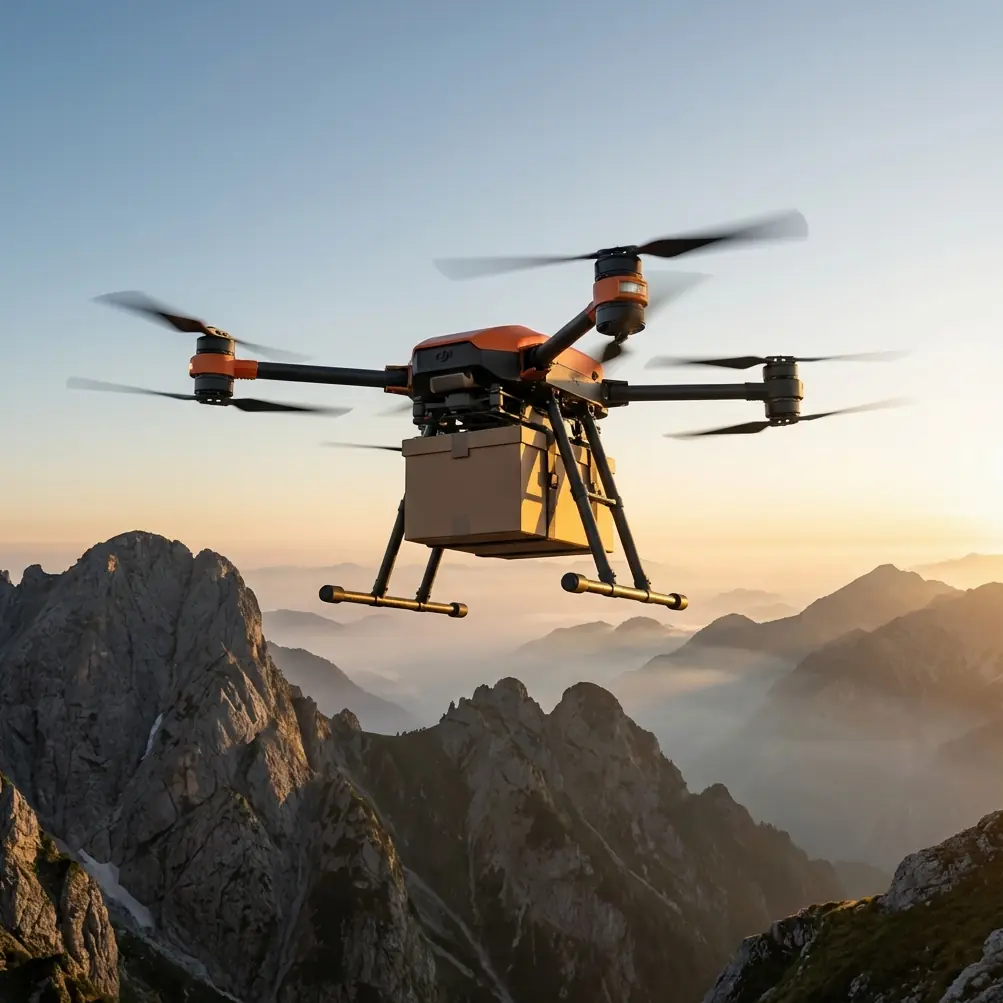
FlyCart 30 for Remote Wildlife Delivery: What Utility Fire Response in Xinjiang Reveals About Real-World Heavy-Lift UAV Operations
META: A field-informed look at FlyCart 30 for remote wildlife delivery, using Xinjiang utility drone fire response to explain payload logic, safety prep, route planning, BVLOS considerations, and winch-based operations.
When people discuss heavy-lift drones, the conversation often drifts toward headline specs. Payload, range, batteries, automation. Useful, yes, but not enough.
What matters in the field is whether the aircraft can solve a hard problem where access is limited, timing matters, and a failed mission has consequences beyond inconvenience. That is why a recent utility operation in Xinjiang deserves attention from anyone evaluating the FlyCart 30 for remote wildlife delivery.
On April 7, State Grid Xinjiang Electric Power reportedly used a large-payload drone for the first time to handle a fire hazard along the corridor of the 750 kV Wuge No. 1 transmission line. The aircraft carried out a precise drop of firefighting rounds and successfully addressed a sudden smoke-and-fire risk within the powerline corridor.
Even if your mission has nothing to do with electrical infrastructure, the operational lesson is clear: a heavy-lift UAV becomes valuable when it can place the right payload in the right location, with precision, under conditions that are difficult or slow for ground teams to reach.
That is the exact logic behind using the FlyCart 30 to support wildlife work in remote terrain.
The real problem is not distance alone
Remote wildlife delivery sounds simple if reduced to transport. Move supplies from point A to point B. But field teams know the actual challenge is messier.
You may be moving medical packs, hydration supplies, tracking collars, feed supplements, sample kits, or rescue support materials into areas with poor road access. The drop zone may sit near cliffs, marshland, brush, snowbound tracks, or protected habitats where vehicle intrusion creates its own problem. Time windows can be narrow. Weather changes quickly. The people receiving the load may be operating from temporary camps or moving observation points.
In those situations, the aircraft is not replacing a van. It is replacing delay.
The Xinjiang transmission-line case shows why precision matters more than brute force. The story was not merely that a drone lifted something heavy. It was that the drone delivered a mission-specific payload accurately enough to neutralize a hazard in a transmission corridor carrying 750 kV infrastructure. That level of placement discipline is highly relevant to wildlife logistics, where a load may need to be lowered into a small clearing without disturbing nearby animals or damaging vegetation.
For FlyCart 30 users, that changes how you should think about mission design. The core question is not “How much can it carry?” but “Can it deliver what I need, exactly where I need it, without creating a second operational risk?”
Why heavy payload capacity matters differently in wildlife missions
Payload ratio is often treated like a marketing metric. In practice, it defines your options.
A stronger payload ratio lets operators consolidate sorties. That matters in remote wildlife work because every additional flight adds battery cycling, weather exposure, rotor wash near the site, and operational complexity for the receiving team. If one aircraft can deliver a more complete mission package in fewer trips, the safety margin often improves.
The Xinjiang operation used a large-payload platform because the task demanded a specific intervention tool, not just a camera. That distinction matters. A drone becomes operationally transformative when it carries something that changes the outcome, not when it merely observes the problem.
For wildlife delivery, that “outcome-changing payload” may be a temperature-controlled medical parcel, sedative reversal supplies for an authorized veterinary team, emergency nutrition, field sensors, camera trap replacements, or rescue gear for a tagging crew working beyond normal vehicle reach. The FlyCart 30 becomes useful when the payload is substantial enough, and mission handling is controlled enough, to make that delivery practical in one cycle.
Precision delivery is where the winch system earns its keep
Dropping a package and delivering a package are not the same thing.
In remote wildlife scenarios, landing can be the worst option. Uneven ground, tall grass, soft soil, loose rock, and animal presence may make touchdown unsafe or disruptive. A winch system changes the mission entirely because it allows the aircraft to remain in a stable hover while lowering cargo into a constrained area.
That is where the Xinjiang example offers a second operational clue. The reported success hinged on precise placement. Whether the payload is a firefighting round in a utility corridor or a sealed veterinary load near a protected habitat, accuracy at the final meter is what determines whether the aircraft is truly useful.
For FlyCart 30 operators, the winch is not an accessory in this kind of mission profile. It is often the main reason the operation works. It reduces the need to find a clean landing zone, limits surface disturbance, and lets the receiving team guide the package into position with less exposure to the aircraft.
It also improves flexibility during route optimization. Instead of planning around where the drone can safely land, you plan around where the cargo needs to end up.
Pre-flight cleaning is not cosmetic. It is part of safety readiness
A lot of failures begin long before takeoff.
Dust on sensors, residue around latches, debris near the winch line path, contamination around battery interfaces, and grime obscuring status indicators can all degrade confidence in the aircraft. In wildlife environments, this gets worse fast. Fine dust, grass fibers, mud splash, salt air, and organic debris are constant companions.
That is why one of the smartest habits for FlyCart 30 teams is a strict pre-flight cleaning step tied specifically to safety features. Not a casual wipe-down. A checklist.
Before a remote wildlife sortie, the crew should inspect and clean:
- obstacle sensing surfaces
- landing gear contact points
- winch attachment and line path
- battery terminals and locking areas
- vent openings
- payload release interfaces
- downward vision areas
- parachute housing and deployment path, if fitted within the operating configuration
The emergency parachute deserves special attention in any heavy-lift discussion. A parachute system is only reassuring if it is clean, unobstructed, and checked as part of normal pre-flight discipline. The same goes for dual-battery security. Heavy-payload work leaves less room for tolerance if a battery is not seated properly or if contamination interferes with contact reliability.
This may sound basic, but field reliability often lives inside basic routines. Remote wildlife missions are exactly where crews are tempted to rush because the team on the ground is waiting. That is when cleaning and inspection become operational safeguards, not housekeeping.
BVLOS changes the planning standard, not just the range
Many remote delivery concepts eventually lead to BVLOS thinking. If the wildlife team is far enough from the launch point, or terrain blocks direct observation, visual line of sight can become limiting.
But BVLOS is not just “farther flight.” It imposes a different quality threshold on planning, routing, communication, and contingencies. The aircraft has to be treated as part of a system rather than a pilot-centered tool.
Again, the Xinjiang powerline case offers a practical analogy. A mission involving a sudden hazard in a transmission corridor demands confidence in placement, route control, and aircraft performance around critical infrastructure. That is not the same as recreational flying with cargo attached. It is managed utility-grade tasking.
For FlyCart 30 wildlife operations, BVLOS planning should account for:
- terrain masking and signal continuity
- alternate delivery points
- safe loiter areas
- battery reserve for aborted drops
- route segmentation by weather exposure
- clear no-entry zones around sensitive habitats
- communication steps for the receiving field crew
Route optimization matters most when it reduces uncertainty rather than simply cutting distance. The shortest route is not always the safest route. A corridor with predictable wind, fewer elevation surprises, and cleaner recovery options may be the better choice, even if it adds time.
Dual-battery architecture supports mission resilience
Heavy-lift logistics in remote areas depend on predictable power behavior. That is one reason dual-battery thinking matters so much for the FlyCart 30 conversation.
In a wildlife delivery profile, you are often balancing payload mass, ambient temperature, elevation, hover time at the delivery point, and return energy. A dual-battery setup supports resilience because it gives the system a stronger foundation for sustained lift and controlled delivery phases, especially when the aircraft needs to hover while lowering cargo rather than simply release and depart.
That hover phase is easy to underestimate. It can be the most delicate part of the mission. The aircraft is no longer just transiting. It is actively managing position, load stability, and power draw while a package moves beneath it.
The transmission-corridor incident in Xinjiang highlights the same principle from another angle. Precision intervention in a critical area is only possible when the platform has enough performance headroom to execute the final action cleanly. In wildlife delivery, that translates to stable hover authority and enough reserve to abort, reposition, and try again if the first placement is not acceptable.
A better way to frame FlyCart 30 for wildlife delivery
Too many buyers frame heavy-lift drones as oversized couriers. That misses the point.
The right way to think about a platform like the FlyCart 30 is as a remote access tool for high-value field tasks. Delivery is the mechanism, not the mission. The mission is preserving time, reducing terrain exposure, limiting ground disturbance, and extending what small teams can accomplish in hard-to-reach places.
When viewed that way, the Xinjiang utility use case becomes highly relevant. The operation showed three things that matter well beyond utility fire response:
First, a large-payload drone can be trusted with a serious operational task, not just observation.
Second, the value came from precision at the point of delivery.
Third, the mission addressed a corridor risk that would have been slower or harder to manage through conventional access alone.
Swap the powerline corridor for remote habitat access, and the logic still holds.
What an effective operating model looks like
If I were building a FlyCart 30 workflow for wildlife delivery, I would not start with the aircraft. I would start with the mission envelope.
Define the payload classes. Map the terrain types. Separate urgent flights from routine resupply. Decide when the winch is mandatory versus optional. Build pre-flight cleaning into the signoff process. Create battery swap discipline around actual field temperatures, not lab assumptions. Test route optimization against wind and elevation, not just map distance. And if BVLOS is part of the future operating concept, design the communication and contingency structure before scaling mission frequency.
That may sound rigorous for a drone delivery program, but the alternative is pretending that remote logistics is simple because the aircraft is advanced.
It never is.
If your team is assessing whether FlyCart 30 fits a wildlife delivery role, the most useful early step is to pressure-test the mission with someone who understands cargo workflows, not just flight specs. If you want to compare route design, payload handling, or field deployment logic in a practical way, you can message a drone logistics specialist here.
The bottom line
The Xinjiang case was a utility fire-risk response, not a wildlife mission. Yet it offers one of the clearest real-world signals for FlyCart 30 buyers: heavy-lift UAV value emerges when precision payload delivery solves an access problem that ground methods cannot solve fast enough.
That is the heart of remote wildlife logistics.
A drone like the FlyCart 30 is not compelling because it is large. It is compelling when its payload ratio, winch system, dual-battery design, route discipline, and safety layers work together to move critical supplies into difficult terrain with control. Add a serious pre-flight cleaning routine and disciplined operational planning, and the aircraft starts to look less like a gadget and more like infrastructure.
That is the threshold that matters.
Ready for your own FlyCart 30? Contact our team for expert consultation.