
FlyCart 30 Field Report: Coastal Filming Tactics
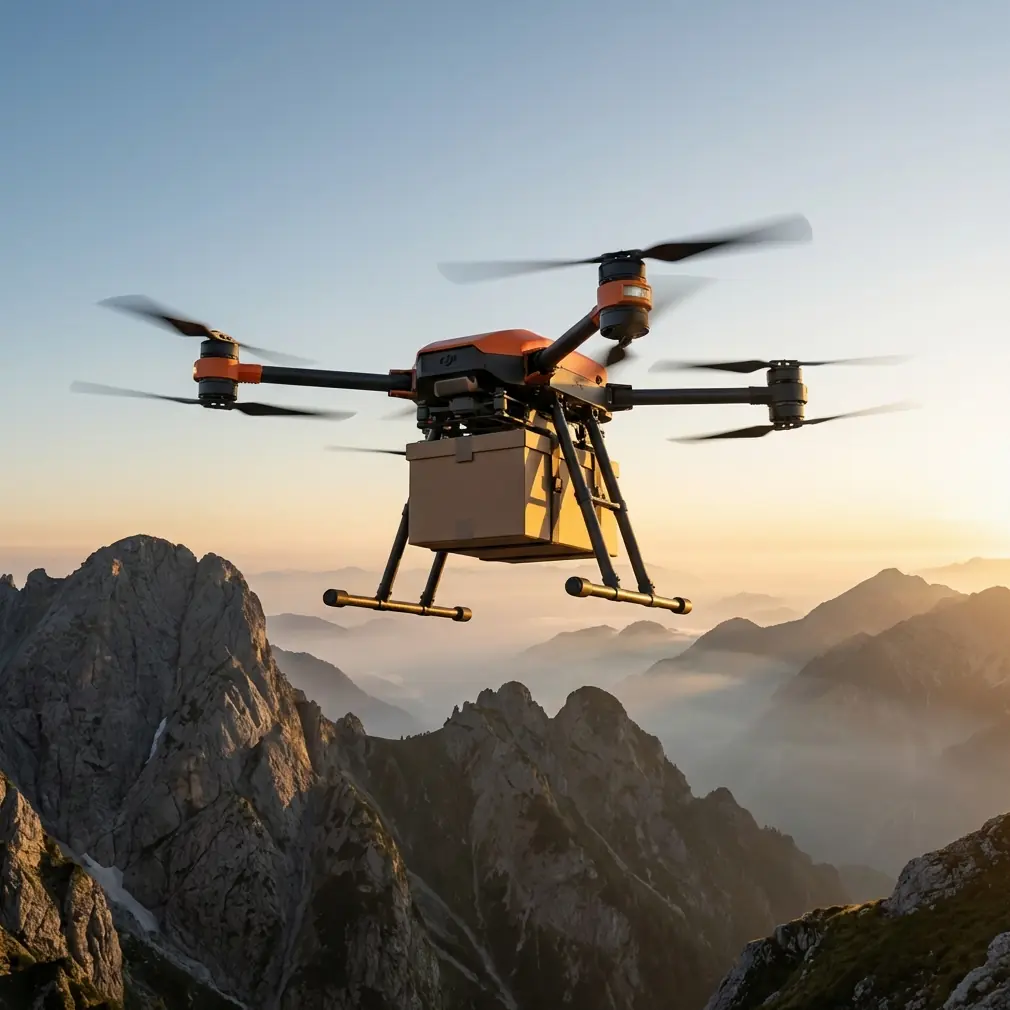
FlyCart 30 Field Report: Coastal Filming Tactics for Complex Terrain
META: Practical FlyCart 30 field report for coastal filming missions, covering payload balance, winch use, dual-battery planning, EMI antenna adjustment, route design, and safety.
Coastlines punish loose planning. Wind shifts off the water, cliffs break line of sight, salt haze softens contrast, and every improvised landing zone seems to sit beside metal railings, power equipment, or rock walls that can distort a control link at the wrong moment.
That is exactly where the FlyCart 30 starts to become more than a heavy-lift platform on a spec sheet. In the field, its value is not just that it can carry a useful camera package or move gear between difficult points. It is that the aircraft gives a crew options when the terrain keeps taking options away.
I’m writing this in the voice I use on actual mission briefs. My background is logistics, not marketing, so I tend to judge an aircraft by what it lets a team do under pressure. For coastline filming, the FlyCart 30 earns its place when the operation involves awkward access, repeated repositioning, and equipment handoffs in places where carrying cases by foot costs more time than the flight itself.
The first lesson is simple: payload ratio matters more on the coast than many crews expect.
A heavy-lift aircraft can tempt operators into loading for convenience rather than mission efficiency. That is a mistake with cliff roads, beach ridges, and narrow service paths. The FlyCart 30 is most useful when the payload is selected around the route, not the other way around. If the aircraft is moving camera support gear, batteries, rigging components, or compact filming kits between positions, the best results usually come from keeping reserve margin rather than chasing the highest possible lift. On a coastal mission, that reserve translates into cleaner handling during gust fronts and more predictable power behavior when the aircraft has to climb away from broken terrain.
The FlyCart 30’s dual-battery architecture is especially relevant here. Redundancy is only part of the story. Operationally, dual-battery planning gives the crew a more disciplined way to think about mission segments. I prefer to break a coastline job into launch-to-transfer, transfer-to-drop, and recovery-to-alternate-landing phases. That sounds rigid until you are dealing with a route that crosses a cove, skirts a bluff, and returns through turbulent air spilling over a ridge. In those conditions, battery strategy should not be treated as a single total-flight estimate. It should be built around escape paths.
That changes route optimization from a software exercise into a terrain exercise.
On paper, the shortest route between two filming points may cut across a bend in the coast. In practice, the better route may arc slightly inland to preserve signal quality, reduce exposure to sea spray, and keep a safer emergency corridor. This is where BVLOS planning enters the conversation, even if a specific mission remains inside a visual framework. Thinking in BVLOS terms forces a crew to define communication logic, route checkpoints, fallback zones, and terrain-related blind spots before takeoff. The discipline is useful even when regulations or site conditions keep the operation closer in.
For readers focused on coastline cinematography, one FlyCart 30 feature deserves more attention than it usually gets: the winch system.
A standard landing is not always the smartest way to deliver or recover equipment near cliffs, elevated pathways, or unstable shoreline surfaces. The winch changes the geometry of the job. Instead of forcing the aircraft to commit to a cramped touchdown zone with rotor wash bouncing off stone or scrub, the pilot can hold a more stable hover in cleaner air and lower the payload to the team below. That reduces the need to bring the aircraft close to fencing, signage, parked service vehicles, or uneven rock shelves. It also minimizes the rotor disturbance that can ruin a delicate setup area or scatter loose kit near the water’s edge.
I’ve seen crews gain real time with this method, but the bigger benefit is risk reduction. A controlled hover-and-lower sequence often avoids the chain reaction that starts when people rush to “just land quickly” in a bad spot.
There is another coastal problem that deserves blunt discussion: electromagnetic interference.
It does not always announce itself dramatically. Sometimes it shows up as inconsistent heading behavior near infrastructure, brief signal quality drops, or a link that feels weaker from one launch position than it did from another only a few dozen meters away. Coastline filming sites often include hidden EMI contributors: communication towers on headlands, power installations near access roads, marine equipment, reinforced viewing platforms, and clustered tourist infrastructure.
On one shoreline mission, the issue became obvious during pre-departure checks. The aircraft link quality was acceptable but uneven, and the telemetry confidence shifted more than expected when the nose angle changed on the pad. The fix was not complicated, but it required attention: we adjusted the ground antenna orientation and moved the control position away from a metal barrier line and nearby electrical hardware. That small antenna adjustment materially improved consistency. This is the kind of detail crews skip when they are eager to launch before the light changes, yet it can determine whether the mission feels calm or chaotic.
The operational significance is straightforward. EMI mitigation is not just about preserving command authority. It helps protect route accuracy, stabilizes crew confidence, and reduces the temptation to overcorrect in flight. When the environment is already complex, removing one avoidable variable is worth more than most people realize.
That same mindset applies to the emergency parachute system. Coastal terrain has too many hard edges for crews to think about emergency systems as a background feature. A parachute is not a substitute for good planning, and nobody should fly as if a backup system erases risk. But in real operations, redundancy changes decision quality. It allows the team to set harder go/no-go rules and still execute demanding tasks with a margin that would otherwise be unavailable.
The point is not fear. The point is professionalism.
If I were building a FlyCart 30 workflow specifically for filming coastlines, I would focus on five field habits.
First, establish launch sites based on signal cleanliness, not just convenience. A beautiful overlook may be a poor command position if it sits beside steel railings, public communications hardware, or dense electrical infrastructure. Walk the site. Test orientation. Change position if the link behaves differently with minor heading changes.
Second, treat payload ratio as a handling variable. The aircraft may be capable of carrying substantial loads, but a coastline mission with variable wind is rarely the place to run tight margins. A lighter, cleaner payload plan often delivers better mission reliability than a heavier all-in-one move.
Third, use the winch system as a precision tool, not as an occasional accessory. If the receiving zone is narrow, sloped, sandy, or unstable, a hover transfer may be the safer and faster choice. This is especially true where the shoreline leaves no room for a clean touchdown and immediate departure.
Fourth, design routes with terrain logic. Do not optimize only for distance. Optimize for signal continuity, wind exposure, recovery options, and fallback landing points. The shortest line over a cove can become the worst line once the sea breeze builds.
Fifth, brief emergency procedures as if the aircraft were already committed to a compromised return path. The emergency parachute, alternate drop zones, and battery phase limits should all be reviewed before the aircraft leaves the pad.
Those habits sound conservative, but they actually support creative work. A film crew operates best when the logistics layer is boring in the best possible way. If the transport platform moves cleanly, delivers gear accurately, and stays predictable under changing conditions, the camera team gets more time for framing, timing, and movement.
That is where the FlyCart 30 fits into a coastline production environment. It is not just a cargo drone and not just a support aircraft. It becomes a force multiplier for crews working across separated terrain features. One team can prep on a cliff path while another stages lower on the shoreline. Equipment can move without long manual carries. Batteries and rigging can be repositioned without burning daylight. The result is a production footprint that feels more connected, even when the location itself is fragmented.
There is also a less obvious advantage: decision speed.
Complex coastal shoots often fail by accumulation. Not one major mistake, just too many small delays. A delayed handoff. A poor landing point. A route that looked fine until gusts hit the return leg. Signal inconsistency that forces a reset. Every one of those problems drains attention from the actual filming objective. When a platform like the FlyCart 30 is integrated properly, it compresses those friction points. The operation becomes easier to repeat, and repeatability is what separates a one-off success from a dependable field method.
For teams still learning the aircraft, the smartest approach is to rehearse the non-cinematic parts first. Practice antenna positioning under suspected EMI conditions. Run winch drops into constrained shoreline-style zones. Simulate route changes based on shifting winds. Build battery decision thresholds that assume terrain penalties rather than ideal open-air performance. Those drills do not just improve safety; they sharpen the crew’s understanding of what the aircraft is actually good at.
And if you are coordinating a FlyCart 30 mission around a difficult coast and want to compare route logic or antenna setup ideas with another operator, this quick field chat link can help: message me here.
The big takeaway is that the FlyCart 30 rewards disciplined crews. On a coastline, its strongest features are not isolated bullet points. The dual-battery design supports better contingency thinking. The winch system opens delivery options where landing is a liability. BVLOS-style route optimization improves even shorter flights by forcing clearer planning. The emergency parachute adds a meaningful layer to risk management. And careful antenna adjustment in the presence of electromagnetic interference can be the difference between a smooth sortie and a mission that never quite settles down.
For filming in complex terrain, that combination matters. Not because it sounds advanced, but because the coast is indifferent to ambition. It only responds to preparation.
Ready for your own FlyCart 30? Contact our team for expert consultation.