
FlyCart 30 in Dusty Forest Operations: A Field Report
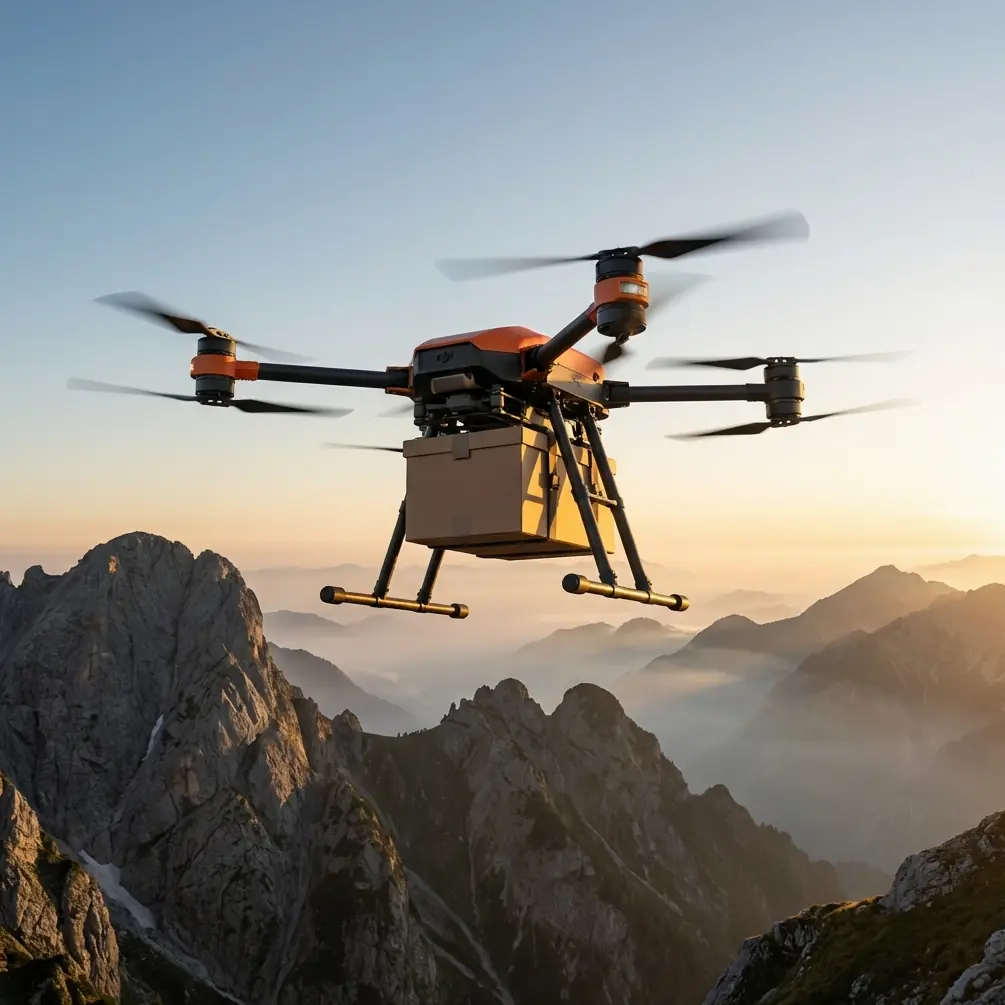
FlyCart 30 in Dusty Forest Operations: A Field Report on Range, Rigging, and Reliable Delivery
META: Practical FlyCart 30 field report for dusty forest work, covering antenna positioning, payload ratio, winch use, dual-battery planning, BVLOS considerations, and emergency safety setup.
I’ve spent enough time around utility UAVs to know that the spec sheet rarely tells you what matters most once the aircraft leaves the launch pad. Forest work proves that quickly. Dust gets into connectors, tree lines distort links, slopes complicate pickup zones, and a route that looks simple on a satellite map becomes awkward once trunks, canopy gaps, and wind channels start shaping the air.
For teams looking at the FlyCart 30 for forest operations, especially in dry and dusty conditions, the right question is not whether the aircraft can lift a load. It can. The real question is whether you can keep the aircraft, payload, and link stable enough to make each mission repeatable.
That distinction matters. A one-off lift is not a workflow. A workflow is what happens when the aircraft flies the same corridor again and again, crews trust the result, and your margin for error does not disappear just because visibility drops or the landing zone is ringed by branches.
This field report is built around that reality.
Why the FlyCart 30 fits forest logistics better than many crews expect
The FlyCart 30 was designed as a transport platform, and that changes how you should evaluate it in wooded terrain. Most pilots first notice payload capability. Fair enough. But in forest work, the more meaningful advantage is the combination of payload flexibility, a winch-based delivery option, and a dual-battery architecture that gives crews choices.
Those three details are operationally connected.
A winch system matters in the forest because it reduces the number of times you need to commit the entire aircraft to a tight clearing. In dusty terrain, every avoided touchdown is useful. Rotor wash can kick up loose material, obscure visual references, and accelerate wear on exposed surfaces. Lowering a load into a constrained zone keeps the aircraft higher, cleaner, and farther from lateral branch strikes. That is not just convenient. It changes site selection. A pickup or drop point that would be marginal for a full landing can become workable when the aircraft only needs a safe hover position overhead.
The dual-battery setup matters for similar reasons. In forest operations, flexibility beats theoretical maximum endurance every time. If you are planning around longer corridors, temperature swings between shaded valleys and exposed ridges, and extra hover time for precision lowering, energy planning becomes central to mission quality. Dual-battery design gives crews a more resilient operating framework because power availability is not tied to a single pack event. It also supports more disciplined turnaround planning when multiple sorties are stacked into a work block.
And then there is payload ratio, which many operators discuss too casually. In forests, payload ratio is not just a lift number divided by aircraft mass. It is your practical relationship between carried load and the energy, hover stability, route length, and safety margin required to move that load through a cluttered environment. If your route demands altitude changes, brief station-keeping, and conservative obstacle clearance, an aggressive payload plan can punish you faster than it would on an open industrial site.
The FlyCart 30 works well when you treat payload ratio as a mission design variable, not a bragging point.
Dust changes the mission before takeoff
Dusty forest work has a specific rhythm. You often launch from rough ground, often near logging roads, dry service tracks, or temporary production areas. Fine particles get everywhere. They affect prop wash behavior near the ground, reduce confidence during low-altitude maneuvering, and can create a false sense of link weakness when the real issue is poor setup discipline.
This is where I see crews lose range they should have had.
Antenna positioning is one of the simplest improvements you can make, and it has an outsized effect in wooded terrain. If you want maximum range from the FlyCart 30 in forests, stop treating the control station as something you simply unfold near the vehicles. The control position should be chosen like a relay point. Elevation matters. Clear line of sight toward the route matters. The first few hundred meters matter most.
The goal is not perfect visibility to the aircraft for the whole mission. In forests, that is often unrealistic. The goal is to avoid handicapping the link at the point of departure.
Here is the practical advice I give teams:
- Set the control position slightly above the launch pad if possible, even by a modest rise.
- Keep antennas clear of trucks, steel cases, generators, and roof racks.
- Do not stand directly beside a vehicle and assume the system will sort it out.
- Aim for an unobstructed corridor in the direction of the first leg, because link quality established early often determines how confidently the aircraft transitions into the route.
- Avoid placing the operator under dense canopy, even if the launch point is technically usable.
That last point is especially important. Tree cover over the pilot station can degrade your control environment before the aircraft has even reached a cleaner propagation path. In dusty conditions, crews may misread this as atmospheric interference or airborne haze. Usually it is simpler than that. The site is wrong.
If your route includes a valley crossing or a turn behind a ridge line, antenna orientation becomes even more critical. You are trying to preserve a healthy signal budget before terrain and vegetation begin subtracting from it. Think of the first leg as your clean runway for communication.
If your team needs a route review for an actual forest corridor, I usually recommend sharing map layers and launch photos before deployment through this quick planning channel: https://wa.me/example
The winch system is not a convenience feature
In woodland operations, the winch system is often the deciding feature.
A lot of inexperienced buyers look at cargo drones through a simple lens: can it land with the package or not? That question misses the real constraint in forests, which is rarely the payload itself. It is ground access geometry. Narrow openings, uneven stumps, loose debris, and tall perimeter vegetation can turn an otherwise easy drop into a risk-heavy landing exercise.
The winch changes the equation by separating aircraft safety from payload placement precision.
That operational separation matters for three reasons.
First, it preserves rotor clearance. You can keep the aircraft in a cleaner hover above snag hazards while placing the load where the crew on the ground actually needs it. Second, it reduces dust exposure at the delivery point because the aircraft does not need to descend as aggressively into loose surface material. Third, it allows you to build more repeatable workflows for areas that are not suitable as formal landing zones.
In practice, that means the FlyCart 30 is often more useful in forests than teams initially assume, provided they train around hover discipline and line management. A winch mission is not just a normal delivery with a different ending. It requires more attention to pendulum control, hover height, and the placement of receiving personnel. But once that process is standardized, it opens up routes that would otherwise be operationally clumsy.
BVLOS is about route discipline, not bravado
Many discussions around BVLOS drift into theory. In real forest logistics, the issue is more grounded. BVLOS only becomes viable when route design, communications setup, emergency procedures, and local compliance practices all align tightly enough to remove improvisation from the mission.
The FlyCart 30 sits naturally in that conversation because it is built for transport workflows rather than occasional demonstration flights. But the aircraft alone does not make a BVLOS operation mature.
Route optimization is the core of that maturity. In forests, the shortest line is often the worst line. You want corridors that reduce signal shadowing, avoid abrupt terrain masking, and minimize unnecessary hover time over poor recovery areas. That may mean a route with a slight lateral offset performs better than a direct path. It may mean entering a clearing from a direction that gives the aircraft a cleaner outbound climb. It may mean accepting a longer transit in exchange for simpler contingency management.
That is what good route optimization looks like in this environment: not theoretical efficiency, but durable repeatability.
For dusty forest filming support, I would also add a caution that gets overlooked. If your mission is tied to production timelines, never let camera crew urgency dictate cargo route logic. A forest unit waiting on batteries, radios, water, or rigging supplies creates pressure. Pressure tends to shorten planning. Short planning tends to produce routes that look efficient but carry weak safety margins. The aircraft should not inherit the tempo problems of the shoot.
Emergency systems are only useful if the route respects them
An emergency parachute is one of those features people mention once and then stop thinking about. That is a mistake.
In forests, an emergency parachute is not just a safety checkbox. It should influence where you fly, what you fly over, and how you think about descent consequences. Dense tree cover can alter how a parachute-assisted descent behaves and where the aircraft finally settles. That does not make the system less valuable. It makes pre-mission thinking more important.
If you are operating around forestry crews, survey teams, or film personnel, your route should avoid placing the aircraft over active work clusters whenever an alternate path exists. The emergency system gives you a layer of mitigation; it does not excuse casual overhead routing. In dusty sites, where visibility and ground attention may already be compromised, that separation becomes even more important.
I also advise crews to think about parachute events in retrieval terms. A safe descent into forest canopy may still create a difficult recovery. Build those possibilities into mission approval before launch. Do not discover them afterward.
How I would configure a FlyCart 30 day in a dusty forest
If I were supporting a forest filming operation with recurring utility lifts, I would build the day around consistency.
Start with a clean operator position, not just a convenient one. Pick the highest practical point with the clearest first-leg line of sight. Keep antennas away from vehicles and metallic clutter. Confirm that the launch area does not force the aircraft through a low, obstructed transition immediately after takeoff.
Then define the route around stable communications rather than visual neatness on a map. If one corridor gives you cleaner propagation and easier emergency logic, use it even if it adds some distance.
Use the winch whenever the delivery zone is tight, dusty, or ringed by vegetation. Save full landings for genuinely suitable surfaces. You will protect the aircraft and simplify crew coordination.
Be conservative with payload ratio when hover time is expected. A route with altitude variation, station-keeping, and lowering operations can turn a nominal payload into an inefficient one. Better to carry slightly less and maintain strong margins than to chase the upper edge of capacity and pay for it in handling, energy consumption, and scheduling instability.
Finally, treat the dual-battery system as a planning advantage, not an excuse to stretch missions. Build swap rhythm, reserve thresholds, and turnaround checks into the operation so the day remains predictable as dust, heat, and crew fatigue accumulate.
What matters most
The FlyCart 30 is at its best in forests when operators stop thinking of it as a heavy-lift drone and start using it as a controlled transport system. The difference is subtle but decisive.
Heavy-lift thinking focuses on peak capability. Transport thinking focuses on repeatable movement through imperfect environments.
Dusty forests are imperfect environments by default. That is why antenna positioning, winch workflow, route optimization, dual-battery planning, and emergency system awareness matter so much more than generic brochure talk. These are not side notes. They are the difference between a drone that technically can do the job and one that becomes genuinely useful to the team relying on it.
For a filming operation, that usefulness shows up in small ways first: fewer unstable landings, cleaner approach planning, less time lost to bad launch placement, more confidence in narrow drop zones, and fewer avoidable range issues caused by poor antenna discipline. Add those together over a production week, and the aircraft starts behaving less like a specialty tool and more like infrastructure.
That is the standard worth aiming for with the FlyCart 30 in the woods.
Ready for your own FlyCart 30? Contact our team for expert consultation.