
FlyCart 30 in Dusty Forest Filming: Battery Discipline
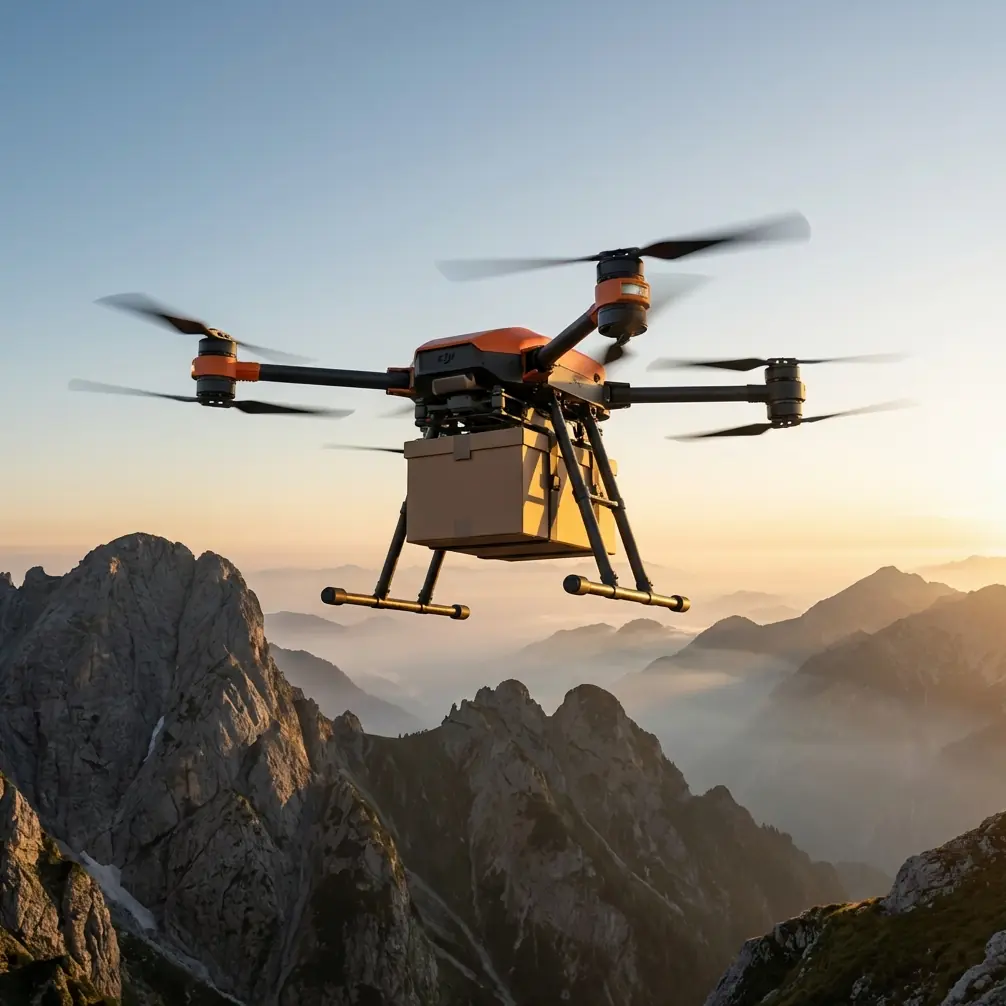
FlyCart 30 in Dusty Forest Filming: Battery Discipline, Winch Tactics, and Route Planning That Actually Hold Up
META: A field-driven FlyCart 30 guide for dusty forest filming, with practical advice on battery management, winch use, route optimization, payload ratio, and why new U.S. battery manufacturing matters for logistics drone reliability.
Dust changes the way a logistics drone behaves long before it causes an obvious problem. In forest filming, that matters more than many crews expect.
The FlyCart 30 often gets discussed as a payload platform, which is fair. But when you use it to support filming in dusty woodland environments, the real story is operational stability. You are not just moving gear from road access to set. You are trying to do it repeatedly, with predictable battery performance, clean route execution, and enough margin to handle shifting wind, uneven clearings, and the kind of debris that seems to appear exactly where your descent path needs to be.
I have seen crews focus heavily on lift numbers and not enough on battery behavior over a full day in dirty air. That is where the difference shows up between a smooth shoot and a chain of preventable delays.
This article is built around one practical question: how do you run a FlyCart 30 well while filming forests in dusty conditions? And behind that question sits a larger industry development worth paying attention to: Packet Digital and its subsidiary Badland Batteries were awarded 9.8 million under Phase 3 of a U.S. Navy contract to scale battery production in North Dakota, with that facility set to manufacture NDAA-compliant battery cells for logistics drones and other unmanned systems. Even if your work is purely civilian, that detail matters. It signals growing attention to battery supply, domestic production capacity, and logistics-grade power systems at a time when drone operators need consistency more than hype.
For FlyCart 30 users, especially those handling remote film support, battery reliability is not abstract. It shapes every routing decision you make.
Why dusty forest filming stresses a logistics drone differently
Forest shoots create an awkward mix of constraints. You may have tight landing options, uneven canopy gaps, and frequent relocation of personnel and equipment. Add dust from dry access roads, leaf litter, disturbed soil, and rotor wash near clearings, and the aircraft starts facing a challenge that is less about raw lifting ability and more about repeatable system health.
Dust affects visibility during approach, contaminates surfaces around connectors and battery bays, and encourages crews to rush handling just to keep production moving. That is usually when battery mistakes happen.
With the FlyCart 30, the conversation should start with payload ratio, not just payload capacity. A drone carrying a modest camera support load over a longer forest route may be under its absolute limit, yet still be poorly planned if the route profile, elevation changes, and stop-start flight pattern eat into battery reserves faster than expected. In dusty environments, conservative payload ratio planning buys you more than endurance. It gives you cleaner decision-making.
A good target is not “how much can this aircraft carry?” but “what fraction of its practical lift should it carry today, on this route, in this air, with this turnaround rhythm?” That shift sounds small. Operationally, it is huge.
The battery tip I give every field team
My most repeated battery management rule in dusty forest work is simple: let batteries rest sealed, inspect dry, and pair by behavior, not by convenience.
That last part gets ignored.
On paper, dual-battery systems are about redundancy and power delivery. In practice, they are also about balance. If one pack consistently trends warmer after similar missions, or reaches recovery voltage differently after a heavy winch cycle, I stop treating that pair as interchangeable with every other pair in the case. I log it and keep pair behavior consistent until I understand what changed.
Dusty conditions make this more important because crews often swap fast, on tailgates, folding tables, or improvised ground mats that are already contaminated. The temptation is to wipe, click in, and launch. Better practice is to keep battery transitions structured:
- Move packs from storage to a clean handling zone, even if that zone is just a dedicated hard case lid used only for battery prep.
- Inspect terminals and seals dry first. Do not smear dust deeper into contact areas with a rushed cloth wipe.
- Note pack temperature before charging and before reinstallation.
- Keep your known stable pairs together through the day unless data tells you otherwise.
Why does this matter on a FlyCart 30? Because a dual-battery setup can hide small imbalances until they become route-planning problems. One inconsistent battery pair can turn a routine gear drop into an early return, a hover-time compromise, or a riskier margin during a winch retrieval.
The newer attention on logistics-drone battery production is relevant here. When a North Dakota facility is being scaled specifically to manufacture battery cells for logistics drones, it reflects what experienced operators already know: cargo operations expose battery systems to a different level of duty cycle seriousness. A filming crew using a FlyCart 30 may not think of itself as a logistics program. Functionally, it is one.
Route optimization in forests is mostly about energy predictability
BVLOS gets mentioned a lot in logistics circles, usually as a regulatory or scale topic. In forest filming support, even when your operation remains within your approved visual and procedural framework, BVLOS-style thinking is useful because it forces you to map routes around energy certainty rather than pilot improvisation.
In practical terms, route optimization for the FlyCart 30 in dusty forests should answer four things before the first lift:
1. Where are the dust-heavy transition zones?
These are usually roadside loading points, dried creek beds, open staging areas, and clearings with loose topsoil. If your route begins or ends in these zones, your battery handling and descent profile should account for contamination risk.
2. Which legs create the worst payload-to-distance tradeoff?
A route that looks short on a map may be inefficient if it demands repeated altitude changes over tree lines. That burns energy differently than a flatter route with slightly more horizontal distance.
3. Where can the winch system replace touchdown?
In many forest filming scenarios, using the winch system avoids rotor wash over loose debris and reduces the need to find clean landing spots. That can protect both aircraft and batteries from unnecessary dust exposure during loading cycles.
4. What is your return-margin rule?
Do not make this emotional. Pick a reserve threshold based on route profile and stick to it. Forest routes punish optimism.
A well-planned route can reduce battery stress more effectively than squeezing extra performance from packs. That is the piece many teams miss. They treat batteries as the variable to optimize, when the smarter move is often to optimize the mission around battery stability.
When the winch system is the better filming tool
For dusty forest operations, I generally prefer the winch system whenever the receiving team is trained and the payload is compatible. Not because winching is inherently easier. It is often slower at first. But it can be operationally cleaner.
Touchdowns in dusty clearings create three problems: rotor wash contamination, unstable footing, and rushed turnaround. A winch-based drop can reduce all three. It also preserves more flexibility when your camera department shifts set position and your original LZ becomes marginal.
Operational significance here goes beyond convenience. If you can avoid repeated landings in dirty areas, you reduce the frequency of dust contact around lower airframe surfaces and battery access procedures. That helps preserve consistency over a long shooting day.
The tradeoff is energy planning. Winch work introduces its own power draw and hover-time requirements, so route optimization has to reflect the true mission profile, not just distance. This is where payload ratio discipline pays off. If you are trying to run near maximum load and also depend on repeated hover-and-lower cycles, your margin disappears quickly.
Emergency systems are not the reason to get casual
The emergency parachute is there for contingency management, not confidence inflation.
I say this because crews sometimes talk themselves into tighter margins once they know a platform includes layered safety features. In forest filming, that mindset is backward. Dense terrain, variable canopy, and shifting set geography already reduce your options. Safety systems are valuable, but they do not turn a poor route or unstable battery pair into a sound operational plan.
The best use of safety features is psychological: they should make your team calmer and more procedural, not bolder and less disciplined.
Why the recent battery manufacturing news matters to FlyCart 30 operators
The Packet Digital and Badland Batteries development is not just a business headline. It speaks directly to a pressure point in the logistics drone world: dependable battery supply for aircraft that are expected to do real work.
The contract’s Phase 3 funding, totaling 9.8 million, is meant to scale production in North Dakota. The facility will manufacture NDAA-compliant battery cells aimed at drones used in logistics and other unmanned applications. Strip away the contract language and the significance becomes clear. Battery production is being treated as infrastructure.
For FlyCart 30 operators in commercial environments, that matters in three ways:
Supply resilience
If more battery manufacturing capacity is built around logistics-drone requirements, operators benefit from a stronger ecosystem focused on repeatable performance rather than hobby-grade assumptions.
Application-specific design priorities
Batteries intended for logistics drones are being developed with heavy-duty operational realities in mind. That aligns more closely with FlyCart 30 use cases such as equipment movement, remote set resupply, and structured multi-leg routing.
Higher expectations for fleet management
As the battery side of the industry matures, crews will be expected to manage packs with the same rigor they apply to aircraft maintenance. That is a good thing. Better hardware only helps if field practices keep up.
This is the broader takeaway for anyone running a FlyCart 30 in forest filming support: the industry is moving toward batteries as strategic assets, not consumable afterthoughts. Your procedures should reflect that now.
A practical setup for a dusty-day filming schedule
Here is the workflow I recommend when supporting a forest production day with the FlyCart 30:
Pre-mission
Build route options around energy demand, not just shortest path. Identify clean battery handling zones. Decide in advance which drops will use the winch system and which require touchdown.
First sortie block
Start with your most behaviorally consistent dual-battery pair, not simply the fullest pair. Early flights give you the best reference for the day’s temperature, dust intensity, and route drag.
Midday adjustment
Review actual battery recovery patterns after several cycles. If one pair is lagging, remove it from your highest-demand routes. Do not wait for an alert or visible problem.
Late-day operations
As dust accumulates and crews tire, handling errors increase. Tighten your turnaround procedures, not loosen them. This is usually the point where “quick swaps” start creating next-day maintenance headaches.
If your team needs help structuring a field-ready workflow, I usually suggest starting with a simple mission checklist and battery rotation sheet before adding more software layers. If you want a practical conversation about that, here is a direct line to our operations desk on WhatsApp.
The real benchmark: smooth repetition
A successful FlyCart 30 day in dusty forests is not defined by one dramatic lift. It is defined by repetition without degradation.
Can you run multiple support flights while keeping battery pairs predictable? Can you use the winch system to reduce landing contamination where it actually helps? Can your route optimization protect reserves instead of consuming them? Can your crew treat the dual-battery setup as a managed system rather than a pile of interchangeable packs?
That is what separates capable field logistics from improvised drone use.
The recent investment in U.S. battery production for logistics drones underscores the same idea from the manufacturing side. Reliable cargo operations begin with power systems that are treated seriously. For FlyCart 30 crews working in dusty forest filming, the lesson is immediate: battery discipline is not a background task. It is one of the main levers that determines whether your aircraft remains a useful production tool all day or becomes the source of delay.
Dust will always be there. The better answer is not to hope around it. It is to build cleaner habits, tighter routes, and smarter battery pair management so the FlyCart 30 can do what it does best: move equipment into difficult places with control, consistency, and enough margin left to make the next flight an easy decision.
Ready for your own FlyCart 30? Contact our team for expert consultation.