
FlyCart 30 in the Real World: What a 5-Minute Loquat Run
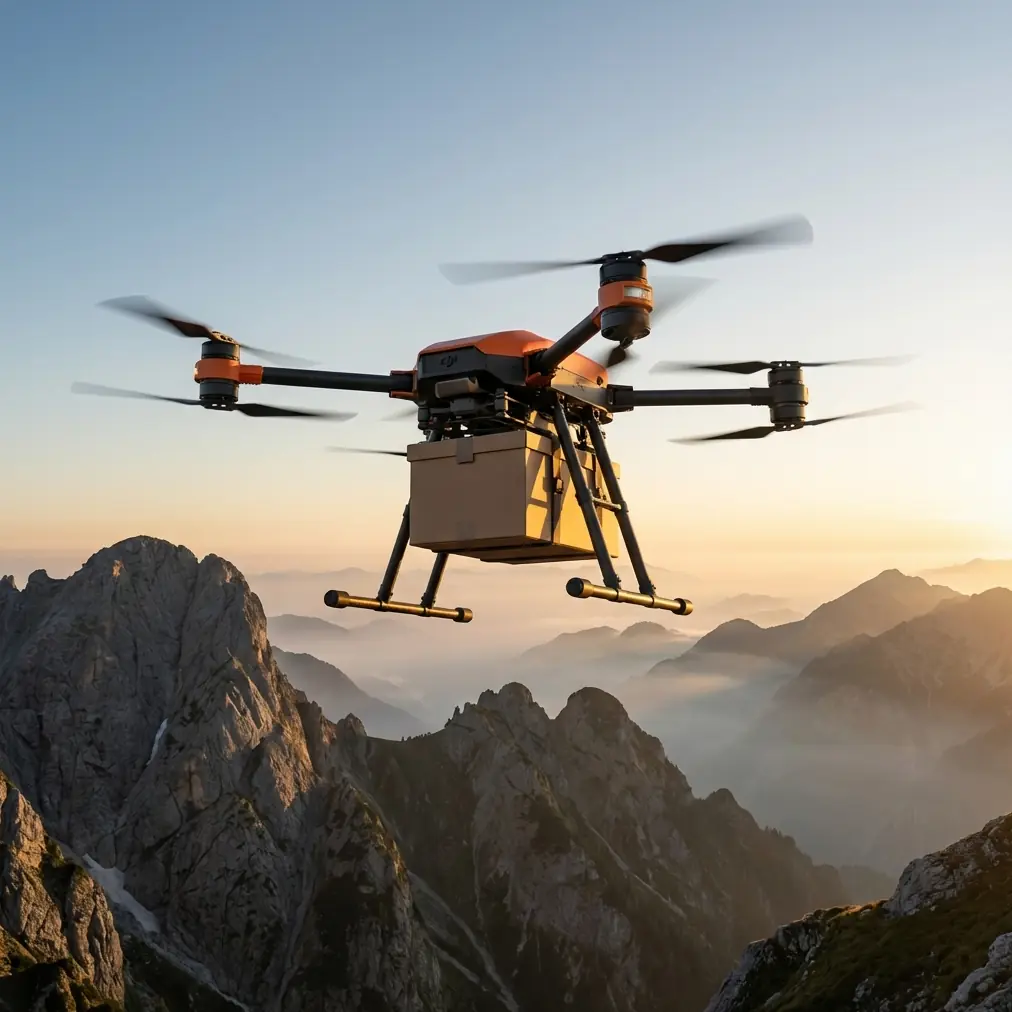
FlyCart 30 in the Real World: What a 5-Minute Loquat Run Says About Wind, Workflow, and High-Risk Logistics Filming
META: A field-based FlyCart 30 case study connecting a 5-minute mountain fruit delivery story to windy-route operations, payload planning, safety checks, and logistics filming strategy.
I’ve spent enough time around cargo UAV projects to know that the most revealing drone stories are rarely the flashy ones. They’re the runs that solve a stubborn ground problem. A slope too steep for fast pickup. A road that turns a short distance into a long delay. A product that bruises easily and loses value by the hour.
That is why a recent loquat transport story is more useful than it first appears.
The headline was simple: loquats were moved down the mountain by drone in about five minutes. Behind that short line sits a very practical lesson for anyone evaluating the FlyCart 30 for commercial operations, route documentation, or even logistics-focused filming in windy corridors such as highways, ridge roads, and exposed mountain access routes. Add one more reference point and the picture sharpens: during the related live commerce event run by major delivery companies including China Post and SF Express, the stream generated nearly 6,400 orders and about 450,000 yuan in sales, roughly six times the result of the previous year’s first event.
Those numbers matter. Not because they make for good headlines, but because they reveal what drone logistics actually changes when it works: speed to handoff, labor pressure, freshness window, and the confidence to market a local product at scale.
For a platform like the FlyCart 30, that is the real conversation.
A five-minute descent is not just about speed
Mountain agriculture has a brutal arithmetic. Moving produce from orchard to collection point often consumes more time and more handling than outsiders expect. The fruit may be ready. Buyers may exist. Demand may even spike during a live event. But if the route off the slope is slow, bumpy, or manpower-heavy, the whole chain gets dragged down.
So when a drone cuts the downhill transport leg to around five minutes, the operational significance goes far beyond shaving time off a trip.
First, it compresses the interval between harvest and packaging. With soft fruit like loquat, fewer transfers and less time in transit can mean better product condition by the time it reaches the sorting area.
Second, it changes how fulfillment scales during peak demand. A livestream that suddenly produces close to 6,400 orders is not a marketing win unless the backend can keep up. Fast aerial shuttle runs create a buffer. They help the ground team pull inventory from dispersed terrain and feed a centralized packing workflow at a pace roads or hand-carry methods may not support.
Third, it reduces the mismatch between sales intensity and terrain reality. A sixfold year-over-year jump in event performance sounds dramatic. In practice, that kind of growth strains every weak point in a supply chain. If the mountain is the bottleneck, then the mountain must be redesigned operationally. Drones do exactly that.
This is the lens through which the FlyCart 30 should be viewed.
Why the FlyCart 30 fits this kind of mission profile
The FlyCart 30 is often discussed in terms of payload and transport capability, but those specs only become meaningful when tied to terrain, weather, and workflow. In agricultural and logistics settings, payload ratio is one of the first things serious operators look at. Not just “how much can it carry,” but how much useful value can be moved per cycle relative to battery use, route complexity, and turnaround burden.
In mountainous produce transport, that ratio becomes especially important because the flight may be short in distance yet demanding in execution. You’re dealing with uneven pickup points, changing wind channels, and the need to keep the loading process quick and repeatable. The winch system becomes operationally relevant here. On slopes, terraces, or road edges where a clean landing area is limited, a suspended pickup or drop method can reduce rotor wash issues near people, crops, and unstable ground. That is not a theoretical convenience. It can be the difference between a viable route and a route that keeps getting delayed by landing constraints.
This also connects directly to the user scenario of filming highways in windy conditions. Many people think filming and logistics are separate conversations. In the field, they overlap more than expected.
If you’re documenting a transport corridor, surveying a route for future deployment, or producing logistics footage along a highway cut through exposed terrain, you’re studying the same variables that govern cargo safety: crosswinds, gust zones near embankments, rotor disturbance around narrow clearings, and how quickly an aircraft can complete a cycle before weather shifts. The FlyCart 30’s design priorities are built for operational reliability in exactly those kinds of environments.
Wind changes everything, especially near roads and slopes
Highways carve through terrain in ways that create messy air. Open stretches can channel lateral gusts. Overpasses and retaining structures can produce turbulence. Ridges and cut slopes can amplify sudden directional shifts. If you’re flying near these corridors, whether for route assessment, site documentation, or transport planning, “windy” is not just a weather label. It is a risk category.
That is where disciplined pre-flight habits matter more than raw confidence.
One small but highly practical step I insist on before any serious windy-day operation is cleaning the aircraft’s safety-critical surfaces and components before power-up. Not as housekeeping. As risk control. Dust, pollen, orchard residue, and road grime collect faster than many crews realize, especially when aircraft are operating around produce staging areas, unpaved loading spots, and roadside pull-offs. A pre-flight wipe-down of sensors, battery interfaces, payload attachment points, and parachute-related housings can prevent tiny contaminants from becoming larger reliability problems.
This matters for several FlyCart 30-adjacent features operators care about:
- Emergency parachute systems depend on being maintained as true last-resort safeguards, not ignored accessories.
- Dual-battery architecture only helps if connection points and battery seating are clean, inspected, and consistent.
- Winch operation benefits from checking line path cleanliness and attachment security before every launch, especially in dusty pickup zones.
I mention cleaning because people often jump straight to route optimization software and flight planning logic while overlooking the physical readiness of the aircraft. In wind, little oversights become big ones.
The hidden lesson in the loquat case: route optimization starts on the ground
The five-minute mountain delivery story sounds airborne. In reality, successful drone logistics is mostly about what happens before and after the propellers spin.
When an event can convert enough interest to produce 450,000 yuan in sales in one day, every minute of staging counts. Fruit has to be harvested, aggregated, loaded, transferred, packed, labeled, and handed to downstream carriers. The drone segment is only one link, but it is the link that can unlock the rest of the chain if the terrain is the limiting factor.
For FlyCart 30 operators, route optimization should therefore be broader than “shortest line between point A and point B.” Good route design asks:
- Where is the safest load zone in shifting wind?
- Can the aircraft avoid unnecessary landing cycles by using a winch-based transfer?
- Which pickup points create the best throughput over a full work block?
- How does battery swapping affect hourly movement capacity?
- If one corridor becomes unstable in gusts, what is the alternate route?
In some projects, a slightly longer route produces better real-world performance because it avoids a turbulent choke point or simplifies the receiving workflow. This is particularly true in highway-adjacent terrain, where an operator may choose a path that trades a few extra seconds of flight for cleaner air and safer approaches.
For teams trying to visualize or validate those decisions, field documentation is vital. If you’re mapping a corridor or planning a logistics deployment and want to compare setup logic, wind exposure, and load-handling methods, it can help to message a FlyCart operations specialist here and sanity-check the mission design before committing crews and equipment.
What the sixfold sales jump really signals
I wouldn’t over-romanticize a livestream result. Sales bursts can be influenced by promotion, timing, and audience reach. But a sixfold increase over the prior year’s event still tells us something operationally meaningful: the ecosystem around the product became more capable.
The delivery side was not just selling fruit. It was signaling confidence that it could move volume.
That confidence matters because one of the biggest barriers in regional agricultural logistics is not demand creation. It is execution credibility. Growers and shipping partners need to believe that if demand spikes, the transport chain won’t collapse into delays and damaged goods. Drone-assisted downhill transport supports that confidence because it tackles a physically stubborn segment of the route.
This is where the FlyCart 30 belongs in the conversation. Not as an abstract heavy-lift platform, but as a tool for reshaping awkward middle-mile segments:
- orchard to roadside staging point
- hillside collection point to village sorting hub
- isolated pickup location to courier transfer station
Each of those legs can be short. Each can still be the hardest part of the day.
Civilian logistics value beats spec-sheet fascination
There is a tendency in the drone industry to obsess over headline specifications without asking what kind of workload creates actual return. The loquat case gives a grounded answer. A commercial UAV earns its place when it removes friction from a real chain of custody.
For fruit growers, that means protecting quality and reducing labor strain on steep terrain.
For express networks, it means smoothing handoff timing.
For project managers filming or documenting these operations, it means capturing not just the aircraft in flight, but the logistics system it supports: pickup rhythm, packing tempo, weather adaptation, and route discipline.
And for FlyCart 30 teams operating in windy highway or mountain-adjacent environments, it means combining the aircraft’s transport features with fieldcraft that is often undervalued:
- clean and inspect before launch
- respect gust behavior near terrain transitions
- use the winch where landing adds unnecessary risk
- plan battery changes around workflow, not convenience
- build alternate routes before the weather forces the issue
That is what separates a demo from an operation.
A better way to think about FlyCart 30 deployments
If you strip away marketing noise, the strongest argument for the FlyCart 30 is simple: some terrain punishes conventional movement far more than it punishes well-planned flight.
The mountain loquat example proves the point elegantly. A short aerial hop that takes about five minutes can support a much larger commercial engine behind it. In this case, that engine included national delivery players, a live selling format, and a one-day result of nearly 6,400 orders. Those outcomes did not emerge from the drone alone. They emerged from the drone’s ability to solve the most inconvenient segment of the route.
That is how experienced operators should assess the platform.
Not by asking whether it is impressive in isolation.
By asking whether it can remove the exact bottleneck that keeps a civilian logistics workflow from scaling safely and predictably in the real world.
On windy routes, near highways, over slopes, and across agricultural pickup zones, that question becomes highly practical. The answer depends on pre-flight discipline, route design, payload handling, and the ability to keep the aircraft mission-ready cycle after cycle.
The crews that understand this are the ones who get value from the FlyCart 30. Everyone else is just watching a drone carry something from one place to another.
Ready for your own FlyCart 30? Contact our team for expert consultation.